The Imperial House of Aisin Gioro
– 3 min read


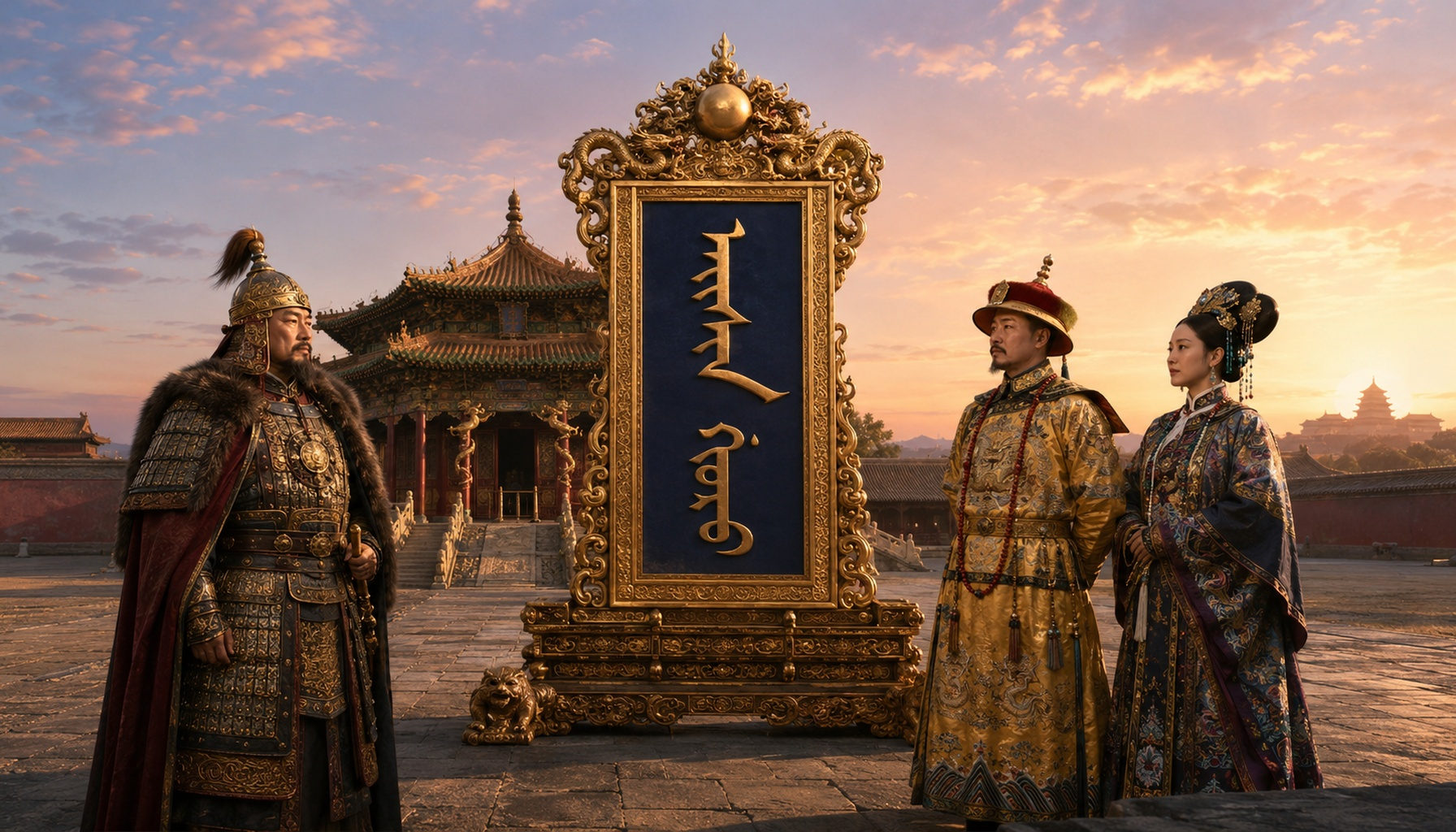
The Aisin Gioro were the imperial Manchu house that founded and ruled the Qing Empire, the last imperial dynasty of China. Their roots lay in the forest-steppe world of northeast Asia, especially in the old Jurchen and later Manchu lands of what is now northeastern China, around Liaoning and Jilin, with deep connections into the wider frontier zone bordering Korea, Mongolia, and the Amur region. In genetic tagging terms, the primary family haplogroup linked with the house is C2a1a3a1, a lineage associated with parts of northern and eastern Eurasia and often discussed in relation to steppe and Inner Asian population history.
This was not simply a palace family that appeared ready-made in Beijing. The Aisin Gioro rose through clan leadership, military organization, alliance-making, and ruthless political skill. Nurhaci (1559-1626) was the great architect of that rise, consolidating Jurchen groups and creating the banner system that gave the family a durable military and social base. His son Hong Taiji (1592-1643) pushed the transformation further, adopting the name Manchu, reshaping the state, and laying the groundwork for imperial rule over China proper. By the time the dynasty reached Beijing, the Aisin Gioro had become masters of conquest and adaptation at once: Manchu rulers of a vast multiethnic empire, guardians of court ritual, and participants in one of the biggest political re-orderings in East Asian history. Their story ends, in imperial terms, with Puyi (1906-1967), the last emperor, whose life carried the long aftershock of dynastic collapse into the modern age.
Explore ancient DNA of the Mongolian steppe
If the Aisin Gioro began in the frontier world of the northeast, the place most people now associate with them is the Forbidden City in Beijing. This immense palace complex, built in the early 15th century under the Ming and later occupied by the Qing, became the ceremonial and political heart of the dynasty after the Manchus took the capital in 1644. It was not just a royal residence but a carefully ordered imperial machine: vast halls for enthronements and court ritual, inner courts for the emperor and his household, side palaces for consorts and princes, storage rooms, archives, shrines, and administrative spaces all enclosed within monumental walls and moats. Under the Qing emperors, the Forbidden City became the stage on which Manchu sovereignty was performed daily, with layers of etiquette, costume, seasonal ceremony, and bureaucracy reminding everyone that empire was both an idea and a lived routine. It survives today as the Palace Museum and can still be visited, which means that one of the great centers of Aisin Gioro memory remains physically accessible rather than merely historical.
Read about steppe and Yellow River crossroads DNA
Ancient DNA does not let us simply point at an old burial and declare, with a flourish, "there is the Aisin Gioro." What it can do is sketch the wider genetic landscape around a lineage such as C2a1a3a1. Related or linked samples include Medieval Ukraine Zaporizhzhia Mamay-Gora (UKR017), Golden Horde elite burials from the Mausoleum of Alasha Khan in Kazakhstan (CZK001), Jochi Khan Mausoleum in Kazakhstan (CZK002), Ayakkamir in Kazakhstan (CZK003), the Early Bronze Age Rostovka sample from Russia (I32816), Ancient Siberia Altai-Krai Itkul Kostenkova-Izbushka (I20312), Neolithic Sosnovy-Mys in Irkutsk Russia (I2134), Bronze Age Western Siberian Plain Seima Turbino Rostovka (I25555), Medieval Nomad Kayalyk Mausoleum (KLK002), and Late Medieval Mongol Tsagaan Chuluut (TSA003). These do not prove direct descent from the imperial house, but they do help place the Aisin Gioro haplogroup within a much broader northern Eurasian and Inner Asian story of mobility, elite formation, and long-range connections across steppe, forest, and frontier worlds.
Explore Golden Horde elite DNA
If your own family story reaches into northeast Asia, Inner Asia, Manchu, Mongol, or wider steppe-connected ancestry, uploading your DNA can be a fascinating way to see whether you match the Aisin Gioro family profile or any of these related ancient DNA samples. Dynasties are never just names in books; they are made of real people, migrations, marriages, victories, collapses, and memories that survive in both archives and genomes.
Comments