The House of van der Merwede
– 3 min read


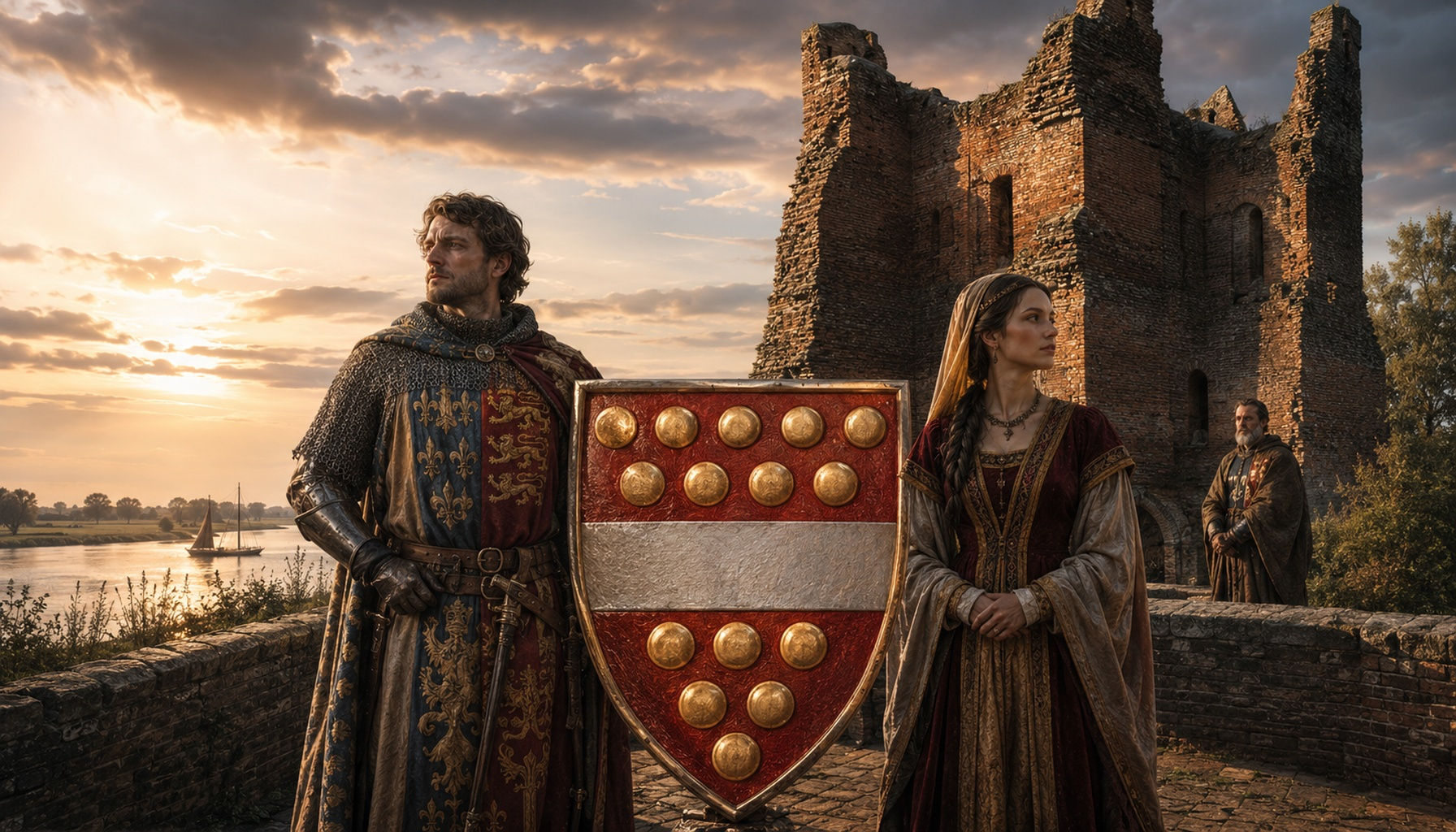
The van der Merwede family was a noble house of the Low Countries, rooted in Holland and closely tied to the watery landscapes of the Merwede river system. Their name itself points to place, and in the medieval Netherlands that mattered enormously: rivers were roads, borders, lifelines, and sources of wealth all at once. The family is linked here with the primary Y-DNA haplogroup R1b1a1b1a1a2c1a4b3, a lineage found in a wide spread of ancient and historic European contexts. In historical terms, the House of van der Merwede fits a very Dutch pattern of nobility, built not simply on battlefield glamour but on estates, river control, local authority, heraldic identity, and service in a region where water management could be as political as war.
Their world was one of dikes, tolls, castles, market towns, reclaimed land, and shifting overlordship between local lords, counts, and urban powers. Families like this did not emerge from nowhere; they grew out of named places and the ability to hold them. The van der Merwedes were part of that landscape of territorial nobility in which a family name, a fortified seat, and a network of marriages could carry influence across generations. Named figures associated with the house include Daniel van der Merwede (1240-1307), Godschalk van der Merwede (1270), Margaretha van der Merwede (1380-1410), and Daniel van der Merwede (1403). Together they suggest not a fleeting line but a family with continuity across the later medieval centuries, when Holland was becoming ever more politically crowded, commercially ambitious, and socially interconnected.
Explore the House of de Lannoy
The great location anchor of the family story is Merwede Castle, near Dordrecht in South Holland, a site that still evokes the old river lordship behind the name. According to the castle record, the stronghold stood in a strategic wetland setting shaped by waterways and regional routes, exactly the kind of place from which a noble family could watch movement, protect land, and project status. What survives today is not a fairy-tale intact fortress but evocative remains, and in some ways that is better: you are forced to imagine the medieval structure in the landscape that gave it meaning. Merwede Castle was associated with the Lords of Merwede and belongs to that familiar but still thrilling class of Low Countries fortifications where brick, water, and power came together. The remains can be visited, so if you want to stand in the terrain that formed the family identity, this is not only a historical reference point but a real place on the map.
Explore the Lower Rhine-Meuse deep past
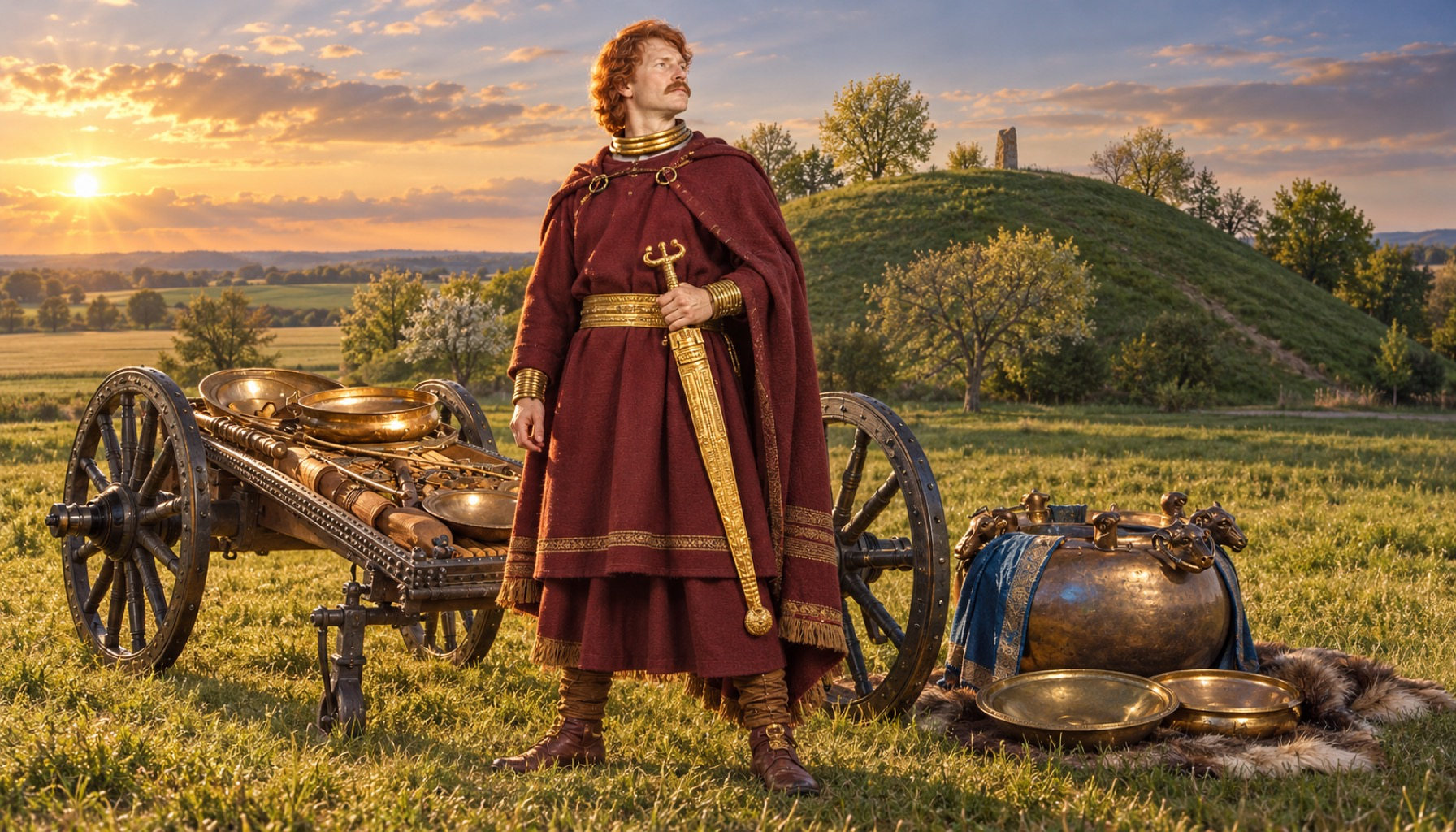
From the DNA angle, the primary family haplogroup given here, R1b1a1b1a1a2c1a4b3, belongs to a broader paternal story seen across western and central Europe over long stretches of time. Related or linked ancient samples include a notably large cluster from Celtic Durotriges burials at Duropolis, Winterborne Kingston in England, such as WBK12, WBK20, WBK29, WBK41, WBK05, WBK30, WBK43, WBK06, WBK08, WBK18, and WBK191, alongside other linked individuals from Medieval England Cambridge St Johns Hospital (ATP_PSN_192), Imperial Roman Era Zadar Croatia (I26776), Bronze Age Orkney Links of Noltland (KD061), Bronze Age Calabria Grotta della Monaca Sant Agata di Esaro (GMO015), Early Medieval Belgium Sint-Truiden Groenmarkt (ST2025), Medieval Belgium Outsider Sint-Truiden Onze-Lieve-Vrouwekerk (ST1308), Gallic France Parancot (CGG023699), Post Roman Worth Matravers Dorset (I11580), Merovingian Alt-Inden (IND013), Late Roman Klosterneuburg (R10656), Late Roman Conimbriga (R10488), Iron Age Worlebury (I11991), Iron Age Battlesbury Bowl (I21309), Bronze Age Trumpington Meadows (I3256), Bronze Age Amesbury Down (I2417), Bell Beaker Upavon (I4950), Bronze Age Bedfordshire (I7576 and I7577), Bronze Age Boatbridge Quarry South Lanarkshire (I5473), Celt Hinxton Iron Age (HI2), Early Bronze Age Thames (I5377), and Ireland Copper Age Rathlin2B. These are not evidence of direct descent from the van der Merwede family, and should not be read that way. Rather, they show the wider archaeological spread of related paternal lineages in the deep background of Europe, including areas tied by migration, trade, and long-term population history to the North Sea world in which Dutch noble families later emerged.
Read about medieval DNA from Sint-Truiden
If the House of van der Merwede catches your imagination, that is because it sits at the meeting point of family memory, landscape history, and deep ancestry: a Dutch noble house born from a river, a castle, and the politics of water. Uploading your DNA can help you see whether you match this family group or any of the related ancient DNA samples linked to the same broader paternal story.



Comments