The House of Montfort
– 3 min read


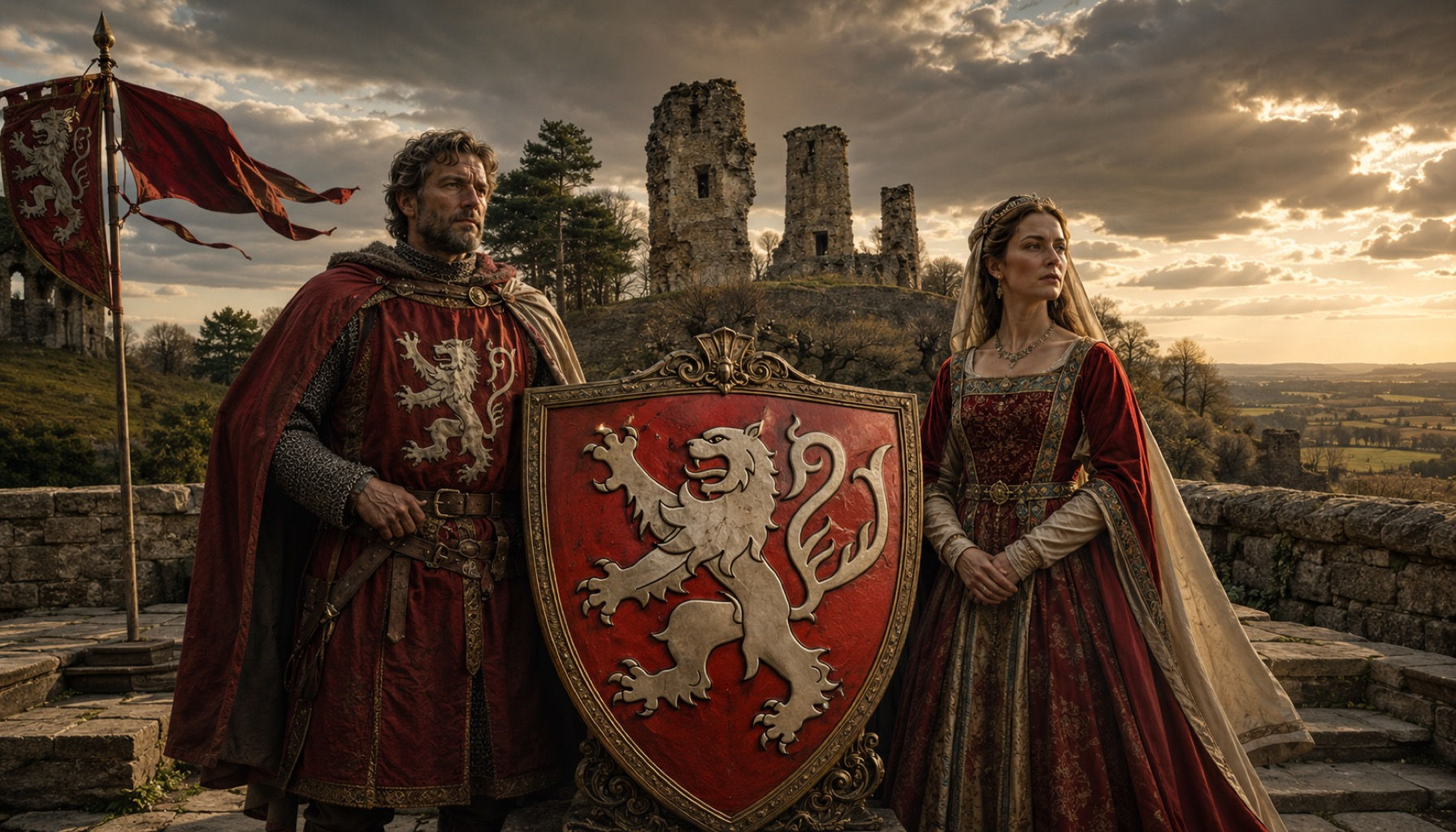
The House of Montfort was a powerful French and Anglo-Norman noble family whose story runs straight through the great tensions of the Middle Ages: castle lordship, crusading, marriage politics, reforming ambition, and the dangerous business of challenging kings. Originating in northern France, with the name most famously associated with Montfort-l'Amaury in the Ile-de-France orbit, the family grew within the feudal world that followed the fragmentation of Carolingian power and the rise of local castle-based lordships. From that setting emerged a lineage whose branches would become entangled with England, Normandy, the Church, and the politics of royal authority. In haplogroup terms, the primary family line here is tagged as R1b1a1b1a1a2a1, a branch associated with a very broad and long-lived paternal history across western Europe.
The Montforts are remembered above all because they did not remain merely local lords. Their name became attached to men who crossed frontiers, served in war, and risked everything in high politics. Simon de Montfort is the figure most people know, but the wider family history is richer than a single dramatic life. It is about generations who built influence through tenure, service, and alliance, and who could just as easily rise by royal favor as fall through overreach. Thurstan de Montfort III belongs to that broader aristocratic world: one of those noblemen whose standing rested on land, military obligation, and the social architecture of lordship. In that sense the House of Montfort is almost a model medieval dynasty, French in origin, Anglo-Norman in reach, and permanently poised between loyalty and ambition.
Explore the House of Montmorency
For the English Montforts, Beaudesert Castle in Warwickshire is a particularly vivid anchor. Built in the 12th century near Henley-in-Arden, it occupied a commanding position on high ground overlooking the surrounding countryside, exactly the sort of place from which a medieval lord could watch roads, manage estates, and make his authority felt. The site developed from an early motte and bailey into a more substantial fortified residence, and it became closely associated with the de Montfort family in England, including Thurstan de Montfort and his successors. Later, the castle passed out of Montfort hands and over the centuries declined into ruin, but that is part of its fascination: it lets you see not a polished fantasy castle, but the real afterlife of aristocratic power. The earthworks and remains survive, and the site is generally understood to be visitable as a historic ruin area, so it still offers a tangible way to stand in a Montfort landscape rather than merely read about one.
Read more about the House of de Clare
The Montfort haplogroup tag, R1b1a1b1a1a2a1, sits within a deeply rooted western European paternal landscape that turns up again and again in ancient DNA. That does not prove direct descent from any excavated individual, and it should not be presented that way. What it does provide is a useful backdrop. Related or linked samples include Early Bronze Age France Saint-Martin-la-Garenne Yvelines Ile-de-France (SMGB54), Early Bronze Age France les Pointes et les Grevottes Greviandes Aube (BRE445FK), Gallo Roman France Metz Lunette Sablon (R2055a and related R2055 series), Medieval England Cherry Hinton (ATP_PSN_944), Roman Era Fenstanton Cambridgeshire (FEN008), Celtic Durotriges England Duropolis Winterborne Kingston (WBK106 and WBK36), and several Medieval and Dark Ages individuals from Las Gobas in northern Spain such as ldo066, ldo037, and ldo062. Seen together, these linked samples sketch a long arc from Bronze Age France through Iron Age Britain, Roman provincial life, and medieval western Europe, a fitting background for a family whose identity was itself cross-Channel and historically mobile.
If the Montfort story speaks to you, that is part of the appeal of combining history with DNA: not fantasy ancestry, but a clearer sense of where your own deeper genetic story may intersect with the same medieval and ancient worlds. Upload your DNA to MyTrueAncestry and see whether you match the House of Montfort, haplogroup R1b1a1b1a1a2a1, or related ancient samples from France, England, and beyond.


Comments