The House of Mandy
– 3 min read


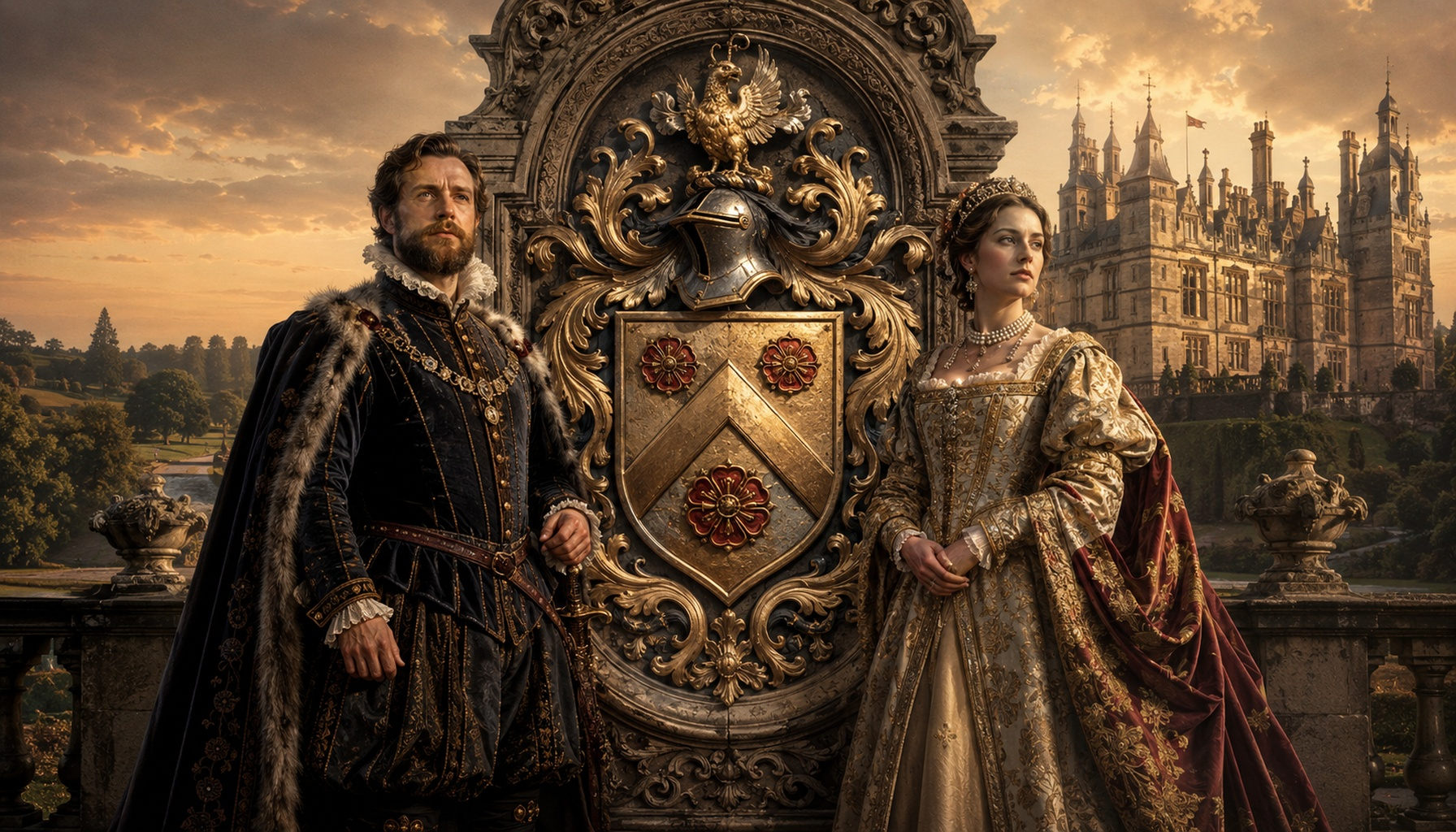
The House of Mandy is best understood not as a princely line but as a family house in the older European sense: a surname rooted in place, carried through generations, and remembered through local standing, service, migration, and continuity. In that sense the Mandy name belongs to a very durable kind of heritage, where identity is preserved not by crowns or grand titles, but by the steady survival of a family name in the documentary and community record. For this house, the primary haplogroup tag is R1b1a1b1a1a2e1c, a paternal line within one of the great West European branches of Y-DNA.
The surname is linked to the wider Norman and Anglo-European world, and its older forms are often associated with places and people moving between northern France and England in the medieval centuries. That matters because many family houses of this sort took shape in exactly that historical setting: monastic estates, lordship networks, trade routes, and the spread of hereditary surnames after the Norman period. The Mandy family story therefore sits in a recognisable historical landscape of coastal Normandy, medieval ecclesiastical power, and later English surname continuity. A named figure often brought into this heritage picture is William Munday (1529-1591), the English stationer, writer, and civic figure whose career reflects how such families could become woven into the public and cultural life of towns and cities without ever needing royal rank to matter.
Explore the House of de Harcourt
A key location anchor for this heritage is Fecamp Abbey in Normandy, one of the great Benedictine houses of medieval France. Fecamp was not some obscure local priory tucked away from events, but a major religious and political centre with deep links to the dukes of Normandy. The abbey grew around an earlier religious foundation and became especially important in the high medieval period, accumulating prestige, lands, and influence across the Norman world. In practical terms, places like this were engines of memory: they kept charters, marked landholding, tied families to districts, and stood at the meeting point of devotion, lordship, and record-keeping. If the House of Mandy is read through regional roots and surname endurance, Fecamp is precisely the kind of place where that story makes historical sense. The abbey church and site can still be visited today at Fecamp, making it not just a name in a pedigree, but a real landscape where medieval Norman identity was built and preserved.
From the DNA side, the House of Mandy is tagged to the paternal haplogroup R1b1a1b1a1a2e1c, and there is a remarkably broad spread of related ancient samples linked to that branch or its close context across western and central Europe. These include medieval and dark age individuals from northern Spain at Las Gobas such as ldo066, ldo037, ldo048, and ldo062; Roman era samples from Fenstanton in Cambridgeshire such as FEN008 and FEN012; Celtic and late Iron Age examples from Britain including WBK36 at Duropolis, I14105 at Pocklington, I16503 at Broxmouth, and I13732 from East Kent; elite Celtic burials from southern Germany including APG001, APG003, and LWB001; Gallo-Roman material from Metz including R2055a through R2055e; and medieval examples from England, Belgium, Ireland, and Germany such as ATP_PSN_1217, ST0058, ST3017, KIL047, and SDN031. Going further back, related lineages also appear among Bell Beaker and Bronze Age individuals from the Netherlands, Germany, Iberia, and Bohemia, including I4073x, I39211, LEU024, WEZ35, ALM040, and HOP001. None of this proves direct descent from any named ancient person, of course. What it does show is that the Mandy haplogroup sits inside a deep and well-attested European paternal landscape, one carried through Celtic, Roman, post-Roman, medieval, and later populations across exactly the regions where this family's historical world took shape.
Read about Norman Conquest DNA
The House of Mandy is a fine example of how family history really works: name, place, memory, and continuity across centuries, with DNA adding another layer rather than replacing the documentary story. If you carry the Mandy surname, or suspect a link to the same wider Norman, English, or western European ancestry stream, you can upload your DNA to MyTrueAncestry and see whether you match the House of Mandy profile or related ancient DNA samples from Britain, Normandy, Iberia, and beyond.


Comments