The House of de Harcourt
– 3 min read


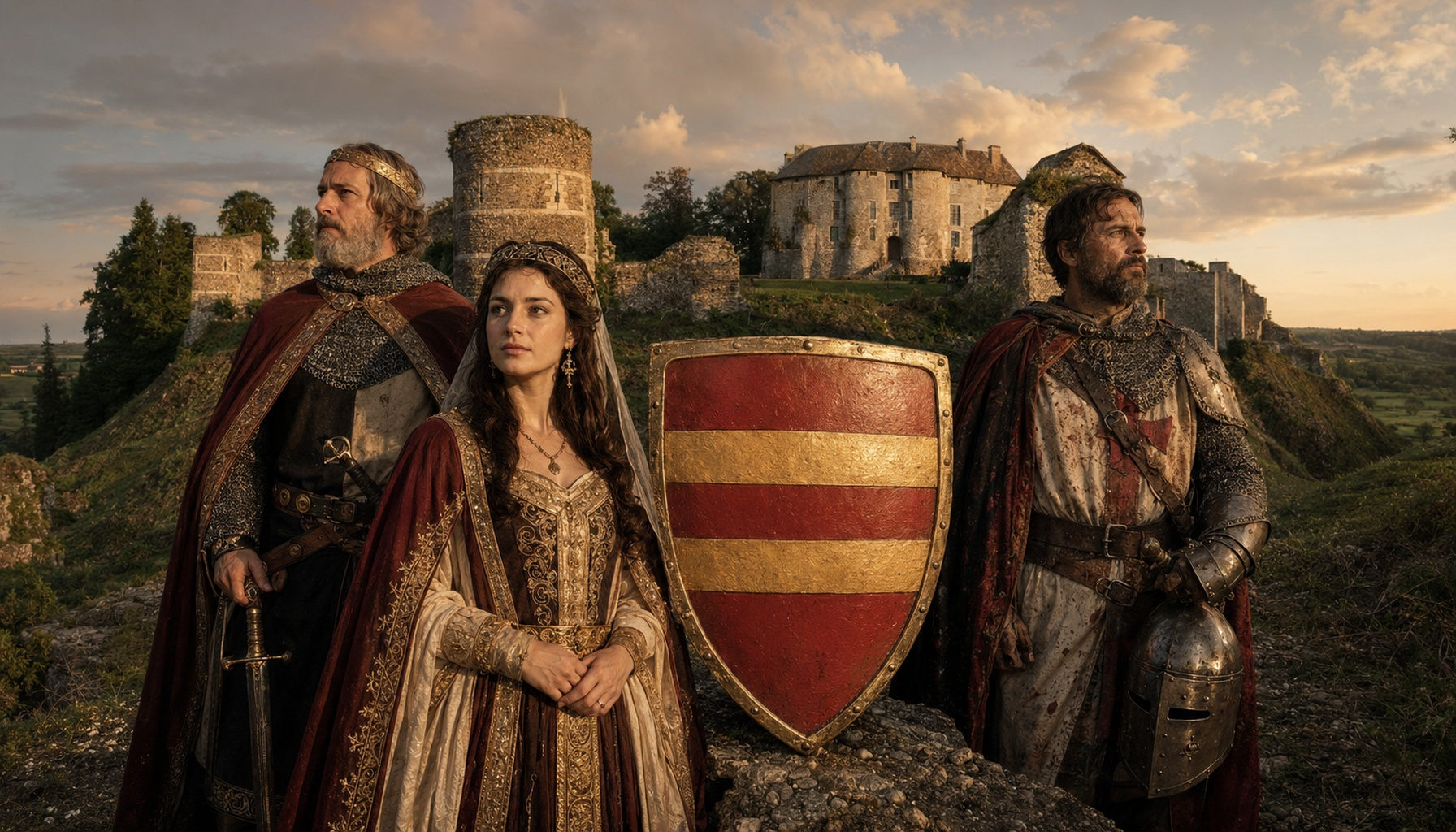
The House of de Harcourt was one of the great noble families of medieval Normandy, rooted in the pays of the Eure and remembered on both sides of the Channel after 1066. Their name came from Harcourt in Normandy, and like so many classic Norman aristocratic lineages, they rose through lordship, castle building, military service, strategic marriage, and loyal participation in the political world of dukes and kings. In haplogroup terms, the primary family line here is tagged with R1b1a1b1a1a2c1a1e, a branch associated more broadly with western European paternal history and well suited to a family whose story sits squarely in the Norman, French, and English worlds.
The de Harcourts belong to that unmistakable post-Carolingian, ducal Normandy landscape where power was not abstract but territorial: held in land, defended from stone strongholds, advertised in heraldry, and extended through kinship. By the 11th century the family was already established among the notable Norman nobility, and figures such as Robert II de Harcourt, active around 1050, stand near the early shaping of the lineage known to history. After the Norman Conquest, the family participated in the cross-Channel aristocratic pattern that linked Normandy and England into one political and family arena. That is what makes the Harcourts so revealing historically: they were not merely local lords, but part of the durable Norman aristocratic identity that survived conquest, migration, and changing crowns.
Read more about the House of de Courcy
The great location anchor for the family is Chateau de Harcourt in Normandy, in the commune of Harcourt in the Eure department. This is one of the most evocative surviving Norman castle sites connected with a noble lineage: a fortified enclosure with medieval towers and curtain walls, later reshaped across the centuries, and surrounded by a celebrated arboretum established in the modern period. In other words, it is not simply a ruin and not simply a grand house; it is a layered place where feudal fortification, later seigneurial life, and modern heritage all sit together in one landscape. That matters for understanding the de Harcourts, because their power was anchored in exactly this sort of site: a defended residence, a symbol of authority, and a statement that lineage and land belonged together. The chateau is today a heritage site and can still be visited, which gives the de Harcourt story a pleasingly rare quality in medieval family history: you can still go and stand where the name began to matter.
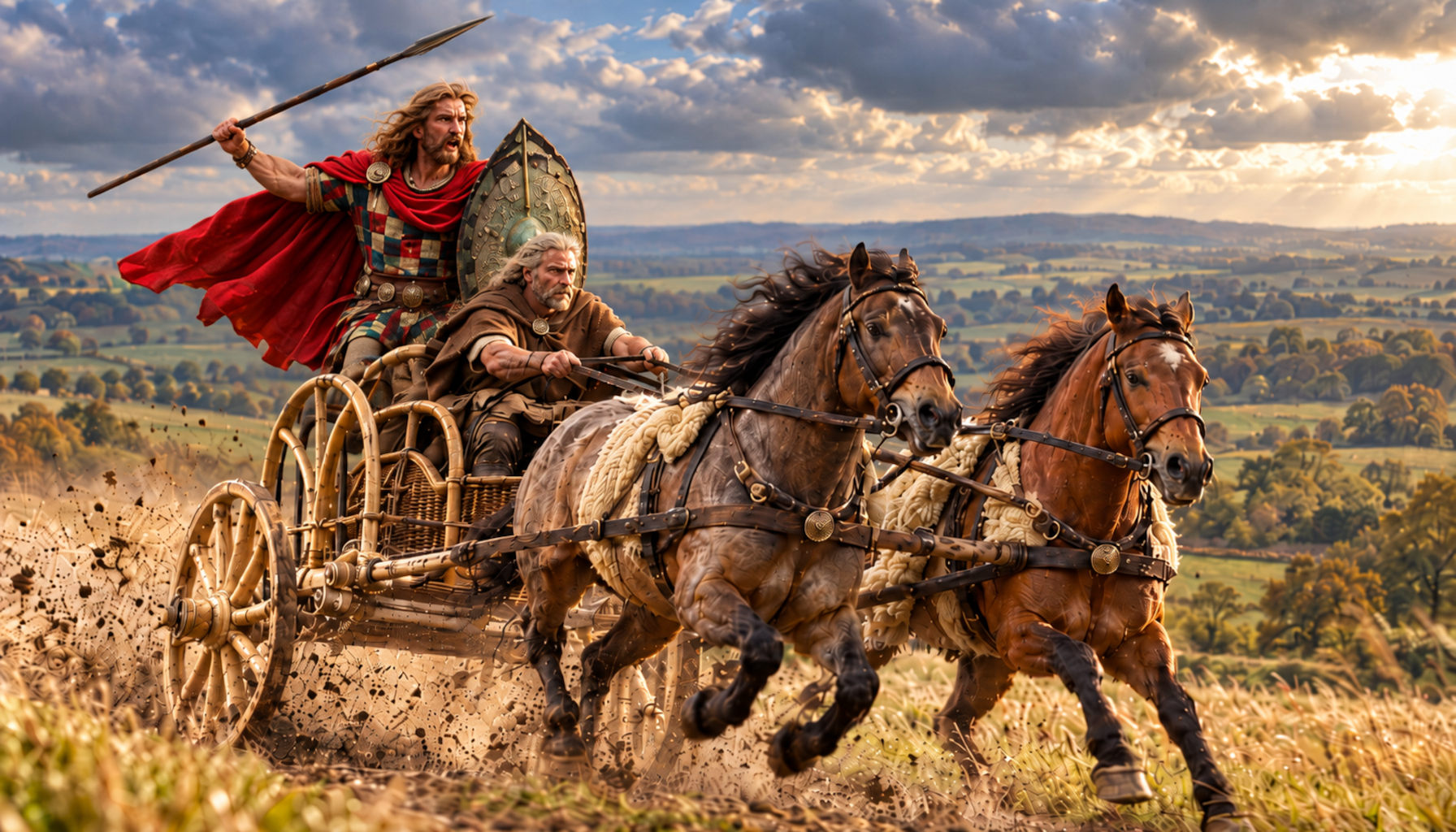
The de Harcourt haplogroup tag R1b1a1b1a1a2c1a1e sits within a deep western European paternal landscape, and related or linked ancient DNA samples help sketch that broader background without claiming direct descent from any one excavated individual. Particularly striking are multiple Celtic Durotriges samples from Duropolis, Winterborne Kingston in England, including WBK12, WBK20, WBK29, WBK41, WBK05, WBK30, WBK43, WBK06, WBK08, WBK18, and WBK191, alongside later and geographically wider linked examples such as Iron Age Cantii from East Kent, Post-Roman Worth Matravers in Dorset, Saxon Hinxton, Early Anglo-Saxon Dover and Cambridgeshire burials, Pict-era Orkney individuals, Belgic and Gallic samples from France, and medieval examples from Spain, Belgium, Hungary, Ireland, and Scandinavia. Taken together, these linked samples do not prove a Harcourt pedigree reaching back to any one Iron Age Briton or continental Celt, but they do place the family’s haplogroup within the long, braided population history of Atlantic and northwestern Europe: Bronze Age movement, Iron Age Celtic societies, Roman-era mobility, post-Roman regional continuity, and the mixed but still recognisably western aristocratic world from which Norman lordship emerged.
Read more about the House of de Warenne
If the House of de Harcourt catches your imagination, the next step is to test whether your own DNA shows links to this family story or to the wider web of related ancient samples behind haplogroup R1b1a1b1a1a2c1a1e. Upload your DNA to MyTrueAncestry and see whether your results connect with Norman-era heritage, cross-Channel noble history, or the older Celtic, Roman, and early medieval populations that form the deeper backdrop to the Harcourt world.

Comments