The House of Gladstone
– 3 min read


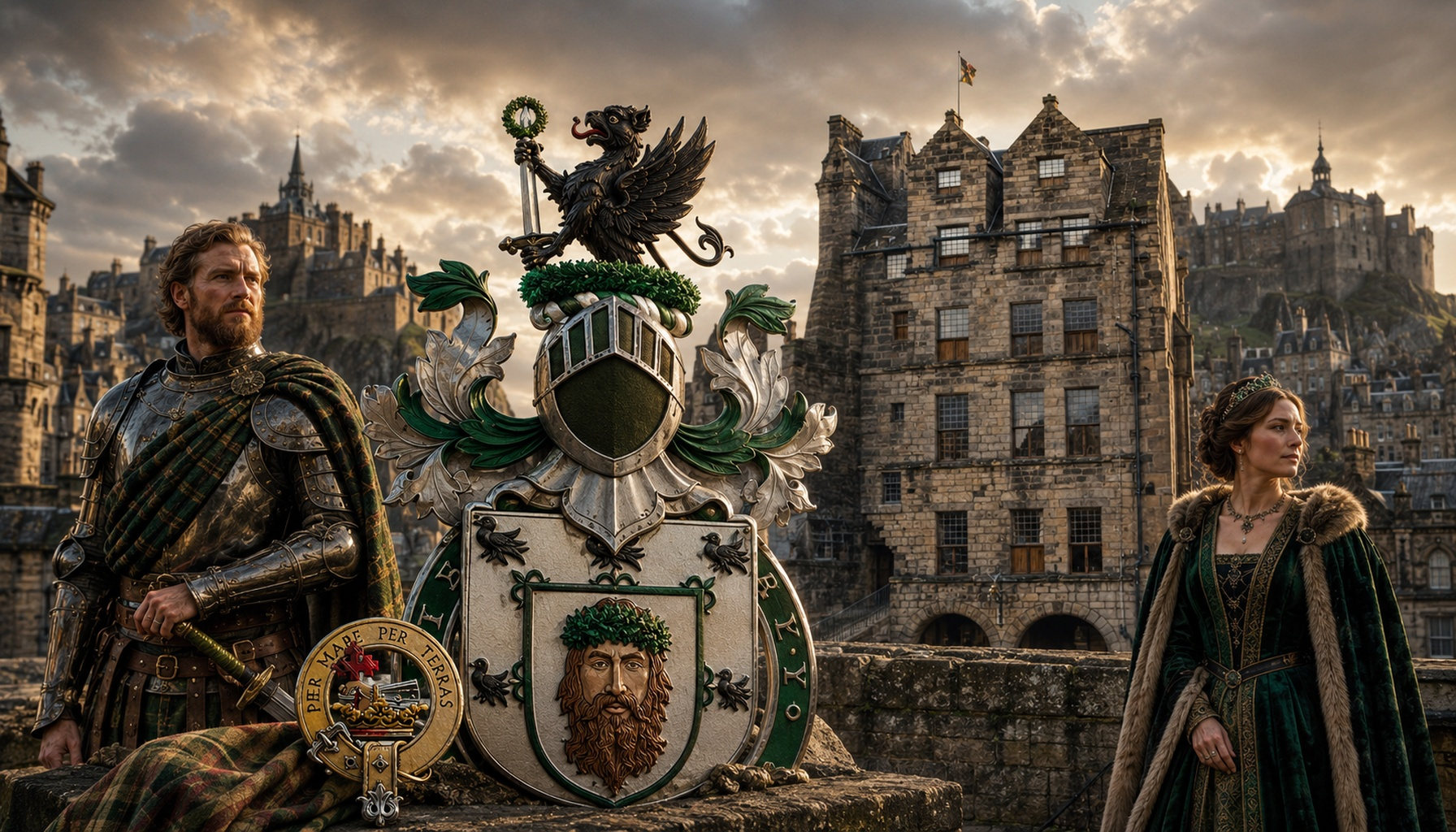
The Gladstones were a Scottish and later distinctly British public-service family, remembered less for crowns or ancient lordship than for that very nineteenth-century mixture of commerce, conscience, politics, religion, and national duty. Their primary linked haplogroup here is R1b1a1b1a1a1f1, a branch within the wider R1b family long associated with much of Atlantic and western European paternal history. The family's roots lay in Scotland, but their historical importance grew within the expanding British world of the eighteenth and nineteenth centuries, when mercantile success could be turned into estates, parliamentary influence, and a carefully cultivated reputation for service to the nation.
That story is often told through one giant figure, but the House of Gladstone is richer than a single biography. Sir John Gladstone (1764-1851), merchant, politician, and father of the future prime minister, helped establish the family's wealth and standing during the era of imperial trade and political transformation. His son William Ewart Gladstone (1809-1898) then became one of the great parliamentary presences of Victorian Britain, serving four times as prime minister and shaping debates on reform, finance, Ireland, religion, and the moral purpose of government. Taken together, they represent a recognisable British pattern: Scottish origins, education and advancement, movement into landholding respectability, and a family identity built on public seriousness rather than princely display.
Read more about House of Guinness
The family's best-known location anchor is Fasque House in Aberdeenshire, Scotland, near Fettercairn. This substantial country house, rebuilt in the early nineteenth century in a castellated style, was purchased by Sir John Gladstone in 1829 and became the family's Scottish seat. It is the sort of place that tells a larger social story all by itself: not a medieval fortress inherited from time out of mind, but a landed residence acquired by a rising family whose money came through trade and whose ambitions were tied to status, improvement, and permanence. William Ewart Gladstone spent part of his youth there, and Fasque remained deeply associated with the family's identity. The house and estate stand in a landscape that links lowland and Highland Scotland, and that geography matters: this is a setting that embodies Scottish rootedness even as the family itself operated at the heart of British imperial and parliamentary life. Fasque House survives, and the estate is still known today; visits are sometimes possible through estate access, events, or accommodation arrangements, so it is a place that can still be experienced in some form rather than merely imagined from portraits and speeches.
On the DNA side, the Gladstone family's primary linked haplogroup, R1b1a1b1a1a1f1, belongs to a deep and remarkably widespread paternal line found across Britain and much of Europe. That does not prove direct descent from any ancient individual, and it is important not to pretend otherwise. What it does offer is a historical backdrop. Related or linked ancient samples assigned to this branch include individuals from Pict-era Rosemarkie Cave on Scotland's Black Isle such as KD001, KD001_2, KD001_3, KD001_4, KD001_6a, and KD001_6b; medieval England examples from Cherry Hinton (ATP_PSN_944) and Cambridge St Johns Hospital (ATP_PSN_36); Celtic and late Iron Age Britain samples such as WBK106 from Durotriges territory and I19653 from Ham Hill Fort in Somerset; and still older continental examples including Early Bronze Age France samples SMGB54 and BRE445FK, Unetice-period Germany samples LEU040, LEU065, and LEU007, and elite Celtic burials from Ludwigsburg Roemerhuegel in Germany such as LWB002_ss and LWB002_ss_b. In other words, the haplogroup background linked with Gladstone sits within a long archaeological tapestry stretching from Bronze Age central and western Europe to Iron Age Celtic worlds, Pictish Scotland, medieval England, and beyond. For a family so tied to Scottish roots and British public life, that broad northwestern European pattern is historically very fitting.
Read more about the House of Cavendish
If the House of Gladstone interests you, the next step is to test the story against your own DNA. Upload your results to MyTrueAncestry and you can see whether you match the Gladstone family profile or any of the related ancient DNA samples linked to haplogroup R1b1a1b1a1a1f1, from Pict-era Scotland to medieval England and Bronze Age Europe.

Comments