The House of Dunn
– 3 min read



The House of Dunn belongs to that deeply rooted British and Irish pattern of family history in which a surname becomes a kind of portable homeland. The Dunn name appears in several parts of the British Isles, especially in Ireland and Britain, and is tied less to princely grandeur than to something more durable: local standing, remembered kinship, service, land, parish, and the stubborn continuity of name across centuries. In that sense, Dunn is a true family house of the islands, shaped by regional loyalties and by the ordinary but weighty business of staying known in a place. The primary haplogroup linked here is R1b1a1b1a1a2c1a1a1a1a1c1, a lineage that sits comfortably within the wider paternal story of Atlantic and northwestern European populations.
Historically, the Irish form O Duinn means "descendant of Donn," with Donn carrying the sense of brown or dark-haired, and the surname developed in more than one district over time, as many Gaelic names did. That is worth stressing, because old surnames are rarely neat little single-file stories. They spread, branch, re-form, and migrate. Families bearing Dunn and O Duinn could be found in local lordship, church life, military service, trade, and later in migration across Ireland, Britain, and beyond. Among the named figures attached to the older tradition is Gillananaomh ODuinn, dated 1102 to 1160, a reminder that the surname was already part of the recorded medieval world when monastic scholarship, local kingship, and shifting territorial power still structured much of Irish life.
Tinnahinch Castle offers a particularly vivid anchor for the Dunn story in Ireland. The castle stands near Graiguenamanagh on the River Barrow, at a strategic crossing point between County Kilkenny and County Carlow, which immediately tells you why the site mattered. This was not some romantic folly dropped in empty countryside. It was a place of passage, oversight, and local control, where river movement, road access, and lordship met. Tinnahinch Castle is generally understood as a tower house, the kind of late medieval Irish stronghold built for defense, residence, and status all at once. It later became associated with the Dunn family, embedding the surname in a real and visitable landscape rather than a purely paper genealogy. Even in ruin, such places are useful historians: they show how families like the Dunns occupied the middle ground of power, not kings on thrones, but established local actors whose memory stuck to stone, fields, and riverbanks. The site remains a known historic ruin and can still be visited from the surrounding area, which makes it an unusually tangible stop for anyone tracing Dunn heritage.
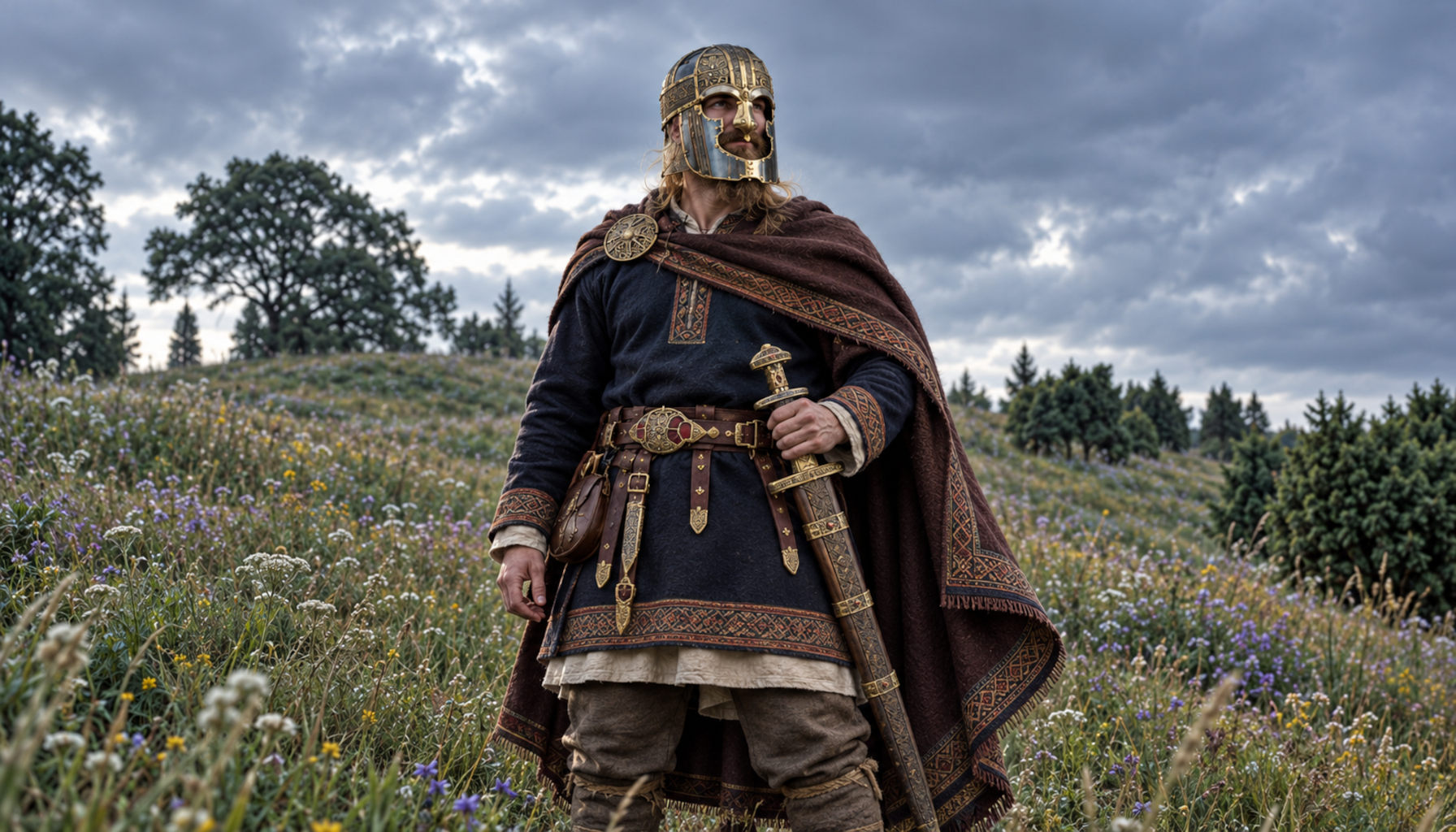
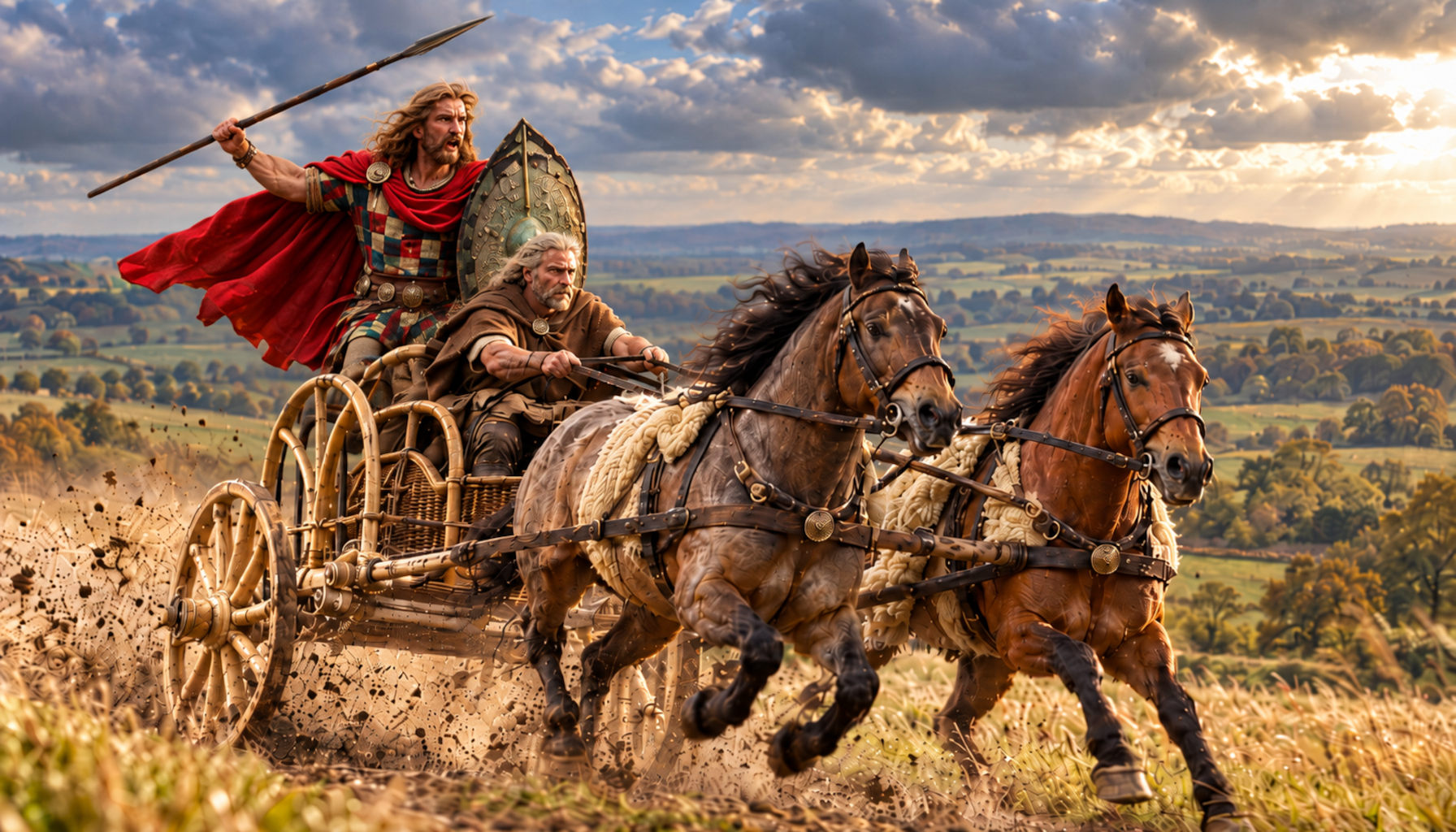
From the ancient DNA angle, the haplogroup R1b1a1b1a1a2c1a1a1a1a1c1 connects the Dunn story to a broad web of related or linked paternal lineages found across time and space rather than to any single proven ancestor. Samples associated with this lineage include Medieval Jutland, Denmark, Vor Frue Kirkegard Aalborg (CGG100512), the Thuringii context at Deersheim in Saxony-Anhalt, Germany (DRH026), Carolingian era Groningen in the Netherlands (GRO005), Medieval Ireland at Kilteasheen, Roscommon, Bishops Seat (KIL043), Merovingian Alt-Inden in North Rhine-Westphalia, Germany (IND007), Anglo-Saxon Sedgeford in Norfolk, England (SED005), Iron Age Briton Thornholme in the East Riding of Yorkshire (I22060), Aquitani Pech-Maho in France (PECH8), and later Atlantic world burials such as the son of Philip Calvert in Maryland (I2097) and Philip Calvert himself (2099). These do not prove direct descent for the Dunn family, and it would be bad history to pretend otherwise. What they do show is that the paternal branch linked with Dunn belongs to a long-lived northwestern European pattern, one that turns up in Iron Age Britain, medieval Ireland, Anglo-Saxon England, Frankish and Germanic regions, the Low Countries, and eventually colonial North America.
The pleasure of a house like Dunn is that it is not only about heraldry or a ruined castle. It is about continuity: the survival of a name through parishes, farms, crossings, records, wars, marriages, migrations, and memory. If you carry the Dunn surname, or have Dunn lines in your family tree, you can now test that story in a new way by comparing your DNA with family-linked and ancient samples. Upload your DNA to MyTrueAncestry and see whether you match the House of Dunn or related ancient DNA profiles from Ireland, Britain, and the wider northwestern European world.
Comments