The House of de Warenne
– 3 min read


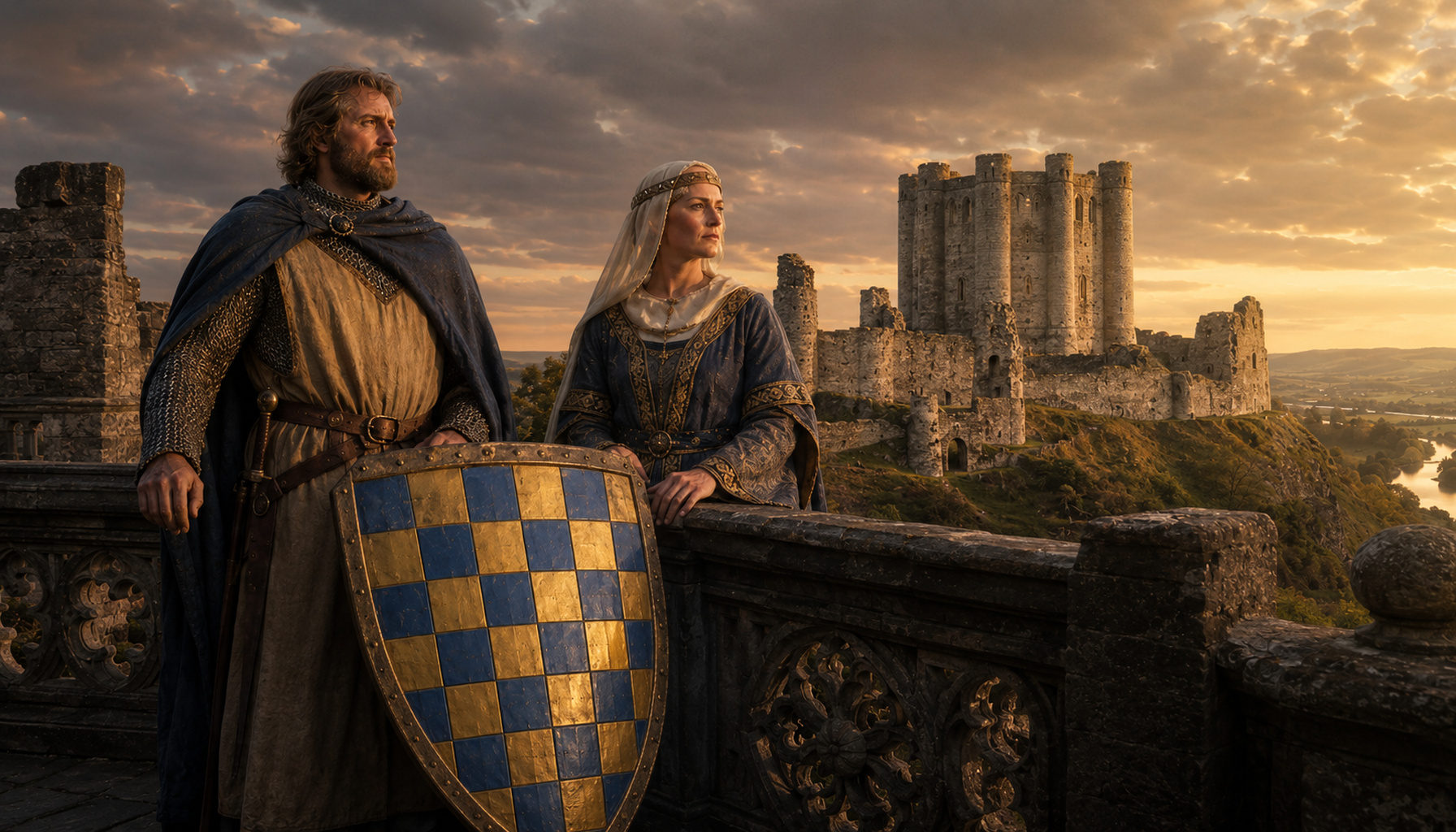
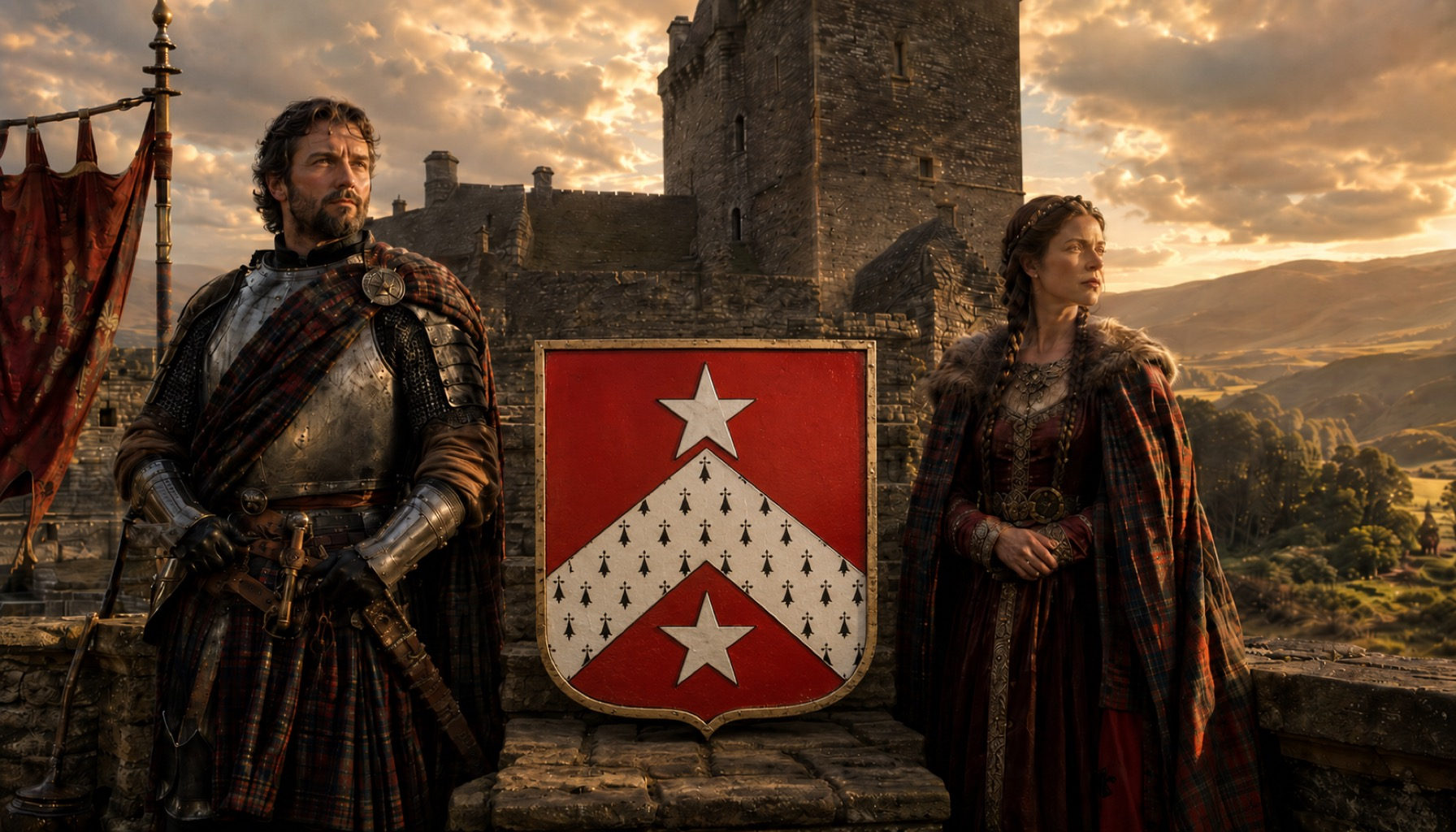
The House of de Warenne was one of the great Norman and later Anglo-Norman noble families of medieval England, best known as the earls of Surrey and as major players in the world created by the Norman Conquest. Their roots lay across the Channel in Normandy, probably taking their name from the region of the river Varenne and the wider frontier landscape of ducal Normandy, a place where lordship, military service, and family ambition mattered enormously. In haplogroup terms, this family is here linked with I1a3a1a2, treated as the primary family haplogroup tag.
What made the de Warennes so important was not simply that they arrived with the winning side in 1066, but that they knew how to turn conquest into permanence. They accumulated vast estates, built castles, founded monasteries, served kings, and married into other leading families. This is the classic Norman story in England: continental aristocrats becoming entrenched hereditary magnates. Among the best-known members were William de Warenne, 1st Earl of Surrey, created earl in 1088, William de Warenne, 2nd Earl of Surrey, who died in 1138, and Isabel de Warenne, Countess of Surrey (1137-1203), whose inheritance and marriages kept the family's influence woven into the highest politics of the realm.
If you want one place that captures de Warenne power in the landscape, it is Castle Acre in Norfolk. This was not just a castle dropped into the countryside, but a whole planned lordly centre: castle, defended settlement, and major religious foundation working together as a statement of authority. Begun by the de Warennes soon after the Conquest, Castle Acre became one of the most impressive Norman sites in England. Its earthworks and masonry remains still show how a conquering family turned military occupation into an ordered feudal world, with lordship radiating outward through tenants, markets, roads, and worship. The wider site is especially telling because the town walls survive alongside the castle, giving a rare sense of a Norman baronial centre as a complete social and political project rather than a ruin in isolation. And yes, it can still be visited today, which means this is one of those places where the de Warenne story is not trapped in parchment but visible on the ground.
Read more about the House of Mortimer
The haplogroup tag associated here with the de Warenne family is I1a3a1a2, a lineage with a wider ancient and early medieval northern European footprint. That does not mean every de Warenne descendant, or every related line, must carry it, nor does it prove direct descent from any excavated individual. What it does offer is a useful genetic backdrop. Related or linked ancient samples in this haplogroup cluster include Migration Period Hungary Rakoczifalva RKF054 and RKO003, Gothic-associated Poland Grodek Wielbark PL048, Gothic-associated Maslomecz Wielbark PL057 and PL062, the Roman-period Germanic warrior from Mursa in Croatia OSIJ007, Denmark Lolland Oustrup Tonderup mose CGG106735, Visigothic-period Spain Estevillas Virgen de la Torre CGG022053, Byzantine Anatolia I14832, Early Medieval Buckinghamshire Wolverton Radcliffe S16508, Viking Age Bodzia elite warrior VK157, and the Vasconic-Roman mix individual from Crypta Balbi R110. In other words, the genetic world linked to I1a3a1a2 stretches across the very same migration and military networks that shaped post-Roman and medieval Europe, the long prehistory behind families like the de Warennes.
Explore Norman Conquest DNA in Surrey
The de Warennes stand at the heart of the Norman transformation of England: warriors from Normandy who became entrenched English magnates, with castles, estates, titles, and a memory still written into places like Castle Acre. If your own family history points toward Norman, English, or wider northern European roots, uploading your DNA can help you see whether you match this family story or any of the related ancient DNA samples linked with haplogroup I1a3a1a2.
Comments