The House of de Malain
– 3 min read


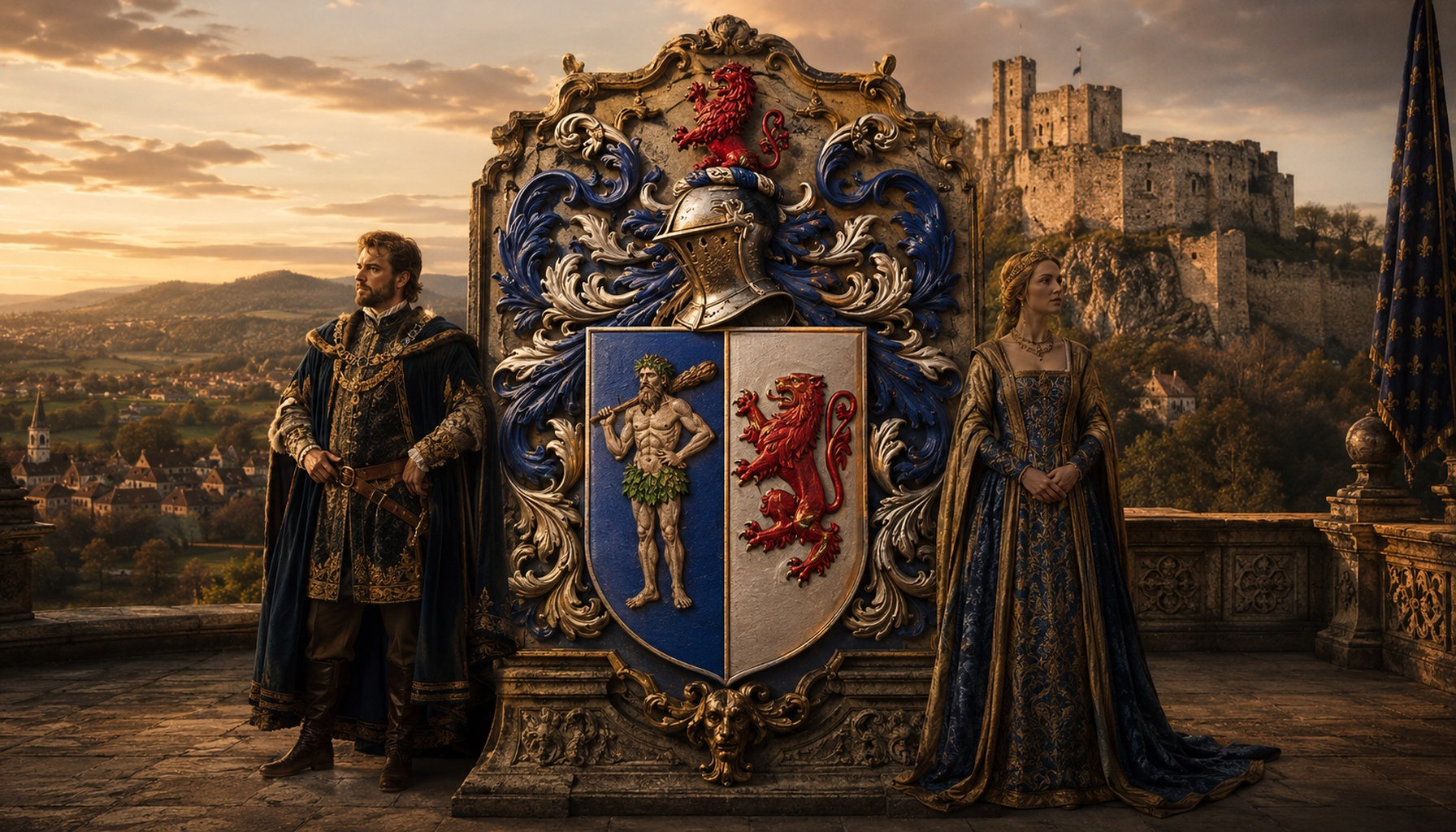
The House of de Malain was a French noble family of Burgundy, rooted in the old seigneurial world of land, castle, service, and memory. Their name is plainly territorial, taken from Malain itself, and that matters: in medieval France, a family like this was not simply a surname drifting free in space, but a house tied to a place, to rights over land, to local standing, and to the visible language of nobility such as arms, lineage, and lordship. In haplogroup terms, the primary family association here is tagged to R1b1a1b1a1a2b4, alongside the broader story of western European paternal lineages that appear again and again in medieval and earlier contexts.
Historically, the de Malains fit a familiar but important French provincial pattern. They emerged from the local framework of Burgundy, where power was often negotiated not only in royal courts but in villages, fortified sites, ecclesiastical networks, and marriage alliances. Over generations, houses such as this endured through estate continuity, military or administrative service, and recognition by neighboring noble society. The record preserves names that help anchor that long arc, including Gui de Mediolano in 1075, showing the family's early medieval presence, and Francis Malin in 1653, reflecting how the name and lineage continued into the early modern world. That continuity is really the point: the House of de Malain represents not a sudden blaze of royal fame, but the durable fabric of regional nobility in Burgundy.
The great location anchor for the family is the Chateau de Malain, in the commune of Malain in Cote-d'Or, west of Dijon. Perched above the village, the castle occupies a commanding position that makes immediate historical sense: this was a place built to watch, to defend, and to signal authority across the surrounding Burgundian landscape. The surviving remains reflect a long history of medieval fortification, adaptation, and decline, with the site associated with the local seigneurial structure that gave families like the de Malains their practical meaning. Like so many castles, it was never just a romantic silhouette on a hill. It was an operating center of control, residence, obligation, and prestige. The site today is known as a historic monument, and the remains can still be visited, which gives modern visitors the rare chance to stand inside the geography that once underpinned this noble identity and to see how closely family history in Burgundy was tied to stone, slope, and settlement.
Read more about the House of Montfort
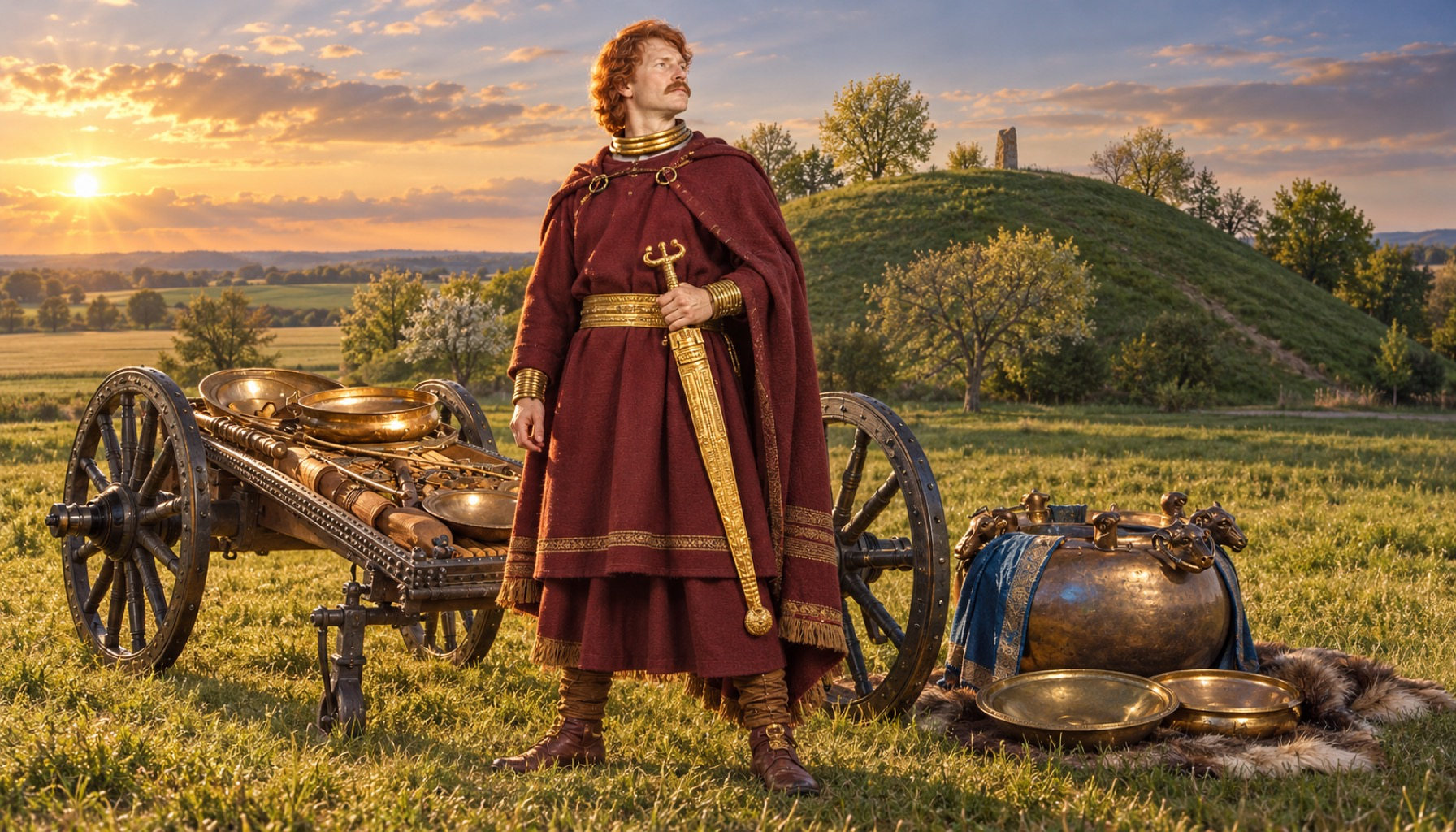
From an ancient-DNA angle, the de Malain haplogroup tag R1b1a1b1a1a2b4 links the family story to a wide scatter of related male-line samples across time and region rather than to any proven single ancestor. That is exactly the sort of pattern one expects in western Europe: deep prehistoric roots, then reuse and reshaping through Celtic, Roman, early medieval, and medieval populations. Related or linked examples include Early Bronze Age France Saint-Martin-la-Garenne, Yvelines, Ile-de-France (SMGB54), Early Bronze Age France les Pointes et les Grevottes, Greviandes, Aube (BRE445FK), Gallo-Roman France Metz Lunette Sablon samples such as R2055a through R2055e, Early Medieval France Burgundy Camp du Chateau (CGG023630 and CGG023658), Belgic Suessiones Iron Age France Bucy-le-Long (CGG022421 and CGG022464), Gallic France Les Moidons (CGG023708 and CGG023710), and Gallic Venelli Normandy Urville-Nacqueville (UN85). Further related matches appear in medieval northern Spain at Las Gobas, including ldo066, ldo037, ldo046, ldo048, ldo040, and ldo062, as well as in elite Celtic burials in Germany such as Asperg-Grafenbuehl (APG001, APG003) and Ludwigsburg Roemerhuegel. None of this proves direct descent from those individuals, of course, but it does place the de Malain paternal signature within a long archaeological corridor stretching from Bronze Age and Iron Age western Europe into the medieval world that produced the Burgundian nobility.
If you are researching the House of de Malain, the real fascination lies in putting the pieces together: Burgundy, castle, heraldry, documented names, and the much deeper background revealed by ancient DNA. Upload your DNA to MyTrueAncestry to see whether you match the House of de Malain, its haplogroup R1b1a1b1a1a2b4, or related ancient samples from France, Burgundy, and the wider European past.


Comments