The House of de Havilland
– 3 min read



The House of de Havilland was a Norman-origin family whose story is most firmly rooted in the Channel Islands, above all Guernsey, and whose wider identity belongs to that fascinating in-between world of sea lanes, loyalties, and legal traditions lying between England and France. The family name preserves that Channel Norman inheritance rather beautifully: a lineage shaped by Norman custom, island landholding, local service, and the long memory of surname and heraldry. In genetic tagging terms, the primary family haplogroup associated here is R1b1a1b1a1a1a1b, a lineage widely linked across much of later prehistoric and historic western and northern Europe.
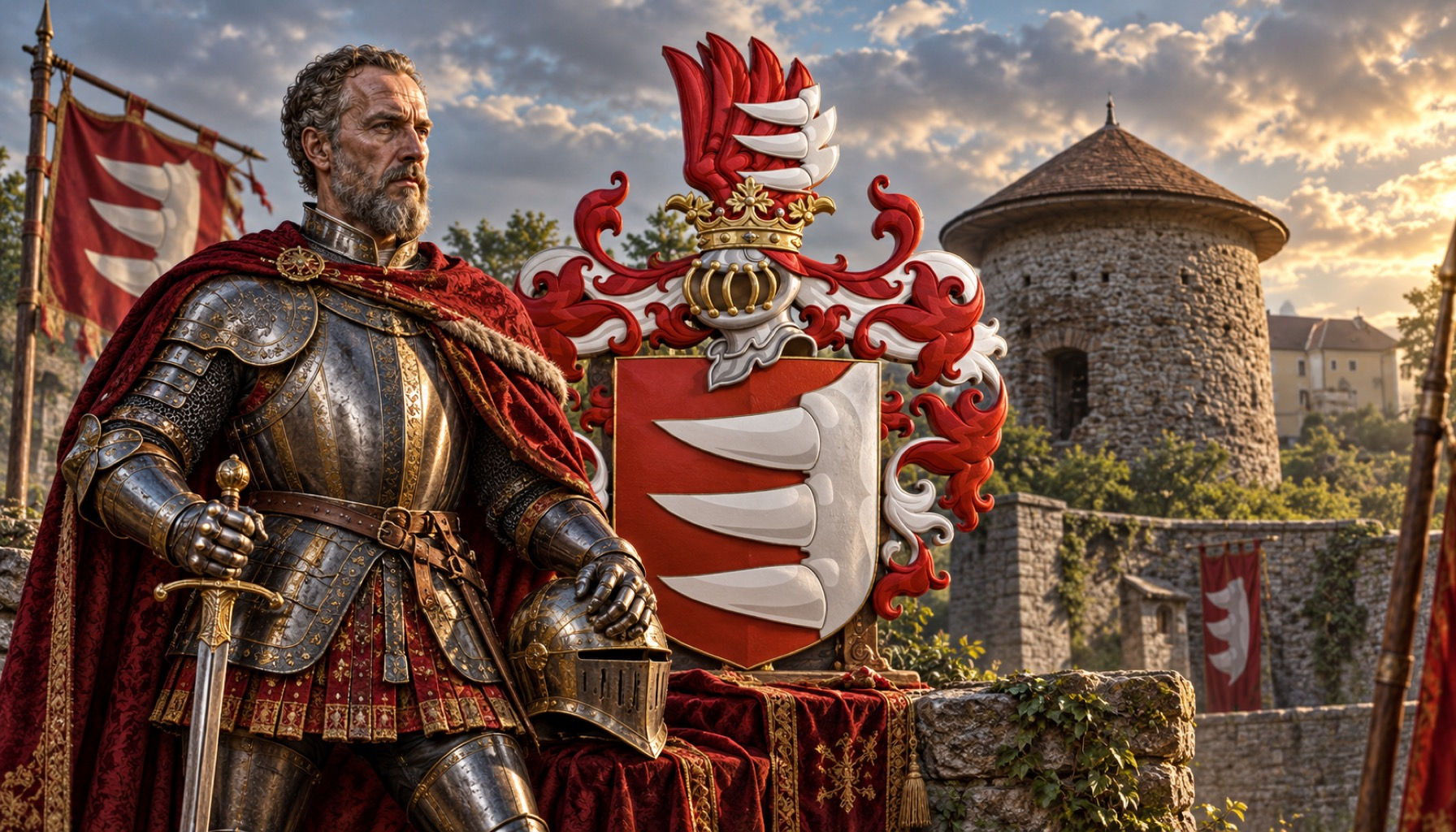
What makes the de Havillands so interesting is not simply that they were old, but that they illustrate a whole historical pattern. In the Channel Islands, Norman families could remain culturally distinctive long after the political map had changed around them. Law, language, property, parish life, office-holding, and maritime connections all helped keep that identity alive. The House of de Havilland belongs to exactly that tradition: island-rooted, regionally known, and remembered through continuity rather than theatrical empire-building. Named figures help anchor the line in time, including Thomas Sieur de Havilland in 1450 and, much later, Thomas de Havilland (1775-1866), whose life reminds us that this family endured well into the British modern age while still carrying a much older Norman stamp.
Read more about the House of de Courcy
A particularly evocative anchor for the family story is Abilant Castle, long treated in de Havilland tradition as an ancestral point of origin. The material gathered in the Quest for Abilant points to a place-name and fortress context in Normandy that matters because medieval surnames of this kind were often geographical badges first and family names second. In other words, before de Havilland was a settled hereditary identity in island life, it likely referred to people connected with a specific estate or stronghold in the Norman landscape. That is exactly the sort of transition that shaped many noble and gentry houses after the ducal and early post-Conquest periods. Abilant therefore matters not because it gives us a fairy-tale castle romance, but because it places the family in the real machinery of Norman history: fortified sites, local lordship, territorial naming, and later migration into the Channel Island sphere. Where the site survives in identifiable form, it is part of the wider historic landscape of Normandy and can reasonably be approached as a place of heritage interest for visitors tracing the family's deep background.
Explore the House of de Harcourt
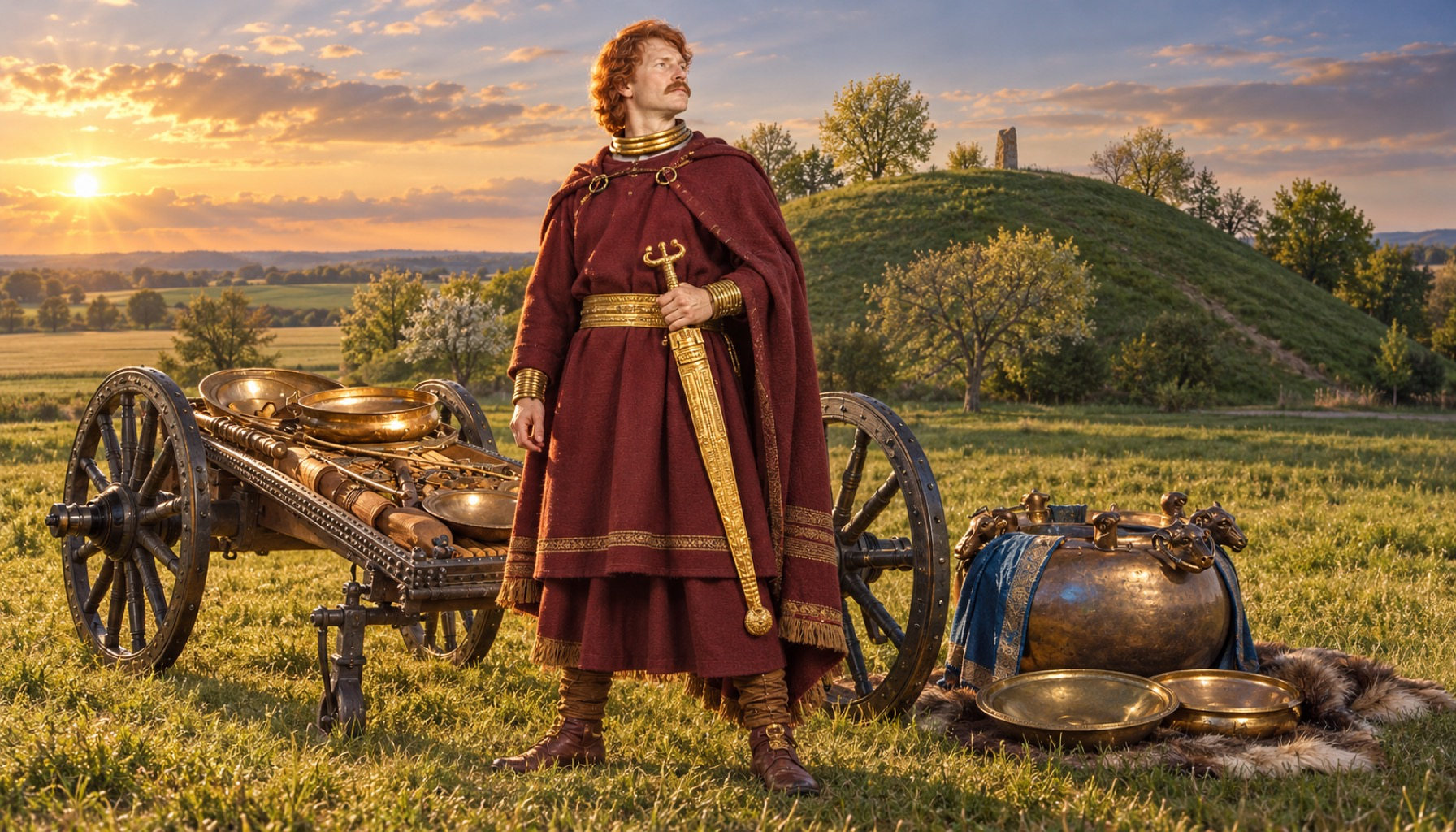
For the DNA side of the story, the key point is caution as well as curiosity. We should not claim direct descent from ancient individuals unless there is specific genealogical and genetic proof. What we can say is that the de Havilland primary haplogroup tag, R1b1a1b1a1a1a1b, is linked to a broad spread of ancient samples from societies that help frame the deeper population history behind Norman and Channel Island ancestry. These include Bronze Age Unetice Thuringia Leubingen Sommerda Germany (LEU007), Late Neolithic Vlaardingen or Corded Ware Netherlands Mienakker (I12902), Battleaxe Sweden L Beddinge 56 (RISE98), Celtic Iron Age Austria Hallstatt (CGG101214), Gothic Wielbark Poland Pommerania Gdansk (PCA0479), Danii Tribe Denmark Sjaelland Kalundborg Simonsborg (CGG106724), Viking Age Sigtuna Sweden (urm160 and urm160x), Saxon England North Yorkshire West Heslerton Vale of Pickering (I11583), Early Anglo Saxon Period Buckland Dover England (BUK064, BUK070, BUK060, BUK012), Anglo Saxon Oakington England (OAI006 and OAI013), Saxon Coast Lower Saxony Germany Dunum (DUN011, DUN006, DUN009), and Medieval Belgium Sint-Truiden samples including ST0024, ST0323, ST0786, and Carolingian ST2969. Also in that linked landscape are Imperial Roman Viminacium Serbia Pecine Necropolis (I15527), Roman-period Germanic Warrior Mursa Croatia (OSIJ003), Etruscan Tarquinii Italy (TAQ013), Post Viking Age Hedeby Schleswig Rathausmarkt Southern Jutland (SWG001), and other Migration Period and early medieval Germanic-associated finds. Taken together, these are not a family tree for the de Havillands. They are a deep-time backdrop, showing how a paternal lineage associated with the family appears across the prehistoric, Roman, Germanic, Viking, and medieval worlds from which the Norman and Channel Island story eventually emerged.
The House of de Havilland is a fine example of how family history is rarely just about one surname on one island. It is about Norman settlement, Channel Island continuity, heraldic memory, and the long survival of identities forged between shorelines and crowns. If you have de Havilland ancestry, or surnames from Guernsey, Jersey, Normandy, or the wider Anglo-Norman world, you can upload your DNA to MyTrueAncestry and see whether you match this family story or related ancient DNA samples connected with the same broader haplogroup landscape.



Comments