The House of de Crombrugghe
– 3 min read


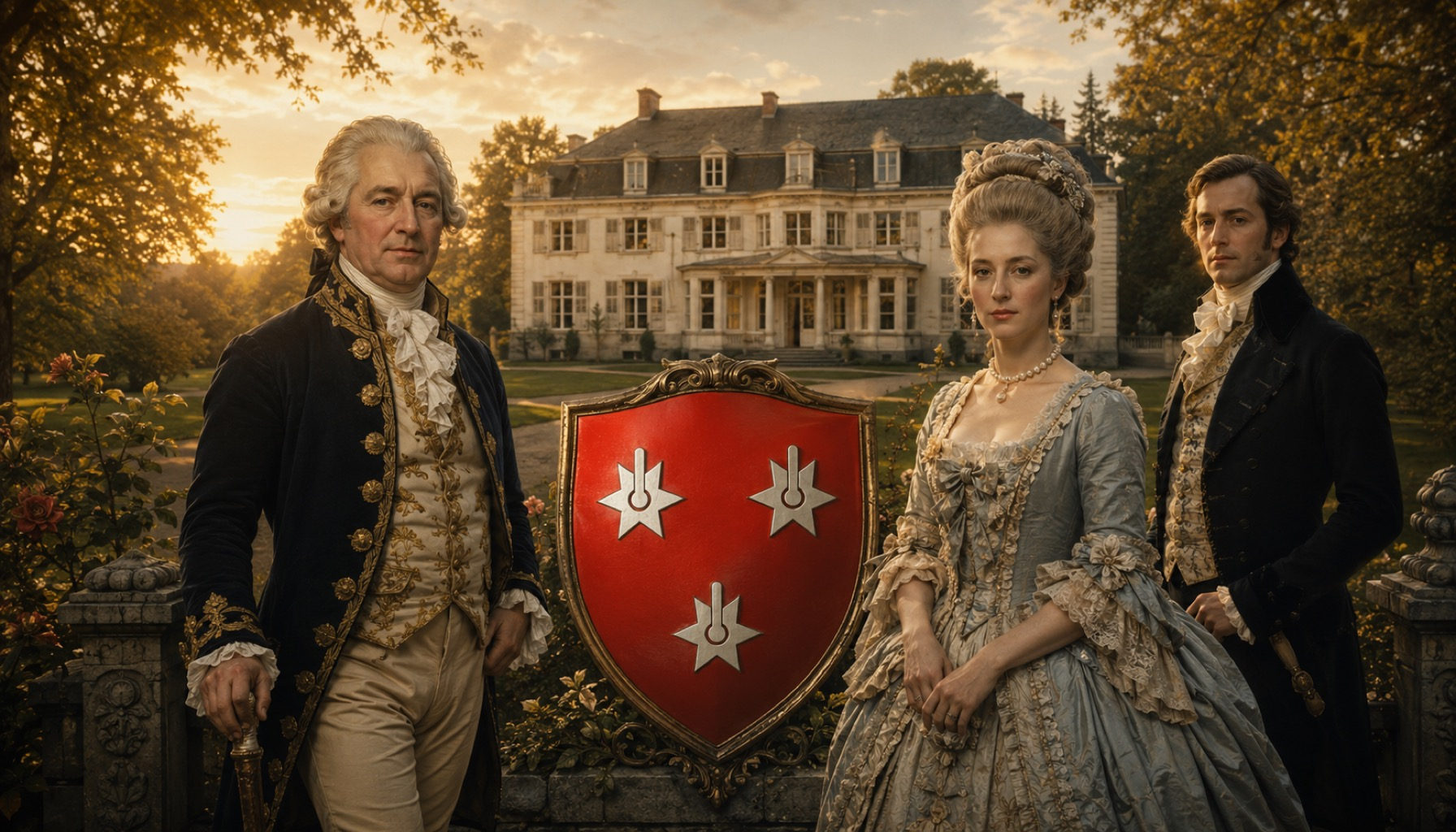
The House of de Crombrugghe was a noble family of the Low Countries, rooted in the old Flemish and later Belgian aristocratic world, and linked here with the primary family haplogroup R1b1a1b1a1a2c1a2a1. Like so many houses of this region, the de Crombrugghes were shaped not by a single dramatic kingdom-building moment, but by something more revealing of Low Countries history: steady service, landholding, heraldic identity, local influence, and the careful preservation of family standing across generations.
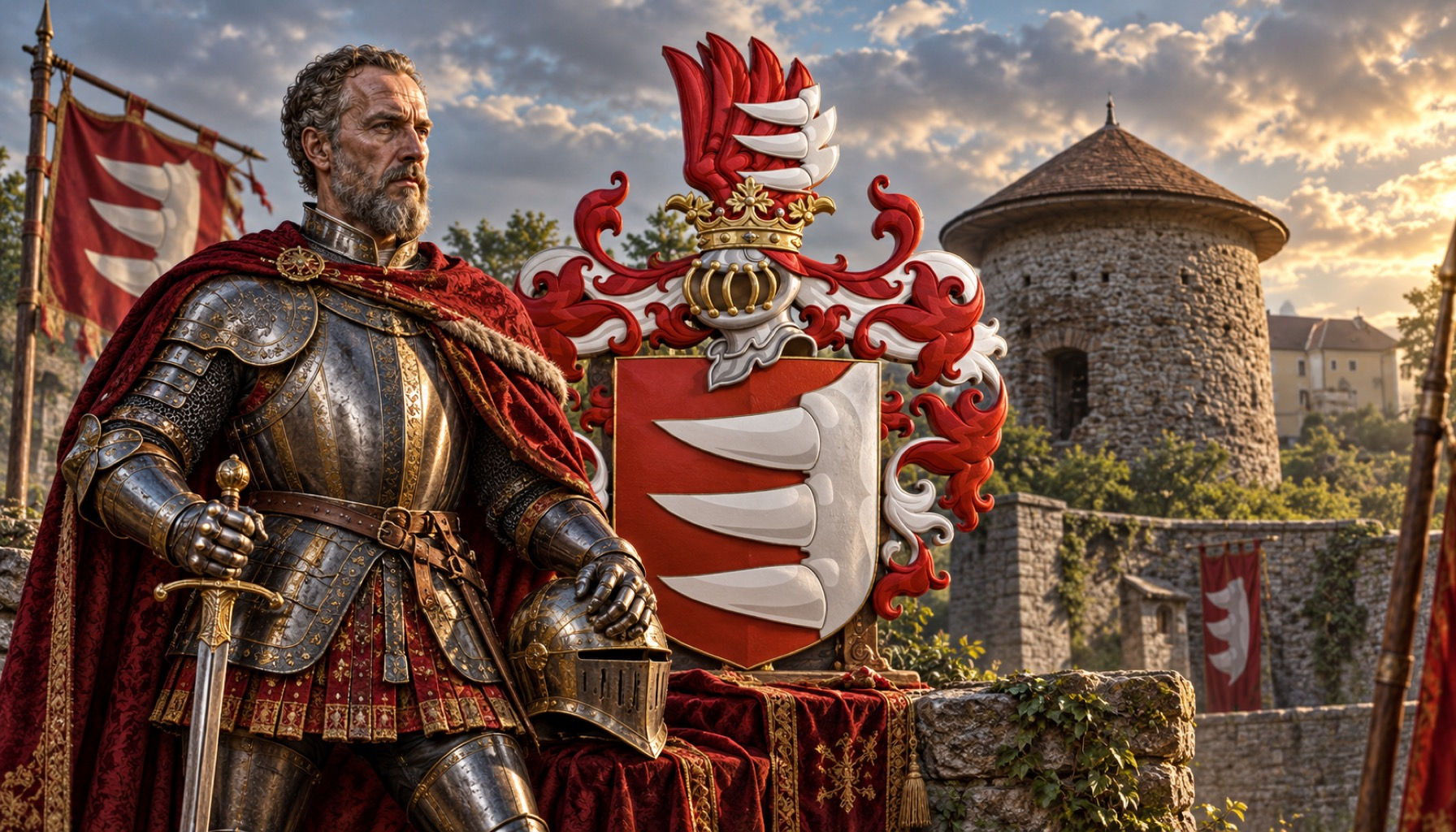
The family emerged from a landscape that was never quiet. Flanders and the wider Low Countries sat at the meeting point of towns, trade routes, lordships, prince-bishoprics, and competing European powers. In that world, noble status depended on being useful as much as ancient. Families such as the de Crombrugghes maintained their place through property, office, military or civic duty, and ties to local institutions. Their story belongs to that distinctly regional pattern of continuity in a densely connected aristocratic society, where a family name, a coat of arms, and a remembered line of service could carry real political and social weight. Among the named figures associated with the house is Gilles de Crombrugghe (1348-1411), a reminder that the family's recorded presence reaches deep into the later medieval world.
Explore the House of van der Merwede
A strong location anchor for the family is Castle Stas de Richelle, in the village of Richelle in the municipality of Visé, in the province of Liege, Belgium. The present castle is a country house with deep roots in the region's noble landscape, rebuilt and reshaped over time, especially in the 18th and 19th centuries, and associated with the Stas family who were later ennobled. What makes it so evocative is not simply architecture, though it has that measured aristocratic grace one expects in this part of Europe, but its setting in the Meuse region, where lordship, estate culture, and proximity to urban centers all mattered. It stands as the sort of residence that tells us how noble identity in the southern Low Countries actually worked: not only in courts and titles, but in estates, land, family alliances, and visible permanence in the countryside. It is still extant, and the exterior and surrounding area can reasonably be appreciated as a heritage site, though visitors should check current access arrangements before planning a visit.
Explore DNA from the Lower Rhine-Meuse region
From a DNA perspective, the de Crombrugghe family is tagged here with R1b1a1b1a1a2c1a2a1, a branch within the broad R1b lineage so often associated with later prehistoric and historic western Europe. That does not let us claim direct descent from ancient individuals, and we should be careful about that. What it does allow is a fascinating look at related or linked ancient samples carrying the same paternal line or close placement within that branch. These include a striking cluster from Celtic Durotriges burials at Duropolis, Winterborne Kingston in England, such as WBK12, WBK20, WBK29, WBK41, WBK05, WBK30, WBK43, WBK06, WBK08, WBK18, and WBK191, alongside samples such as Early Medieval Belgium Sint-Truiden Groenmarkt ST2025, Medieval Belgium outsider Sint-Truiden Onze-Lieve-Vrouwekerk ST1308, Imperial Roman Era Zadar Croatia I26776, Bronze Age Orkney KD061, Bronze Age Calabria GMO015, Gallic France CGG023699, Post Roman Dorset I11580, Merovingian Alt-Inden IND013, Late Roman Klosterneuburg R10656, Late Roman Conimbriga R10488, Celtic Briton East Kent I13730, and older British and Atlantic zone examples such as I11991, I2982, I21309, I3256, I2417, I4950, I7576, I7577, I5473, HI2, I5377, Rathlin2B, and VK27. Taken together, these linked samples sketch a very wide western European story, stretching from Bell Beaker and Bronze Age horizons through Iron Age Celtic communities, Roman mobility, and medieval populations in places not far from the later world of the Low Countries nobility.
Read about medieval Sint-Truiden DNA
The de Crombrugghes belong to that wonderfully intricate noble history of the Low Countries, where family continuity was built as much in charters, offices, estates, and memory as in battlefields. If your own family story reaches into Flemish, Belgian, or wider northwestern European ancestry, uploading your DNA to MyTrueAncestry can help you see whether you match the House of de Crombrugghe or any of these related ancient DNA samples.


Comments