The House of Dalrymple
– 3 min read



The House of Dalrymple was a Scottish noble and landed family rooted in Ayrshire and later famous across the kingdom for law, government, estate power, and the titles of the Earls of Stair. In the broad pattern of Scottish history, this was not a house that rose first by battlefield legend alone, but by something just as important in the making of the modern state: service. The family name is linked with the place of Dalrymple in Ayrshire, a Lowland landscape where landed identity, royal administration, and local influence could be converted into lasting status. Their primary family haplogroup is tagged here as R1b1a1b1a1a2c1a4b3a, a branch associated with a wider Atlantic and western European paternal story.
That matters because the Dalrymples are a particularly Scottish kind of success story. They belong to that world in which lairds, judges, office-holders, and political managers could climb from regional significance to national importance. Over generations the family accumulated estates, heraldic distinction, parliamentary influence, and a formidable reputation in public life. James Dalrymple, 1st Viscount of Stair (1619-1695), stands out as one of the great legal minds of Scotland, helping shape Scottish jurisprudence in the seventeenth century. His son John Dalrymple, 1st Earl of Stair (1648-1707), moved through high politics and royal service, while Field Marshal John Dalrymple, 2nd Earl of Stair (1673-1747), carried the family's name into European diplomacy and war. Together they show how this house became woven into the history of Scottish institutions and later British statecraft.
A particularly vivid location anchor for the wider Dalrymple story is Lochinch Castle in Galloway, associated with the Earls of Stair and their estate world. The present house is not a medieval fortress in the storybook sense, but a grand baronial-style country seat developed in the nineteenth century near Stranraer, replacing an earlier residence and standing within an older landed landscape beside the water. It is one of those places that reminds us what noble continuity often looked like in Britain: not a single untouched ancient pile, but layers of rebuilding, landscaping, family ambition, and estate identity. Lochinch became part of the social and territorial expression of the Stair line, tying title, land, and public prestige together in stone. The setting is known for its scenic grounds and connection with the wider Castle Kennedy estate, and the estate area is reasonably supported as visitable today, especially its gardens and surrounding heritage landscape, even if access to the house itself may vary.
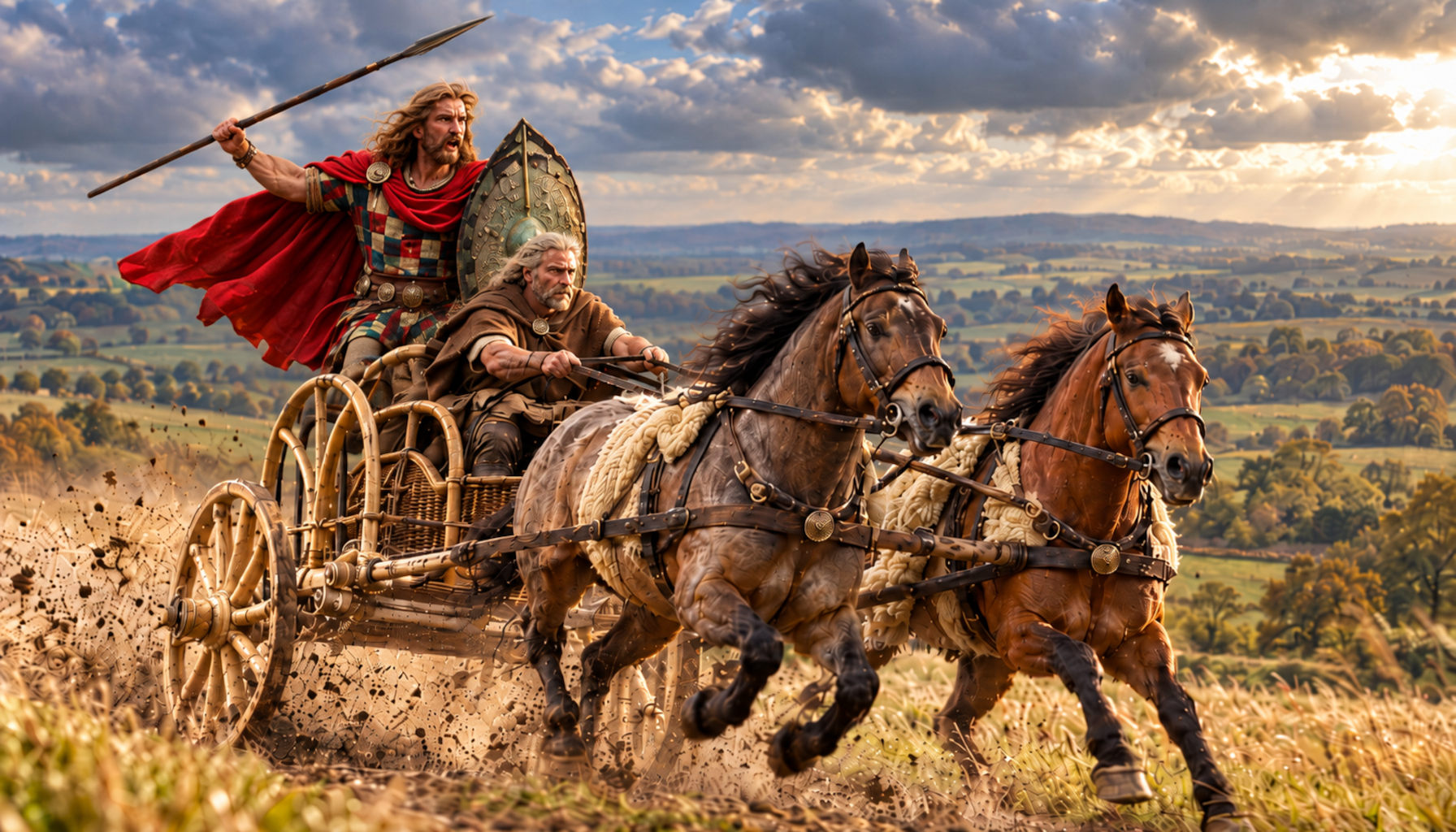
From a DNA perspective, the Dalrymple tag R1b1a1b1a1a2c1a4b3a sits within a paternal world deeply at home in western Europe and the Atlantic-facing zones that shaped Britain and Ireland over millennia. Related or linked ancient samples assigned in this broader line include individuals from Celtic Durotriges burials at Duropolis, Winterborne Kingston in England such as WBK12, WBK20, WBK29, WBK41, WBK05, WBK30, WBK43, WBK06, WBK08, WBK18, and WBK191; Medieval Cambridge St Johns Hospital (ATP_PSN_192); Imperial Roman era Zadar in Croatia (I26776); Bronze Age Orkney, Westray Links of Noltland (KD061); Bronze Age Calabria, Grotta della Monaca (GMO015); Early Medieval Sint-Truiden in Belgium (ST2025); Medieval Sint-Truiden outsider burial (ST1308); Gallic France Parancot (CGG023699); Post-Roman Worth Matravers, Dorset (I11580); Merovingian Alt-Inden in Germany (IND013); Late Roman Klosterneuburg in Austria (R10656); Late Roman Conimbriga in Portugal (R10488); Iron Age Worlebury (I11991); Iron Age Battlesbury Bowl (I21309); Bronze Age Trumpington Meadows (I3256); Bronze Age Amesbury Down (I2417); Bell Beaker Upavon (I4950); Bronze Age Bedfordshire samples I7576 and I7577; Bronze Age Boatbridge Quarry, South Lanarkshire (I5473); Hinxton Iron Age HI2; Early Bronze Age Thames (I5377); and Copper Age Ireland Rathlin2B. These do not prove direct descent from any named Dalrymple ancestor, of course, but they do sketch the long archaeological backdrop of paternal lines related to the one associated with the house: Bronze Age mobility, Iron Age Celtic communities, Roman-period mixing, and medieval continuity across Britain and parts of the Continent.
If the House of Dalrymple catches your imagination, that is because it sits at the crossroads of land, law, lineage, and memory. It is a family story that begins in a named place in Lowland Scotland and expands into courts, parliaments, embassies, armies, and estates. If you have Dalrymple roots, Stair connections, or simply a taste for Scottish noble history, you can upload your DNA to MyTrueAncestry and see whether you match the family story or any of the related ancient DNA samples linked with this wider haplogroup world.

Comments