The House of Cundell

– 3 min read


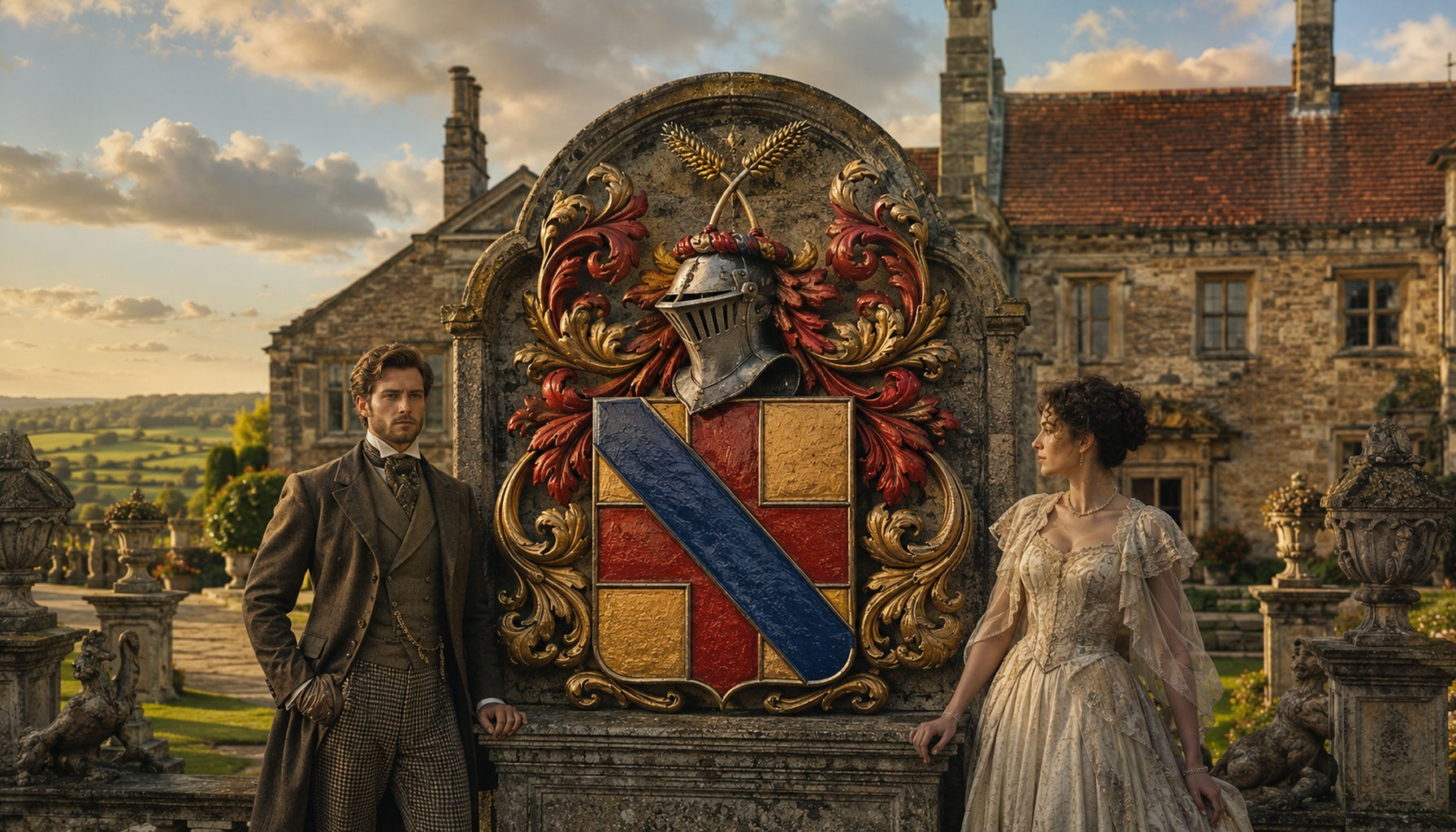
The House of Cundell represents a very English kind of family history: a surname rooted in place, shaped by local standing, and carried forward through service, marriage, landholding, and parish memory. The name is associated with Cundall in North Yorkshire, and the family tradition fits the old pattern by which people were identified from the place they came from, then kept that place-name as a hereditary surname. In that sense, the Cundells were not simply a family with a name, but a family-house with a landscape behind it. In genetic tagging terms, the primary family haplogroup associated here is R1b1a1b1a1a2c1a1i, a branch within the wider paternal lineage long found across western Europe and well represented in Britain.
What makes families like Cundell interesting is not some melodramatic tale of sudden rise, but the quieter durability of continuity. After the Norman Conquest, Yorkshire was a region of lordship, estate management, and careful local record-keeping, and it is in that world that the name begins to come into view. An Alured is recorded under the Count of Mortain in 1086, placing the family in the documentary landscape of Domesday England, and by 1176 we find Ralph de Cundale, a form that still wears its place-origin on its sleeve. That is often how these names worked in medieval England: first a location, then a family marker, then an inherited badge of belonging. Over generations, such houses preserved identity not only through land, but through church attendance, witness lists, tenurial duties, alliances with neighboring families, and the stubborn human habit of remembering who belonged where.
Read more about the House of Clifford
The family's geographic anchor is Cundall Manor, tied to the village of Cundall in North Yorkshire, a small settlement near the River Swale in the old North Riding. Cundall appears in Domesday Book, which immediately tells you that this was no invented Victorian pedigree landscape but a real and functioning medieval place, already caught up in the great redistribution of land after 1066. Historically the village formed part of the agricultural and manorial fabric of Yorkshire, where authority was exercised not from abstract capitals but through manor, church, field, and road. St Mary's Church and the long continuity of village occupation help make the point: this is exactly the kind of place from which a locational surname could endure for centuries. Cundall can still be visited today, and that matters. Heritage becomes much more tangible when the setting is not merely archival but physical, when the old parish ground, roads, and village layout still allow you to stand where the story began.
Explore the Noble House of Percy
From the ancient DNA side, the Cundell haplogroup tag R1b1a1b1a1a2c1a1i links the family not to a single proven ancestor, but to a broad and very interesting set of related paternal-line samples across Britain and western Europe. Among the most relevant are multiple Celtic Durotriges individuals from Duropolis at Winterborne Kingston in England, including WBK12, WBK20, WBK29, WBK41, WBK05, WBK30, WBK43, WBK06, WBK08, WBK18, and WBK191, alongside later British and near-British era samples such as Iron Age East Kent I19909, Pict-era Orkney CGG018915 and CGG018915x, Saxon Hinxton 12880A and 12884A, Buckland Dover BUK055, Lakenheath LAK010, Hatherdene Close HAD018, Eastry EAS004, and Post-Roman Worth Matravers I11580. The same linked branch also appears farther afield in samples from Las Gobas in northern Spain, Sint-Truiden in Belgium, Verona, Zadar, and beyond. The important point is caution as well as excitement: these are related or linked lineages, not evidence of direct descent from any named ancient individual. But they do show that the Cundell paternal signature sits within a deep historical network stretching from Bronze Age and Iron Age Britain into the medieval world that helped form England itself.
Explore DNA in Roman and Early Medieval Britain
If you carry the Cundell name, have Cundell lines in your family tree, or are simply interested in how English surname history meets archaeology and DNA, this is exactly the sort of story worth exploring further. Uploading your DNA to MyTrueAncestry can help you see whether you match the House of Cundell profile or any of the related ancient DNA samples linked with haplogroup R1b1a1b1a1a2c1a1i, placing your family story in a much deeper historical frame.

Comments