The House Carew

– 3 min read


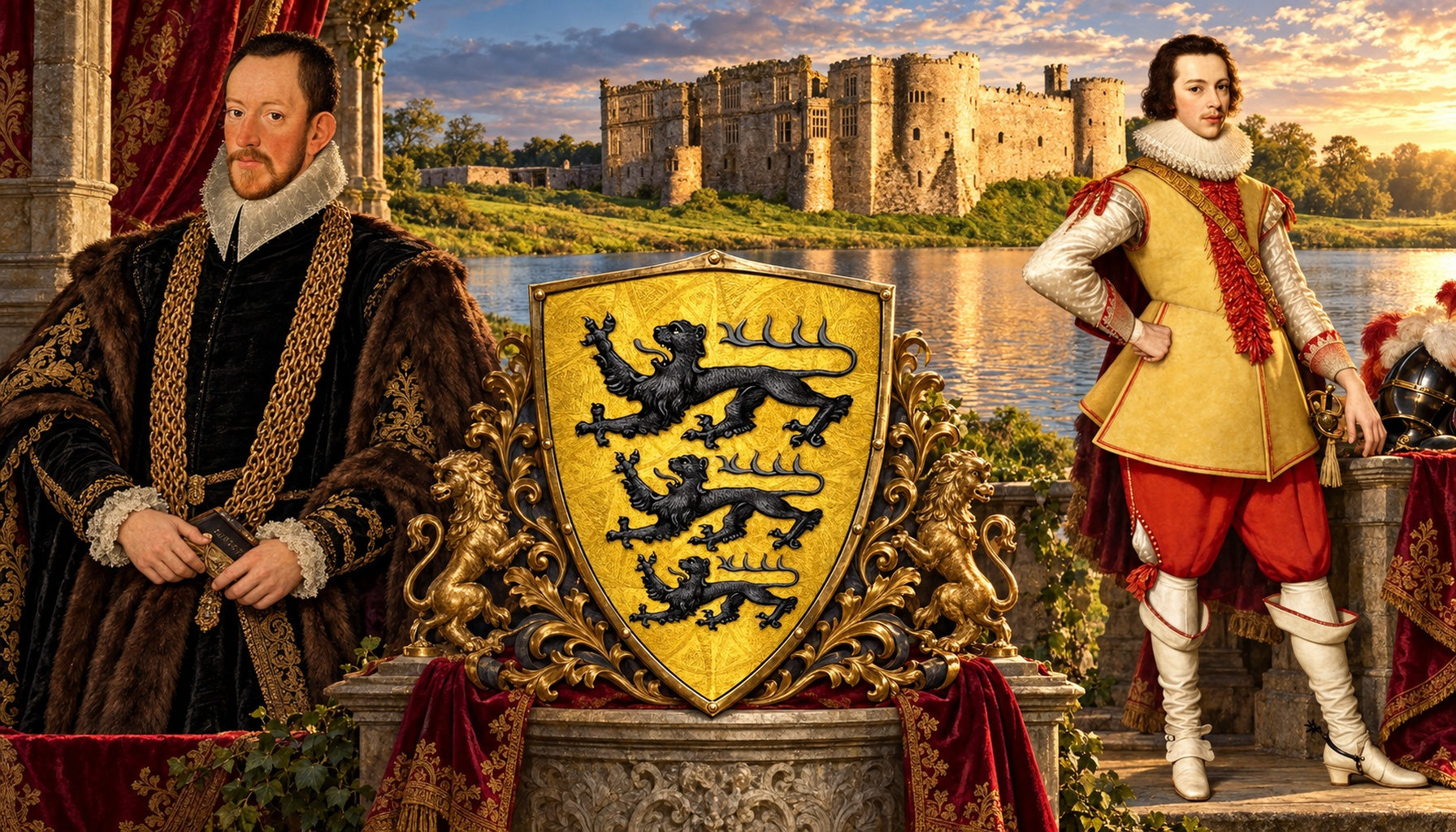
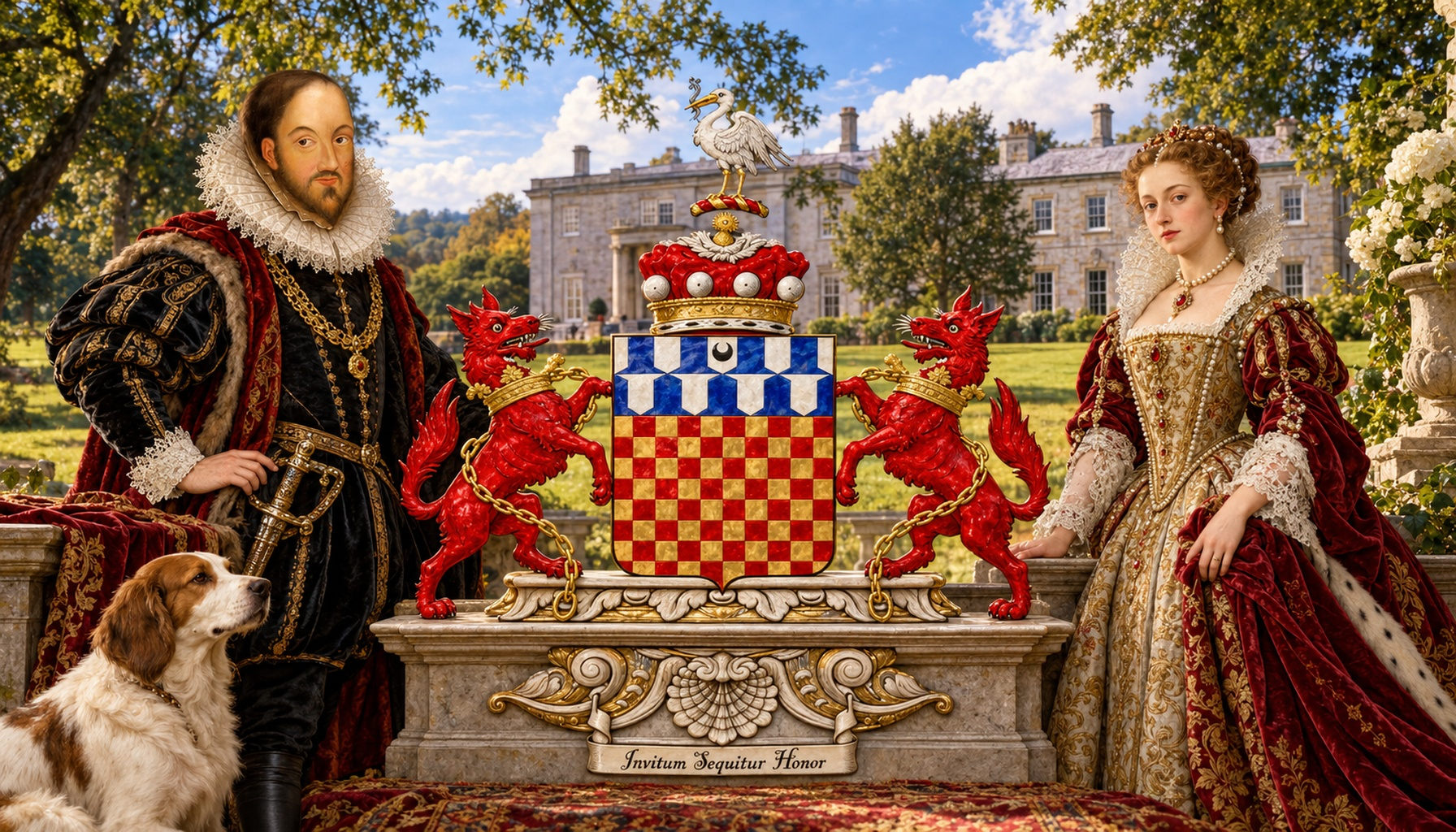
The House Carew was an old Anglo-Norman and Welsh noble family rooted above all in Pembrokeshire, with its identity closely tied to Carew Castle. In historical terms, this was a Marcher family: a lineage formed in the borderlands where Norman expansion, Welsh lordship, military force, and political negotiation all met in sometimes splendid and sometimes brutal fashion. Their primary linked haplogroup here is R1b1a1b1a1a2a1b1a1a, a branch associated with a wide sweep of western European paternal ancestry. The Carews emerged from the world created after the Norman penetration of south Wales, when ambitious families established themselves through fortification, landholding, royal favour, and service in war.
From that frontier beginning, the family developed into something larger and more durable than a single castle line. They expanded through marriage alliances, office-holding, and the steady accumulation of estates in Wales and southwestern England, especially in Devon and Cornwall. Men of the family appear as knights, soldiers, courtiers, administrators, and members of Parliament, which is exactly what one would expect of a successful medieval noble house that knew how to serve the Crown without quite disappearing into it. Among the named figures remembered in the line are Nicholas de Carew, recorded in 1278, Nicholas Carew, Lord of Carew, who lived from 1255 to 1311, and John Carew, Lord of Carew, active in 1324. The story is one of long regional continuity: not a sudden blaze, but a family that kept turning up where power, land, and service intersected.
Carew Castle is the great location anchor of the family, and it is not difficult to see why. Set beside the tidal Carew River in Pembrokeshire, the site began as a Norman fortification, first in timber and later rebuilt in stone, before developing over centuries into a striking residence that blended military architecture with more comfortable lordly display. Its position mattered enormously: it commanded movement through the surrounding landscape and advertised authority in a region where authority always had to be asserted as much as inherited. Later phases added a grander domestic range, and the castle as it survives today still shows that layered history rather beautifully, from Norman stonework to later medieval and early modern changes. Nearby stands the famous tidal mill, one of the most distinctive survivals in Wales, which helps place the castle not just as a fortress but as the centre of a working seigneurial landscape. Happily, yes, it can still be visited today, and it remains one of the most vivid places in Wales for understanding how a Marcher noble family like the Carews made power visible in stone.
Explore the House of Stradling
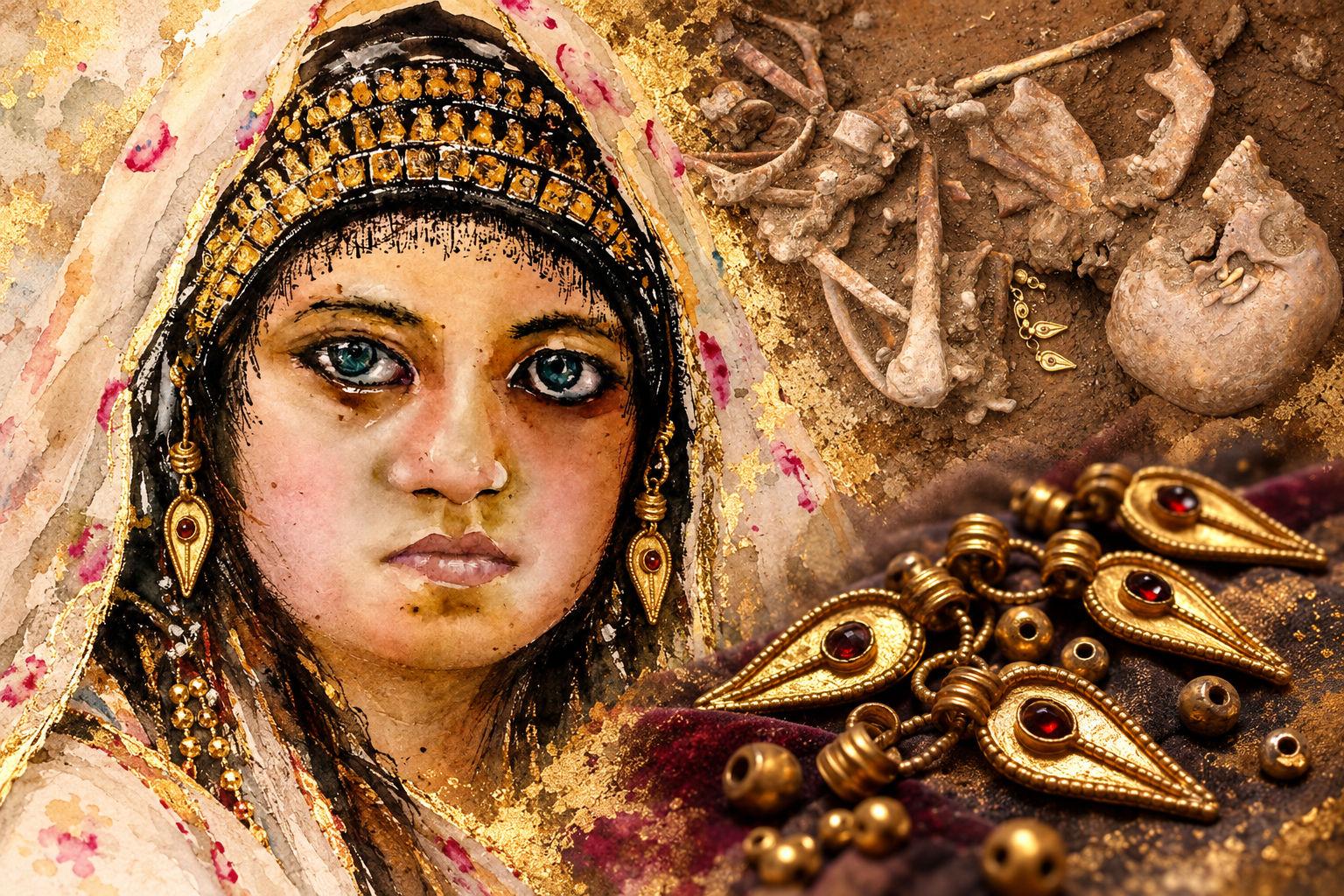
The haplogroup R1b1a1b1a1a2a1b1a1a linked here to the House Carew belongs to a wider western European genetic landscape rather than to one provable single medieval pedigree. So it is better to speak of related or linked ancient DNA samples, not direct descent. Useful comparisons include Dark Ages Northern Spain Las Gobas ldo057, Medieval Northern Spain Las Gobas ldo058 and ldo055, Roman Era England Knobbs Farm Somersham KNF014, Celtic Parisi Iron Age England East Yorkshire Wetwang Slack I36774 and I36777, Iron Age Hill Fort Suddern Farm Hampshire I20982, Gallic Chemin de Coupetz Marne France I21399, Viking Hesselbjergmarken Denmark VK87, Medieval Denmark Zeeland Ahlgade Holbaek CGG101873, Carolingian Belgium Sint-Truiden Groenmarkt ST2964, Medieval Belgium Sint-Truiden Groenmarkt ST2666, Carolingian Settlement Barcelona I7672, and even later historic-era examples such as St. Mary City Chapel Field Cemetery in Maryland I35265 and I15286. Taken together, these linked samples sketch the long, mobile history of an R1b paternal world stretching across Iron Age, Roman, medieval, and early modern western Europe and its Atlantic extensions, which suits the broad frontier and maritime setting in which the Carews rose.
Explore Roman and early medieval Britain DNA
If the House Carew catches your imagination, that is really the fun of it: a family standing at the meeting point of Norman conquest, Welsh geography, castle lordship, and centuries of local continuity. Upload your DNA to MyTrueAncestry and see whether you match the House Carew, the haplogroup R1b1a1b1a1a2a1b1a1a, or any of the related ancient DNA samples from Britain and the wider western European world.
Comments