The House of Stradling
– 3 min read


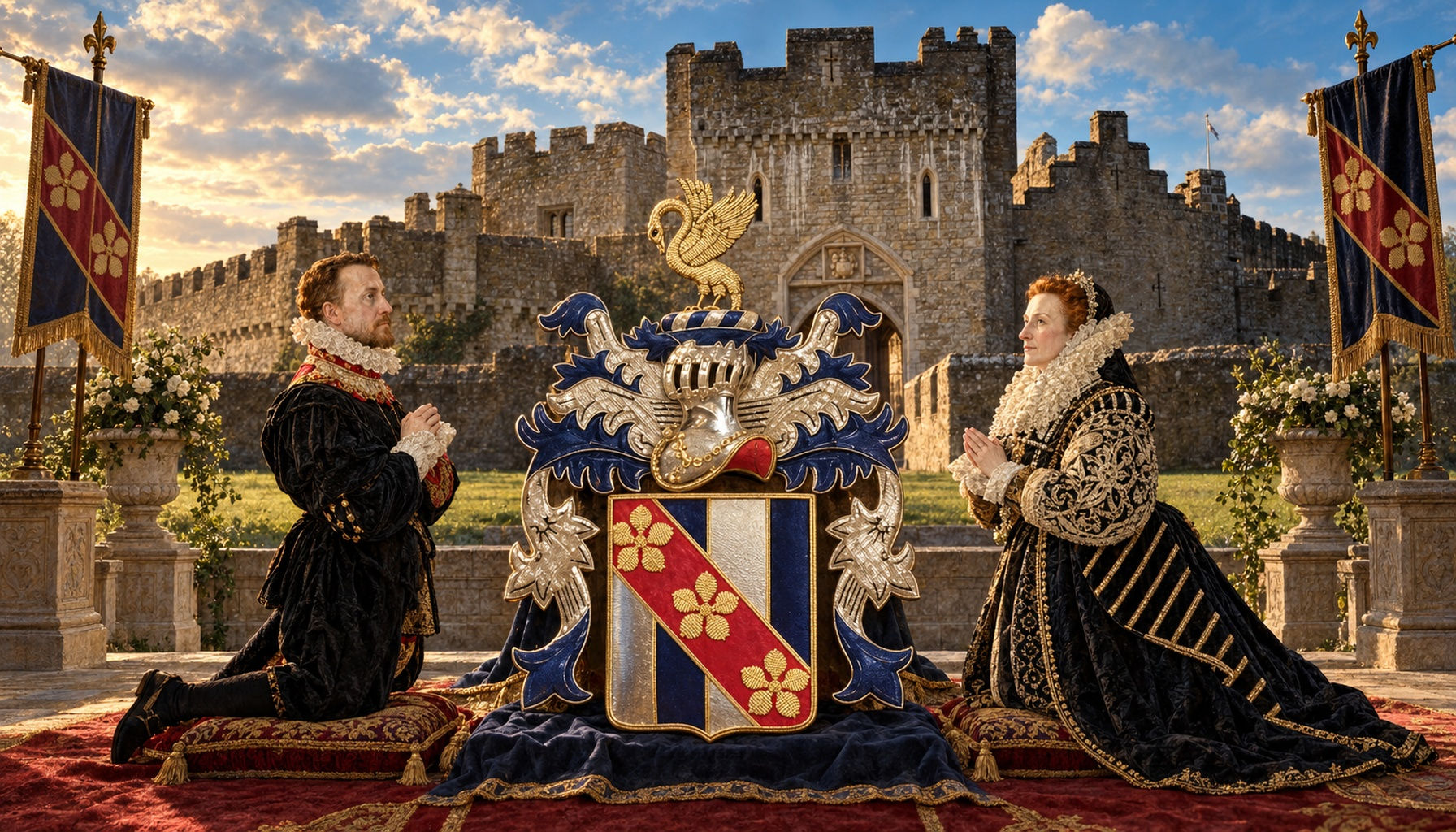
The House of Stradling was one of the great Anglo-Welsh families of Glamorgan, rooted above all at St Donats Castle on the south Wales coast. In broad historical terms, they belong to that fascinating marcher world where Norman and Welsh power met, argued, intermarried, fought, and eventually settled into a distinctly regional form of lordship. Their primary family haplogroup is tagged here as R1b1a1b1a1a1c2a1, a paternal lineage with deep roots across western and northern Europe and one that appears in a wide spread of ancient and early medieval contexts.
The family became established in medieval south Wales and grew into one of the leading landed houses of Glamorgan. This was not simply a story of owning a castle and collecting rents. The Stradlings appear in military service, public office, maritime concerns, local governance, scholarship, and patronage. They were the sort of family who mattered because they could do several things at once: hold land, serve the crown, cultivate learning, and maintain influence in both Welsh and English political society. Figures such as Sir Edward Stradling (1529-1609), remembered for his learning and antiquarian interests, Sir John Stradling, 1st Baronet (1563-1637), and Sir Edward Stradling, 5th Baronet (1672-1735) show how the family sustained status over generations rather than flashing brightly and vanishing.
Read more about the House of Meyrick
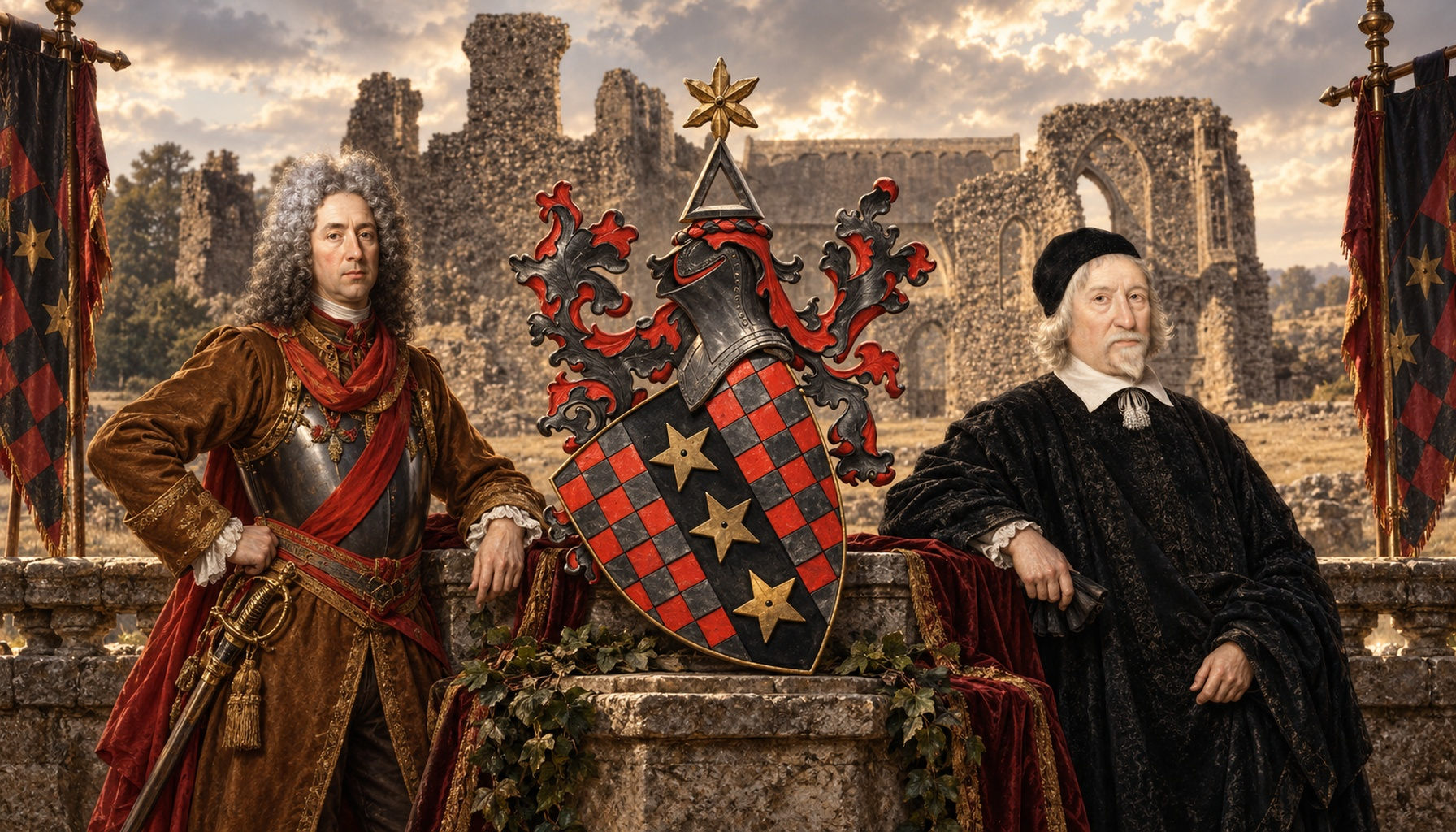
St Donats Castle was the great anchor of Stradling identity, and it is one of those places where the stones really do tell the family story. Set near the Bristol Channel in the Vale of Glamorgan, the castle began as a medieval fortification after the Norman advance into south Wales and was steadily enlarged and reshaped over centuries. Under the Stradlings it developed from a defensive stronghold into a substantial residence, with the layered look that so many long-lived noble houses acquire: battlements and curtain walls alongside halls, domestic ranges, and later refinements suited to aristocratic comfort. In other words, it is not just a castle in the romantic sense, but a working record of how a marcher family adapted from conquest society to established gentry power. The site remained important long after the rougher frontier age had passed, and it still stands today as one of the most striking historic buildings in Wales. Happily, it can still be visited as part of the wider St Donat's Castle estate and Atlantic College setting, which gives modern visitors a rare chance to see the family landscape in place rather than only on paper.
From a DNA perspective, the Stradling family is tagged to haplogroup R1b1a1b1a1a1c2a1. That does not mean every historical Stradling line can be proven from ancient graves, and it certainly does not permit any claim of direct descent from named archaeological individuals. What it does offer is a wider genetic backdrop. Related or linked samples assigned within this branch or its close context appear across an impressively broad historical map: Lombard warrior elite and Lombard-era individuals from Collegno in northern Italy such as COL_069, COL_069b, and COL_069x; medieval Belgium at Sint-Truiden with ST0044; Iron Age and Gallic contexts from Bucy-le-Long in France including CGG022456, CGG022425, and CGG022419; Viking Age Denmark at Kongsted Lyng and Trelleborg with CGG019689 and CGG105938; early Anglo-Saxon West Heslerton in Yorkshire with I20644, I20671, and I20677; Longobard-associated graves at Haeven in Mecklenburg-Vorpommern with HVN005 and HVN006; Jutish and early medieval England with OAI002 and POH003; Norman invasion period Lincoln Castle with S3044; early medieval Wels in Austria with R10665; a Middle Bronze Age sample from Westwoud-Binnenwijzend in the Netherlands, I11972; a post-medieval plague victim from Ellwangen, ELW003; Viking Age Funen with VK313; Bell Beaker North Holland with I4070; and medieval Upper Bavaria at Petersberg. For a family like the Stradlings, settled in the Anglo-Welsh marcher world yet connected to the wider currents of Britain and the Continent, that spread feels historically apt.
Explore Ancient DNA in Post-Roman Britain
The Stradlings are a splendid example of how family history becomes regional history: castle lordship, service, learning, and long continuity in one of the most contested and creative borderlands in Britain. If your own family lines run through Wales, the marches, western England, or the wider medieval world of Norman, Welsh, and Anglo-British connections, you may well find echoes here. Upload your DNA to MyTrueAncestry to see whether you match the House of Stradling story or any of these related ancient DNA samples.
Comments