Haplogroup R1b1a1b1a1a1c2b2

– 5 min read



At Cambridge's St John's Hospital, one medieval man dated to about AD 1209 has become an unexpectedly useful signpost for a very specific paternal line. The individual identified as ATP_PSN_127 belongs to the Y-DNA haplogroup R1b1a1b1a1a1c2b2, placing this branch in a real archaeological setting rather than leaving it as a string of letters on a family-tree chart. That matters because medieval hospitals were not dynastic tombs or elite mausolea: they were part of ordinary urban life, where illness, poverty, care, and burial all met.
This is a narrow branch within the wider R1b family, one of the major paternal lineages in western Europe. Y-DNA follows a direct male line only, so it does not summarize a person's whole ancestry, language, or identity. Still, when the same branch appears in different times and places, it gives us a way to trace one small thread through much larger historical changes.
The Cambridge sample is the latest of the three ancient finds linked here, and in some ways the most revealing. A man buried at St John's Hospital belongs to the same paternal branch as earlier individuals from southern Britain and southern France. That does not make him their close relative in any simple sense, but it does place this lineage inside the social fabric of medieval England.
Hospitals in the High Middle Ages were religious and charitable institutions, not hospitals in the modern technical sense. Their cemeteries often preserve people who would otherwise vanish from the historical record. A lineage like R1b1a1b1a1a1c2b2 appearing in such a context suggests continuity at the level of male descent across many centuries, long after Roman rule, post-Roman migrations, and the formation of medieval English society had reshaped the island.
A broader ancient DNA study of Britain and nearby regions has helped frame exactly this kind of question: not whether one haplogroup "belongs" to one people forever, but how older paternal lines persisted, mixed, and reappeared in new settings across time. For readers interested in that bigger picture, MyTrueAncestry's piece on genomic history in Roman and early medieval Britain gives a useful companion view.
Roman & Early Medieval Britain DNA
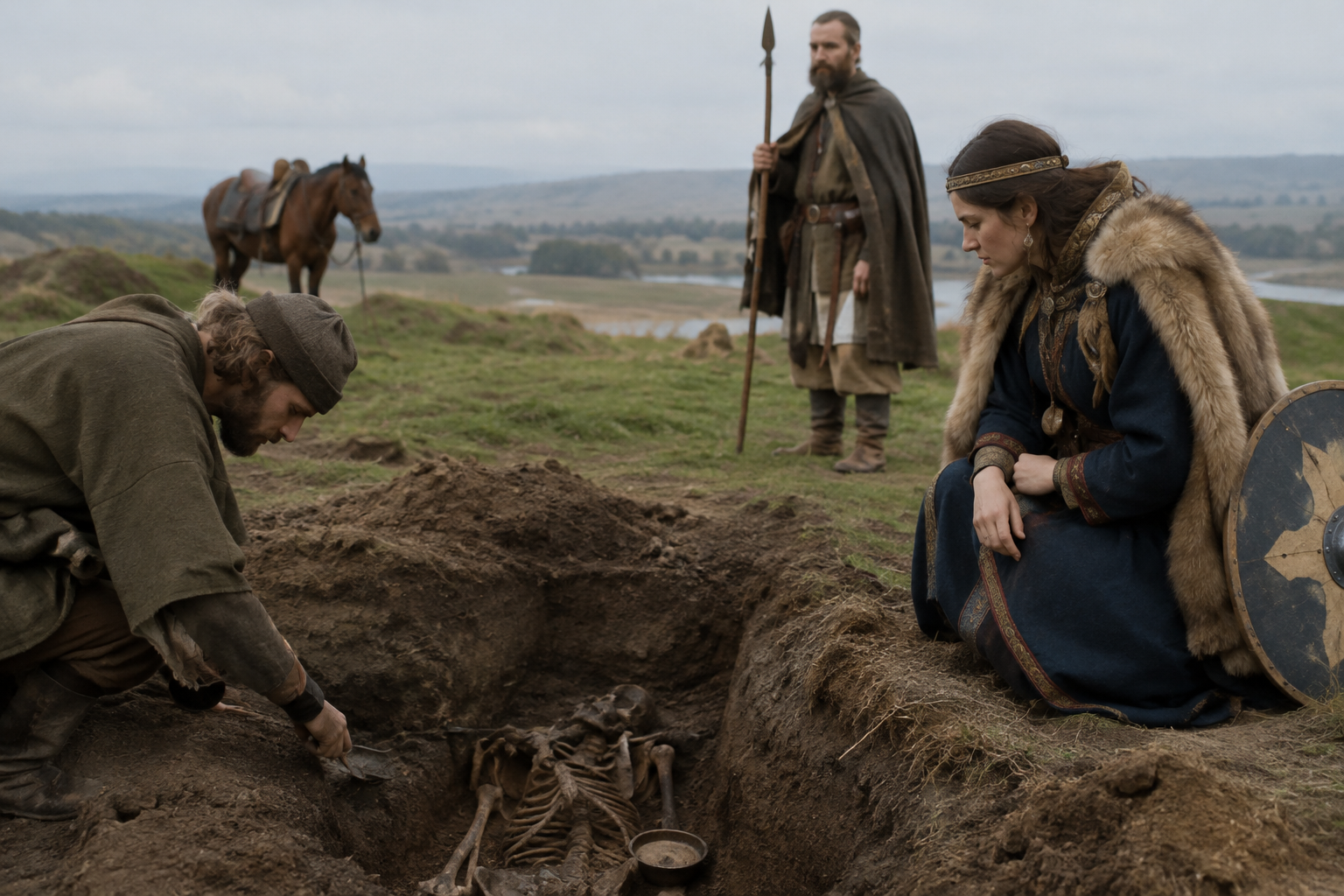
The second sample, POH001, comes from Polhill in Kent and is dated to about AD 600. The record identifies him as Jute Early Medieval Polhill Kent England, which places him in one of the most historically charged landscapes of early Anglo-Saxon England. Kent was a contact zone: close to the Continent, politically important, and deeply entangled with movements across the North Sea.
That said, one must be careful with labels. "Jute" is a historical and archaeological designation, not a biological essence, and a Y-chromosome lineage does not by itself prove ethnicity. What POH001 does show is that the paternal branch linked here was present in Kent during the early medieval period, in a region often discussed in connection with migration, settlement, and cultural change after the end of Roman Britain.
This is where the branch becomes especially interesting. With Cambridge and Polhill together, we are not looking at a single isolated burial. We are seeing this lineage in England before and after the consolidation of early medieval kingdoms. In other words, R1b1a1b1a1a1c2b2 was part of the human background of England during a period when identities were being renegotiated at every level, from burial custom to kingship.
Research on early medieval burials in England and Iberia has also highlighted how varied local populations could be, even when archaeological labels sound neat and tidy. That wider caution is worth keeping in mind when reading any single paternal assignment. A relevant comparison appears in MyTrueAncestry's discussion of diverse origins at a 7th-century Madrid burial site.
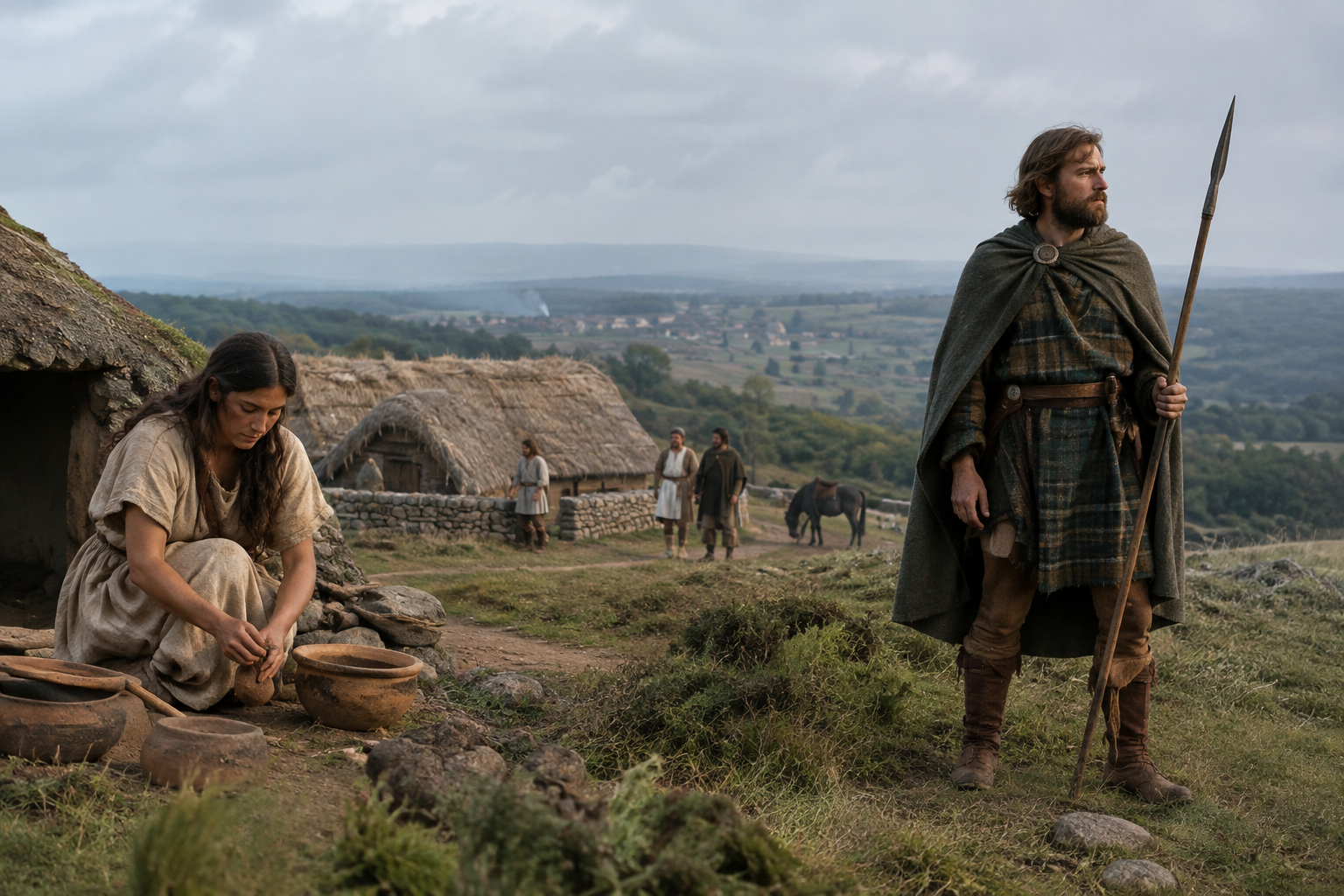
The earliest sample in this small cluster is CLR23, dated to about 350 BC and described as an Iron Age Le Cailar Severed Head Southern France individual. Le Cailar is an arresting site even before genetics enters the picture. It is famous in Iron Age archaeology for its human remains and evidence connected with violent display, trophy practices, and the public language of conflict in Mediterranean Gaul.
Here the haplogroup appears in a setting utterly unlike medieval Cambridge or Kent. Instead of an urban hospital cemetery or an early medieval burial ground, we are in the southern French Iron Age, in a world of fortified settlements, regional exchange, and the social theater of warfare. That does not mean the later English men "came from" this one man in any immediate historical sense. It means that the same paternal branch, or a reported association with it, turns up in a much earlier western European context.
That western Mediterranean angle matters because broad R1b lineages are deeply established in later prehistoric and Iron Age western Europe, but the narrow sub-branches are where the story becomes less generic and more local. A find like CLR23 shows that the branch behind R1b1a1b1a1a1c2b2 was already present in Iron Age southern France, giving the lineage a documented foothold on the Continent centuries before its appearance in the English samples listed here.
An ancient DNA study examining French archaeological contexts and long-term population change has helped open up exactly these regional questions, even if a single burial must always be treated with care. For a broader Celtic-period backdrop, MyTrueAncestry readers may also want the article on ancient DNA and the spread of Celtic languages.
Three samples are not a dynasty, a tribe, or a migration map. But they are enough to sketch a historically sensible pattern. This branch appears in Iron Age southern France, then in early medieval Kent, and then in medieval Cambridge. The common denominator is not one named people. It is western Europe itself, across very different societies.
That is often how useful haplogroup history works. The paternal line survives while political worlds change around it: Iron Age communities in southern Gaul, post-Roman groups in Kent, and urban Christian society in medieval England. The lineage persists not because history stood still, but because male descent lines can move quietly through conquests, language shifts, marriage networks, and local continuity alike.
The English evidence is especially suggestive because it spans two quite different medieval contexts. Polhill hints at the branch during the formative centuries of early English society, while Cambridge shows it still present in a later institutional burial ground. Readers who want another angle on post-Roman and early medieval population mixture may find MyTrueAncestry's piece on Norman Conquest DNA in rural Surrey a useful comparison.
If your paternal line falls under R1b1a1b1a1a1c2b2, the most grounded thing these ancient samples suggest is not a single grand origin story, but a documented presence in western Europe across a long stretch of time. The branch is represented in an Iron Age individual from southern France and in later men from early medieval and medieval England. That makes it a lineage with visible archaeological depth, not merely a modern surname-era phenomenon.
For family historians, that is often the most valuable kind of result. It tells you that your direct male line belongs to a branch that turns up in real ancient people living through very different chapters of European history: the violent ceremonial world of Iron Age Le Cailar, the migration-era politics of Kent, and the charitable urban landscape of medieval Cambridge.

Comments