Haplogroup I1a1a

– 5 min read


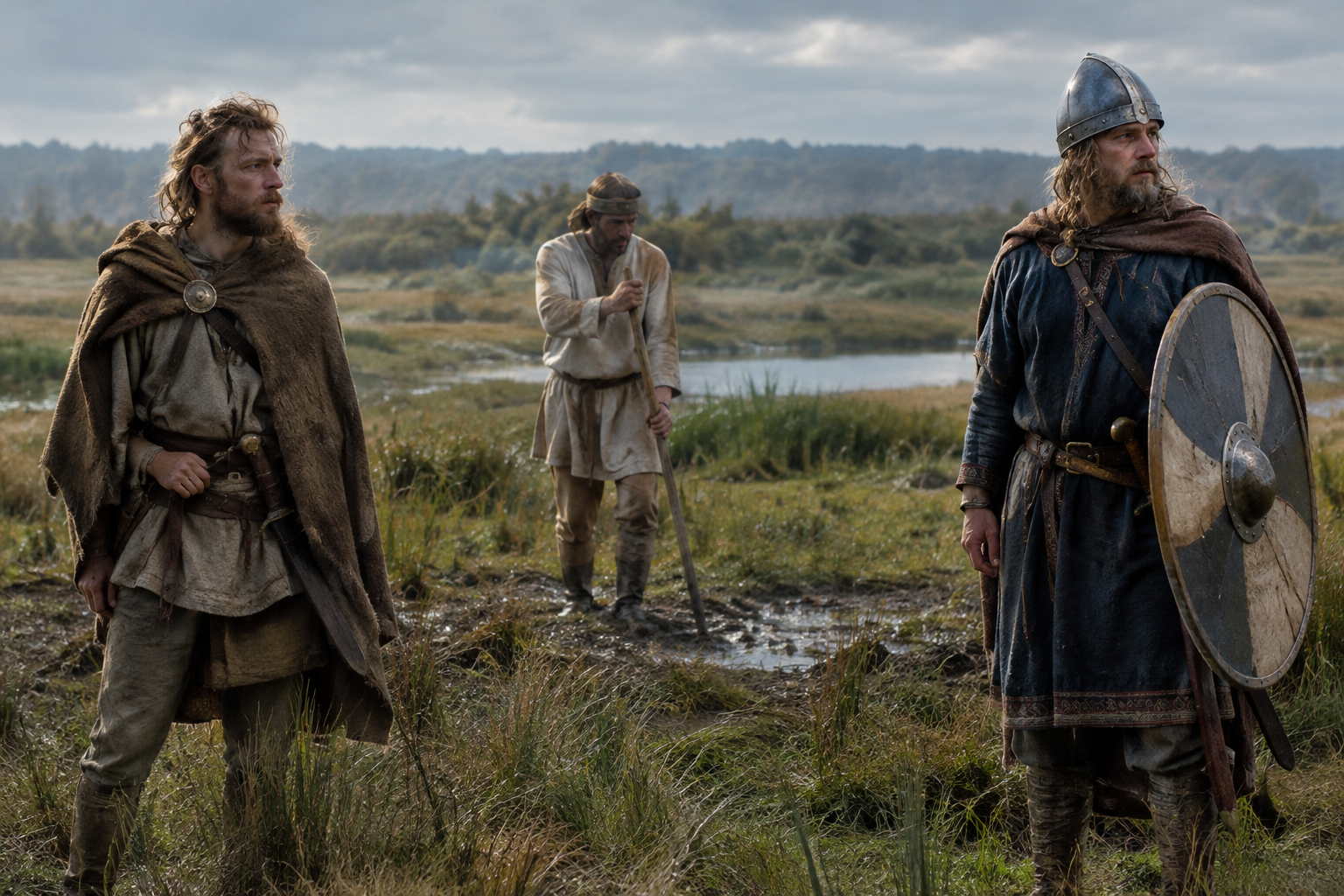
At Alken Enge in eastern Jutland, the dead were not buried in the neat, domestic way we often expect from the Roman Iron Age. They were gathered in a wetland landscape and deposited after a violent episode around the early 2nd century AD. One of the men from that grim assemblage, sample CGG019210, is associated here with Y-DNA haplogroup I1a1a, a paternal line that matters less as a badge of identity than as a clue to the male-line histories moving through northern Europe.
That is a useful place to begin, because I1a1a is not a whole people, a language, or a tribe. Y-DNA follows one direct paternal line only. But when the same branch appears in a Jutland war deposit, in Migration Period Saxony-Anhalt, and again in Viking Age Sweden, it starts to illuminate something very specific: a northern European male lineage present across several centuries of the North Sea and Baltic world.
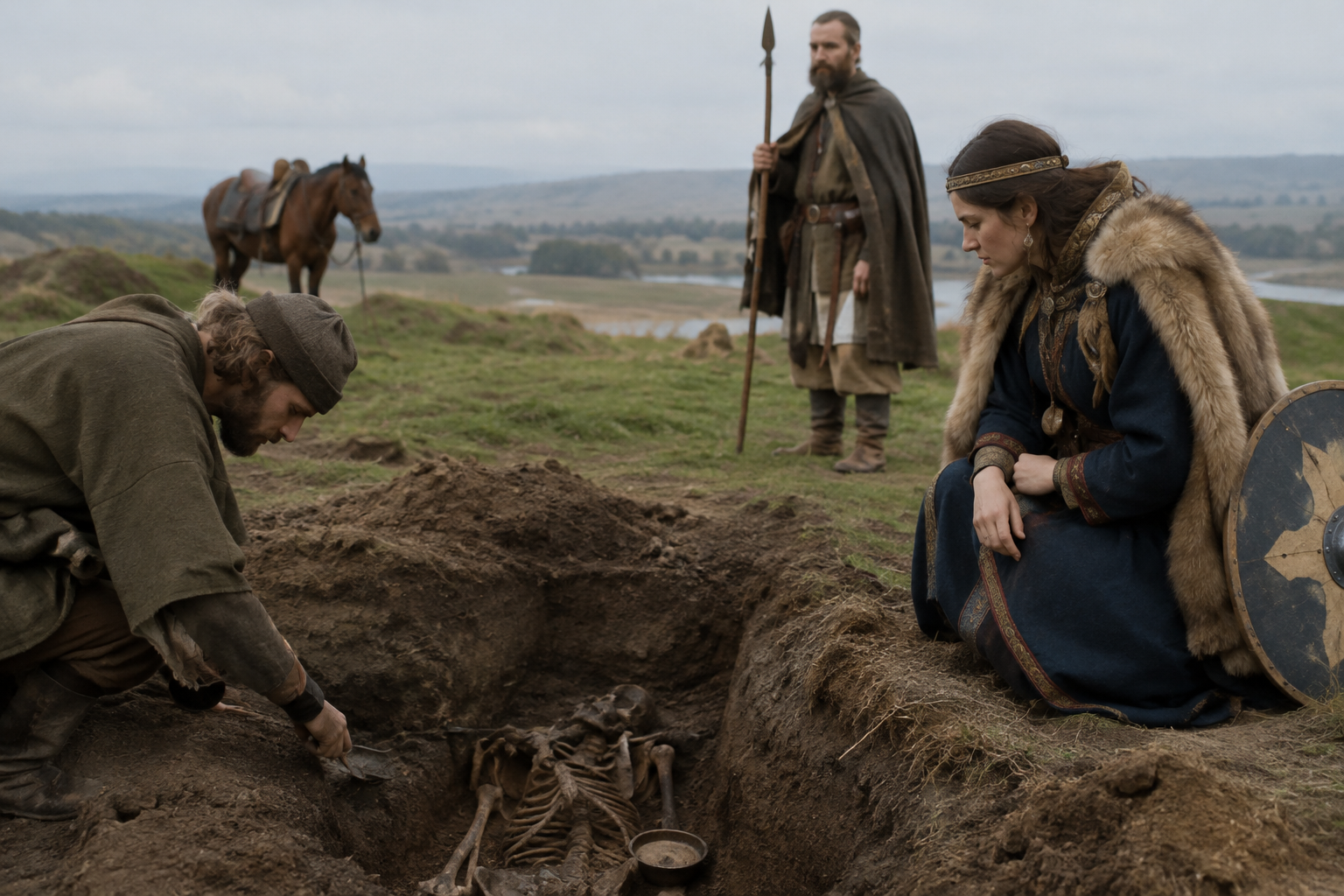
The Alken Enge material is important precisely because it is so archaeological. This is not a saga hero, and not a later medieval pedigree polished by generations of family memory. It is a real assemblage of human remains from a bog landscape in Denmark, dated here to around 107 AD, in a period when Roman power pressed on the edges of barbarian Europe without directly ruling Jutland.
Sample CGG019210 is described as a Jute, from the Early Roman Era, found in the Alken Enge war bog. Even without embroidering the find with invented details, that context tells us quite a lot. This was a world of organized violence, local alliances, and mobile male groups. If an I1a1a-associated paternal line appears here, it places the branch in a Scandinavian setting well before the Viking Age and firmly within the older demographic history of southern Scandinavia.
An ancient DNA study connected with these northern European remains is available at https://www.biorxiv.org/content/10.1101/703405v1. The larger significance is not that one sample can define the Jutes, but that such evidence helps anchor a paternal lineage in a documented archaeological landscape rather than in legend.
Haplogroup I1 is widely associated with northern Europe, especially Scandinavia, but this article concerns the narrower branch I1a1a as provided in the sample set. That distinction matters. We should not lazily pour the whole history of I1 into every smaller branch beneath it, nor pretend that one ancient match gives a complete migration map.
What the present evidence does suggest is continuity of one paternal line across places that were deeply entangled by migration, warfare, trade, and settlement. The men carrying this branch were not all one population in any simple sense. They lived in different centuries and under different political conditions. Yet the recurrence of the lineage in Denmark, central Germany, and Sweden makes it historically interesting: I1a1a belongs to the male-line background of northern Europe during a long stretch from the Roman Iron Age into the medieval Scandinavian world.
The sample BRC036x, dated here to around 500 AD, comes from Bruecken in Saxony-Anhalt, in what is now central Germany. This is a very different historical setting from Alken Enge. By the 5th and 6th centuries, the western Roman Empire had collapsed, frontiers had been transformed, and central Europe was a patchwork of shifting post-Roman communities.
An I1a1a-associated individual in this landscape is a reminder that lineages linked strongly with Scandinavia did not remain neatly boxed within the peninsula. Migration Period Germany was full of movement: some local, some regional, some much longer-distance. The presence of this paternal branch in Saxony-Anhalt fits a broader picture in which northern-linked male lines were part of the demographic reshaping of the Elbe and North Sea zones.
It would be careless to claim that BRC036x was a migrant from Denmark, still less to assign him to a named ethnic group on Y-DNA alone. But the sample does show that by about AD 500 this branch was present in a central European region tied into the great transformations of late antiquity.
Research on post-Roman and frontier populations in this broad period has increasingly shown how mixed and locally varied such communities could be. That wider picture is worth keeping in mind when reading male-line evidence from regions like Saxony-Anhalt.
German frontier mixing, 400-700 CE
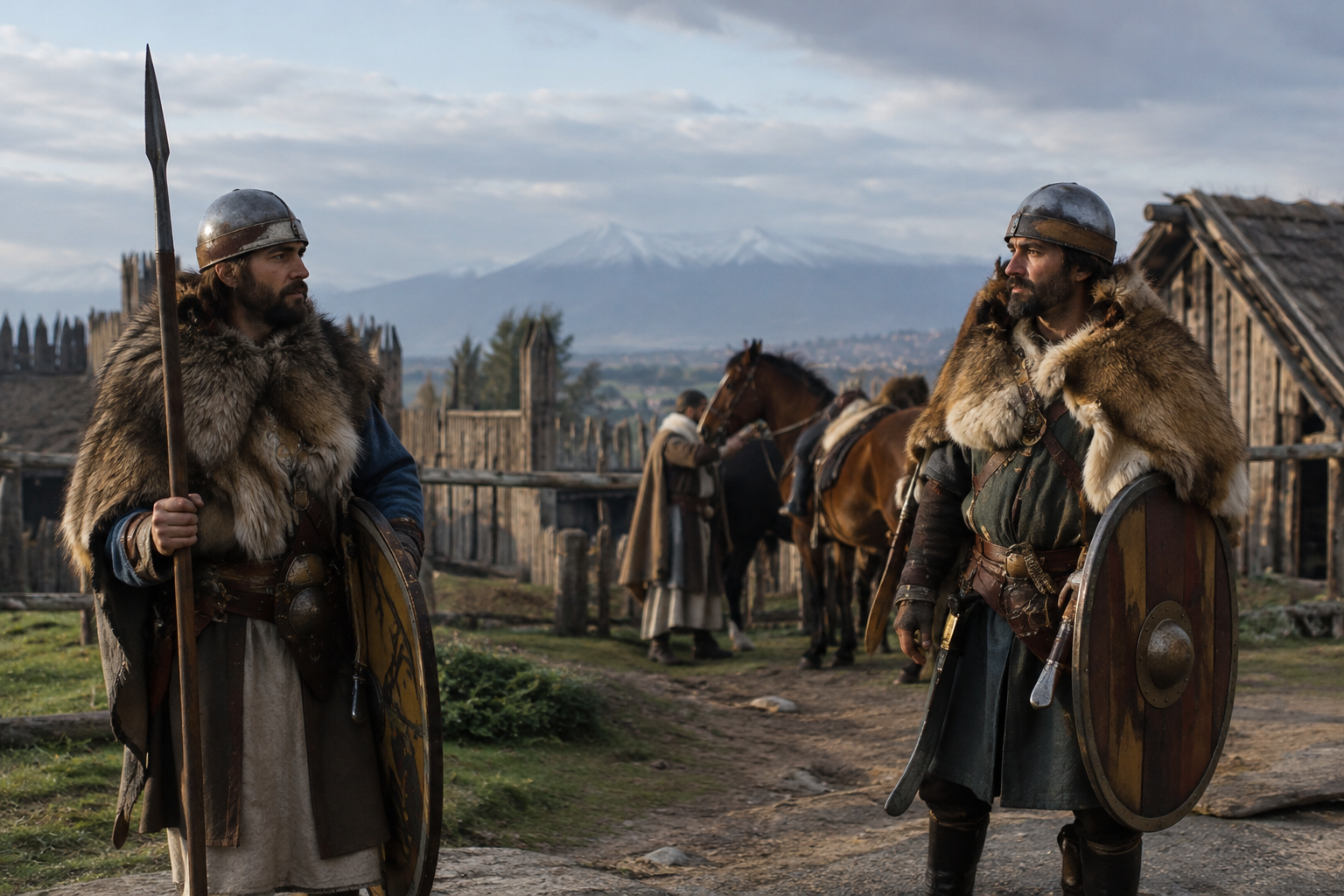
The third sample, VK29, is from Viking Age Skara Varnhem in Sweden and dated here to around 1050 AD. This is the most overtly Scandinavian setting of the three, and chronologically the latest. By this point, we are in the world of Christianizing kingdoms, expanding royal power, and a Scandinavian society increasingly tied into Latin Europe as well as the Baltic and North Atlantic.
Varnhem is especially evocative because it belongs to a landscape that later became one of medieval Sweden's important ecclesiastical centers. An I1a1a-associated male here suggests that this paternal branch remained part of the Swedish population into the late Viking Age, when old regional identities were being folded into more centralized kingdoms.
That matters because people sometimes imagine Viking Age genetic history as if it were made entirely of spectacular voyages. In reality, the age was also about local continuity. Some paternal lines travelled widely; others endured in place while the political and religious world around them changed. VK29 sits neatly in that more grounded history.
A separate ancient DNA research lead associated with this material is https://www.biorxiv.org/content/10.1101/2025.02.28.640770v1. Even where one does not lean too heavily on a single preprint, the archaeological implication is plain enough: this branch belongs within the paternal landscape of Viking Age Sweden.
Put the three samples together and a pattern emerges, though not a simplistic one. CGG019210 shows I1a1a in Roman-era Jutland. BRC036x places it in Migration Period central Germany. VK29 carries it into Viking Age Sweden. That is a substantial chronological arc, spanning roughly nine centuries.
What links these places historically is not a single ethnic label but a zone of repeated contact. Southern Scandinavia, the Elbe region, and Sweden were connected by marriage networks, war bands, seasonal travel, trade routes, and later by the political consolidation of early medieval kingdoms. A Y-DNA branch recurring in those settings is exactly the sort of small but telling signal that ancient DNA is good at recovering.
It also sits comfortably beside wider MyTrueAncestry discussions of northern mobility and settlement history. The Viking world was built on older demographic foundations, not conjured overnight.
North Sea migrations to Britain
If your Y-DNA belongs to I1a1a, these ancient finds do not identify a single named ancestor, tribe, or royal house. What they do offer is something better grounded: evidence that this paternal line was present in the historical populations of southern Scandinavia and nearby northern Europe from at least the Roman Iron Age through the Viking Age. In other words, it is a lineage with real archaeological footing in the connected Danish, German, and Swedish worlds that helped shape medieval northern Europe.
Comments