Haplogroup R1b1a2a1a1
– 5 min read


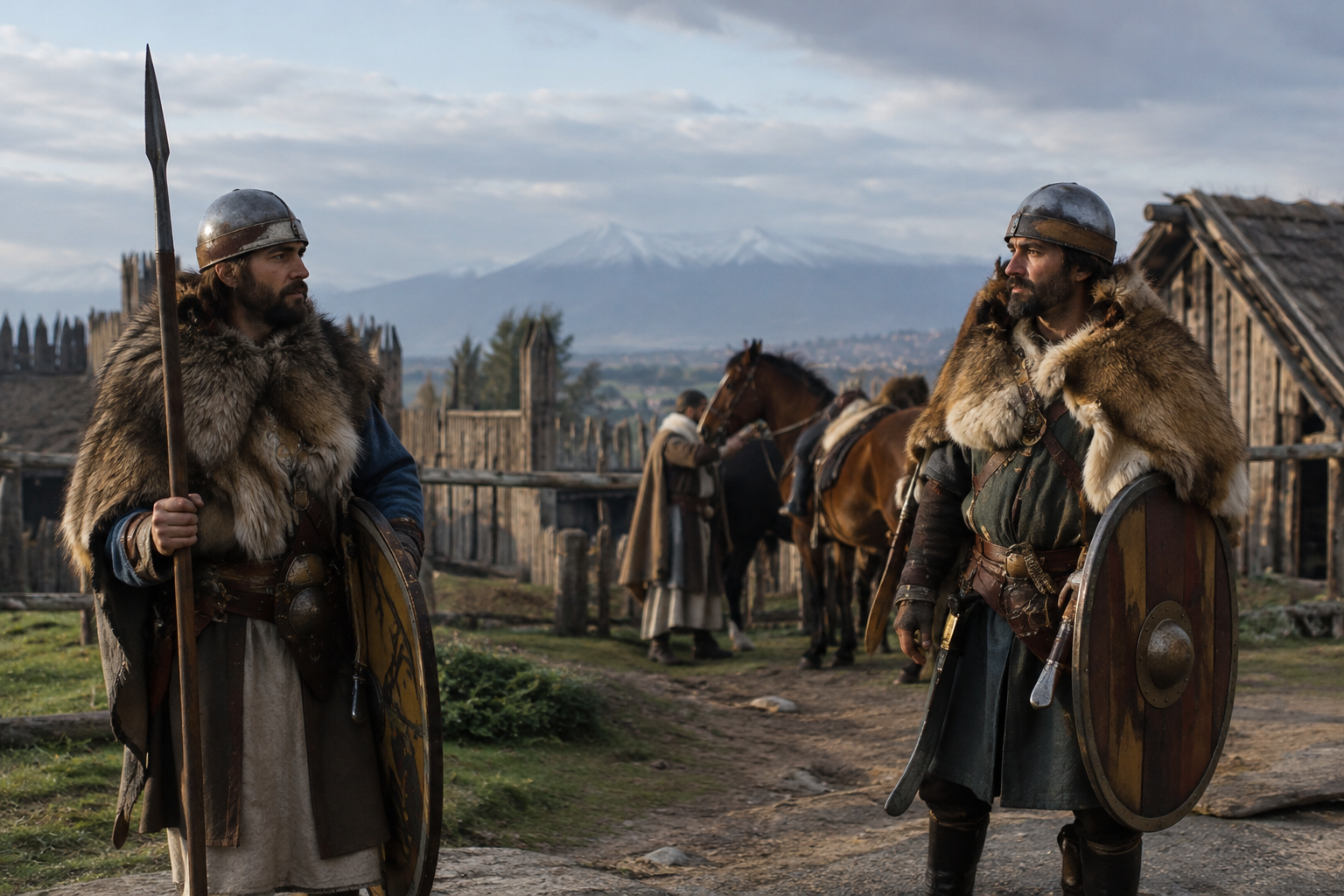
In the cemetery at Collegno in northern Italy, one sixth-century man identified as COL_034 helps anchor a very specific paternal story. He lived around AD 580, in the Lombard era, when Italy was being reshaped after the end of Roman imperial rule in the West. For anyone exploring the Y-DNA haplogroup R1b1a2a1a1, that matters because this is not a vague prehistoric shadow but a lineage appearing in the DNA record of a recognizably early medieval world.
The same branch is also reported from KMU005, dated to about AD 550, from Longobard-period Pannonia at Arrabona-Kony Barbaricum in present-day Hungary. Taken together, these two men place R1b1a2a1a1 in the historical corridor linking the Middle Danube to post-Roman Italy. That does not make the haplogroup "Lombard" in any simple ethnic sense, but it does place this paternal line within one of the most mobile and politically important societies of sixth-century Europe.
Collegno has become one of the most discussed early medieval burial sites in Italy because it captures a society in motion. The people buried there belonged to a world shaped by migration, military followings, household movement, and local integration. In that setting, COL_034 is valuable not because he can stand for everyone, but because his Y-DNA links one paternal branch to a real community living through the transition from Roman Italy to Lombard rule.
Ancient DNA studies of early medieval cemeteries have repeatedly shown that labels such as "Lombard" or "Longobard" were not simple biological categories. These communities could include people of varied ancestry living under the same political and cultural umbrella. Y-DNA traces only one direct paternal line, yet that narrow line can still be historically useful: it shows that R1b1a2a1a1 was present among men buried in a cemetery associated with the Lombard-era reordering of northern Italy.
A broader discussion of how ancient genomes illuminate Italy's shift from Roman to early medieval populations can be found here:
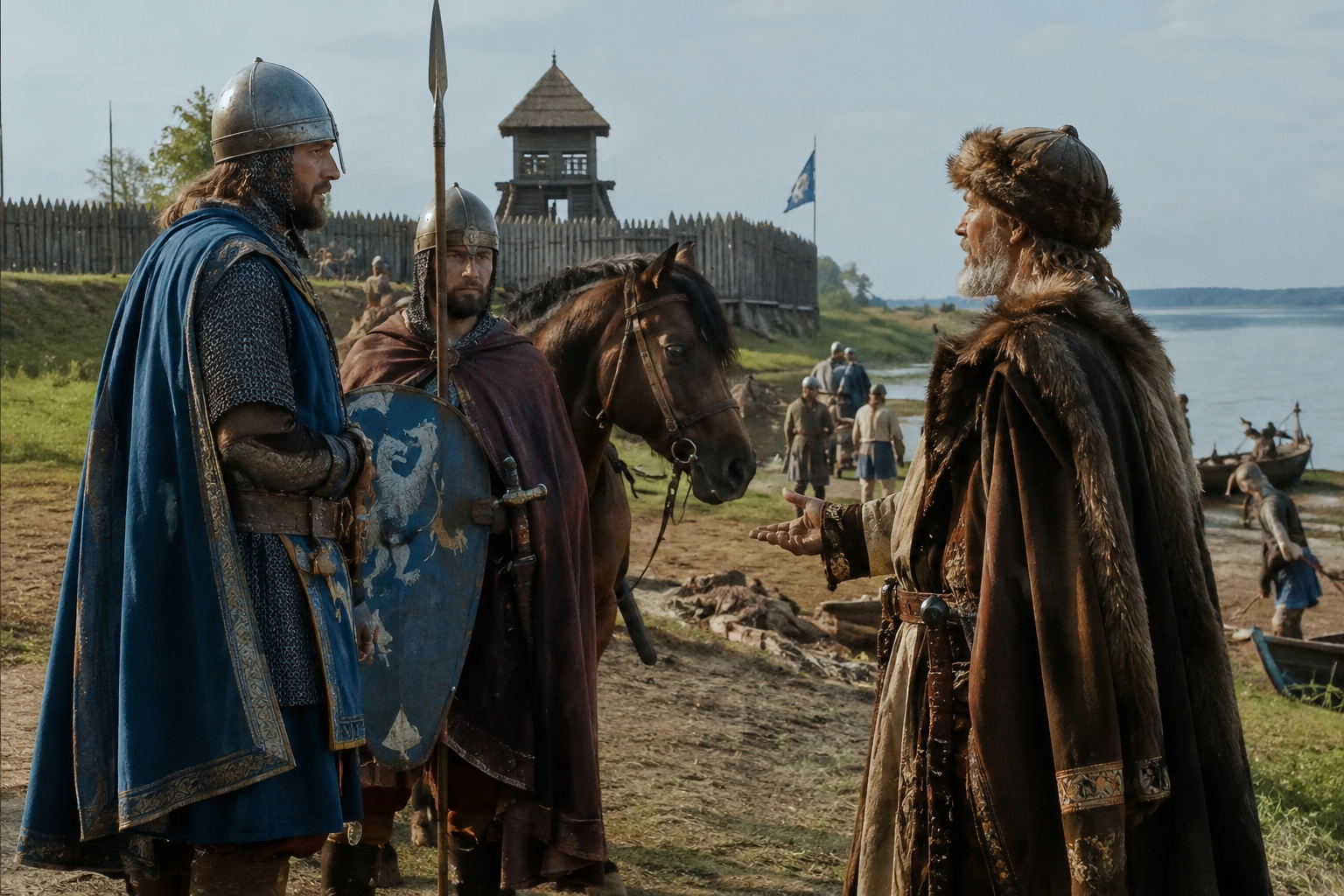
The second key individual, KMU005, comes from Arrabona-Kony Barbaricum in present-day Hungary, dated to around AD 550. This was Pannonia, a frontier region of the former Roman world and a major staging ground in the history of the Longobards before their move into Italy in AD 568. That alone makes the sample historically important: it places the same paternal branch in the Danubian sphere just before or during the period when Lombard political power shifted southward.
What makes Pannonia so useful to archaeologists is that it was not a sealed ethnic homeland. It was a contact zone. Roman provincial traditions, post-imperial military structures, and communities conventionally grouped as "barbarian" all overlapped there. So KMU005 is best understood not as a mascot for a tribe, but as evidence that R1b1a2a1a1 was part of the male-line diversity present in this mixed frontier landscape.
Research on post-Roman populations in the region has helped clarify just how complex that world was. One study relevant to this broader setting is published here: https://www.science.org/doi/10.1126/science.aec2634.
At first glance, the label looks forbidding, but the main point is straightforward. R1b1a2a1a1 is a downstream branch within the very large and widespread paternal haplogroup R1b, one of the major Y-chromosome lineages in western Eurasia. The important caution is that a broad parent haplogroup and a narrower branch are not the same thing historically. You cannot simply borrow the entire deep history of R1b and paste it onto this subclade without evidence.
What the two ancient samples do show is that this particular branch, or an assignment associated with it, occurs in early medieval contexts tied to the Longobard world. That is a much more precise and useful statement than claiming a sweeping origin myth. For a tester today, the value lies in context: this branch appears in men living in the political and social upheaval of the sixth century, in both the Danube region and northern Italy.
One of the most interesting things about these two samples is not just their haplogroup, but their geography. Collegno and Arrabona-Kony Barbaricum sit in different parts of Europe, yet both belong to the same historical moment of movement between Pannonia and Italy. The Lombard migration is often told as if whole peoples marched in tidy formation. Archaeology and genetics suggest something more untidy and more human: shifting coalitions, family groups, retainers, locals, and newcomers all caught up in the same transformation.
That is where a lineage like R1b1a2a1a1 becomes revealing. It does not prove that COL_034 descended directly from KMU005, or that every man carrying this branch was part of one kin-group. But the recurrence of the same paternal line in these connected settings hints at the kind of male-line continuity that could travel with migrating or expanding communities.
For a wider look at how ancient DNA is reshaping the picture of post-Roman population change in the Carpathian Basin, this related article is particularly relevant:
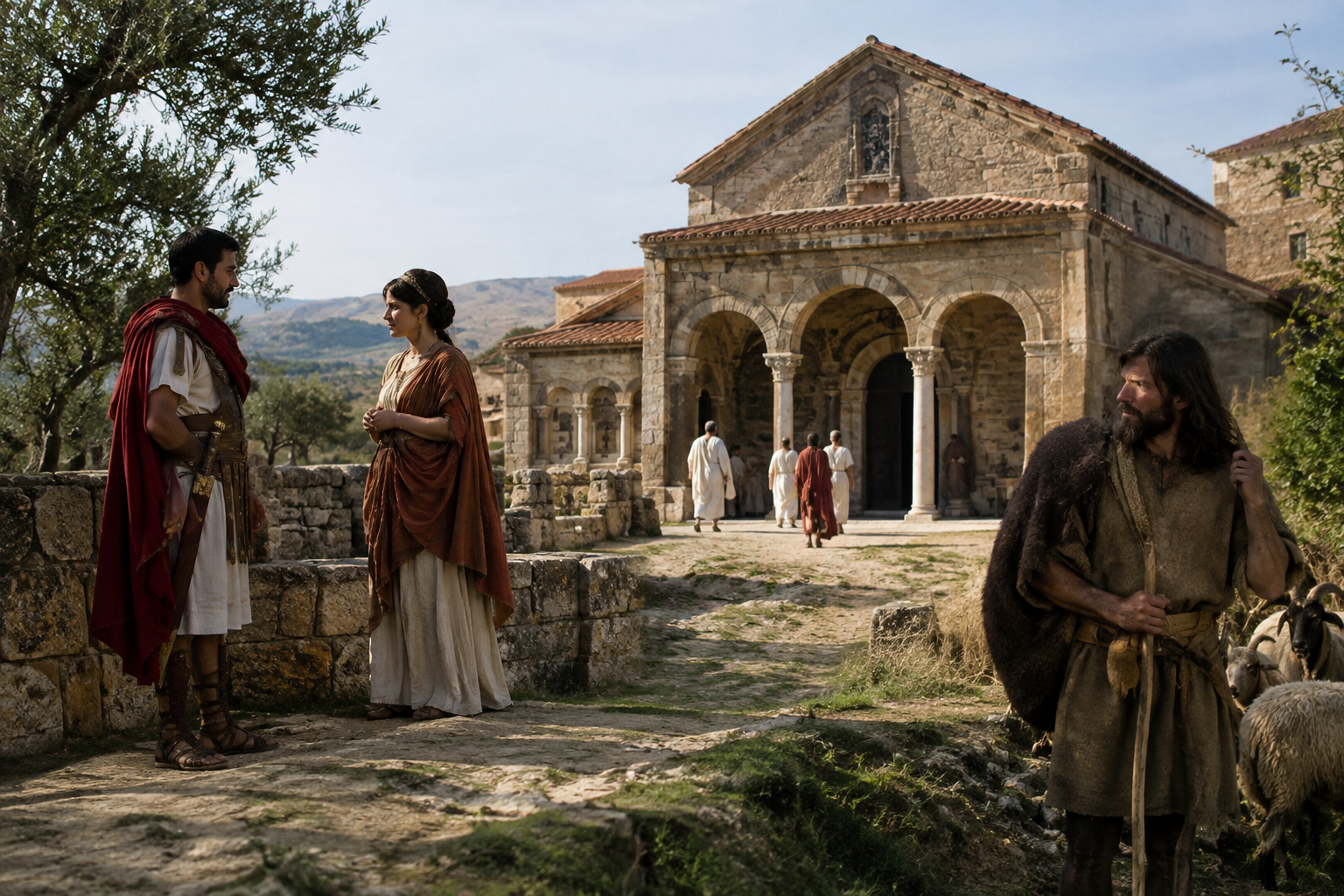
Northern Italy in the late sixth century was not an empty stage waiting for newcomers. It was a densely historical landscape, full of Roman towns, rural communities, church networks, and older local populations. When a man like COL_034 was buried there, he belonged to a society that was already the product of mixture and negotiation. That is why early medieval Y-DNA findings are so informative: they let us see male-line strands within a larger patchwork rather than pretending whole populations were genetically uniform.
Recent research on Italy's ancient population history has emphasized continuity in some places, movement in others, and frequent coexistence between people of different genetic backgrounds. Another useful study for this broader Italian picture is available here: https://www.pnas.org/doi/10.1073/pnas.2317868121.
If you want to place these Lombard-era findings into the longer story of Italian population change, this article makes a good companion read:
With only two ancient individuals in hand, caution is essential. Yet they are unusually well positioned historically. KMU005 sits in the Danubian world from which Lombard power expanded, while COL_034 appears in northern Italy after that expansion had become a new political reality. That makes R1b1a2a1a1 one of those paternal branches that turns up not in abstraction, but at a major hinge-point in European history.
There is also a useful corrective here to older ways of telling the Migration Period. Ancient DNA does not simply sort graves into neat ethnic boxes. Instead, it shows how political identities and family lines intersected in complicated ways. A man could belong to a Lombard-period community without that identity being reducible to a single chromosome line.
Another related case study on diverse origins in an early medieval setting can be found here:
Diverse Early Medieval Origins
What distinguishes R1b1a2a1a1 in the present evidence is not sheer antiquity, but historical placement. It appears in two sixth-century settings tied to the Longobard sphere: one in Pannonia, one in northern Italy. For someone tracing this paternal line today, that does not promise a named ancestor or a dynastic pedigree. It does suggest that your direct male line belongs to a branch already present in the mobile, mixed, and politically volatile societies that emerged from Rome's western collapse.

Comments