Haplogroup J2a1a1a2b2a1a1

– 5 min read


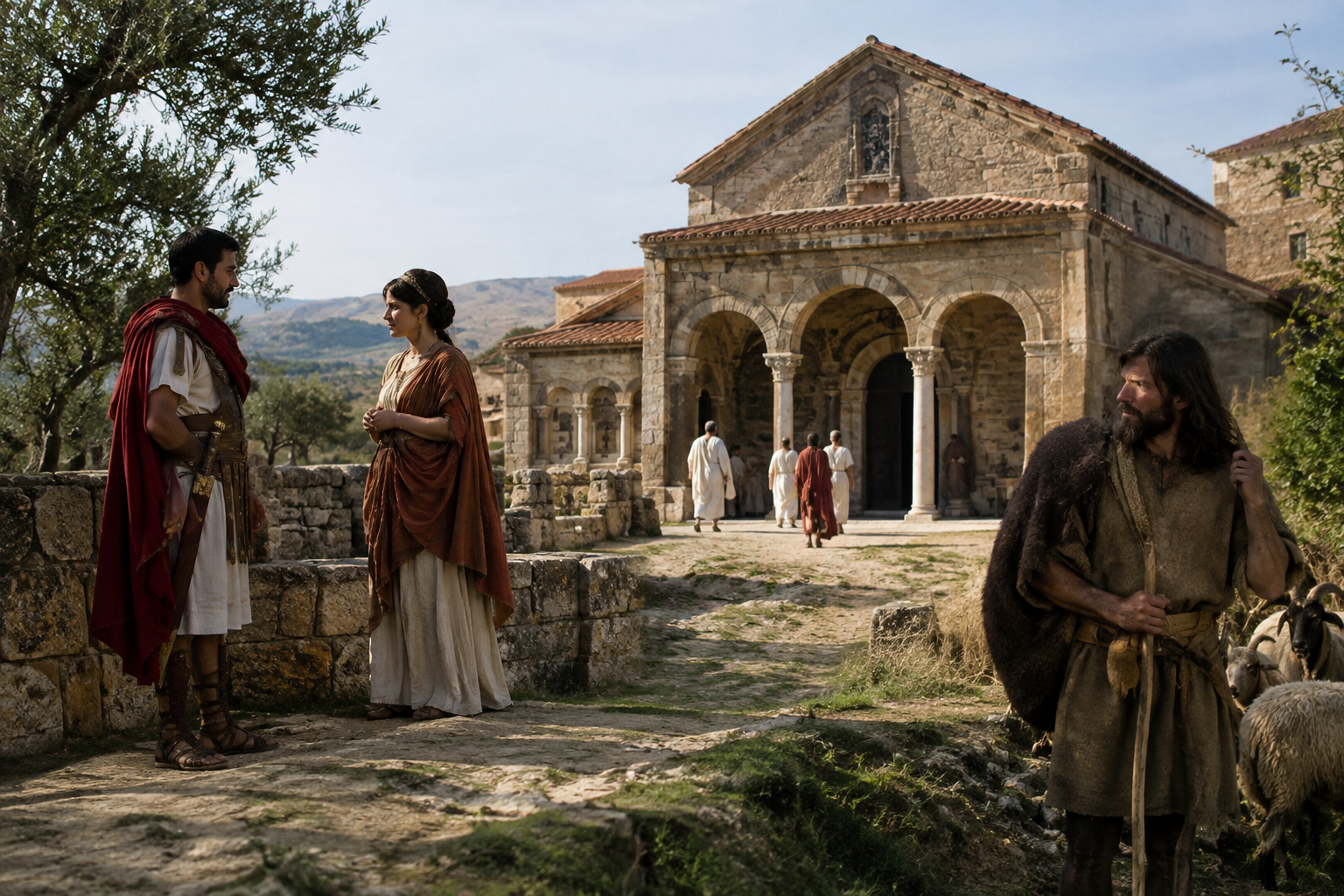
At Lucena in Cordoba province, one Late Roman burial has become an unexpectedly useful signpost for tracing a very specific paternal line. The individual labelled I36196, dated to about AD 450 from the Cortijo Basilica del Coracho, belongs to the Y-DNA haplogroup J2a1a1a2b2a1a1. That may look forbiddingly technical, but the point is simple enough: one direct male line that is often associated, at broader levels, with populations of the eastern Mediterranean and Near East had reached southern Iberia by the last phase of Roman rule.
That is intriguing because the evidence here is not abstract. It is anchored in two ancient men, separated by more than a thousand years and by a considerable stretch of geography: one from Iron Age northern Armenia, I16546 from Bragdzor, around 750 BC; the other from Late Roman southern Spain. Taken together, they do not tell us that one was the ancestor of the other, and they do not define the whole history of this branch. But they do show that the paternal line represented by J2a1a1a2b2a1a1 belonged to the long-connected world stretching from the South Caucasus to the western Mediterranean.
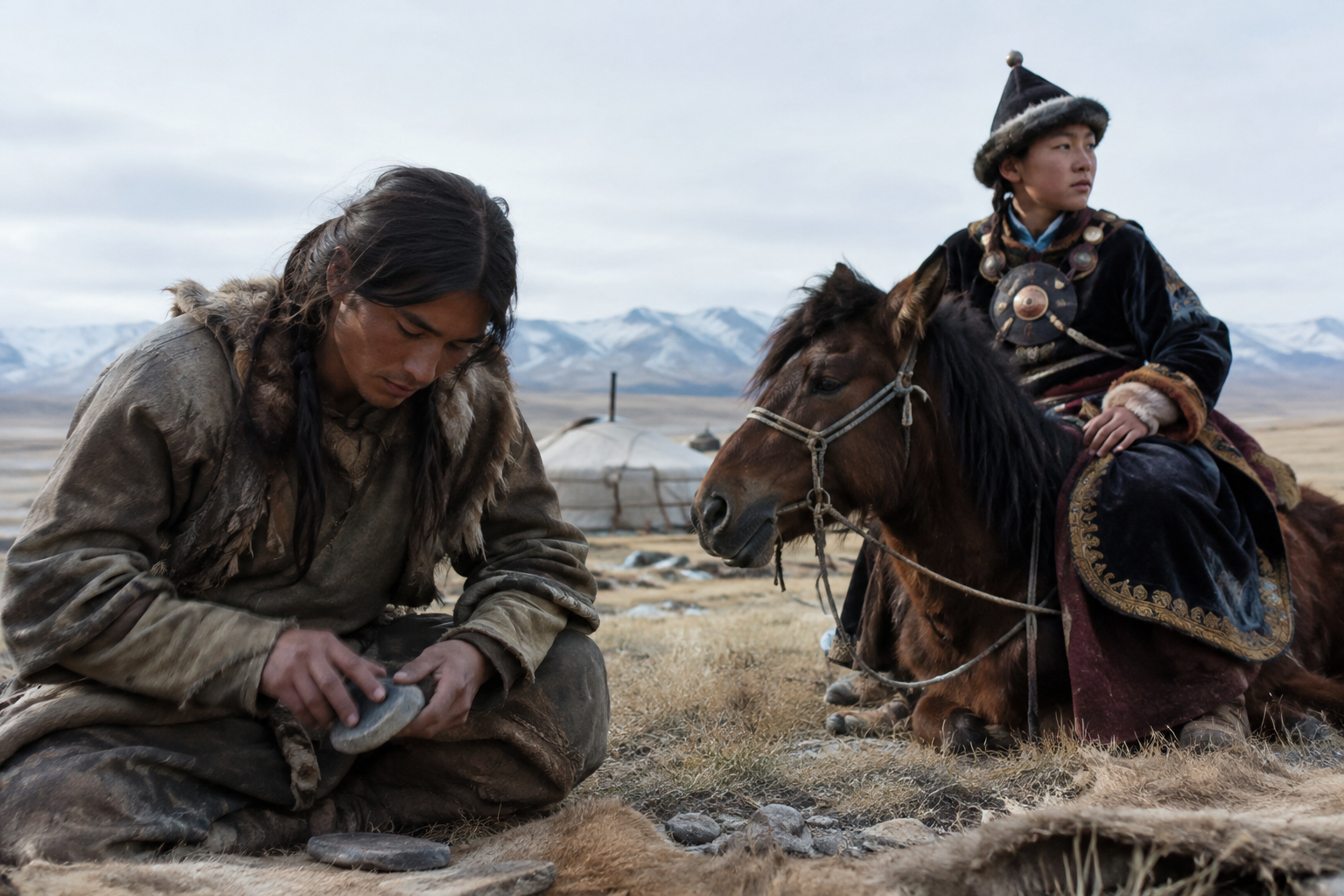
The earlier of the two ancient cases is I16546 from Bragdzor in northern Armenia, dated to around 750 BC. This is the sort of evidence archaeologists relish because it gives a firm historical foothold. Rather than speaking vaguely about "ancient origins," we can point to an actual Iron Age individual from the South Caucasus carrying this lineage.
That matters because the Caucasus was never some remote backwater in the first millennium BC. It sat between Anatolia, the Iranian world, the steppe, and Mesopotamia, with mountain corridors and political frontiers that were also routes of exchange. A Y-chromosome line found there in the Iron Age fits well with the broader reputation of J2 branches as part of the old demographic landscape of the Near East and adjoining regions, though one should be careful not to project the whole history of haplogroup J2 onto this exact downstream subclade.
A large ancient DNA study of the region and its surrounding histories has helped clarify just how connected these landscapes were over long periods, even when local populations remained distinctive in important ways. For readers interested in that wider Caucasus setting, the Science paper linked with these materials offers valuable background: research on ancient population history in the broader region.
South Caucasus genomic history
J2a1a1a2b2a1a1 is a very narrow branch on the Y-chromosome tree. Y-DNA tracks one direct paternal line only: father to son, to son, to son. It does not describe a person's whole ancestry, language, ethnicity, or social identity. An Iron Age man from Armenia and a Late Roman man from Spain could share this paternal branch while having very different overall genetic backgrounds and belonging to entirely different historical communities.
Still, narrow branches are precisely what make ancient DNA so interesting. A broad haplogroup such as J2 can turn up across a very wide zone, but a more exact lineage like J2a1a1a2b2a1a1 gives us a finer historical grain. In this case, the currently supplied ancient evidence suggests a branch present in the South Caucasus in the Iron Age and later visible in Roman Iberia. That is a pattern of movement and continuity within a connected Old World, not a neat one-direction migration story.
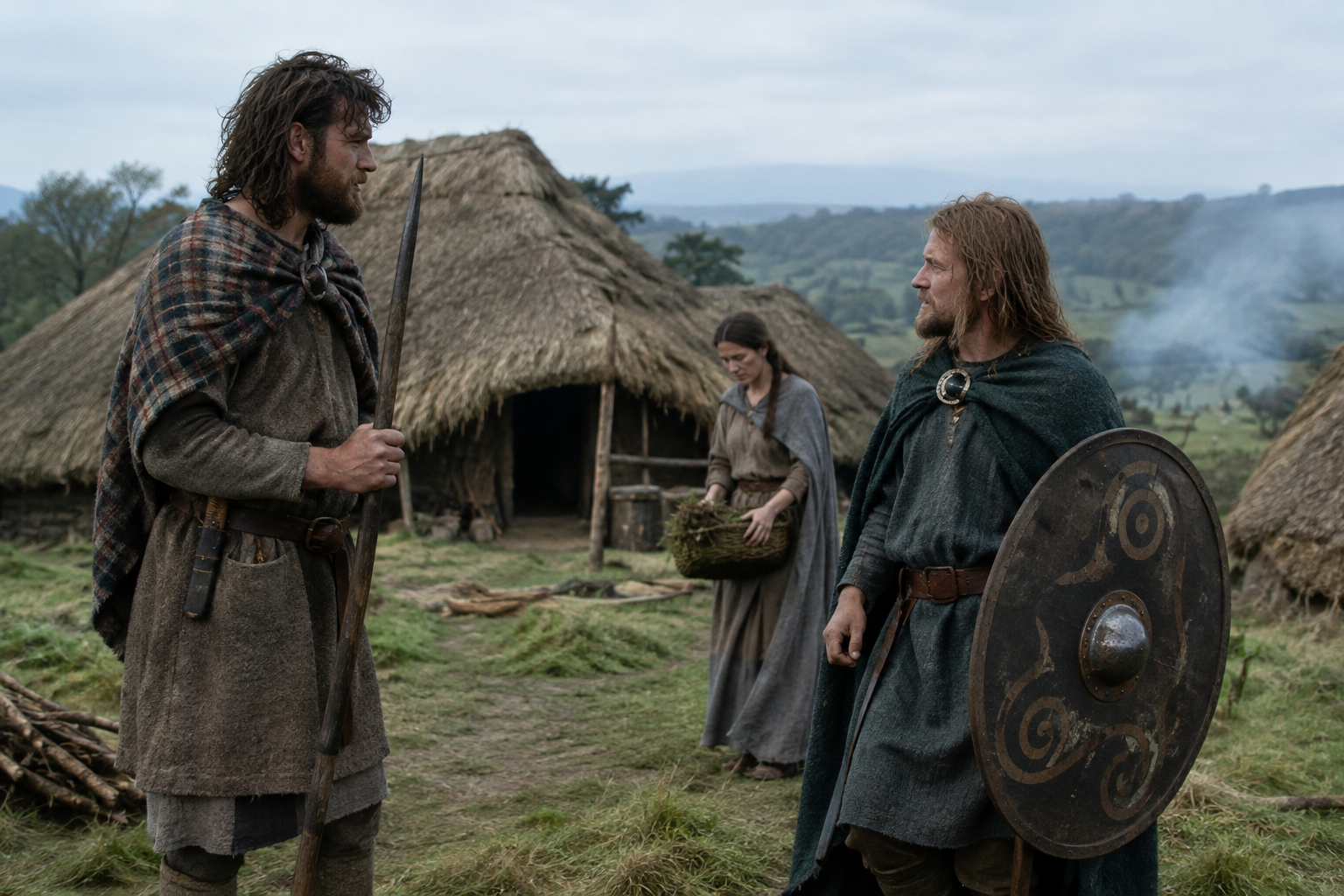
The later sample, I36196 from the Cortijo Basilica del Coracho at Lucena, belongs to the fifth century AD, around the time when Roman political control in the West was fragmenting. Southern Spain in this period was not isolated; it remained tied into Mediterranean networks of trade, administration, religion, and mobility. People moved through empire for military service, commerce, clerical careers, settlement, and family reasons, and their descendants did not always remain where their paternal lines had first emerged.
So the appearance of J2a1a1a2b2a1a1 in Late Roman Cordoba province should not be treated as a surprise in the melodramatic sense. It is better seen as a reminder of how thoroughly Roman Hispania had been integrated into a larger imperial world. A recent Cell study on ancient Iberian and post-Roman populations has sharpened that picture by showing just how varied some communities could be across time: an ancient DNA study examining population change in Iberia.
Lucena is especially useful because it sits in Baetica, one of the most urbanised and economically active parts of Roman Spain. Olive oil, ceramics, taxation, church networks, and roads tied the region to the rest of the empire. By the fifth century, a paternal line with deeper eastern associations could perfectly well be local to Iberia in the everyday sense, having arrived generations earlier and become part of the normal human mixture of provincial Roman life.
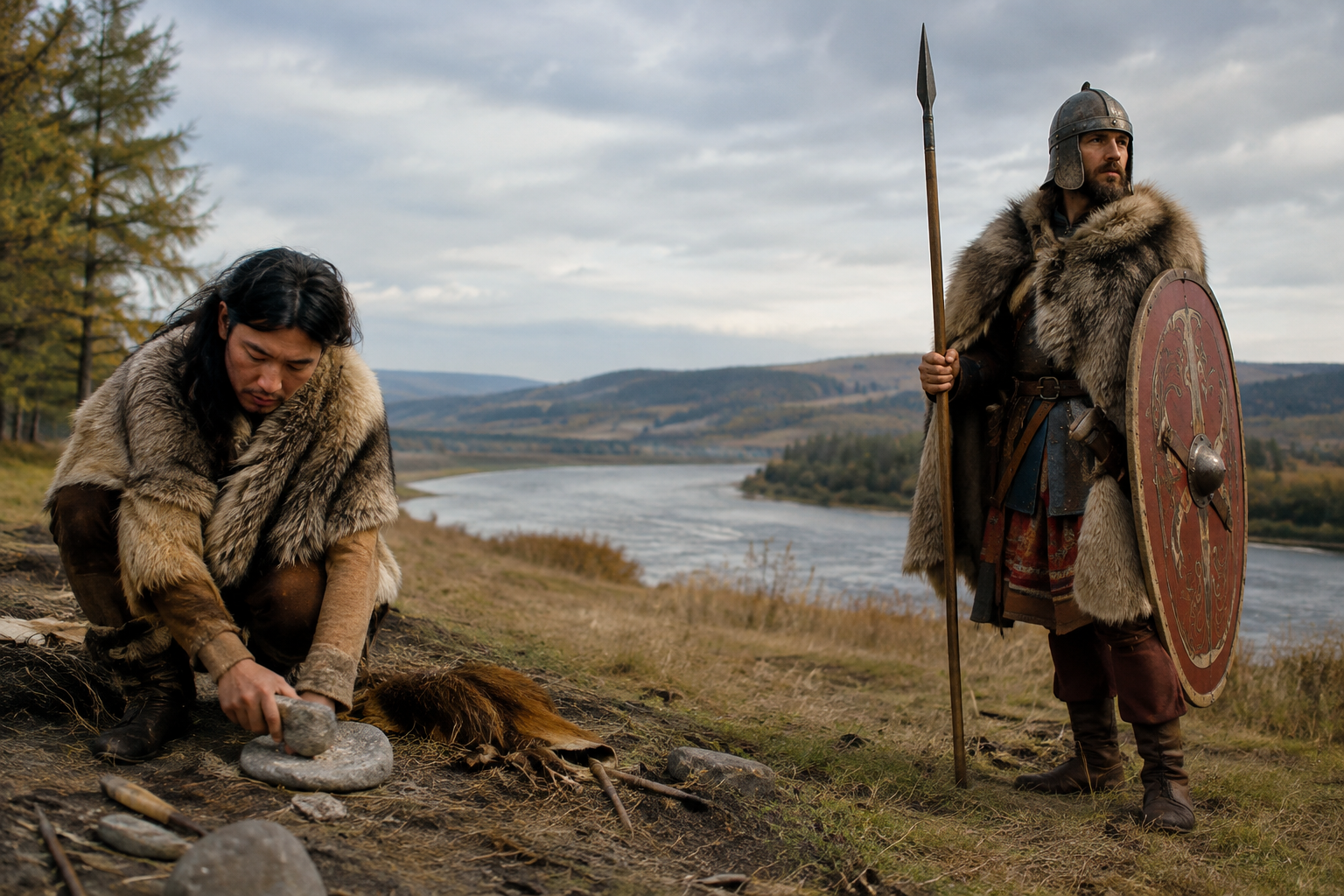
If we put Bragdzor and Lucena side by side, the striking feature is not simply distance. It is the kind of historical world required to connect them. Between about 750 BC and AD 450 lay the eras of Achaemenid power, Hellenistic kingdoms, Roman expansion, and the immense traffic of the Mediterranean and Near Eastern spheres. A paternal branch present in the South Caucasus could spread westward by many mechanisms over many centuries without any single dramatic migration event standing behind every later case.
This is where archaeology helps keep genetics honest. The Armenian sample belongs to an Iron Age setting in northern Armenia; the Spanish sample belongs to a Late Roman Christian burial landscape in southern Iberia. Those are not the same culture, not the same polity, not the same language world. The continuity lies only in one male line. But that one line is enough to show that the channels linking east and west were not theoretical. They were lived routes, repeated over generations.
Early medieval Spain diversity
Iberia often rewards this kind of close reading because it was a receiving zone for many different streams of ancestry long before and long after Rome. Phoenician contacts, Greek exchange, Roman colonisation, military recruitment, enslaved movement, Jewish diaspora communities, later Islamic-period mobility, and internal provincial circulation all contributed to the peninsula's complexity. Not every J2 lineage in Iberia came by the same route, and one should certainly not reduce them all to a single eastern source.
But the Lucena result does fit a broader picture in which southern and central Iberia, especially in Roman and post-Roman centuries, contained lineages that speak to eastern Mediterranean and Near Eastern connections. The value of a specific assignment like J2a1a1a2b2a1a1 is that it encourages us to stop imagining past populations as neatly bounded. A man buried in fifth-century Andalusia could carry a paternal line whose deeper documented ancient appearance, in the evidence provided here, lies far to the east.
Roman Iberia population change
For someone researching J2a1a1a2b2a1a1 today, the most useful lesson is not a simplistic origin myth but a historical horizon. The ancient evidence currently attached to this branch places it in Iron Age northern Armenia and in Late Roman southern Spain, which is a powerful reminder that paternal lines can travel across very different societies while remaining only one thread in a much larger ancestry. This haplogroup points toward old connections linking the Caucasus, the Near East, and the Mediterranean world - and it does so through real individuals, not just maps.
Comments