Haplogroup R1a1a1b1a1

– 5 min read


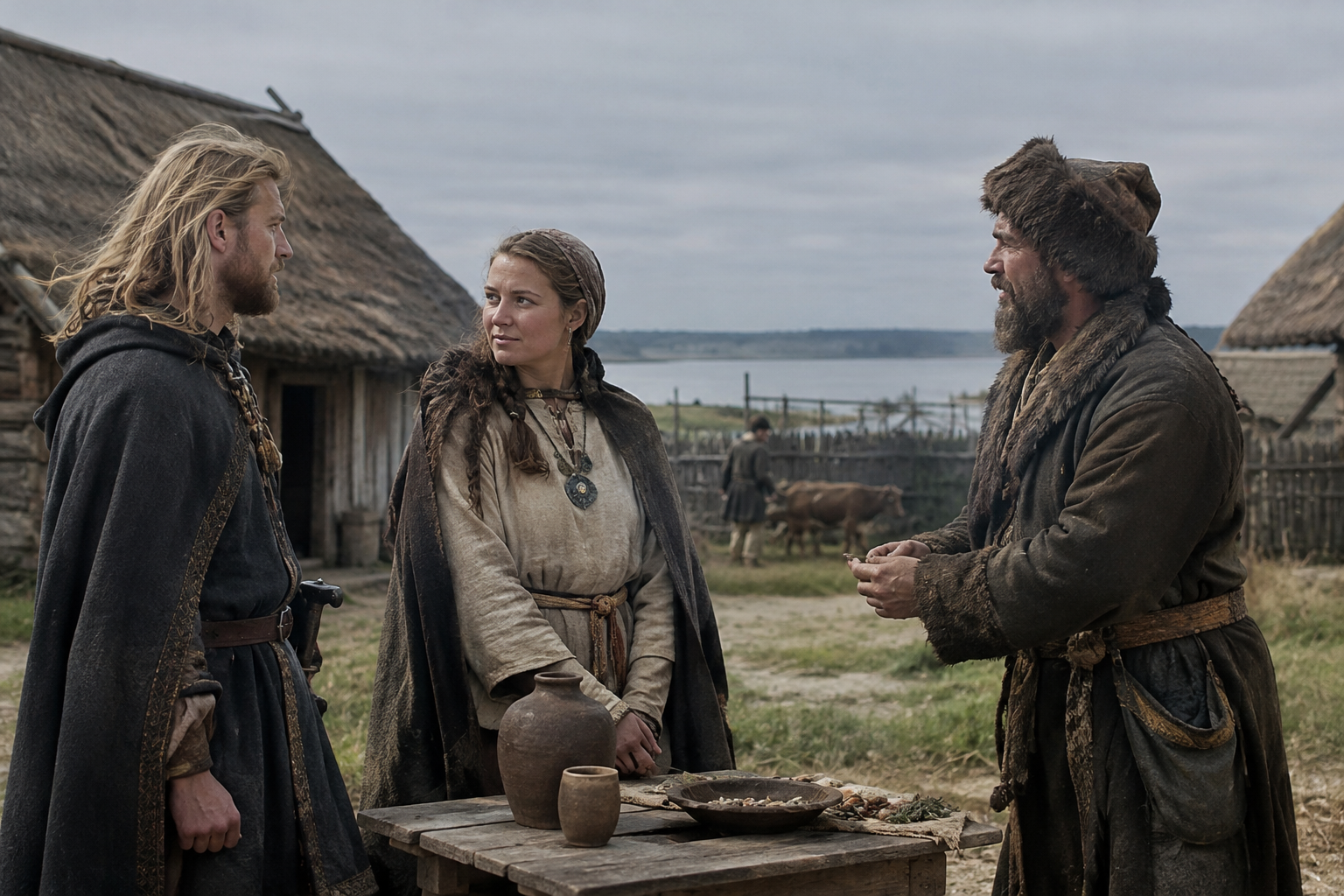
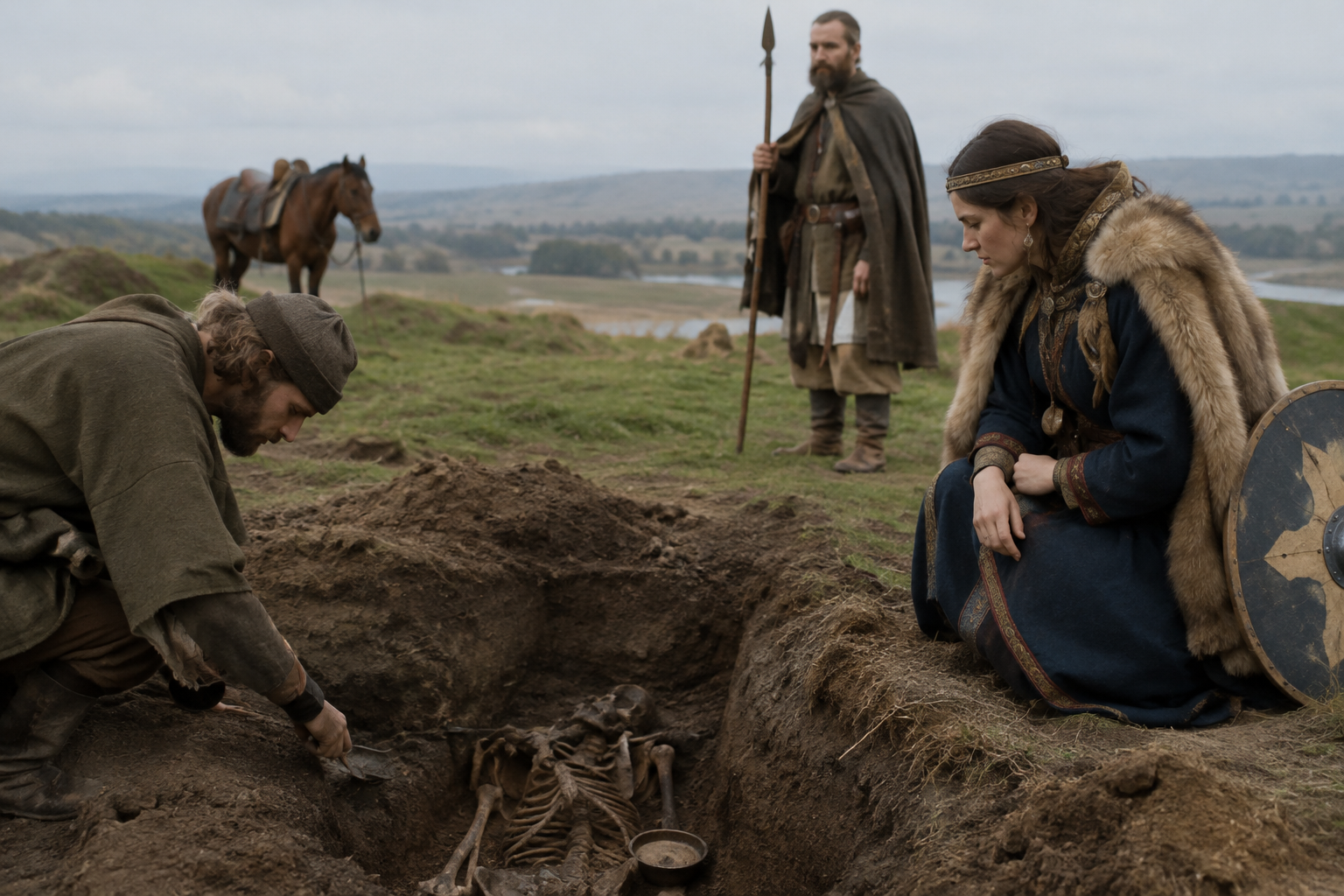
At Niederwunsch in Saxony-Anhalt, one medieval burial has become a small but telling witness to a large historical movement. The individual catalogued as NDW116, dated to about AD 1100 and described as a Western Slav settler, sits at the point where archaeology, migration, and paternal lineage all meet. In this case, the Y-DNA branch associated with him is R1a1a1b1a1, a subclade within the wider R1a family that appears again and again in discussions of eastern and central European population history.
That does not mean one grave can stand for a whole people, still less for a language or an ethnicity. Y-DNA tracks one direct paternal line only. But when a branch like R1a1a1b1a1 turns up in more than one ancient setting, and in places that matter historically, it gives us something much more interesting than a label: a glimpse of how male lines persisted through settlement, local mixing, and political change.
Niederwunsch belongs to one of the most important frontier stories in medieval Europe: the long Slavic presence west of the Elbe and Saale. By the High Middle Ages, regions of what is now eastern Germany were not empty borderlands waiting to be filled, but landscapes shaped by centuries of interaction among Slavic-speaking communities, German-speaking elites, church institutions, and expanding lordship. A burial such as NDW116 matters because it puts an actual male line into that history.
The description of NDW116 as a Western Slav settler is especially valuable because it anchors the haplogroup in a concrete historical context rather than a vague map of modern frequencies. We are not dealing here with mythic ancestors on an endless steppe, but with a man buried in medieval Saxony-Anhalt during a period when settlement, identity, and political allegiance were being negotiated village by village. For a lineage like R1a1a1b1a1, that is precisely the kind of context that gives it historical texture.
A recent ancient DNA study touching this broader regional world of medieval mobility and settlement can be followed through research on medieval central European populations. Even where a paper is consulted chiefly as regional support rather than as a line-by-line report on one burial, the larger lesson is clear enough: central Europe in the medieval period was full of continuity, movement, and local complexity.
The wider haplogroup R1a is one of the best known Y-chromosome lineages in Eurasian archaeogenetics, especially because of its prominence in many eastern European, central European, and steppe-related discussions. But the article haplogroup here is not the whole of R1a. It is the narrower branch R1a1a1b1a1, and that distinction matters.
In practice, ancient samples are not always published at the same level of resolution, and not every report supports the exact same depth of branching. So the safest way to read these samples is as evidence that this paternal line, or a very close upstream branch, appears in medieval and Iron Age northern and eastern Europe. That is already historically meaningful. It suggests persistence and spread within the broad zone stretching from Scandinavia across the Baltic world into Slavic-speaking regions, without pretending that one branch alone explains those populations.
This also helps correct a common misunderstanding. A man carrying R1a1a1b1a1 in medieval Germany was not "just Slavic" because of his Y-chromosome, and a man carrying a related line in Iron Age Denmark was not therefore part of the same named people. Y-DNA is one thread in a much larger social fabric.
The sample CGG106795 comes from Sjaelland, Denmark, and is dated to around AD 200, in the Iron Age. This is a very different world from medieval Saxony-Anhalt. We are now in the period of northern European chiefdoms, regional exchange, and the centuries before the Viking Age, when Scandinavia was already deeply connected to the Baltic and continental Europe.
The importance of CGG106795 is not that it proves some simple "origin point" for R1a1a1b1a1. Ancient DNA rarely behaves so neatly. Its value is that it places this paternal branch, or its immediate background, in Denmark centuries before the medieval sample from Niederwunsch. That widens the historical frame considerably. Instead of a lineage appearing suddenly in one medieval settlement context, we can see it as part of a broader northern European pattern.
Denmark is especially useful here because it so often sits at the crossroads of archaeological arguments about continuity and change. Studies of Danish prehistory and later population shifts have shown again and again that the region was shaped by repeated demographic events, but also by enduring local lines. A sample such as CGG106795 belongs to that longer story of northern European male ancestry.
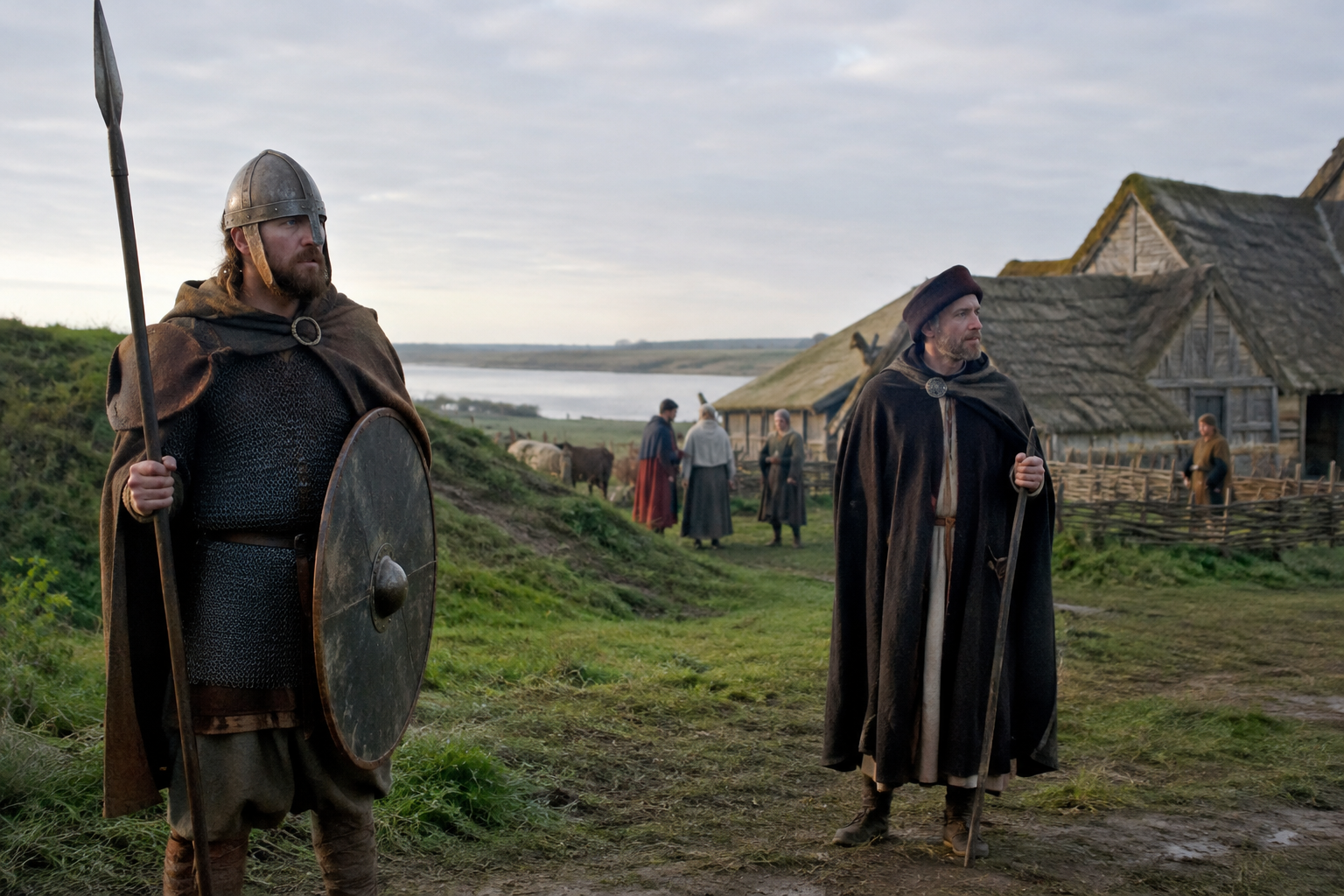
The third sample, SHE009, comes from Shekshovo in Russia and is dated to about AD 1000. If Niederwunsch shows this lineage in a western Slavic settlement setting, Shekshovo places it further east in the world of early medieval Rus'. That is a significant contrast. It suggests that the paternal line associated here with R1a1a1b1a1 was not confined to one political frontier or one local ethnic label.
Shekshovo belongs to the broad eastern European zone where Slavic expansion, local forest-zone populations, trade routes, and emerging princely networks all overlapped. Around AD 1000, this was not a static landscape. It was a world of river communication, settlement growth, and cultural blending. A Y-chromosome lineage found there may reflect local continuity, wider Slavic-associated demographic patterns, or both.
That wider eastern context has been clarified by ancient DNA work on early medieval eastern Europe, including research available through this open-access study of ancient populations in the region. The specific value for our purposes is not a dramatic claim about a single dynasty, but the reminder that eastern Europe around the first millennium AD was genetically and historically complex, with paternal lines crossing cultural boundaries that later historians sometimes treat as fixed.
Taken together, these three samples do not give us a royal pedigree or a neat migration arrow. What they do give is arguably better: a pattern. One occurrence in Iron Age Denmark, another in medieval Russia, and another in a Western Slav context in Saxony-Anhalt show that R1a1a1b1a1 belongs to a real historical corridor spanning the Baltic and north-central European worlds.
That corridor matters because it was one of Europe's great contact zones. Goods, people, languages, marriage ties, and political ambitions moved through it for centuries. The paternal lineage seen in these burials may have travelled in some cases and remained local in others. Either way, the evidence fits a history of interconnected northern and eastern European populations rather than isolated ethnic blocks.
There is also something salutary here for family historians. People often hope a haplogroup will deliver a single ancestral identity in one jump. Ancient DNA usually says something subtler. In this case, R1a1a1b1a1 looks less like the badge of one tribe and more like a durable paternal strand woven through several neighboring historical worlds.
Ancient DNA and Slavic Populations
For someone researching a paternal line in R1a1a1b1a1, the most defensible takeaway is not a claim to one famous house or one named ancient people. It is the stronger and more interesting fact that this branch is at home in the archaeological record of the Baltic-facing and east-central European world. From Iron Age Denmark to medieval Russia and a Western Slav settler in Saxony-Anhalt, the evidence points to a lineage that participated in the making of northern and eastern Europe across many centuries.
Comments