Haplogroup R1b1a1b1a1a1c2b3
– 5 min read


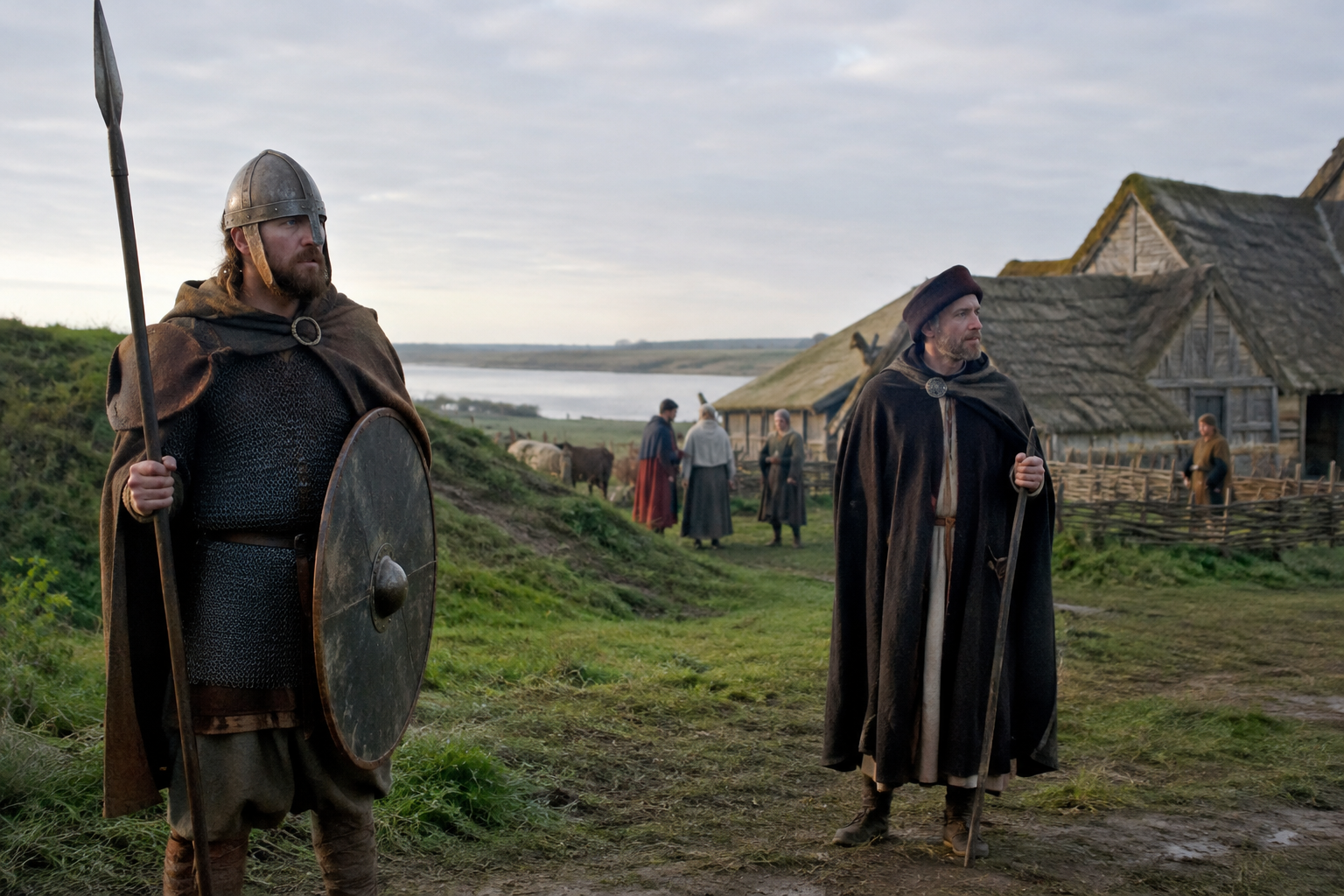
At Edix Hill in Cambridgeshire, one early medieval burial helps pin a very specific Y-chromosome branch to a real place and time. The individual known as EDI064d, dated to around AD 545, lived in the unsettled generations after Roman rule in Britain had collapsed and new communities were taking shape across eastern England. For anyone carrying Y-DNA haplogroup R1b1a1b1a1a1c2b3, that is a striking anchor point: not a legend, not a surname tradition, but a man from an excavated Anglo-Saxon cemetery.
The branch itself is a very narrow twig on the enormous R1b tree. That matters. A broad label such as R1b covers huge stretches of western Eurasia and many different historical trajectories, while R1b1a1b1a1a1c2b3 points to a much more specific paternal line. Y-DNA traces one direct male line only, but in archaeology that single line can still be illuminating when it appears in well-dated burials like Edix Hill and, later, in medieval Groningen in the northern Netherlands.
EDI064d comes from the cemetery at Edix Hill, near Barrington in Cambridgeshire, a site that has become important for understanding the population history of early Anglo-Saxon England. This was a period when burial grounds, settlements, and political identities were all shifting. The old Roman world had fragmented, but people did not simply vanish and get replaced wholesale; the evidence increasingly shows a complicated mixture of newcomers and locals.
An ancient DNA study on early medieval England, available here at ResearchGate, helped sharpen that picture by examining how migration and admixture shaped the early English gene pool. EDI064d belongs in that wider story. A lineage like R1b1a1b1a1a1c2b3 appearing in this setting suggests that this paternal branch was part of the North Sea world that linked eastern Britain to continental Europe during the 5th and 6th centuries.
That does not mean every man in early Anglo-Saxon Cambridgeshire carried this lineage, nor that one burial can stand for an entire people. But EDI064d is valuable because he is securely tied to a named site, an approximate date, and a recognisable archaeological horizon. He shows that this paternal branch was present among the communities involved in the formation of early medieval England.
The second ancient sample associated with this branch shifts the map east across the water. GRO013 is dated to around AD 1090 and comes from Groningen in the Netherlands, in the Carolingian or post-Carolingian medieval world of the northern Low Countries. That is not the same society as 6th-century Cambridgeshire, but it belongs to the same broad North Sea zone of movement, trade, and cultural contact.
This pairing is what makes the article's haplogroup interesting. Instead of appearing once and disappearing into silence, the branch is represented in two different regions tied together by maritime networks and long-term demographic exchange. From an early Anglo-Saxon cemetery in England to a medieval context in Groningen, the line seems at home in precisely the region where archaeology has long shown dense contact between Britain, Frisia, Saxony, and the Low Countries.
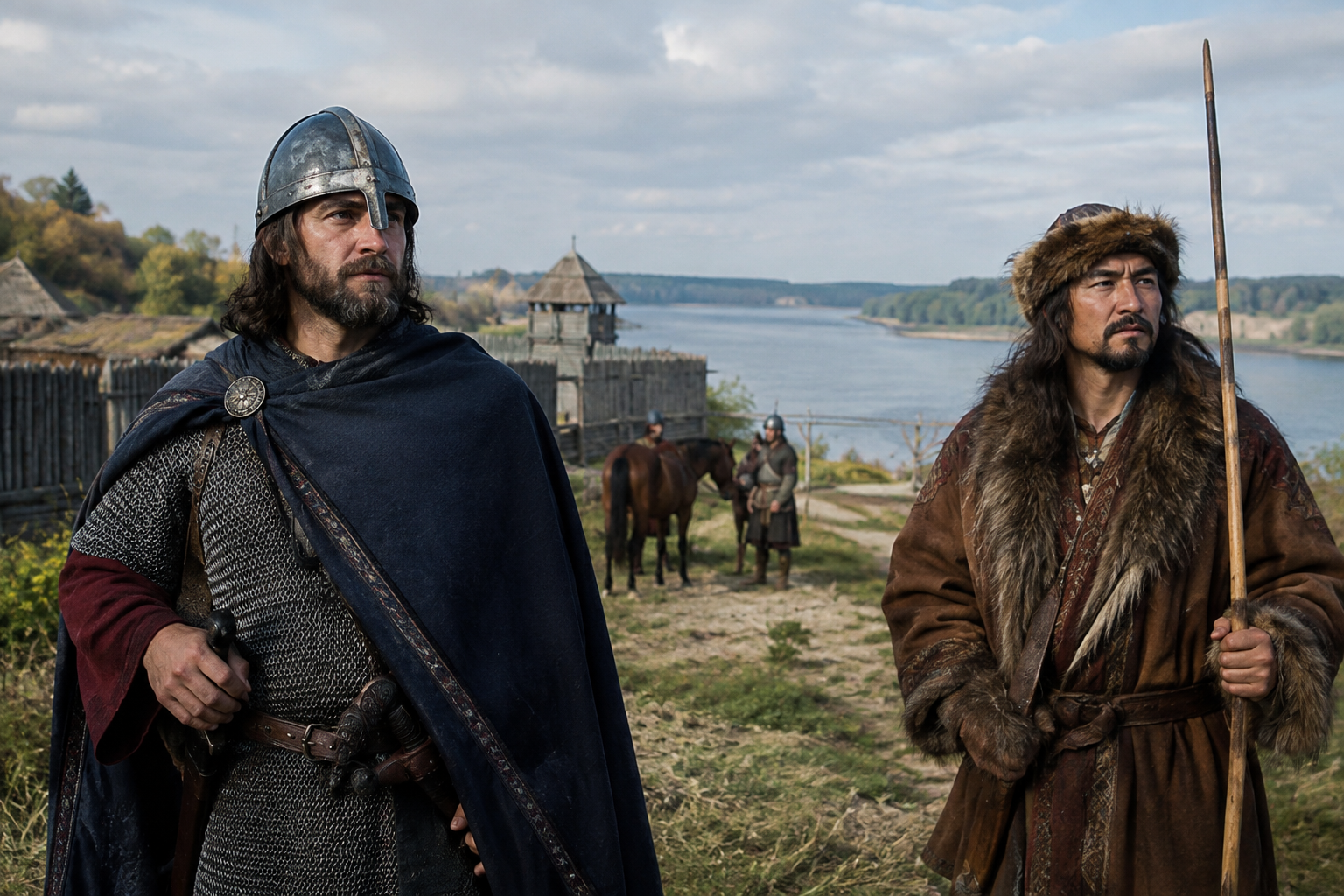
Groningen in the 11th century sat within a landscape of churches, emerging towns, rural estates, and waterways that connected the North Sea coast to inland Europe. A man like GRO013 need not have been a migrant in the dramatic sense. He may instead represent the quieter fact that paternal lines often persist across centuries in connected coastal populations, even while languages, polities, and local identities keep changing around them.
Because R1b1a1b1a1a1c2b3 sits inside the vast R1b family, there is always a temptation to tell an enormous story about Bell Beakers, Bronze Age expansions, Celts, Germanic speakers, Atlantic Europe, and almost everything else in between. Some of that broader background may well be relevant at the level of distant ancestry. But the narrower the branch, the more careful we have to be.
What the present evidence really supports is more modest and more useful. This specific paternal line is attested in early medieval eastern England and again in the medieval northern Netherlands. That pattern fits a historical zone where movement across the North Sea mattered enormously for the formation of populations after the Roman period. It is far more responsible to emphasise that documented medieval distribution than to force a precise prehistoric origin story for this exact subclade without direct evidence.
The distinction is worth keeping clear for family historians. Your haplogroup is not your whole ancestry, your language, or your ethnicity. But it can mark one remarkably persistent line of fathers and sons, and in this case the ancient evidence places that line in the heart of the early and high medieval North Sea world.
Edix Hill matters for another reason as well. Sites like this have become central to a larger rethink of post-Roman Britain. Older narratives often imagined a clean break: Roman Britain ends, Anglo-Saxons arrive, and a new population simply takes over. Ancient DNA has made that picture harder to sustain in such simple form.
Research published in PNAS on ancient genomes from Britain showed how dramatically ancestry profiles could shift over time, while still leaving room for continuity and local complexity. Although broad ancestry patterns and exact Y-line assignments are different kinds of evidence, they belong to the same larger lesson. The men buried in early medieval cemeteries were living through a real demographic transformation, but not one that can be reduced to a single tribe marching in and replacing everyone else.
For haplogroup R1b1a1b1a1a1c2b3, EDI064d therefore offers more than just an early date. He places the branch inside one of the most debated archaeological questions in British history: how migrants from the continent, local survivors of Roman Britain, and their descendants created the early English population.
GRO013 adds a later chapter from a region that often sits in the background of English history, despite its central importance. The northern Netherlands was not merely a neighbour across the sea. In the early medieval and medieval periods it was part of the same world of shipping lanes, coastal settlements, ecclesiastical networks, and commercial exchange that linked England to the continent.
That makes Groningen a sensible and historically meaningful second point for this branch. Rather than treating the English sample as uniquely national, the pairing with GRO013 suggests a paternal history spread across connected coastal populations. In plain terms, this looks less like a line trapped within one kingdom and more like one embedded in the old North Sea corridor.
The strongest supported insight for R1b1a1b1a1a1c2b3 is not a glamorous royal claim or a single point of origin far back in prehistory. It is that this paternal line is already visible in the archaeological record of the early medieval North Sea zone, with one example in Anglo-Saxon Cambridgeshire and another in medieval Groningen. That is a historically rich setting: the coastlines, river mouths, and settlement belts where post-Roman Britain and the Low Countries were closely entangled.
If this is your Y-DNA line, the ancient evidence points toward a paternal history shaped by those connections. Not the whole of your ancestry, certainly, but one direct male line moving through the same world that helped make early England and medieval coastal Europe.

Comments