The Grand Dukes of Lithuania

– 3 min read


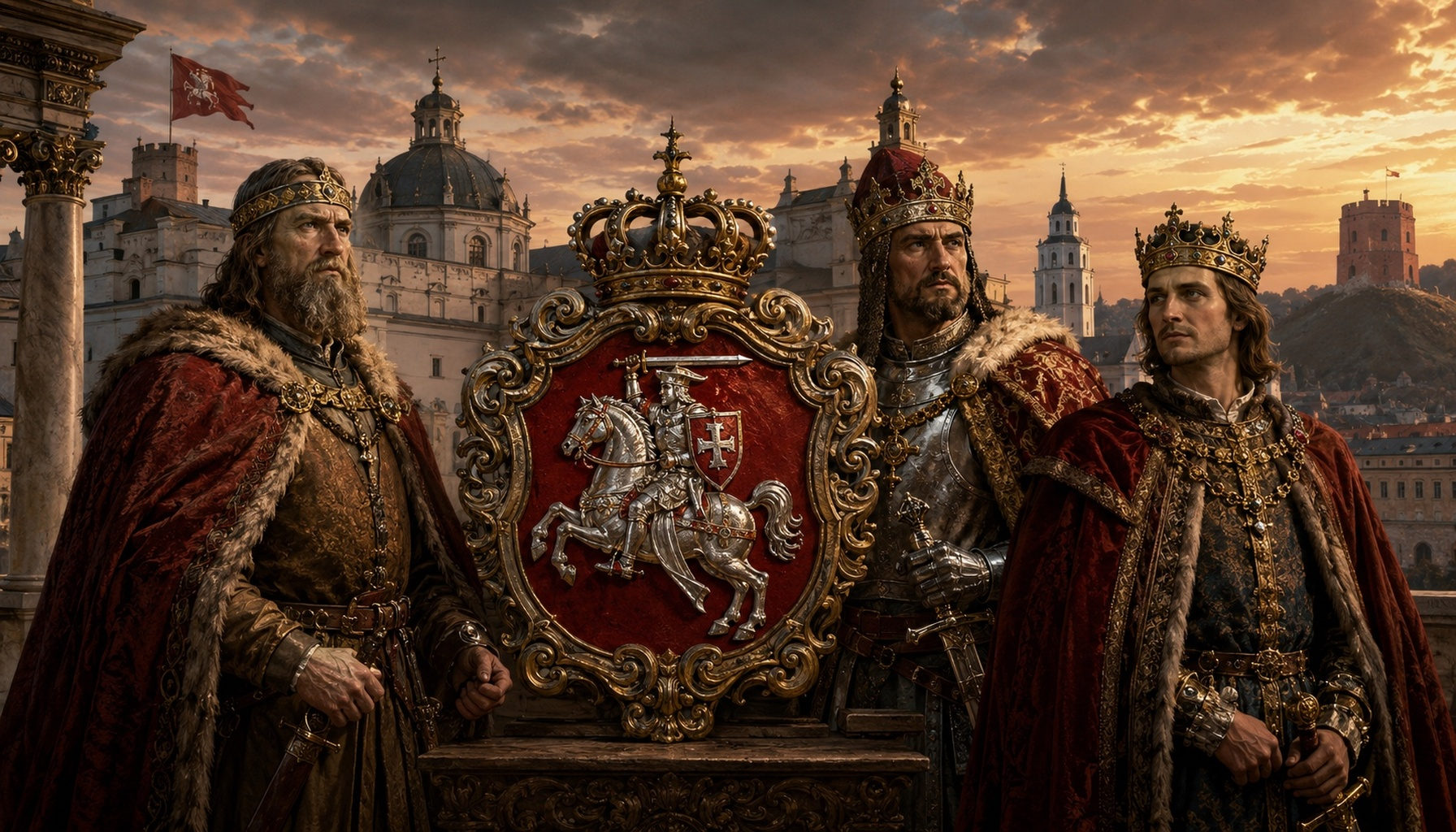
The Grand Dukes of Lithuania were the rulers of a dynasty and political world that grew out of the Baltic heartlands of medieval Lithuania and expanded into one of the largest states in Europe. Their story begins in the forests, river systems, and frontier strongholds of the eastern Baltic, where local rulership hardened into something much bigger: a remarkably flexible grand duchy that governed Lithuanians, Ruthenians, Poles, and many other peoples. In haplogroup tagging terms, this family is linked here with N1a1 as the primary family haplogroup, alongside the wider genetic background often associated with northern and northeastern Eurasian population histories.
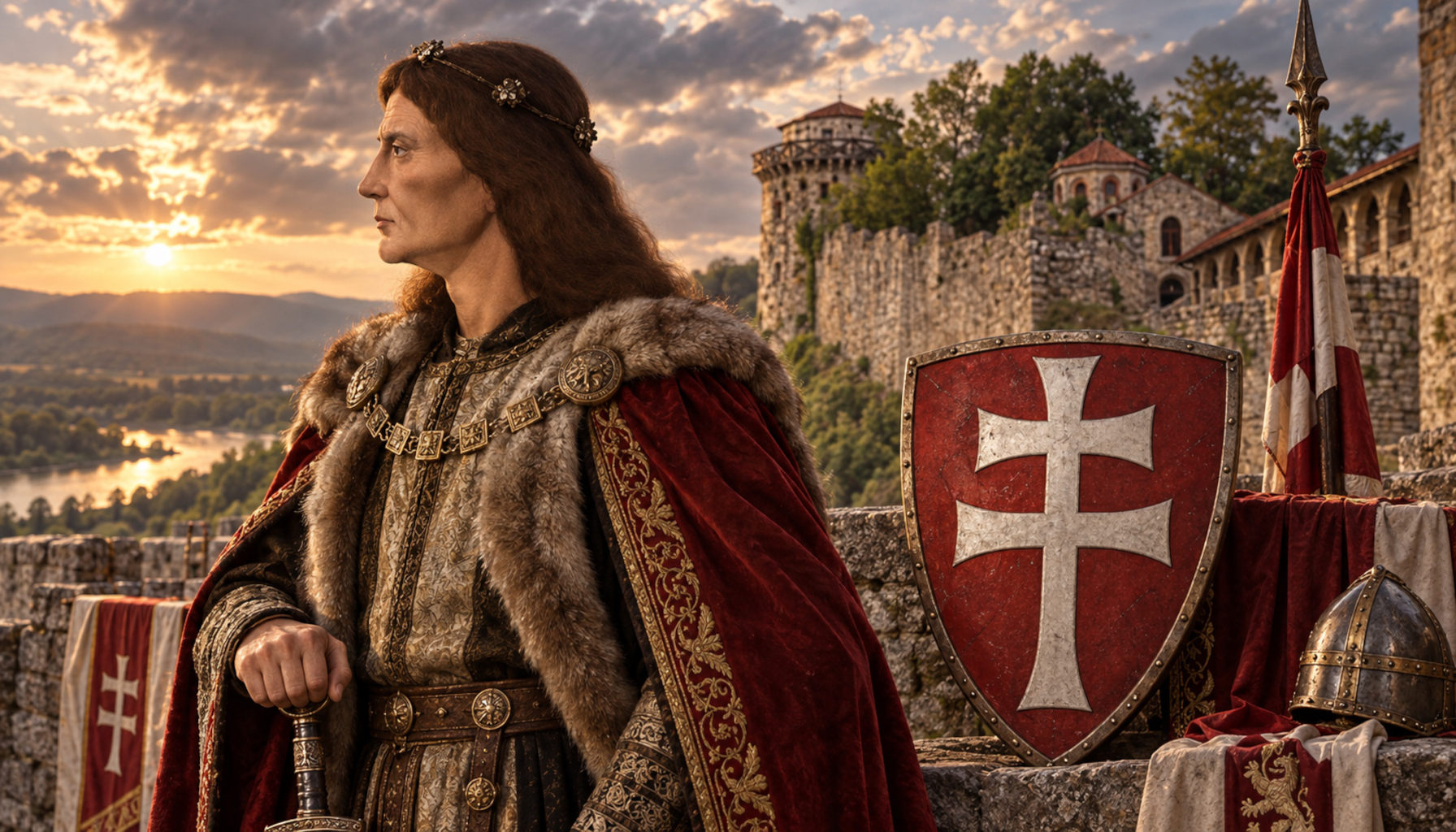
What makes the Grand Dukes so fascinating is that they were never just local chiefs in grander clothes. Under the House of Gediminas (1285-1440), Lithuania became a major regional power through conquest, alliance, marriage, and a shrewd sense of political timing. Figures such as Gediminas, the founder and diplomatic architect of dynastic Lithuania, Algirdas, who pushed Lithuanian influence deep into Ruthenian lands, Kestutis, famed for long resistance against the Teutonic Order, and Jogaila, whose union with Poland reshaped eastern Europe, all belonged to a ruling tradition that was practical, ambitious, and highly adaptable. Their authority rested not only on war, but on negotiation: with crusading orders, Muscovy, Polish elites, Orthodox lands, and steppe powers. That is why their legacy feels so modern in a medieval way - not a tidy nation-state, but a federation held together by dynastic skill.
Read more about the House of Gediminid
The great architectural symbol of this dynasty is the Palace of the Grand Dukes of Lithuania in Vilnius, beside Cathedral Square at the political and ceremonial center of the old capital. Historically, the site began as part of the Lower Castle complex and developed over centuries from earlier defensive and residential structures into a major seat of grand ducal power. It was associated with rulers including the Gediminids and later Jagiellonian-era monarchs, and became a place of receptions, governance, dynastic display, and courtly life. Damaged and transformed across wars and political upheavals, the palace was eventually demolished in the early nineteenth century under Russian imperial rule. The present building is a reconstruction based on archaeology, surviving documentation, and historical study, intended to restore the memory of Lithuania's ruling center rather than pretend uninterrupted survival. And yes, it can still be visited today: the rebuilt palace functions as a museum and cultural venue in Vilnius, making it one of the best places to grasp how the Grand Dukes staged authority in stone, ceremony, and space.
From an ancient-DNA point of view, the N1a1 tag linked with this family sits within a much broader northern Eurasian and eastern European story rather than proving direct descent from any one excavated ruler. Related or linked N1a1-bearing samples appear across a striking geographic spread: Avar Period Hungary at Kunszallas Fulop Jakab (KFJ001), Ancient Siberia Western Transbaikalia Zjindo (NEO115 and NEO117), Bronze Age Central Asian Steppes Bazaiha (NEO70), Ancient Russia Minino Vologda (NEO538), Bronze Age Kazakhstan Sjauke (NEO900), Late Neolithic Russia Lake Baikal Fofonovo (I8535), Medieval Finland Outlier Tavastia Paelkaene (PKN009), Early Vendel Age Sweden Stockholm Viken Lovo (lov002), Medieval Russia Shekshovo (SHK002), Ancient Mercenary First Sicilian War Himera Sicily (I10944), Late Bronze Age Arbulag Soum Mongolia (ARS003), Uyelgi Trans-Ural Russia (Uyelgi16), Altai-Sayan Mongolia (BER002), Pre Bronze Age Fofonovo Buryatia Russia (FNO001), Hungary Avar Mounted Archer Mako-Mikocsa (MMper58_GE), and Hungary Elite Khagan Ruler (KBper300_GE). These are best understood as showing the long and tangled history of lineages related to N1a1 across forest zones, steppe corridors, and medieval frontier societies - a useful reminder that dynasties like the Grand Dukes emerged from worlds shaped by movement, mixture, and political reinvention.
Explore the medieval Polish Piast rulers
If the Grand Dukes of Lithuania capture your imagination, the next step is to see whether your own DNA shows matches to this family story or to related ancient samples from the wider N1a1 world. Upload your DNA to MyTrueAncestry and explore whether you connect with the Grand Dukes of Lithuania, the House of Gediminas, or the broader tapestry of Baltic, steppe, and eastern European ancestry behind them.
Comments