The Dukes of Parma
– 3 min read


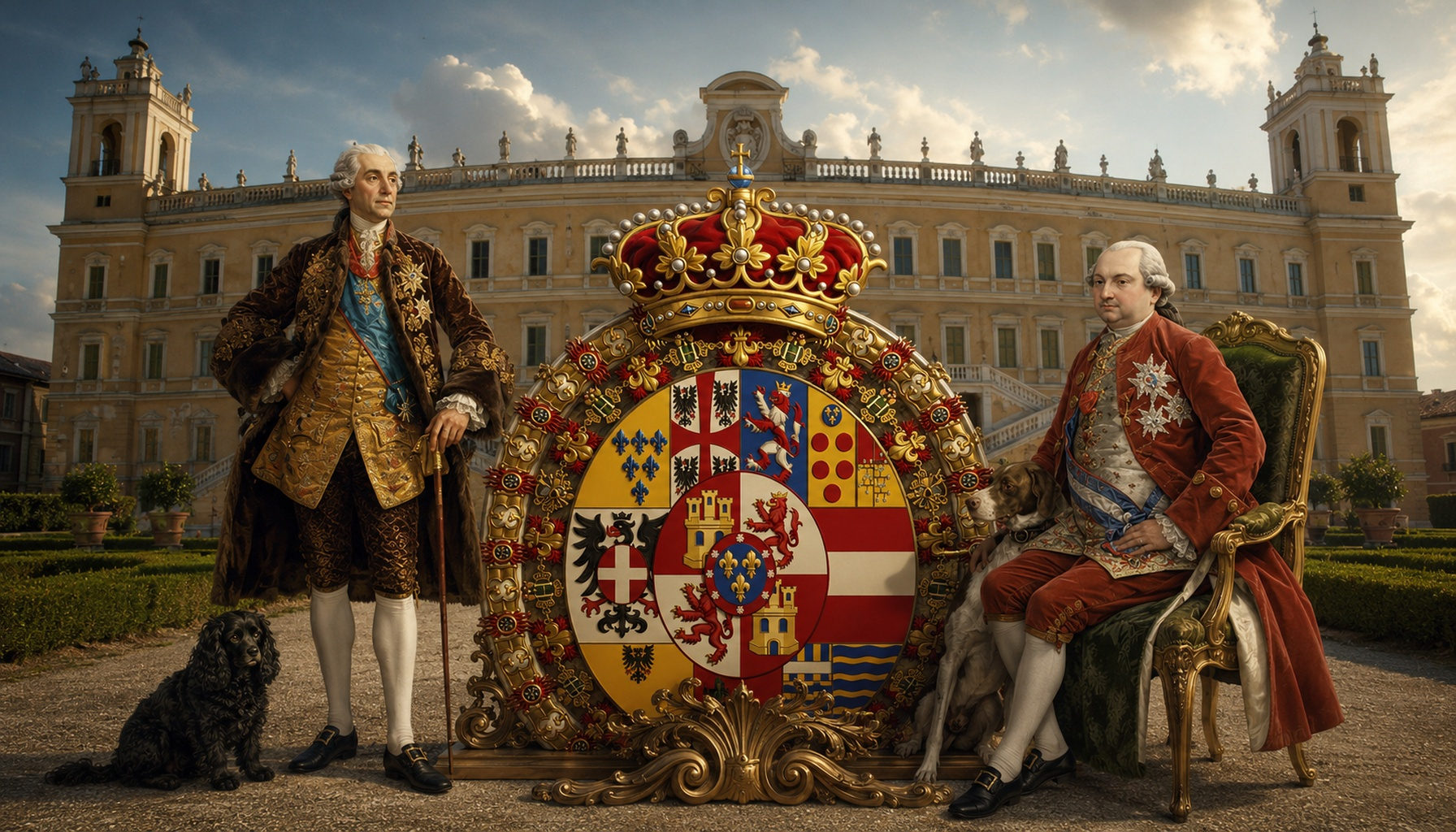
The Dukes of Parma were rulers of the Duchy of Parma in northern Italy, a small but highly prestigious state set in the Po Valley between larger powers that were always eager to influence it. In later centuries the title became especially associated with the House of Bourbon-Parma, a branch of the wider Bourbon dynasty, linking Parma to the courts of France, Spain, Austria, and beyond. In haplogroup discussions, the family is tagged with R1b1b2a1a1b as its primary associated paternal line, placing it within one of the major West Eurasian Y-chromosome lineages.
What makes the Dukes of Parma so interesting is that they were never just local grandees in fine clothes. They sat at the crossroads of European dynastic politics, where marriage contracts could matter as much as armies, and where a compact Italian duchy could become a prize in continental negotiations. The Bourbon-Parma line emerged from that world of inheritance, diplomacy, and careful family strategy. Figures such as Philip, Duke of Parma, who established Bourbon rule in the duchy in the eighteenth century, Ferdinand, Duke of Parma, who navigated the turbulence of the Napoleonic era, and Robert I, Duke of Parma, whose family connections spread across European royalty, all show how Parma's ruling house belonged to a much bigger story than the map alone suggests.
Read more about the House of Bourbon-Parma
If you want one place that captures the world of the Dukes of Parma, the Ducal Palace of Colorno is an excellent anchor. Located at Colorno, just north of Parma, this grand residence grew into one of the great ducal seats of the region and is often compared, with good reason, to a smaller Versailles in Emilia. The palace passed through important ruling hands, including the Farnese, the Bourbons, and later Marie Louise, Duchess of Parma, and over time it was enlarged and embellished into a serious statement of power. It is not just a palace facade either: the complex is known for its formal gardens, ceremonial rooms, and long association with court life, administration, and display. In other words, it tells us that ducal rule in Parma was not only about titles on paper, but about architecture, ritual, patronage, and the daily theatre of sovereignty. Happily for visitors today, the palace is still standing and can be visited.
Explore the Royal House of Savoy
From an ancient DNA perspective, the Dukes of Parma's tagged haplogroup R1b1b2a1a1b belongs to a very broad and deep paternal story stretching across time and geography. Related or linked ancient samples assigned within this wider lineage include Neolithic Black Sea Ukraine Zaporizhzhia UKR008, Neolithic Romania Giurgiu Pietrele Magura Gorgana PIE042, Mesolithic Padina Serbia Iron Gates I5237, Iron Gates Mesolithic Padina Serbia I5232, Early Neolithic Denmark Ruds Vedby CGG107526, Imperial Roman Era Viminacium Serbia R6756, Kindoki Congo KIN004, Bronze Age Sardinia I0206 and I0209, Early Bronze Age Sardinia SUA007, and Grotta Continenza Neolithic Italy R6. These individuals do not prove direct descent to the ducal family, and it would be wrong to claim that. What they do show is that lineages related to R1b1b2a1a1b appear in a striking range of ancient populations, from the Balkans and the Black Sea world to Roman-era communities and prehistoric Italy, giving the Parma story a much deeper prehistoric backdrop.
Read more about the Spanish House of Bourbon
The Dukes of Parma remind us how family history can sit at the meeting point of local place, royal ambition, and very old genetic lineages. If you have tested your DNA, you can upload it to MyTrueAncestry and see whether you match the Dukes of Parma, the House of Bourbon-Parma, or related ancient DNA samples connected with haplogroup R1b1b2a1a1b.

Comments