House of Bourbon-Parma
– 3 min read


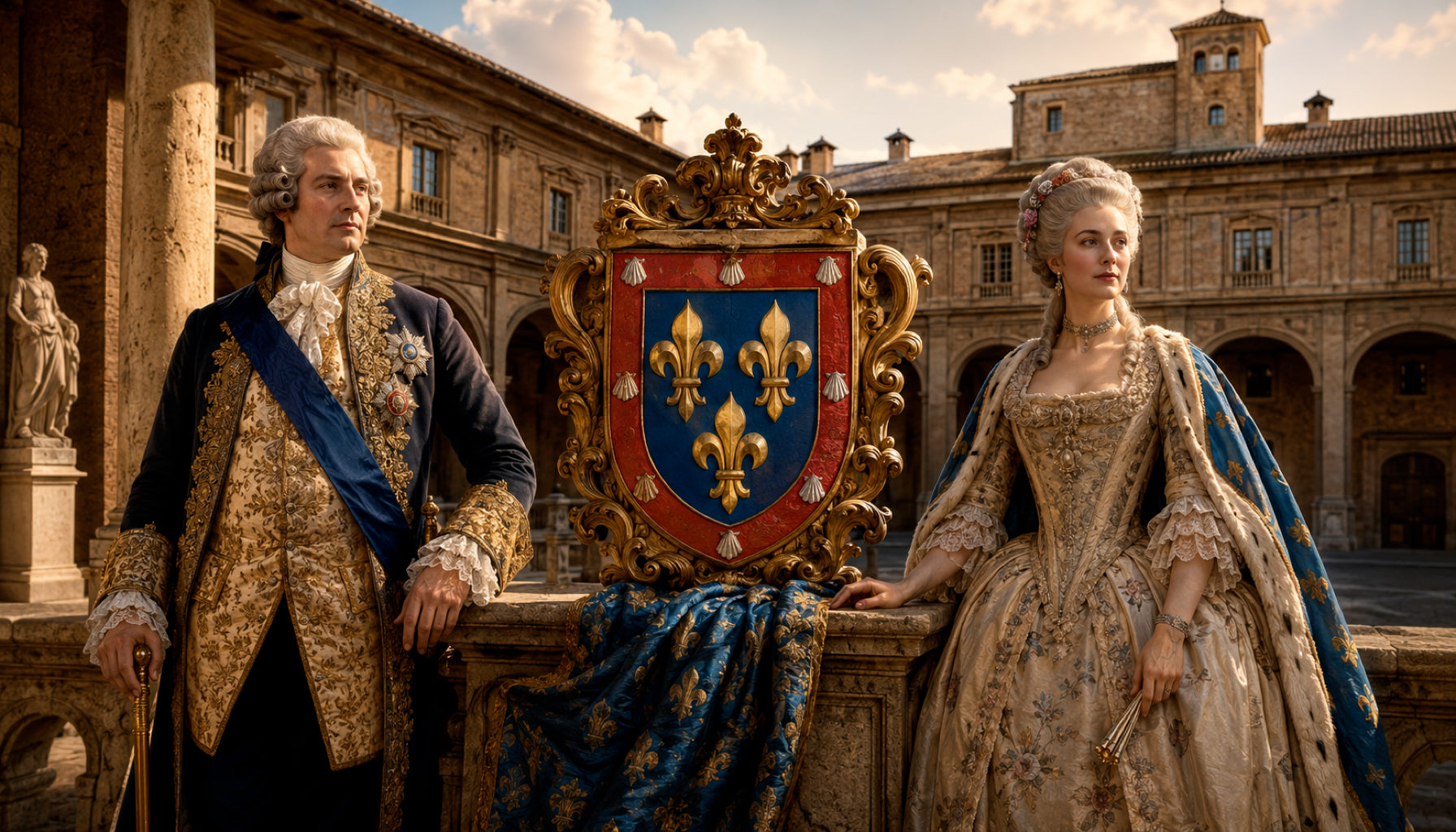
The House of Bourbon-Parma was a branch of the wider House of Bourbon, one of the great ruling families of Catholic Europe. Its story begins in the dense political world of early modern dynastic inheritance, where crowns, duchies, and marriages were as strategic as armies. The family became historically tied to Parma in northern Italy, but its roots and alliances stretched across France, Spain, Luxembourg, Austria, and beyond. In that sense Bourbon-Parma was never just a local ruling house. It was part of the grand machinery of European monarchy, where princely identity survived wars, partitions, exile, restoration, and changing political regimes. Haplogroup tag: R1b1a1b1a1a1c1a1. Primary family haplogroup: R1b1a1b1a1a1c1a1.
The family emerged from the Bourbon dynastic sphere through Spanish and French royal connections, taking shape in the historic context of eighteenth-century power politics after the War of the Spanish Succession and the reshuffling of Italian territories. Parma, positioned in the Po Valley, was small in size but important in prestige and strategy, a duchy that sat at the intersection of Austrian, Spanish, and French interests. Among the notable figures was Charles, Duke of Parma (1716-1788), a prince whose career shows exactly how these dynasties worked: one territory could be a stepping stone to another, and one title could lead into a much wider imperial story. The Bourbon-Parma identity was preserved through titles, heraldry, lineage, and ceremonial memory even when direct rule was interrupted, which is why the family remains such a good example of dynastic Europe in action.
One of the best location anchors for understanding the wider world around the House of Bourbon-Parma is the Royal Palace of Madrid. Although Bourbon-Parma was associated with Parma, its history is inseparable from the Spanish Bourbon orbit, and Madrid was one of the great theatres in which Bourbon family power was staged. The Royal Palace, built on the site of the old Alcazar after the fire of 1734, became the monumental ceremonial heart of the Spanish monarchy. It is vast, formal, and unapologetically dynastic: state rooms, throne rooms, royal collections, armour, painting, chapels, and all the architecture of monarchy made visible in stone and silk. This is the sort of place that helps one grasp how families like the Bourbon-Parma fitted into a broader network of kinship and rank, where cousins ruled in different courts but shared a political language of dynasty, Catholic legitimacy, and display. According to Patrimonio Nacional, the palace is open to visitors, so yes, it can still be visited today, and it remains one of the clearest surviving settings for the world in which Bourbon relatives and allied courts moved.
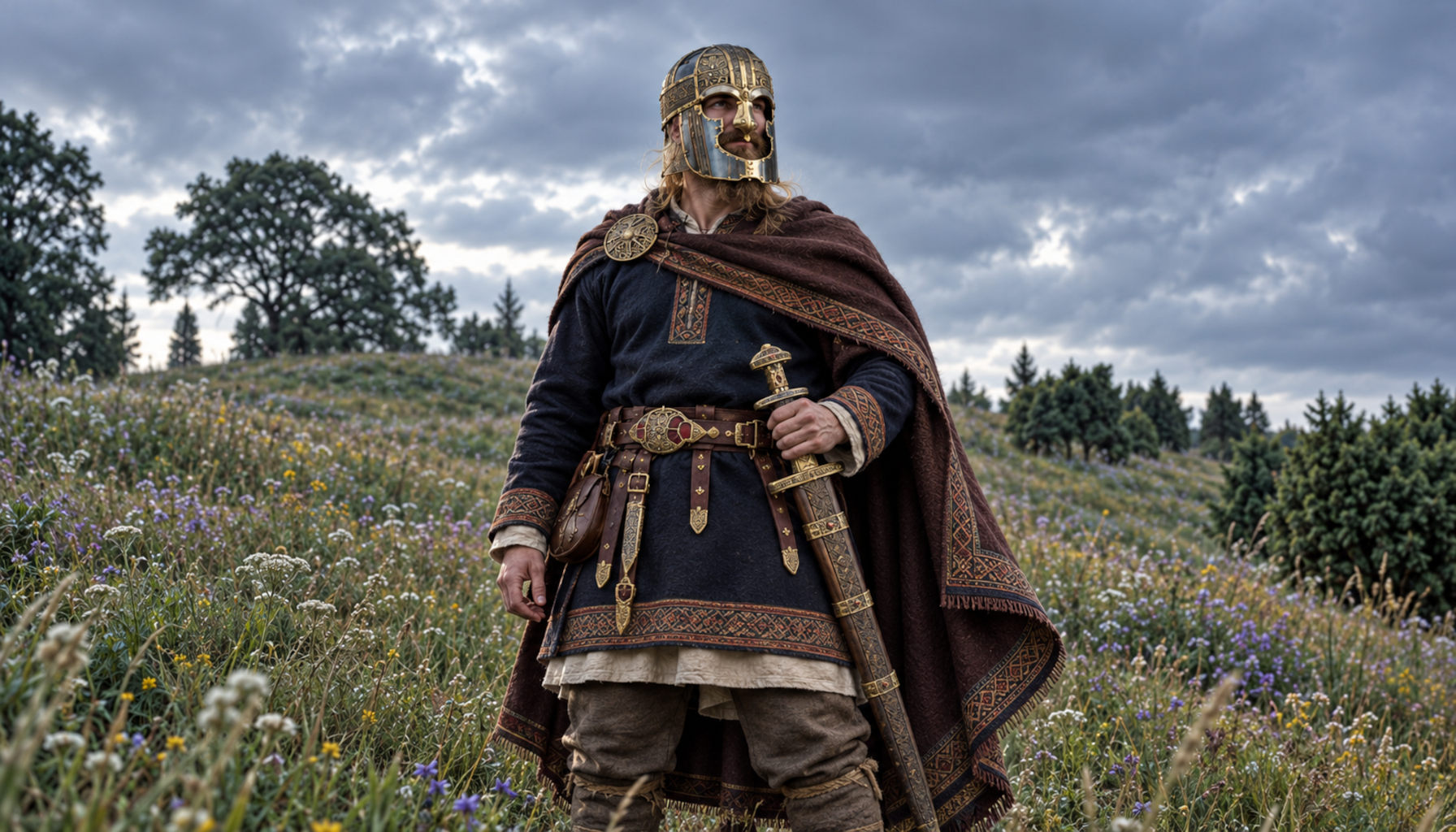
If we look at the deeper paternal background linked with haplogroup R1b1a1b1a1a1c1a1, we find a wide scatter of related ancient DNA samples across Iron Age, Roman, early medieval, and medieval Europe. These do not prove direct descent from the House of Bourbon-Parma, and they should not be read that way, but they do give a sense of the long male-line landscape within which such later dynasties ultimately emerged. Linked examples include Lombard Warrior Elite Collegno Northern Italy samples COL_069, COL_069b, and COL_069x; Hungarian knightly burials such as Elek Bathory at Pericei PER01 and Ferenc Bathory PER03-1; medieval individuals from Denmark, Belgium, Poland, and England including CGG100493, ST0052, ST1232, ST0632, ST3006, PCA0193, I20644, I20671, I20677, BUK059, and BUK027; Belgic and Gallic era samples from Bucy-le-Long in France such as CGG022456, CGG022463, CGG022431, CGG022425, CGG022438, and CGG022419; Batavi-associated samples from Valkenburg Marktveld in the Netherlands CGG107745 and CGG107754; and a broader spread including DUN010, HVN005, S3044, R10339, R10659, I13788, I15950, I11149, I11972, I17019, I12907, AED106, ELW003, I4070, and R58 from contexts ranging from Bell Beaker and Bronze Age Europe to Roman forts, Anglo-Saxon cemeteries, and medieval strongholds. In other words, the haplogroup linked with Bourbon-Parma sits within a very old and very European story.
If the House of Bourbon-Parma sparks your curiosity about royal lineages, deep ancestry, and the way DNA can illuminate history, upload your DNA to MyTrueAncestry and see which ancient and historic populations your results connect with.
Comments