Prehistoric Lethal Plague in Lake Baikal Hunter-Gatherers

– 6 min read


On the western shores of Lake Baikal and along the Angara River, a remarkable prehistoric landscape emerges. Around 5,500 years ago, communities lived by skill and movement rather than farming, knowing river channels, fish runs and forest paths. Their cemeteries offer an unusually vivid glimpse of life and death in Holocene Siberia.
The cemeteries at Ust'-Ida I, Shumilikha, Bratskii Kamen and Serovo sit along the Angara, a river that functioned as a highway. Though sites lay many kilometres apart, they belonged to a shared social world. People returned to burial grounds over generations, making cemeteries both sacred ground and maps of community identity.
Archaeology distinguishes groups by burial custom. Isakovo-tradition graves placed bodies parallel to the river with mitre-shaped clay vessels and bone points. Serovo-tradition graves placed bodies perpendicular to the river with bifaces and egg-shaped pots. These distinctions reveal a culturally lively region where different burial practices expressed social belonging as clearly as clothing or speech.
Ust'-Ida I stands out as the largest Isakovo mortuary site in Cis-Baikal. Its tightly clustered dates suggest a short, intense burial period, with more than half the graves containing multiple individuals — making it feel less like slow accumulation and more like a community snapshot under pressure.
Dietary isotopes confirm meals drawn from both river and forest: Angara fish and terrestrial game. Far from being marginal survivors, these groups mastered a rich ecological mosaic. The cemeteries also reveal an outward-looking social world, with marriage ties across groups and low inbreeding — nodes in a larger human network rather than isolated communities.
Plague's most startling chapter begins not in medieval cities but among hunter-gatherers on the Angara River around 5,500 years ago. From dental DNA, researchers identified the plague bacterium in 18 of 46 Late Neolithic individuals tested across four cemeteries — an extraordinary proportion pointing to real outbreaks affecting whole communities.
Even more dramatic is the pattern: two separate outbreak phases divided by several centuries, the first around 5,500 years ago, the second around 5,000 years ago. Plague was not a single episode. It returned, suggesting a persistent local animal reservoir kept the disease circulating.
These Siberian strains sit near the very root of the plague family tree — older than many previously known examples from Europe. Far from being a late side-effect of farming, plague was already present and deadly in a northern hunter-gatherer world. At Ust'-Ida I alone, plague was detected in 11 of 31 individuals sampled. At Bratskii Kamen, infected individuals included a grave of three young girls. The story is stitched across the river landscape, site by site, burial by burial.
This early plague lacked genetic features later associated with flea-borne bubonic transmission, suggesting spread through direct contact, respiratory infection or handling infected animals. Yet the archaeological evidence cuts through any assumption of mildness: burials cluster tightly in time, multiple family members died together, and the age profile points to devastating mortality. The disease was not harmless background noise.
In the Baikal region today, marmots are a known plague reservoir. The prehistoric evidence points to a similarly ancient ecological relationship — people hunting and skinning wild rodents facing recurring infection risks generation after generation. These earliest outbreaks reveal plague among mobile foragers far from supposed epidemic centres, giving that immense history a human face: children, siblings and cousins buried on the Angara's banks in moments of sudden loss.
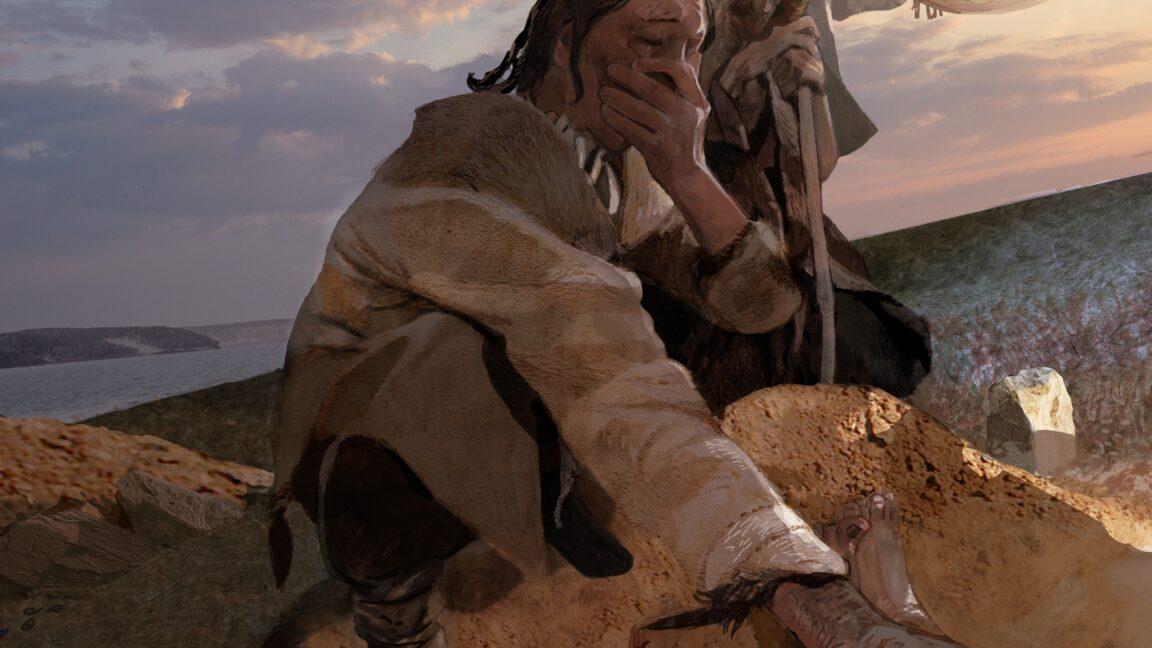
What gives this discovery its greatest emotional force is not just the bacterium but the people. Through genetic links, age estimates and grave locations, clusters of kin emerge, caught in short and brutal sequences of death. At Ust'-Ida I, tightly grouped burial dates combined with close family relationships paint a stark picture: siblings, avuncular ties, children and adults whose ages fit near-contemporaneous death within a single generation.
More than half the burials at Ust'-Ida I involved multiple individuals with no sign of graves being reopened later — suggesting those buried together died at roughly the same time. One can almost feel the pressure on survivors: several deaths close together, mourners burying relatives quickly yet carefully, maintaining familiar rites and proper grave goods.
Bratskii Kamen offers the most affecting example: a single grave holding three young girls aged roughly four to nine, two confirmed as probable cousins, all three carrying plague DNA. Three related children in a common grave. At Ust'-Ida I, another shared grave contained an aunt and nephew, both infected, with further relatives — a niece, a father, siblings — distributed across nearby burials in what reads as a map of unfolding tragedy rather than simultaneous death.
The age pattern is striking. Children between roughly eight and eleven appear in unusually high numbers among the dead. Young adults aged twenty to thirty-five are strikingly scarce. Whether adults had prior exposure and greater resistance, or children faced different biological vulnerability, remains uncertain — but the pattern demands explanation.
Care is evident everywhere. Bodies were arranged in culturally meaningful ways, objects included, kin recognised in burial placement. The community was under severe strain but not social collapse. Shared graves of infected relatives become archaeological testimony to intimacy: households, caregiving, contact and grief. The soil along the Angara holds not just disease history but domestic history.
Plague did not arrive from nowhere. It belonged to a living environment of rodents, rivers and seasonal human movement. In the Baikal region today, wild marmots are major plague carriers, and historical accounts describe human infection after hunting or skinning them. Earlier regional burials contained marmot teeth as grave goods, confirming these animals mattered economically and symbolically across millennia.
A hunter kills a marmot, skins it for fur, butchers it for meat. Blood, organs and tissue are handled at close quarters. If the animal is infected, that moment becomes dangerous. The river then does the rest: linking all four cemetery sites, carrying people, kinship and — inevitably — disease across great distances. The Angara was both lifeline and pathway.
Since these early strains lacked the flea-survival genetics of later bubonic plague, transmission likely relied on direct routes: animal-to-human through butchery, and human-to-human through respiratory spread or close contact. The burial evidence fits this uncannily. Close relatives infected in the same grave, family groups struck in sequence, deaths compressed in time — all point toward transmission thriving in households and caregiving situations. Someone coughs. Someone tends the sick. Someone else falls ill.
Two outbreak phases separated by centuries strongly suggest a persistent wild-animal reservoir rather than continuous human-to-human spread across generations. The natural world was not a passive backdrop but an active participant. Traces of brucellosis — another animal-contact infection — in one individual at Ust'-Ida I reinforce the same truth: these communities lived amid constant animal contact, and that contact brought recurring danger.
This overturns a comfortable assumption that major outbreaks required farming or dense settlements. Small mobile hunter-gatherers could experience severe zoonotic disease without cities. They needed only the right bacterium, the right host animal and the ordinary patterns of human intimacy.
The Baikal genomes allow plague's deep history to be rewritten from the inside out. These strains belong to a very early branch of the plague family tree, diverging before most previously known ancient and modern forms — helping pin down the moment plague became a distinct pathogen with its own evolutionary path, at least 5,700 years ago.
Without the later flea-transmission toolkit, these early strains were dangerous through different means. Among the most intriguing features is a toxin-related gene capable of triggering excessive immune responses — pushing the body into reacting so violently that the response itself contributes to severe illness. Modern infections involving this toxin cause dramatic inflammatory disease, especially in children. Given that prepubescent children dominate the Baikal victim profile, the biological story becomes compellingly plausible.
These strains also preserve ancestral genetic material later lost in familiar plague forms — a pathogen still in transition, not yet streamlined into the medieval killer. The two outbreak phases show slight genetic differences from one another, suggesting later outbreaks were reintroductions from the animal reservoir rather than the same infection lingering in humans across centuries.
This illuminates a larger mystery: how did early plague appear across such widely separated parts of Eurasia? Not through improbable continuous human transmission chains, but through repeated spillover from widespread rodent reservoirs. Diseases do not appear fully formed. They evolve, experimenting with hosts and transmission routes. The Baikal strains capture one such early phase — already deadly, already capable of devastating outbreaks, but not yet identical to their medieval descendants.
These graves on the Angara are therefore not a local Siberian footnote. They illuminate the origin story of one of humanity's most feared pathogens, demonstrating that epidemic history begins far earlier than written records — in the teeth of children, in genes carried by microbes and marmots, in the silence of cemeteries along a Siberian river. The struggle between humans and infectious disease is as old, intimate and surprising as history itself.
 Ruairidh Macleod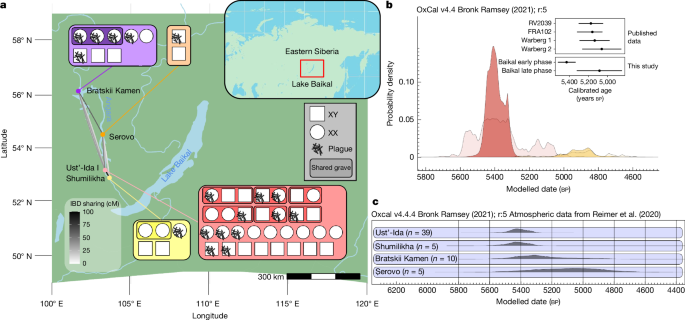
Comments