Nakatomi Clan

– 2 min read


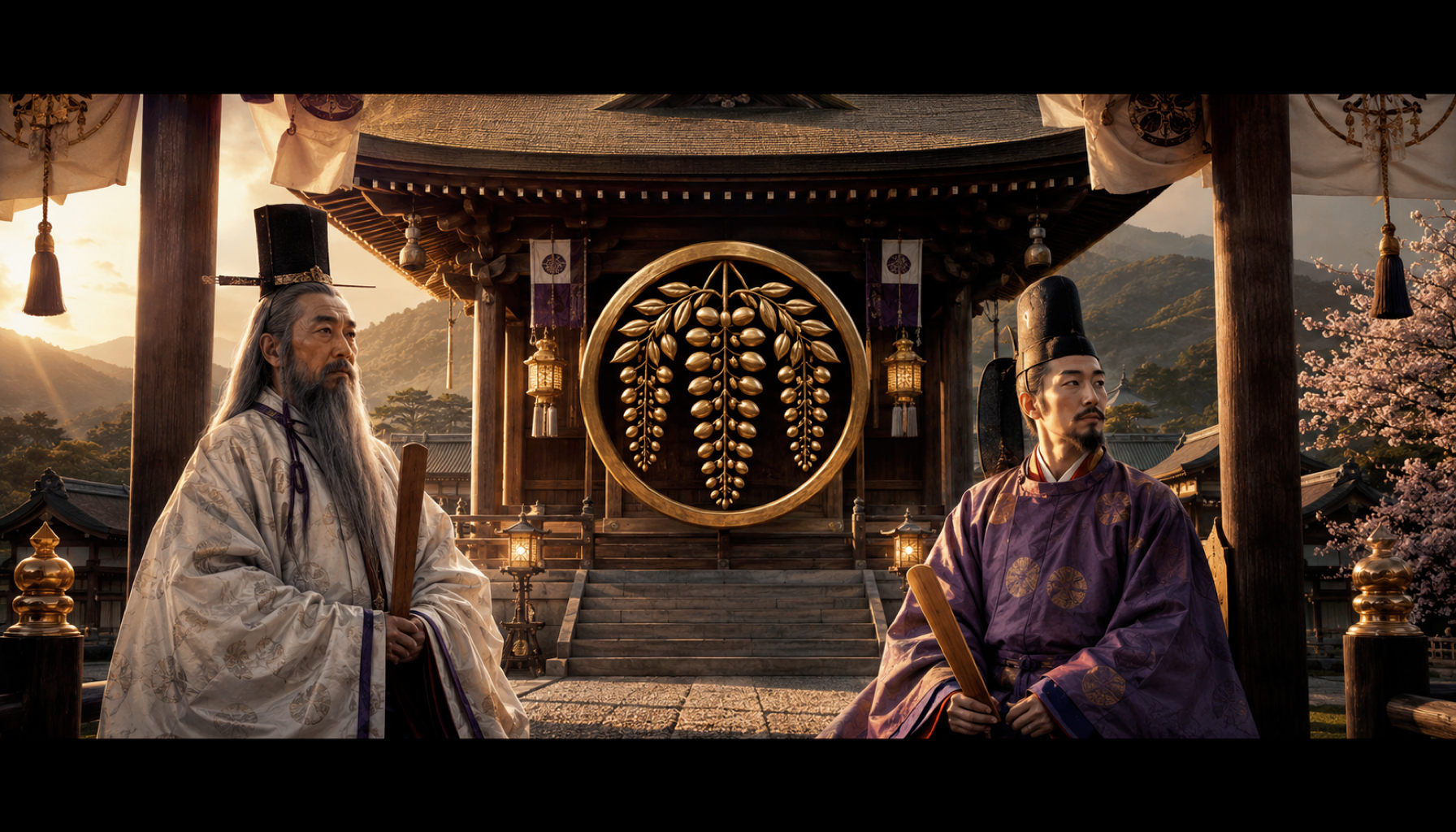
The Nakatomi Clan was one of the great ancient ritual families of Japan, rooted in the world of the early imperial court around the Yamato heartland, in what is now the Nara region. If some families built power with swords, the Nakatomi did it with words, rites, and sacred performance. They were closely associated with Shinto observance, purification ceremonies, and the management of court ritual, which made them indispensable in a society where politics and religion were never neatly separated. Haplogroup-wise, the primary family association here is O1b2a1a1c, a lineage linked more broadly with parts of the Japanese archipelago and East Asian paternal history.
What makes the Nakatomi especially fascinating is that they stood at the hinge between sacred authority and state power. In the formative centuries of the Japanese court, ritual was not ornamental; it was government in another form. To control rites of purification and communication with the kami was to stand very near the throne indeed. From this Nakatomi base emerged the Fujiwara lineage, perhaps the most famous aristocratic house in classical Japanese history, showing how ceremonial prestige could be transformed into dynastic influence. Figures such as Nakatomi no Amahisa-no-kimi belong to that older world of court service and hereditary rank, when clan identity, ritual office, and political legitimacy were all tightly braided together.
Read more about the Fujiwara Clan
The Nakatomi story is anchored above all in the old Yamato region, the cradle of the early Japanese state, where court, cult, and clan power took shape together. This was not some remote provincial lineage later climbing into prominence; it belonged to the landscape where the institutions of early Japan were being invented. In historical terms, that means the Nakatomi were active in and around the ritual geography tied to the imperial center, especially the networks of shrines and court spaces that later tradition connected with their ceremonial role. Places in the wider Nara area, including sites associated with early court religion and the later memory of Nakatomi and Fujiwara power, can still be visited today, and that is part of their appeal: this is history not just in texts, but in a living landscape of shrines, old capitals, and ceremonial memory.
From a DNA perspective, O1b2a1a1c provides an intriguing paternal tag for thinking about lineages linked to historic Japan, though it should be handled carefully and not treated as a magic badge of direct descent. One related ancient DNA point of comparison is the sample known as Tokugawa Shogunate Okinawa Japan, NAG036, which has been linked with this same broader paternal branch. That does not prove a direct line to the Nakatomi, of course, but it does help place the clan within a wider genetic landscape of Japanese historical populations. Ancient DNA is most useful here as context: it gives us related signatures and population links, while the written record explains why a family like the Nakatomi mattered so much.
Explore ancient DNA from Japan
If the Nakatomi story speaks to you, it may be because this is the world where ancestry, ritual, and power all meet: ancient clans shaping the sacred language of the state, and their legacy flowing into later aristocratic dynasties. Uploading your DNA to MyTrueAncestry can help you see whether you match the Nakatomi family profile or related ancient DNA samples connected to Japan's deeper past.


Comments