Ancient Ryukyu Jomon Genomes and Their Lasting Genetic Impact on Japanese Populations
– 11 min read


The people of the Japanese mainland and those of the Ryukyu islands began to drift apart genetically around 6,900 years ago. This is not a vague supposition but a timed parting of ways, reconstructed from whole genomes of 25 ancient individuals dating from about 6,700 to 900 years ago and more than 270 modern islanders.
At this point in deep prehistory, the ancestors of the "Hondo Jomon" on Honshu, Shikoku, and Kyushu and the "Ryukyu Jomon" in the Central Ryukyus were already sharing a broadly similar pottery-using, hunter-gatherer lifestyle. Yet their DNA now tells us that, from about 6,900 years before the present, the islanders of the Central Ryukyus became a separate branch, isolated enough over thousands of years to develop their own distinct genetic profile.
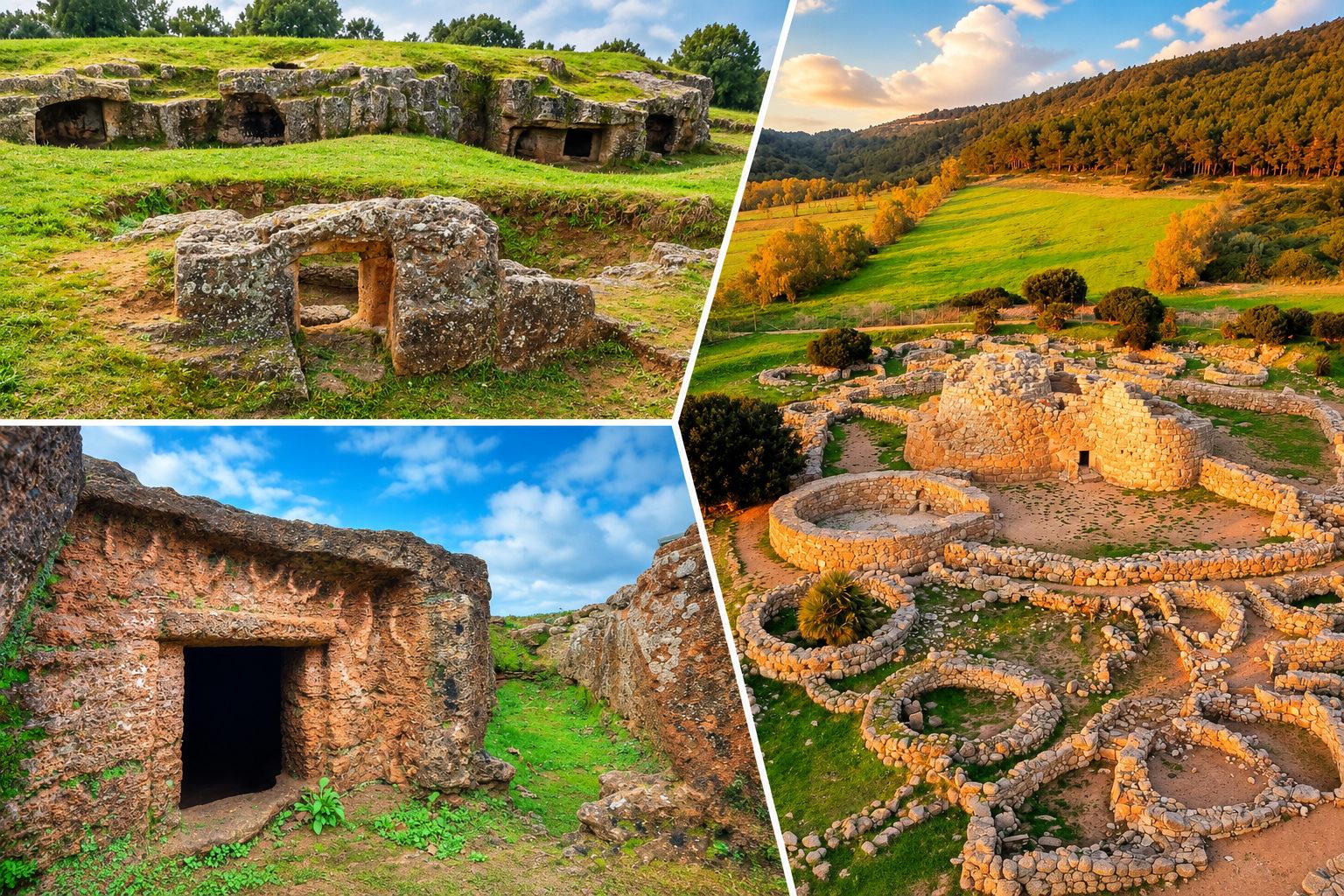
The study is built on real people, buried in very real places. The ancient Ryukyu individuals come from 12 archaeological sites scattered across the Central and Southern Ryukyus, forming a chain of coastal villages, shell middens, caves, and hilltop burial grounds stretching from the Amami group in the north to the Yaeyama Islands in the south. They anchor the genetic story in a very physical landscape of reefs, channels, and sea-crossings.
One of the most engaging threads is the reconstruction of actual family relationships. At the Tomachin site on Tokuno-shima, three individuals – Tomachin001, Tomachin002, and Tomachin003 – all dating to around 2,500 years before present, turned out to be closely related. The archaeologists have not only found bones; the geneticists have reassembled a three-generation family, buried on a small island in the mid-first millennium before the present. Their DNA also shows signs of recent inbreeding, reminding us that these were small communities, tightly bound by kinship and constrained by island geography.
More distant kinship links exist within and between sites. Within the Gushikawa and Heizanbaru sites on Okinawa, several individuals share the sort of genetic overlap expected of cousins or more distant relatives. Even more striking, HeizanbaruA3 about 1,200 years old shows distant kinship with Ufutobaru003 about 1,400 years old on the same main island, and with Furuzamami3 on Zamami Island. These links reveal that people were moving between communities and even between islands, carrying marriages, alliances, and ancestry across the sea.
What emerges is not a set of isolated villages, but a web of small, intermarrying island societies with regular local migration, even in the pre-agricultural centuries.
When the ancient DNA is compared to that of mainland Jomon and modern East Asians, the Ryukyu Jomon form their own branch. In broad-brush analyses, all Jomon – mainland and island – share a set of genetic features that separate them from later populations arriving from continental East Asia. But when examined closely, the Ryukyu Jomon and Hondo Jomon cluster apart from each other.
The study uses genetic family trees and comparisons of shared DNA to show that the Ryukyu Jomon represent an unusually isolated branch of the broader Jomon world, marooned genetically in the Central Ryukyus while mainland populations experienced different pressures and later waves of newcomers.
While many grave goods from these sites are shells, tools, and pottery, the skeletons themselves carry inherited ornaments – distinctive maternal and paternal lineages. This genetic uniformity in maternal and paternal markers matches the archaeological sense of insularity: a small founding group arrives, probably from the Hondo Jomon world, and then their descendants stay and intermarry on the islands, with only limited outside input.
In the Southern Ryukyus, on Ishigaki and Miyako, the story takes a more enigmatic turn. Archaeologists have long puzzled over cultures such as the Shimotabaru culture about 4,200–3,500 years ago with its own material traditions, and the later Aceramic culture about 2,500–900 years ago, known especially for large adzes made from giant clam shells.
These groups did not use pottery, and they left a gap in the material record where the Jomon pottery horizon does not reach. Some scholars have suggested links to Taiwan or the Philippines, but the genetics are still hazy. The study includes Aceramic individuals from Miyako and Ishigaki, such as Shiraho6 from the Shiraho Saonetabaru Cave, yet the DNA coverage is too low to give a full answer.
Even so, preliminary hints suggest that at least one Aceramic individual in earlier work looked genetically Jomon-like, raising the possibility that some southern islanders were distant cousins of the Jomon rather than complete outsiders. This remains one of the most tantalising open questions: were the shell-adze makers of the far south part of the same long Jomon story, or a different tale altogether?
The study does not stop with the prehistoric split. It also looks at what happened much later, when the Ryukyu islands entered the Gusuku period roughly 900–500 years ago, marked by fortresses, iron tools, and the spread of agriculture.
Using patterns of how genetic variants are paired across the genome, the researchers estimate that ancient individuals from the Gusuku period and the later Ryukyu Kingdom period still carry substantial Ryukyu Jomon ancestry, but with a clear and growing input from mainland-related migrants over time. By the time we reach the modern islanders, the majority of their genome is derived from these later arrivals, yet they still carry a distinctly higher proportion of Jomon ancestry than modern mainland Japanese.
In other words, the rise of fortified sites, iron tools, and farming appears not only as a cultural import but as a demographic one too. New people, connected to the historic populations of Hondo and the continent, enter the archipelago and intermarry with long-established Jomon-descended islanders.
Throughout, the study keeps returning to the simple but powerful fact that the Hondo and Ryukyu Jomon are not interchangeable "ancestral Japanese". They are two related but distinct island stories: on the mainland, Jomon communities eventually face large-scale immigration from continental East Asia, the spread of rice farming, and political centralisation. In the Central Ryukyus, small, shell-mound–building, fishing and foraging societies branch off around 6,900 years ago and keep going, on their own terms, for millennia. Their descendants later fuse with incoming farmers and metal-users during the Gusuku centuries.
The burial caves, shell mounds, hilltop cemeteries, and scattered islands of the Ryukyu chain are thus not a marginal footnote to Japanese prehistory. In this research, they emerge as a testing ground for a more complex picture of how people moved, met, and diverged around the western Pacific rim – a story written equally in pottery, shell adzes, fortress walls, and the DNA of a sibling pair and their nephew buried on a small, windswept island 2,500 years ago.
The work plunges into the prehistoric world of the Ryukyu Islands and asks a deceptively simple question: how many people actually lived there in Jomon times, and what did that mean for their history? By reading genomes from ancient skeletons, the authors argue that the Ryukyu Jomon spent thousands of years as a very small, isolated community of a few thousand people at most, shaped by repeated bottlenecks and restricted marriage networks.
The work rests on ancient individuals from archaeological sites spanning from around 6,700 years before present down to about 900 years ago. Together they bridge deep prehistory and the dawn of the Ryukyu Kingdom, linking shell middens, cave burials, and cliff graves into a single genetic narrative.
One of the most vivid aspects is that some of these ancient islanders can now be described not just as "a skeleton" or "a burial," but as members of specific families. At the Tomachin site on Tokuno-shima, three individuals turn out to be a tight-knit family cluster. These are people living around 2,500 years ago, in a small island community, where close family members were buried side by side in the same shell-mound landscape.
At Heizanbaru and Gushikawa on Okinawa, the genomes reveal more distant kin links – cousins and beyond – consistent with repeated burial of related individuals in the same local cemeteries over centuries. Remarkably, the study finds kinship that crosses the sea. Late Jomon islanders were not trapped on their home islands: they moved, married, and buried their dead across short sea crossings. The maritime networks inferred by archaeologists from pottery and shell exchange are mirrored in the kinship patterns in their DNA.
The authors use two main genomic clues to argue that the Ryukyu Jomon lived in very small, isolated populations for millennia. By fitting computer simulations to the observed genetic data, they estimate that on an archipelago of many small islands, each island group may have been home to only a few hundred Jomon people at any one time. The shell mounds at various sites are thus not just picturesque relics; they represent the material remains of societies constantly flirting with demographic fragility.
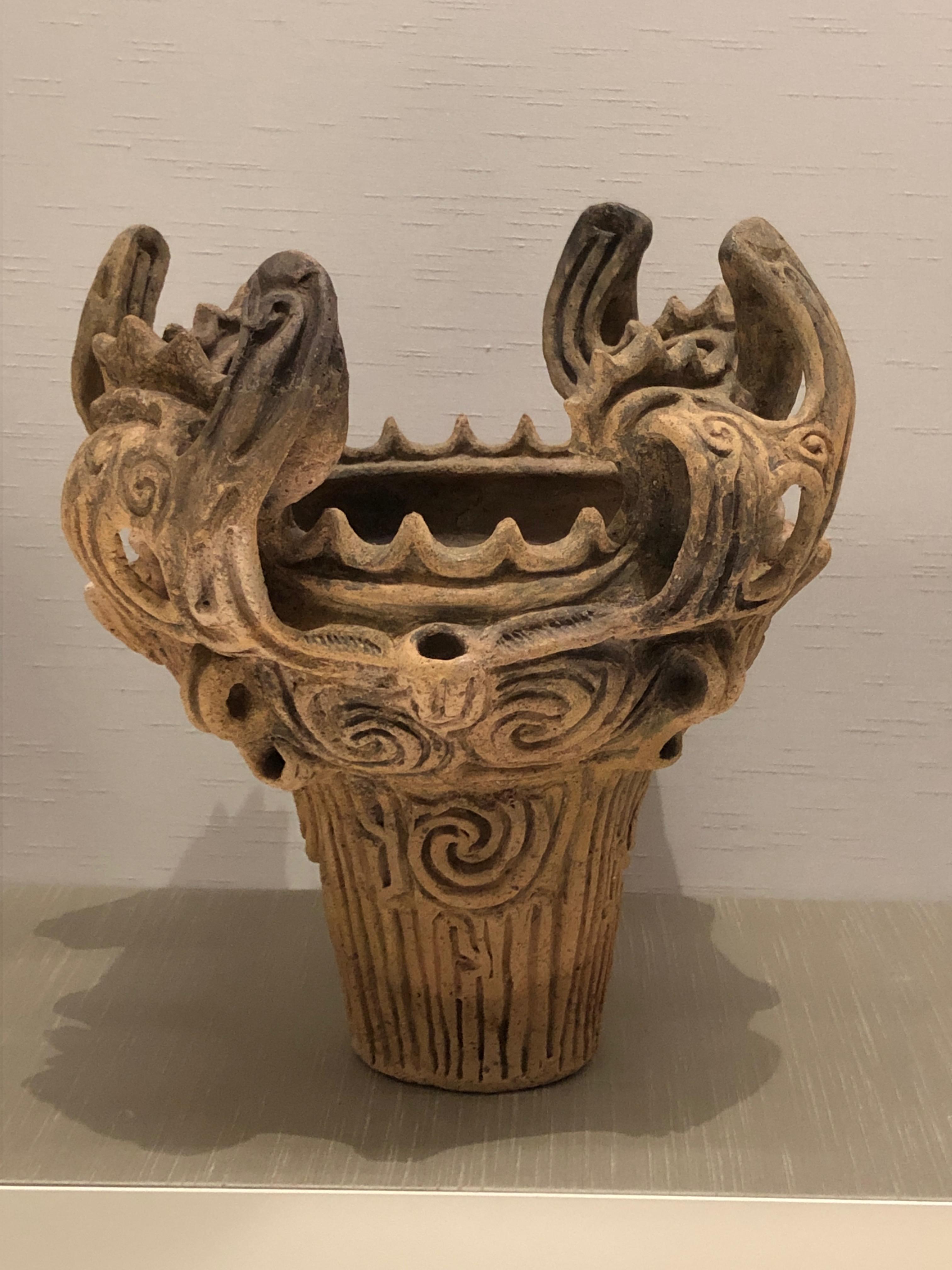
The estimated date of the split – about 6,900 years before present – resonates with the archaeological sequence. Around this time, a distinctive fingernail-impressed pottery tradition appears in the Central Ryukyus, linked with intensified stone tool production and settlement. This cultural shift follows the enormous Kikai-Akahoya volcanic eruption about 7,300 years ago, which blanketed much of southern Japan in ash. Archaeologists have long debated whether the post-eruption pottery in the Ryukyus derives from mainland Jomon traditions or is a more independent development.
The genomes argue that, by this time, the Ryukyu Jomon were already on their own path. Their ancestors clearly share deep roots with mainland Jomon, but once settled in the Ryukyus, they become a distinct genetic lineage, shaped by isolation, maritime geography, and small numbers.
Long before the shell-mound era, humans lived in the Ryukyus during the Upper Paleolithic. Famous sites show that people were exploiting these islands long before pottery, shell mounds, or agriculture. Their skulls and teeth have often been described as having affinities with prehistoric Southeast Asians and Australo-Melanesian groups.
Yet, when the authors look for genetic traces of these early islanders in the later Ryukyu Jomon, they find none that can be clearly distinguished. The people who built the great shell mounds seem not to be direct genetic descendants of the earliest inhabitants. The study paints a picture of at least two waves of settlement in the Ryukyus: an early Paleolithic one that left little genetic legacy, and a later Jomon-derived colonisation that led to the small, long-lasting Ryukyu Jomon populations studied here.
The Southern Ryukyus – particularly the Miyako and Yaeyama islands – follow a different archaeological script. For decades, some archaeologists have suggested that these aceramic groups might be linked to movements from Taiwan or the Philippines, perhaps tied to early Austronesian seafarers. Unfortunately, their DNA is very fragmentary, and the results must be treated with caution. However, combined with earlier work, the study leans towards a provocative possibility: that at least some Aceramic islanders were genetically Jomon-like, not Austronesian.
More skeletons and better-preserved DNA will be needed to decide whether the spectacular clam-shell tools of the Aceramic culture arrived with new people, or emerged among the descendants of small, already-established Jomon-derived communities.
By about 900–500 years ago, the archaeological record of the Ryukyus is transformed. This is the Gusuku period, and the cliff burials literally sit at the junction of these worlds, with Jomon-descended islanders buried beneath later fortress walls. The genomes show that, by this time, the Ryukyus were receiving significant genetic input from migrants ultimately related to the mainland Japanese.
Using patterns of how bits of DNA from different ancestries are shuffled along the chromosomes, the study dates substantial mixing between islanders carrying Jomon-derived genomes and newcomers carrying more "continental" East Asian ancestry to around 1,000 years ago. That is precisely when agriculture and iron tools become widespread in the Central Ryukyus.
Earlier individuals show lower levels of mainland-derived ancestry than modern Okinawans. This suggests that migration was not a single wave but a drawn-out process: generation after generation of arrivals from the Hondo region and beyond, gradually swamping the small, beleaguered Jomon-derived gene pool that had survived for millennia in the islands.
Across all sites, one striking pattern emerges in the uniparental markers – those inherited only from the mother or father. This uniformity suggests a tight-knit, long-lived island population, maintaining the same maternal and paternal lines over thousands of years, even as their overall numbers remained low and their world gradually filled with newcomers from the north.
The research provides a remarkable window into the lives of specific individuals: a sibling pair and their nephew at Tomachin, fishermen buried among their shell middens, cliff-side burials beneath a medieval fortress, and cave dwellers whose toolkits lacked pottery but whose genes still carried Jomon signatures. When their genomes are woven together with those of modern islanders, a picture emerges of the Ryukyus as a crossroads rather than a cul-de-sac: first settled by Jomon-related hunter-gatherers who split from their mainland cousins around the time fingernail-impressed pottery appears; touched by faint currents of northern continental gene flow; and then transformed a thousand years ago by farmers and iron-wielding newcomers from the north, all while maintaining a distinctive island identity that can still be read in the DNA of the people who live there today.
The research plunges into one of the most intriguing questions in Japanese prehistory: where, exactly, does the genetic legacy of the ancient Jomon people still live on in modern Japanese genomes – and what parts of the genome seem to have been especially shaped by that legacy? To answer this, the researchers zoomed in, region by region along the chromosomes.
A striking finding is that there was not just "one" Jomon population. The Jomon of the Ryukyu Islands and those of the Japanese mainland had already become distinct groups thousands of years ago. Nineteen regions of the genome stood out as highly different between Ryukyu Jomon and Hondo Jomon. These genetic "fault lines" suggest that, for many generations, the people of the Ryukyu shell mounds and those of the Hondo region followed rather separate paths. Different environments, diets, and disease pressures across the island chain may have slowly tugged their genomes in different directions.
The researchers used local ancestry inference to map Jomon-derived segments across modern genomes. The findings reveal that people in Okinawa carry a higher proportion of Jomon-derived DNA than people on the mainland. However, the pattern of where Jomon segments sit along the chromosomes is very similar in both modern groups. This tells us that the mixing of Jomon and later migrants followed broadly similar genetic rules across the archipelago, even if Okinawa held on to more of that older ancestry.
One region of the genome stands out especially clearly: the tail end of chromosome 14. Here lies a dense cluster of genes that build part of the human immune system – specifically, the immunoglobulin heavy chain genes. Immunoglobulins are antibodies: the molecules our bodies use to recognise and neutralise pathogens.
In this segment of chromosome 14, the researchers found that this region is "Jomon-rich" in both mainland Japanese and Okinawans. This suggests that Jomon-derived variants in the antibody heavy chain region have been retained at high frequency across Japan. Jomon communities, living for millennia on forested coasts and among coral reefs, may have evolved immune responses well-suited to local parasites, microbes, and diets. When later migrants from the continent arrived and mixed with them, some of these immune-related Jomon variants may have conferred an advantage and so persisted.
From an archaeological perspective, this casts shell mounds and cave burials in a new light. The same people who fashioned fingernail-impressed pottery and shell tools, who buried their dead along the coral-fringed shores, have left a lasting imprint on how modern Japanese bodies respond to disease.
The excavation sites and their ancient individuals connect deep prehistory with the inner workings of modern genomes. Communities defined by fishing, shellfish gathering, and hunting now turn out to be key ancestors of today's Okinawans, and a substantial ancestral layer in mainland Japan. The tight-knit family helps define the Ryukyu Jomon genetic profile that can be traced in living people.
In this way, the research shows how graves cut into shell heaps, bones from cliff-foot settlements, and skulls from cave burials can be read together with modern genomes. The result is a vivid picture: not only were the Jomon of the Ryukyus and Hondo distinct peoples with their own histories, but pieces of their DNA – particularly in regions like the antibody heavy chain cluster – still thread through the genomes of people living in Japan today. The burial caves, shell mounds, and scattered islands emerge as a testing ground for understanding how people moved, met, and diverged around the western Pacific rim – a story written in pottery, tools, fortress walls, and the genetic legacy that persists in modern populations.



Comments