House von Amsberg
– 3 min read


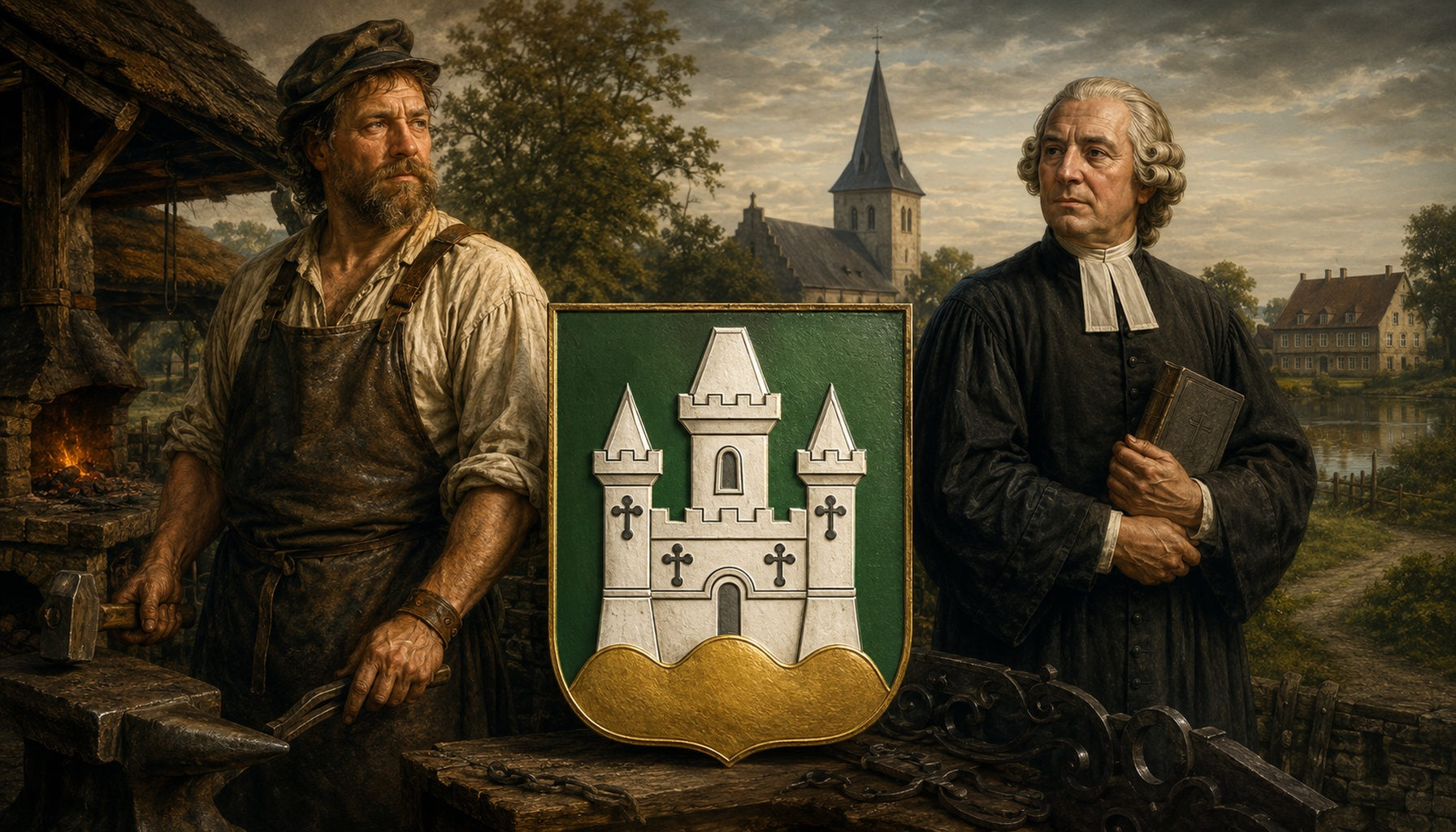
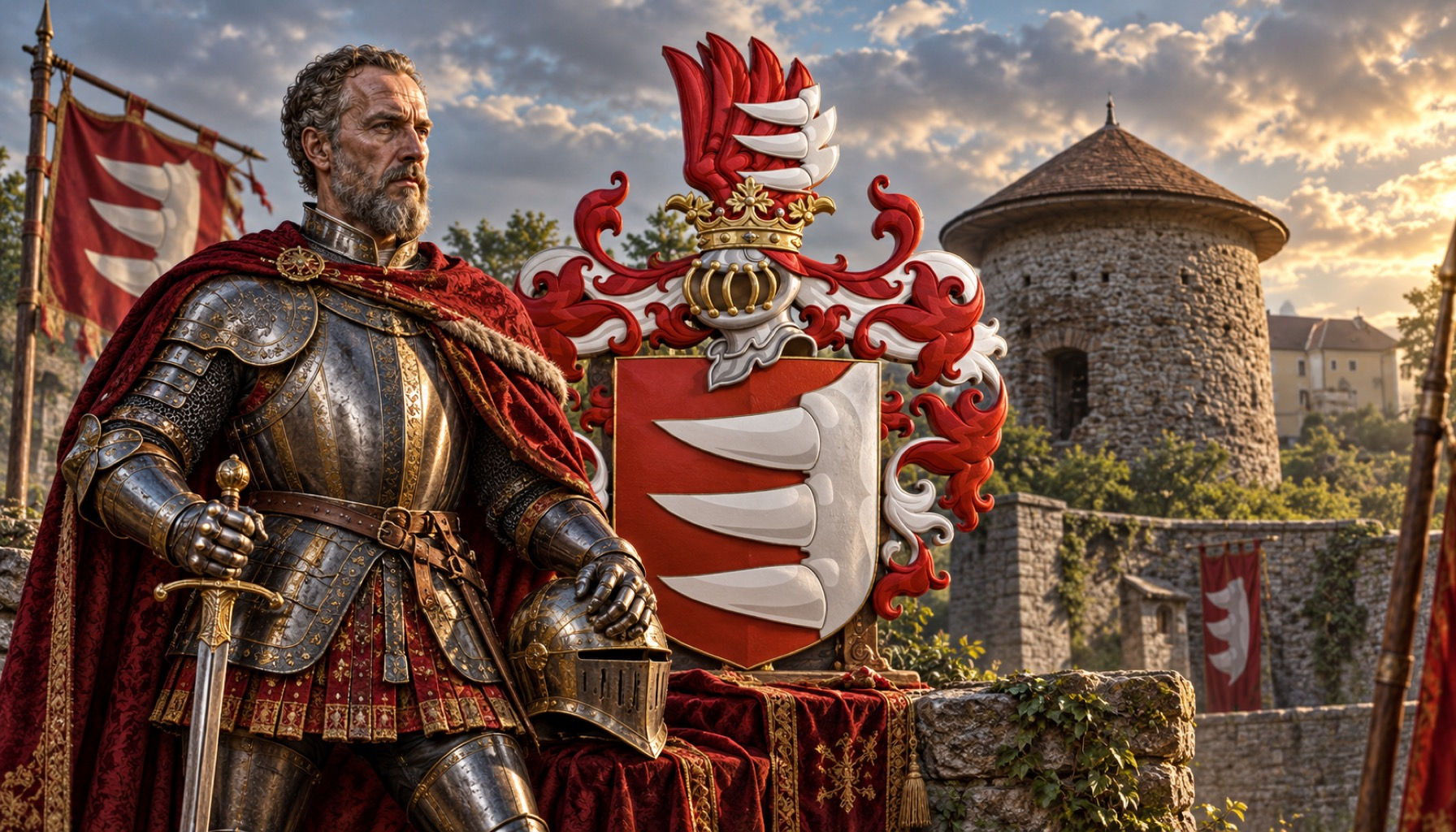
House von Amsberg was a German noble family rooted in Mecklenburg, shaped by the old world of regional landholding, service, and aristocratic continuity, and linked here with the primary family haplogroup R1a1a1b1a2b3a3a1b1. Like so many noble houses in northern Germany, the von Amsbergs belong to that long historical pattern in which a family name was preserved not simply by prestige, but by practical roles in local governance, military obligation, estate management, and public duty. Their story begins in the social landscape of the medieval and early modern German northeast, where noble identity was tied as much to place and service as to title.
That background gives the family a rather interesting double life in history. On the one hand, the von Amsbergs are plainly part of the Mecklenburg noble tradition, with heraldry, memory, lineage, and continuity all playing their part. On the other, they stepped into a much wider public view through dynastic connection with the Dutch royal family, bringing a German noble house into the orbit of modern constitutional monarchy. Figures associated with the family include Juergen Amtsberg (11640-686), a name tied to the deep historical memory of the lineage, Prince Claus of the Netherlands (1926-2002), whose marriage made the name internationally familiar, and King Willem-Alexander of the Netherlands (1967-), in whom that connection entered the present age. It is precisely this blend of regional aristocratic roots and modern public symbolism that makes House von Amsberg so revealing.
Explore the Noble House von Weltzien
A useful modern location anchor for the family story is Noordeinde Palace in The Hague, the Dutch royal palace closely associated with the working life of the monarchy. Originally developing from a manor house and later expanded into a palace, Noordeinde became one of the best-known royal buildings in the Netherlands. It serves as the official working palace of the Dutch monarch and sits in the historic heart of The Hague, surrounded by the political and ceremonial world of the Dutch state. In that sense it is a fitting setting for the von Amsberg connection: a place where older dynastic tradition meets the very modern business of constitutional monarchy. The building is not generally open as a full-time palace interior visit, but the exterior, palace grounds area, and the Royal Stables are known public points of interest, with the stables in particular opening to visitors at certain times, so yes, it can still be visited in a reasonable and practical sense.
Explore the Royal House of Wettin
From an ancient-DNA point of view, the von Amsberg haplogroup tag R1a1a1b1a2b3a3a1b1 connects the family to a wider web of related or linked paternal-line samples across central and eastern Europe, without implying direct descent from any one excavated individual. Among the relevant linked samples are Avar Elite Hungary Rakoczifalva (RKC052) and (RKC051), Bronze Age Hungary Balaton Region Somogyvar-Vinkovci (S9), Late Antique Pannonia Arrabona Szechenyi Square Hungary (GYS058), Piast Dynasty Lubusz-Greater Poland Border Santok Lad (PCA0404), Piast Dynasty Poland Santok Lubusz Province Gorzw Wielkopolski (PCA0520), Santok Iron Age samples (PCA0381) and (PCA0382), Medieval Germany Sachsen-Anhalt Western Slav Settler Niederwuensch (NDW036, NDW017, NDW025, NDW038, NDW043), Steuden (SDN028, SDN029), Duchy of Sandomierz Lublin Region Pidhirtsi (PDH011, PDH012), Early Medieval Croatia Velim-Velistak (VEM035, VEM049), Medieval Poland Piast Dynasty Lad (PCA0198), Bronze Age Romania Trestiana (I6185), and Iron Age Ingria (VII15). What is striking here is not a fairy-tale claim of a single unbroken royal blood trail, but a broad historical pattern: this lineage sits within a paternal cluster seen across Bronze Age, Iron Age, early medieval, and dynastic contexts stretching from the Carpathian Basin to Poland, Germany, Croatia, and the Baltic world.
If House von Amsberg catches your interest, the next step is not just to read about noble houses, but to test where your own story may fit. Upload your DNA to MyTrueAncestry and see whether you match House von Amsberg, the haplogroup R1a1a1b1a2b3a3a1b1, or related ancient samples from Avar, Piast, medieval German, and early Slavic contexts. That is where family history becomes properly exciting: not just names in a pedigree, but real connections across centuries.


Comments