Haplogroup R2a2b1b2b1

– 5 min read


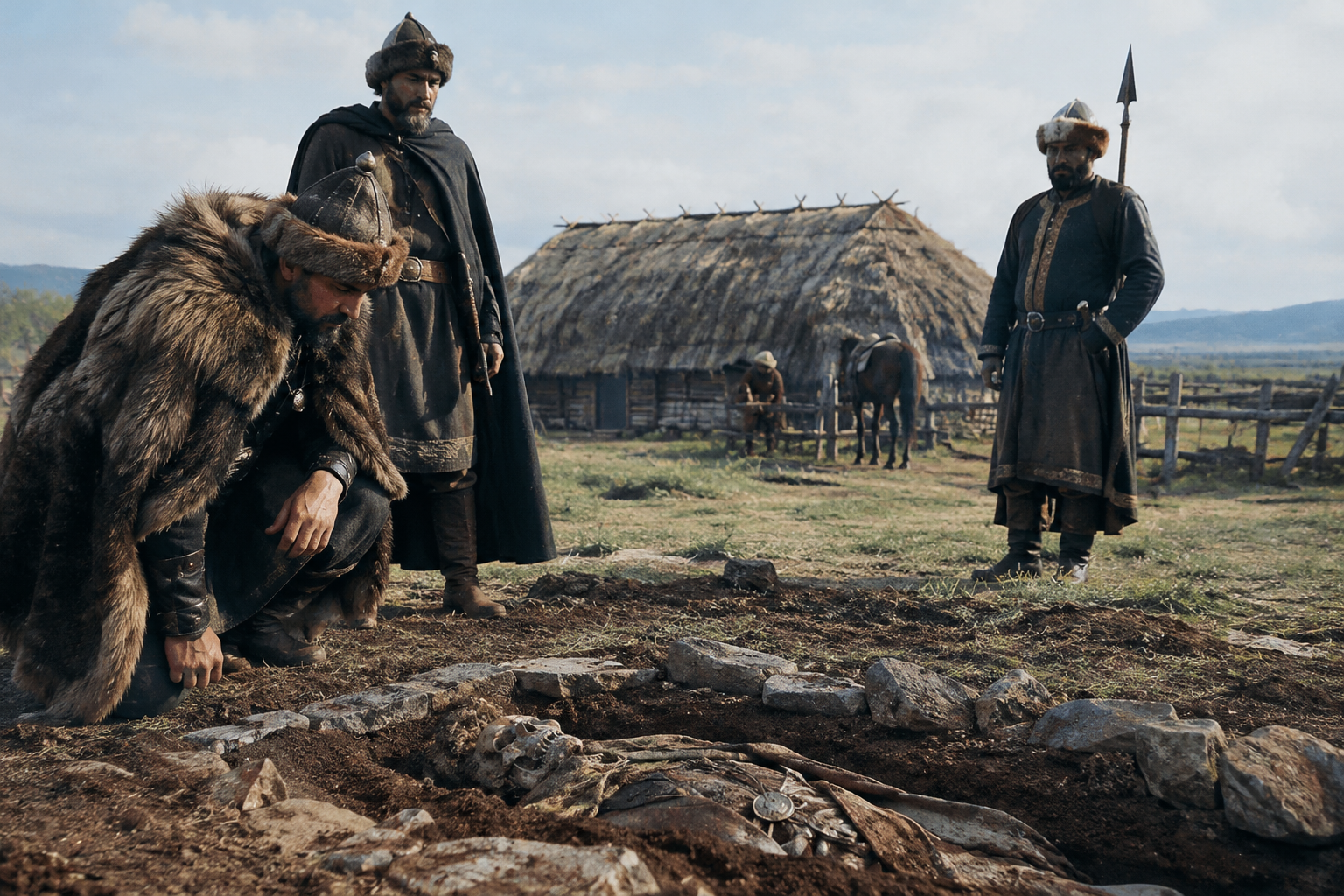
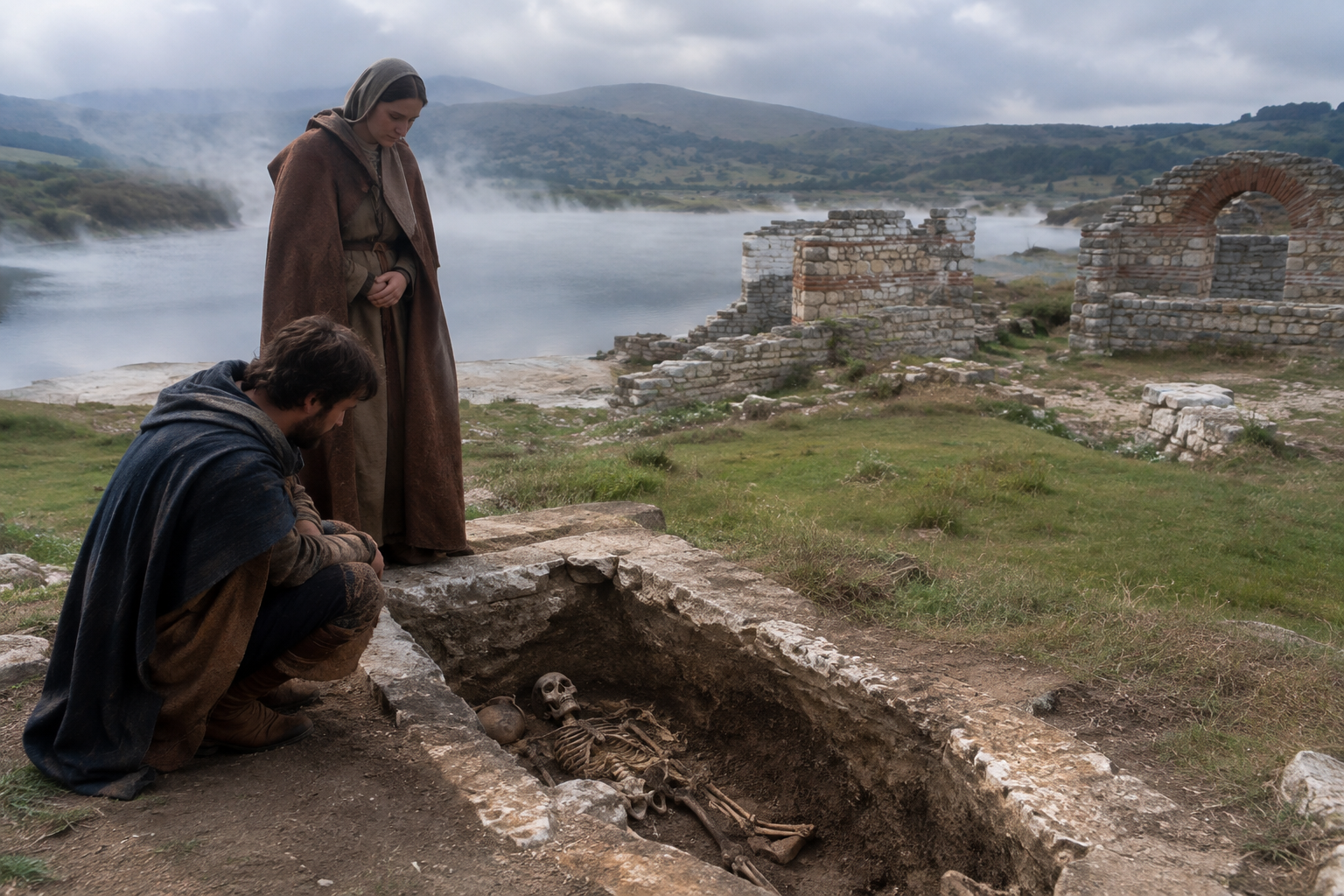
At Han Krum village in Bulgaria, a grave attributed to a Gothic context and dated to around AD 400 produced an ancient male sample identified as I40357, described as the Gothic Grave Aul of Kan Omurtag. That is already enough to make historians pause. Late antique Bulgaria was not a tidy ethnic map but a zone of movement, alliance, warfare, and settlement, where Goths, local Balkan populations, Roman influence, and steppe connections overlapped in ways that archaeology is only now beginning to untangle. Into that complicated world comes a striking paternal label: R2a2b1b2b1.
This is not one of the Y-DNA branches people usually expect to meet first in a Gothic burial. And that is precisely why the find matters. Y-DNA tracks one direct paternal line only, not a person's whole ancestry, language, or identity. But when a lineage like R2a2b1b2b1 appears in a late antique Gothic-associated burial in Bulgaria, it becomes a useful reminder that communities described in historical sources as "Gothic" could be socially real and culturally coherent without being genetically simple.
The setting matters as much as the haplogroup. Around AD 400, the Balkans were a contact zone under intense strain. Roman power still framed the landscape, but its grip was uneven. Gothic groups had long been active in the region, sometimes as enemies, sometimes as federates, sometimes as neighbors buried in local cemeteries that do not fit any cartoon picture of a wandering barbarian people.
Sample I40357 belongs in that world. The label "Gothic Grave" points to an archaeological interpretation rather than a biological essence. In other words, the burial was associated with a Gothic milieu, but the man himself may have carried a paternal line with a longer and more complicated history than any single ethnic name can capture.
That is exactly where ancient DNA becomes so useful. It does not replace archaeology; it complicates it in productive ways. A recent ancient DNA study on Gothic-era communities in Bulgaria has emphasized mixed origins rather than neat descent lines, and that broader context is important when thinking about I40357 and R2a2b1b2b1. The point is not that one lineage "explains" the Goths, but that Gothic communities could absorb, organize, and reproduce men from varied paternal backgrounds.
R2a2b1b2b1 is a very specific downstream branch. That specificity is important, because people often slide too quickly from a narrow terminal lineage to grand statements about whole continents or civilizations. One should resist that temptation. A man assigned to R2a2b1b2b1 is not automatically evidence for every movement ever associated with the much broader R family.
Still, the wider point is clear enough: this is a paternal line with deeper roots outside the standard popular image of a uniformly northern or north-central European Gothic male profile. In a late antique Balkan grave, that matters because it suggests that the community around Han Krum village included men whose direct paternal ancestry had reached the region through older or wider networks than the historical label alone would suggest.
That should not surprise us too much. The Roman Empire and its borderlands were expert machines for moving people around: soldiers, captives, traders, clients, refugees, craftsmen, and farming families. By the fourth and fifth centuries, a burial identified archaeologically as Gothic could easily represent a social identity formed from several ancestral streams. Ancient DNA keeps forcing us back to that basic historical truth.
The old habit was to match pots, brooches, or burial rites directly to tribes, and then to imagine those tribes as stable biological populations. That habit has had a remarkably long afterlife. But late antique archaeology in the Balkans, the Black Sea region, and Central Europe now looks much messier and much more human.
Groups called Goths in texts were political and social communities, not closed breeding isolates. They recruited, absorbed, intermarried, and re-formed under pressure. So a lineage such as R2a2b1b2b1 in a Gothic-context grave is not an anomaly to be explained away. It is evidence of the sort of composite society historians ought to expect in this period.
This is one reason the Bulgarian sample is so interesting. It does not merely add a new pin to the map of Y-DNA. It helps dismantle the lazy assumption that migration-period peoples can be read as if each burial ground were a genetic passport office. The archaeology gives us a community label; the genetics shows that the community itself was more open-textured.
Bulgaria's importance in this story is geographical as well as historical. The region sits between the lower Danube, the Black Sea world, the Balkan interior, and routes leading toward Anatolia and the steppe. In antiquity and late antiquity, that meant repeated episodes of contact and resettlement. A paternal lineage turning up here need not have arrived in a single dramatic migration; it may reflect generations of movement through imperial and frontier systems.
That is why one sample can still be historically valuable even when the evidence is sparse. We do not need a made-up life story for I40357. What we do have is enough: a late antique male from a Gothic-associated burial in Bulgaria, carrying R2a2b1b2b1, in a region famous for population interaction. The line is specific; the context is turbulent; the combination is revealing.
For readers following the wider genetic history of the Black Sea and Balkan zone, this fits a broader pattern in which frontier populations repeatedly show mixed ancestry and unexpected lineages. Different periods and sites produce different results, of course, but the larger lesson is steady: these were not sealed populations. They were crossroads societies.
Quite a lot, if one asks the right question. Not "Was this what all Goths were?" plainly not. But rather: what kinds of paternal diversity were present in communities identified as Gothic in late antique southeastern Europe? On that question, I40357 is a useful and concrete data point.
It tells us that the paternal landscape of these communities could include lineages outside the most familiar western and northern European expectations. It also warns against reading ethnicity straight off a Y chromosome. A man with R2a2b1b2b1 could live, die, and be buried within a Gothic social setting, because identities in this period were made through allegiance, kinship, mobility, and local custom as much as through descent.
Research connected with these Bulgarian finds, including an ancient DNA preprint on Gothic communities in late antique Bulgaria, points in just that direction: toward diversity within named groups, not away from it. Even without overclaiming from a single burial, that is historically significant.
For someone researching R2a2b1b2b1, the most distinctive point here is not a grand claim of origin, but a firmly archaeological one: this lineage appears in at least one Gothic-associated burial in late antique Bulgaria, sample I40357, around AD 400. That places the branch inside the lived world of frontier mixing, post-Roman political change, and culturally Gothic communities in the Balkans. It is a small but vivid reminder that paternal ancestry can surface in unexpected places, and that the people who carried these lines often belonged to historical societies far more diverse than their labels suggest.

Comments