Haplogroup R1b1a2a1a2c1b2c1

– 5 min read


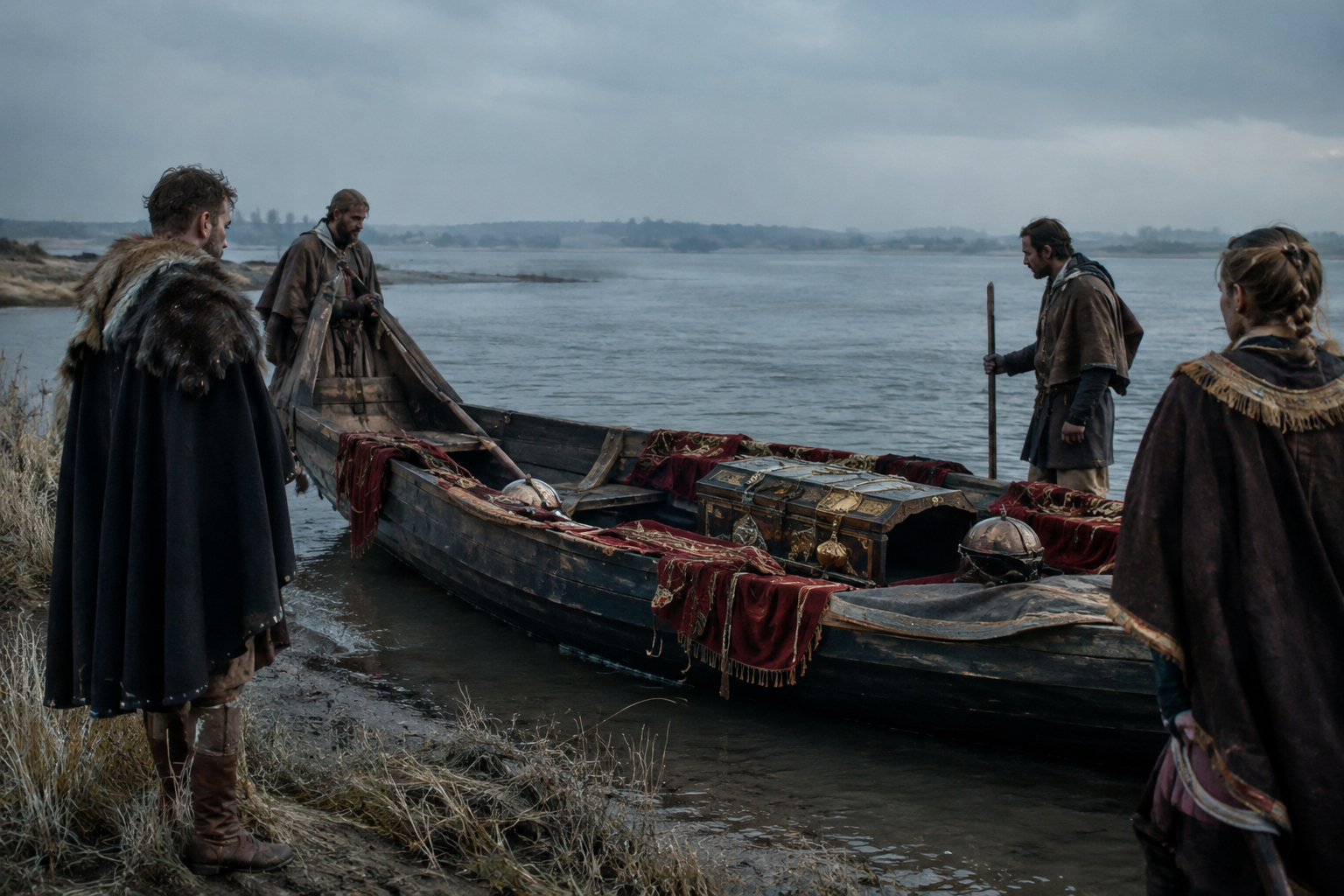
At Fallward on Germany's North Sea coast, archaeologists uncovered an elite boat burial dated to around AD 400, right on the edge of the Late Roman world. One ancient individual from that setting, sample G265, has been associated here with the Y-DNA haplogroup R1b1a2a1a2c1b2c1. That makes the burial interesting for more than one reason: not simply because of status, but because it places a paternal line inside a maritime frontier zone where Roman connections, local power, and North Sea mobility were all meeting at once.
That needs handling carefully. A Y-chromosome lineage traces one direct paternal line only, not a person's whole ancestry, language, or identity. Still, when a branch like R1b1a2a1a2c1b2c1 appears in a well-dated archaeological context, it gives us something unusually concrete: one man, one burial, one moment in a changing historical landscape.
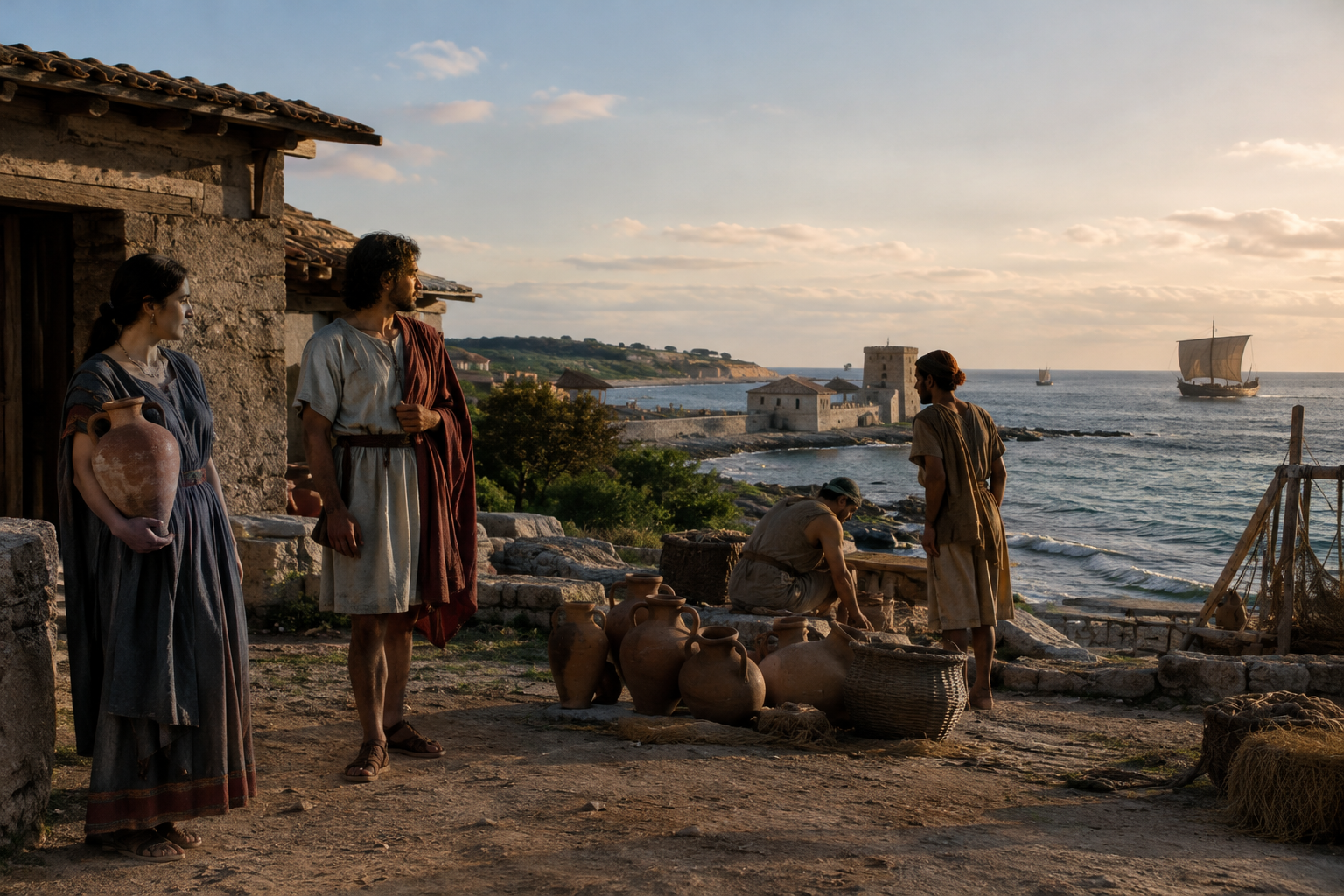
The Fallward burial belongs to a period when the Roman Empire still existed, but its northern edges were being reshaped by shifting military loyalties, coastal exchange, and the growing prominence of regional elites beyond the formal frontier. A boat burial on the German coast is not just a curious rite. It points to a society that looked seaward, understood prestige in material terms, and participated in a wider North Sea conversation linking the lower Elbe, the Rhineland, the Low Countries, and eventually early medieval Scandinavia and Britain.
That is the real historical value of G265. The sample does not prove the ethnicity of the buried man, nor does it let us assign him neatly to one named people from later texts. What it does do is anchor haplogroup R1b1a2a1a2c1b2c1 in an elite coastal context during the centuries when Roman authority and northern European power structures overlapped in complicated ways.
An ancient DNA study on early medieval Germany and adjacent regions has helped sharpen this wider picture, showing that burials from the period can reveal both local continuity and striking mobility rather than any simple story of replacement or one-way migration. That broader context matters when thinking about individuals like G265 on the North Sea fringe.
The haplogroup name here is extremely specific: R1b1a2a1a2c1b2c1. In practice, that means we are dealing with a narrow twig on the enormous R1b tree, one of the major paternal lineages found across much of western Eurasia. The larger family has a deep and complicated history stretching back far beyond the Late Roman period, but the presence of this exact branch in one coastal German burial should not be turned into a grand claim about all R1b men, all Germanic speakers, or all North Sea populations.
That distinction is worth making because popular DNA discussions often collapse broad and narrow levels together. A parent haplogroup may have a very wide prehistoric story; a fine-grained subclade such as R1b1a2a1a2c1b2c1 is much more particular. For family historians, that is precisely the point. The tighter the branch, the more it can potentially connect a present-day paternal line to specific regional histories, even when it cannot identify a named dynasty or an unbroken documentary pedigree.
The most tempting mistake with burials like Fallward is to treat status as if it explained everything. It does not. "Elite" tells us that the man in G265 was buried in a socially prominent way, but the more interesting question is why such prominence took this form in this place. Boat burials belong to a vocabulary of power with deep northern resonances, yet Fallward also sits within a world touched by Rome's economy, military structures, and prestige goods.
So this is not a tale of sealed cultural boxes: Romans over here, barbarians over there. It is a frontier landscape where local leaders could borrow, adapt, and display power in ways that were simultaneously regional and international. Paternal lineages are part of that picture, because they can reveal continuity between generations of local men, but they do not replace archaeology. The grave type, the coastal setting, and the date around AD 400 are what make this one sample historically vivid.
For readers interested in how ancient genomics is reshaping our view of language and population movements in this part of Europe, one useful companion is the wider discussion of Germanic expansions and contacts.
The centuries around AD 400 to 600 in northern Germany are often narrated rather too bluntly, as if populations either stayed put unchanged or else arrived in dramatic, homogeneous waves. Ancient DNA has been rather good at spoiling both tidy stories. What we increasingly see across the broader region is a mixture of local persistence and selective mobility, with individuals and family lines moving through political networks, marriage networks, military service, and trade.
That makes the Fallward individual useful as a fixed point. Sample G265 does not stand for all of northern Germany, but he does show that this branch was present among socially elevated people in a coastal community at the end of the Roman era. Research on early medieval Germany has repeatedly underscored that status communities could include people of varied backgrounds, and that movement over long distances was a normal feature of the age rather than an exception.
A related study of the region's population history has been especially valuable in showing how post-Roman communities along the western German frontier and Rhineland were shaped by both inherited local structure and incoming connections. That does not make Fallward a Rhineland site, of course, but it helps place coastal Germany inside a larger map of interaction rather than isolation.
For someone who carries R1b1a2a1a2c1b2c1 today, the value of a match like this is not that it turns an ancestor into a famous chieftain by magic. The value is subtler, and in some ways better. It places one branch of the direct paternal line in a documented social landscape: coastal northern Germany, the Late Roman period, and an elite burial tradition linked to North Sea prestige culture.
That can matter a great deal for reconstructing family-scale history. The North Sea was not a marginal backwater. It was one of Europe's great corridors of movement, carrying goods, styles, stories, and people between continental coasts and the British Isles. A paternal branch found in this environment may speak to ancestors shaped by maritime worlds, frontier politics, and the social transformations that bridged antiquity and the early Middle Ages.
There is also a useful caution here. One ancient sample is a point, not a population. It can suggest where a lineage was present; it cannot by itself map the full spread of the branch, nor prove descent from this specific man. But archaeology rarely gives us neat, total answers. What it gives us are well-placed lights in the dark, and Fallward is one of them.
Mobility in Early Medieval Germany
The distinctiveness of R1b1a2a1a2c1b2c1 in this case lies not in a sweeping origin myth, but in its sharp archaeological setting. Sample G265 ties the branch to an elite boat burial at Fallward around AD 400, on a coast where Roman influence, northern burial customs, and long-distance mobility all met. For anyone researching this paternal line, that is a meaningful clue: not a legend, not a dynasty, but a real man in a real frontier world at a pivotal moment in European history.
Comments