Haplogroup R1b1a1b1a1a2c1a5a1a1

– 4 min read


The difficulty with a very specific Y-DNA label such as R1b1a1b1a1a2c1a5a1a1 is that it sounds wonderfully precise, but precision only matters when the archaeology underneath it is equally firm. Here, the striking fact is not a glamorous king or a lavish burial. It is the opposite: we have an extremely narrow paternal branch, but no securely supplied ancient sample list to pin it to a named grave, cemetery, or excavation horizon.
That may sound disappointing, but in archaeogenetics it is actually an important starting point. Y-DNA follows one direct paternal line only: father to son across many generations. It can sometimes illuminate how a male lineage moved or persisted, but it is never the whole story of a person's ancestry, language, status, or identity. With a branch this specific, the responsible question is not "which famous dynasty did it belong to?" but "what broader archaeological landscape does its parent lineage belong to, and where do ancient finds help us understand that world?"
This haplogroup sits deep inside the enormous R1b family, one of the best-known paternal lineages in later prehistoric and historic western Europe. That broader story is archaeologically visible because ancient DNA has repeatedly found R1b branches in populations connected with the great demographic changes of the later Neolithic and Bronze Age, especially those linked to steppe-derived ancestry and, later, Bell Beaker and post-Beaker expansions in western and central Europe.
What we cannot do, on the evidence given here, is pretend that every ancient R1b male belonged to R1b1a1b1a1a2c1a5a1a1. That would collapse thousands of years of branching history into a single label. The narrower subclade may represent a much later slice of that paternal tree, perhaps one that became regionally important only in historical or even comparatively recent times.
Bell Beaker on the Lower Rhine
If you want to understand why a descendant branch like this one matters, the Lower Rhine-Meuse region is a sensible place to look. Archaeology and ancient genomics together show that this was one of the crucial corridors where older Neolithic populations, lingering forager ancestry, incoming steppe-related ancestry, and Bell Beaker-associated communities interacted in ways that helped shape later northwestern European populations.
That does not mean your exact branch can simply be projected back into every Beaker grave. But it does mean that the long-term success of many western European R1b lines was tied to this broad transformation: new burial practices, new social networks, and new patterns of mobility that linked river basins, coastlines, and inland routes. In other words, the deep ancestry of this paternal line almost certainly belongs to a world made visible by archaeology, not merely by a modern haplogroup string.
MyTrueAncestry readers interested in that regional background may want to compare it with Bell Beaker-driven population turnover in the Rhine-Meuse region, which explores the same broad zone from a different angle.
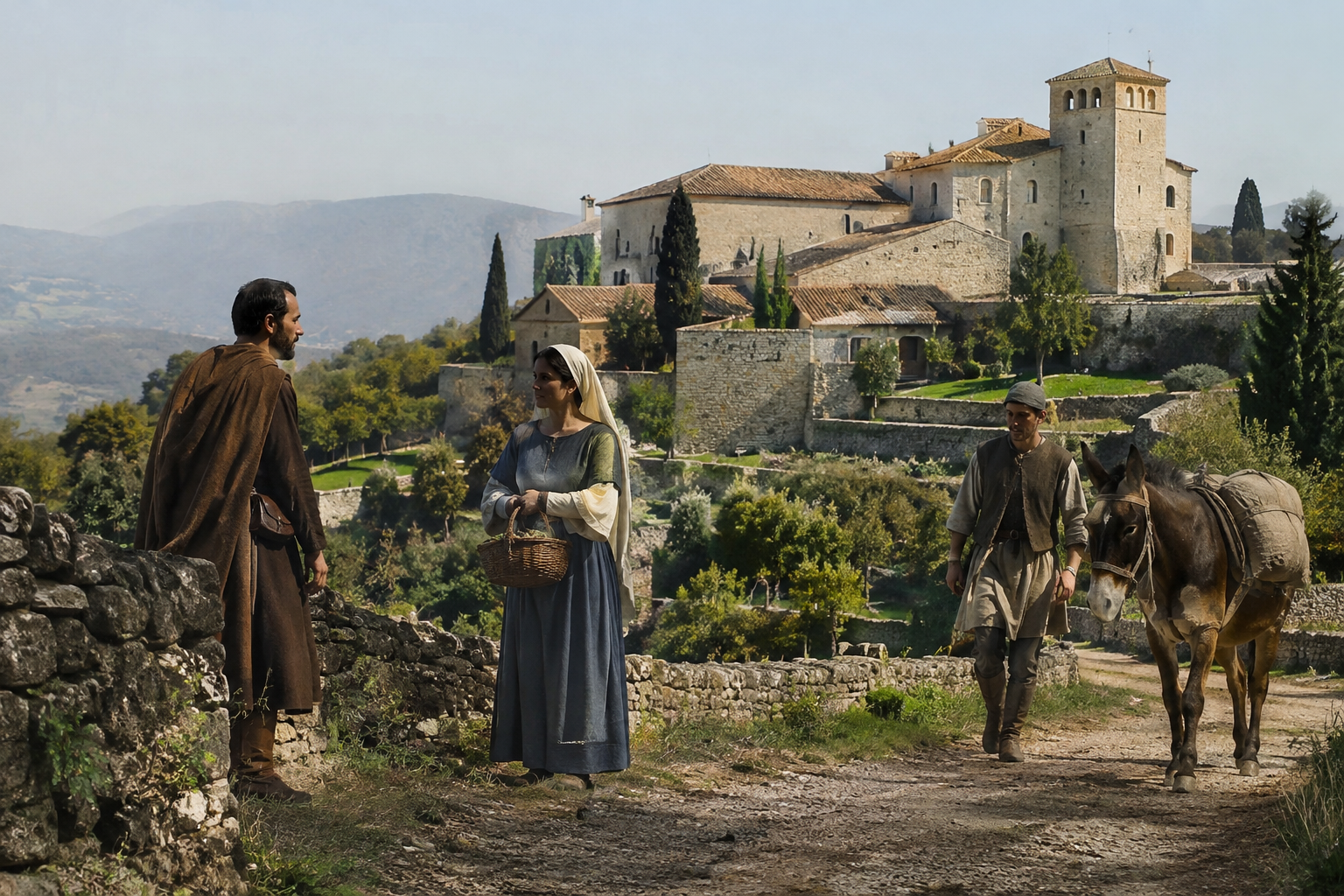
One of the most useful correctives in ancient DNA is that lineages do not stand still. A paternal branch that became common in later prehistory could be redistributed many times over by Roman frontier movements, post-Roman settlement shifts, elite formation, local population recovery, and ordinary village marriage patterns. By the early medieval period, western European R1b lineages were no longer simply the story of Bronze Age expansions; they were embedded in new political and cultural landscapes.
The Rhineland is especially revealing here. It sat at the edge of empire and then at the center of post-Roman change. Ancient DNA from the region has shown that communities of the early Middle Ages could combine local continuity with substantial mobility. That matters for anyone carrying a narrow R1b subclade today, because such branches often owe their present distribution not just to deep prehistory but to these later centuries of compression, resettlement, and local founder effects.
There is always a temptation to match a Y-DNA branch neatly to a people named in texts: Celts, Franks, Saxons, Goths, Normans. History is rarely that tidy. Language shift, political allegiance, and paternal descent overlap only imperfectly. A man with a western European R1b line in the early medieval north could live in a Latin-speaking Roman town, join a community labelled Germanic by historians, and have ancestors drawn from several older populations.
That is why studies of language spread and genomics are most useful when they stay at the level of populations rather than promising tribal certainty for a single lineage. The parent branches above R1b1a1b1a1a2c1a5a1a1 fit comfortably within western Europe's long archaeological development, but the exact subclade should be treated as a later genealogical refinement, not as a ready-made ethnic badge.
Germanic Languages and Genomics
So what can someone with R1b1a1b1a1a2c1a5a1a1 take from all this? First, that their direct paternal line almost certainly belongs to the immensely successful western Eurasian R1b story, a story that became especially visible in Europe after the later Neolithic and Bronze Age. Second, that the exact terminal branch is likely to reflect much later branching inside that bigger history, meaning that medieval and post-medieval population structure may matter just as much as prehistoric expansion.
In practical terms, this is the kind of haplogroup that invites comparison rather than grand claims. Compare your paternal line with regional matches, medieval clusters, and any future ancient samples assigned securely to the same subclade. The most revealing discovery may not be a famous ancestor at all, but the point at which a very old western European paternal tradition narrows into a local, documentable family history.
Roman Lower Rhine Frontier DNA
For now, the honest historical picture is a broad one: this lineage belongs inside the long making of western Europe, from prehistoric demographic change to the crowded and mobile societies of the Roman and early medieval north. As more ancient Y-chromosome results are published at finer resolution, narrow branches like R1b1a1b1a1a2c1a5a1a1 will become easier to place. Until then, its value lies in linking a modern paternal line to one of the major archaeological dramas of European history without pretending that every missing detail is already known.
Comments