Haplogroup R1b1a1b1a1a2c1

– 6 min read


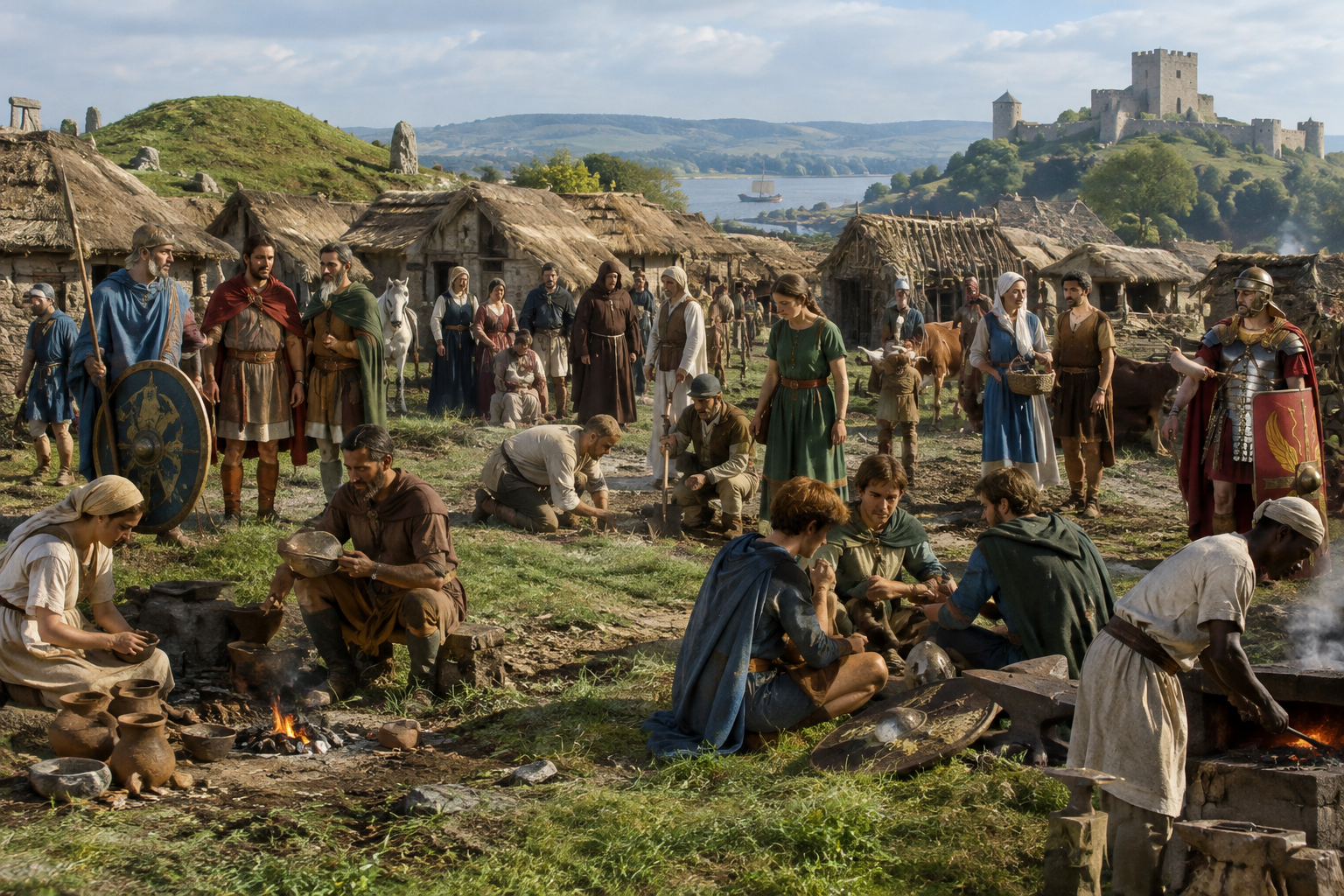
At Wetwang Slack in East Yorkshire, a cluster of Iron Age burials has become one of the clearest windows onto the paternal history behind haplogroup R1b1a1b1a1a2c1. Several men from this cemetery and its wider Arras Culture setting, dated to around 225 BC, are associated here with the branch: among them I36873, I36847, I36840, I36757, I36763, I36770, I36908, and I30967. That is immediately striking, because it suggests not an isolated appearance, but a repeated paternal presence in one of the best-known Iron Age landscapes of eastern Britain.
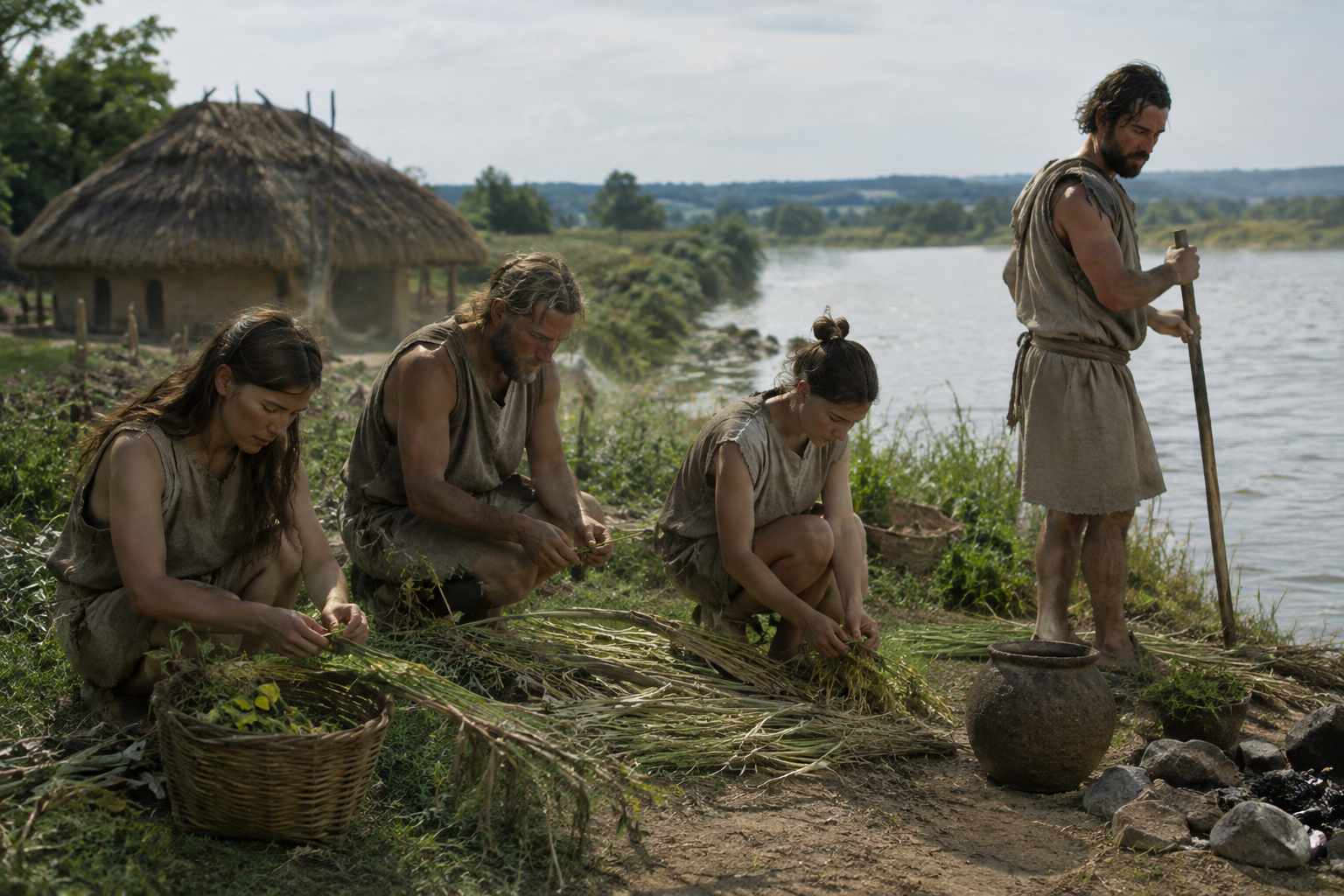
The deeper interest is that this same branch also appears much earlier and much farther east, in sample I3525 from Early Bronze Age Hungary at Sarretudvari-Orhalom, dated here to about 2450 BC and described as Yamnaya-related. So the article is not about a single tribe or kingdom. It is about a paternal line that turns up first in the steppe-linked world of the early Bronze Age, and later again and again in Britain, with further appearances in Iron Age Italy, Roman Iberia, early medieval England and Ireland, and medieval northern Spain. Y-DNA, of course, traces only one direct male line, not a person's whole ancestry, but in this case that line is unusually useful because it appears in so many archaeological settings.
The earliest sample in this set, I3525 from Early Bronze Age Hungary, matters because it places the branch in the broad historical zone where steppe-derived male lineages were becoming prominent across much of Europe. One should be careful here: that does not mean every later carrier of R1b1a1b1a1a2c1 descends in any simple, traceable way from this one man, nor that the exact fine subclade was already fully resolved in every ancient case. But the association does fit the wider pattern in which R1b lineages became important during and after the Bronze Age transformations of Europe.
Britain provides the next important stage. The branch appears in a run of Bronze Age English and Scottish contexts: Amesbury Down in Wiltshire, Cranborne Chase in Dorset, Lechlade-on-Thames in Gloucestershire, East Kent, Sussex, Bedfordshire, Northumberland, East Lothian, and elsewhere. Samples such as I2565 from Amesbury Down, I12935 and I12786 from Lechlade-on-Thames, cfa001 from Canada Farm, and hdw002 from Handley Barrow show that by the second millennium BC this paternal line was already well established in Britain. A major ancient DNA study of Britain and nearby Europe helped frame this larger background of population change and continuity across later prehistory and the early medieval period in research on ancient genomes from Britain.
If one site gives this haplogroup its clearest archaeological personality, it is Wetwang Slack. The cemetery belongs to the Arras Culture of Iron Age Yorkshire, famous for its square barrows and for burial customs that have long prompted comparisons with communities across the Channel. Here, however, the genetic point is simpler and in some ways more interesting: the same paternal branch appears repeatedly among men buried in the same regional culture.
That pattern does not prove a ruling dynasty or even close kinship among all the individuals. Cemeteries are not family trees. But repeated appearance within one burial landscape does suggest that R1b1a1b1a1a2c1 was not marginal there. It seems to have been part of the local male population over enough time to show up in multiple graves, and that is exactly the sort of evidence that makes a haplogroup historically legible rather than just technically classifiable.
The Yorkshire pattern is strengthened by nearby and related Iron Age finds. I5505 from Pocklington, also in Yorkshire and dated here to about 295 BC, sits well within the same broad eastern British world. Other Iron Age carriers appear across southern and western Britain too: East Kent, Oxfordshire, Bedfordshire, Somerset, Hampshire, Cornwall, Sussex, Scotland, and Wales. In other words, this was not merely an Arras Culture curiosity. It was a branch distributed across Iron Age Britain, though with an especially dense concentration in the east.
A useful companion to this is MyTrueAncestry's post on Ancient DNA and matrilineal kinship in Iron Age Britain, which explores how burial communities can preserve social patterns more subtle than a simple ethnic label.
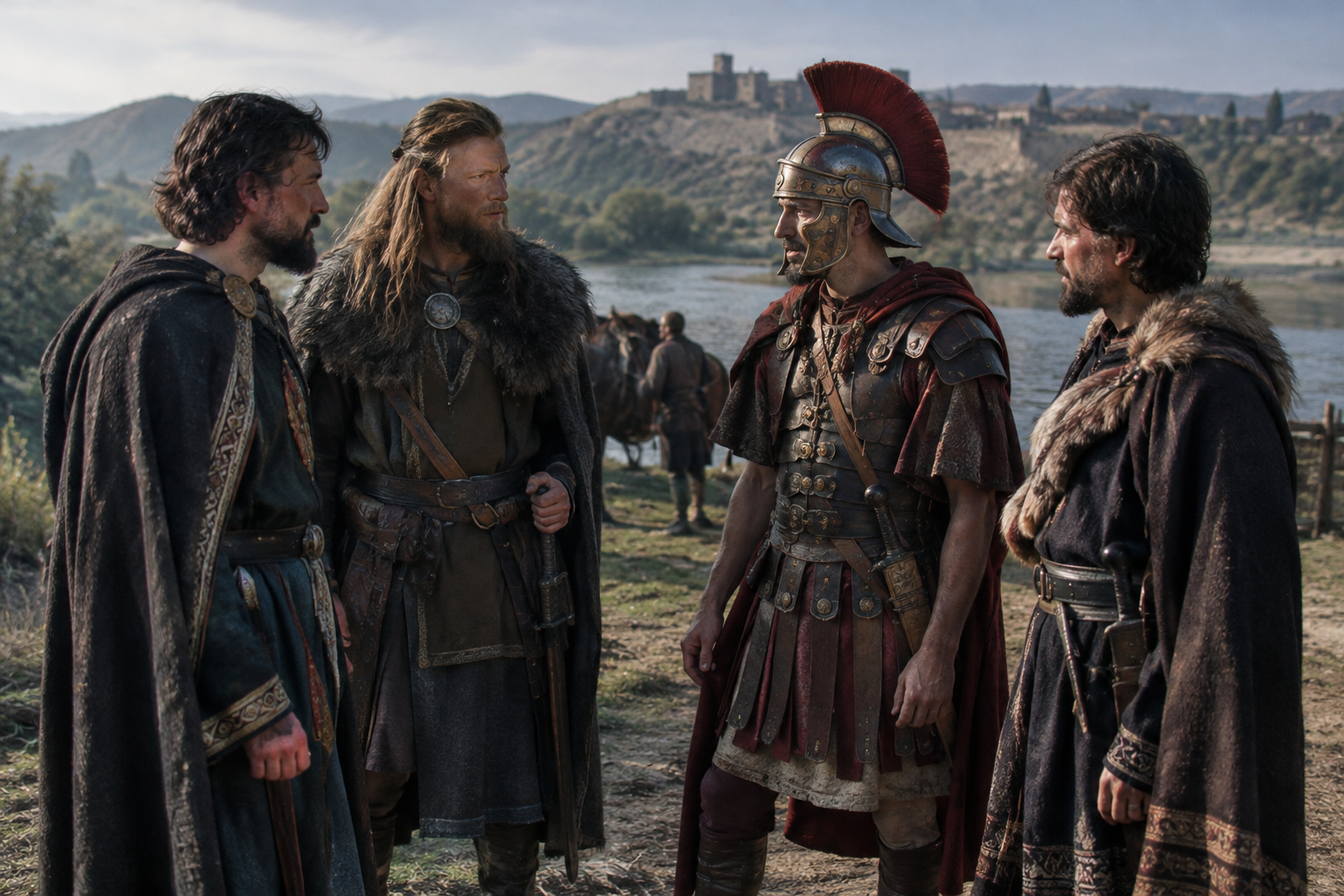
The branch also appears on the Continent in ways that suit what we know of later prehistoric mobility. Two samples from Verona Seminario Vescovile in Italy, 3214s and 3214, are described here as belonging to the Gallic Cenomani around 300 BC. That is a valuable reminder that lineages found in Britain were not sealed off from mainland Europe. Northern Italy in the later Iron Age was a contact zone of Celtic-speaking groups, local Italic populations, and later Roman expansion.
One should avoid turning that into an over-neat map of "Celtic DNA." A haplogroup is not a language, and no single paternal line can stand for all Cenomani, Britons, or Gauls. Still, the appearance of this branch in both Iron Age Britain and a Gallic context in northern Italy is historically suggestive. It places R1b1a1b1a1a2c1 in the kinds of male networks that linked Atlantic Europe, Gaul, and the Po Valley during the first millennium BC.
Roman-period Iberia adds another layer. Sample I23763 from the Merida Necropolis Blanes, dated here to about AD 450, and I6492 from a Roman villa at Tarragona around AD 350, show the branch in the Iberian Peninsula in late Roman settings. That matters because Iberia was not just a passive endpoint. It was one of the great provinces of the Roman world, thick with soldiers, settlers, merchants, local elites, and long-settled provincial communities. MyTrueAncestry's discussion of Roman Hispania's Lasting Genetic Legacy gives useful background for that mixed but locally rooted world.
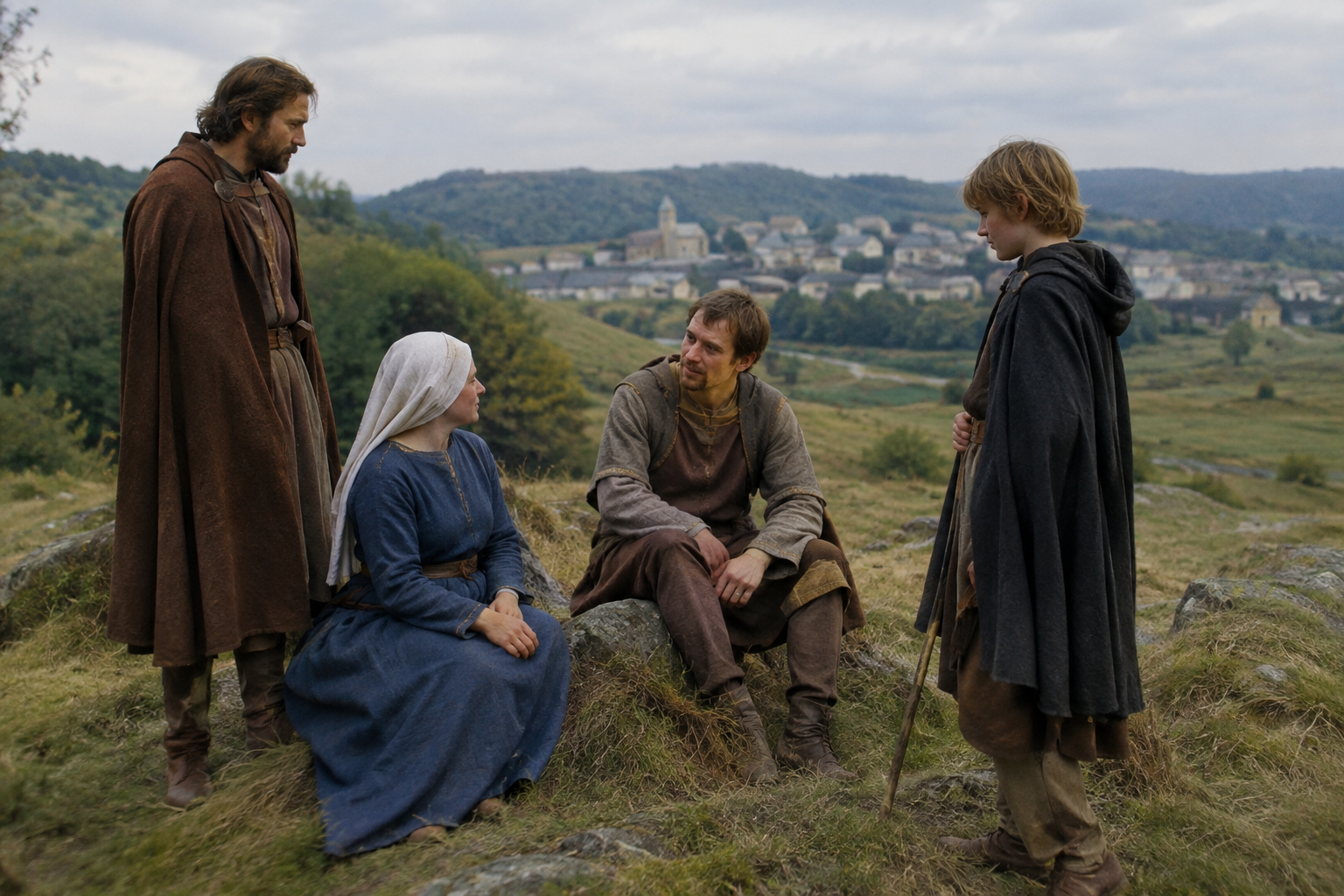
One of the most appealing things about this branch is that it does not vanish with Rome. It turns up in early medieval England in contexts labelled Saxon or Anglo-Saxon: BUK055 from Buckland Dover, HAD018 from Hatherdene Close in Cambridgeshire, LAK010 from Lakenheath in Suffolk, EAS004 from Eastry in Kent, and 12880A and 12884A from Hinxton. A large study on early medieval England has helped show just how varied these communities were, combining migrants and locals in different proportions from region to region in ancient DNA research on the formation of the early English gene pool.
For this haplogroup, that means something quite specific. R1b1a1b1a1a2c1 cannot be boxed into a single identity such as "Celtic" or "Saxon." It was present in Britain before the Anglo-Saxon migrations, and it also appears within early medieval communities shaped by those migrations. That is exactly the sort of continuity-and-change pattern archaeogenetics often reveals: old lines surviving inside new political and cultural worlds.
Ireland offers a similar glimpse. KIL025, KIL015, and KIL012 from Kilteasheen in Roscommon, around AD 650, place the branch in an early medieval Irish ecclesiastical landscape. These are especially helpful because they show the haplogroup in the Irish west during the same broad period that Britain was being transformed by kingdoms, monasteries, and shifting regional identities.
The latest especially coherent cluster comes from Las Gobas in northern Spain, where ldo039 is dated here to about AD 650 and ldo052 and ldo242 to around AD 1000. That gives us the branch in a place shaped by Visigothic, local Iberian, and later medieval Christian histories. Northern Spain in these centuries was not isolated at all; it was part of the fractured but highly connected post-Roman west.
Seen together with Merida, Tarragona, and the later sample I3809 from post-Reconquista Granada around AD 1550, the Iberian evidence suggests staying power. The branch was not a passing arrival. It persisted through Roman rule, the end of the western Empire, and the reshaping of medieval Iberia. That fits well with broader regional studies such as MyTrueAncestry's post on diverse origins at a 7th-century Madrid burial site, which shows how mixed and mobile early medieval Iberia could be.
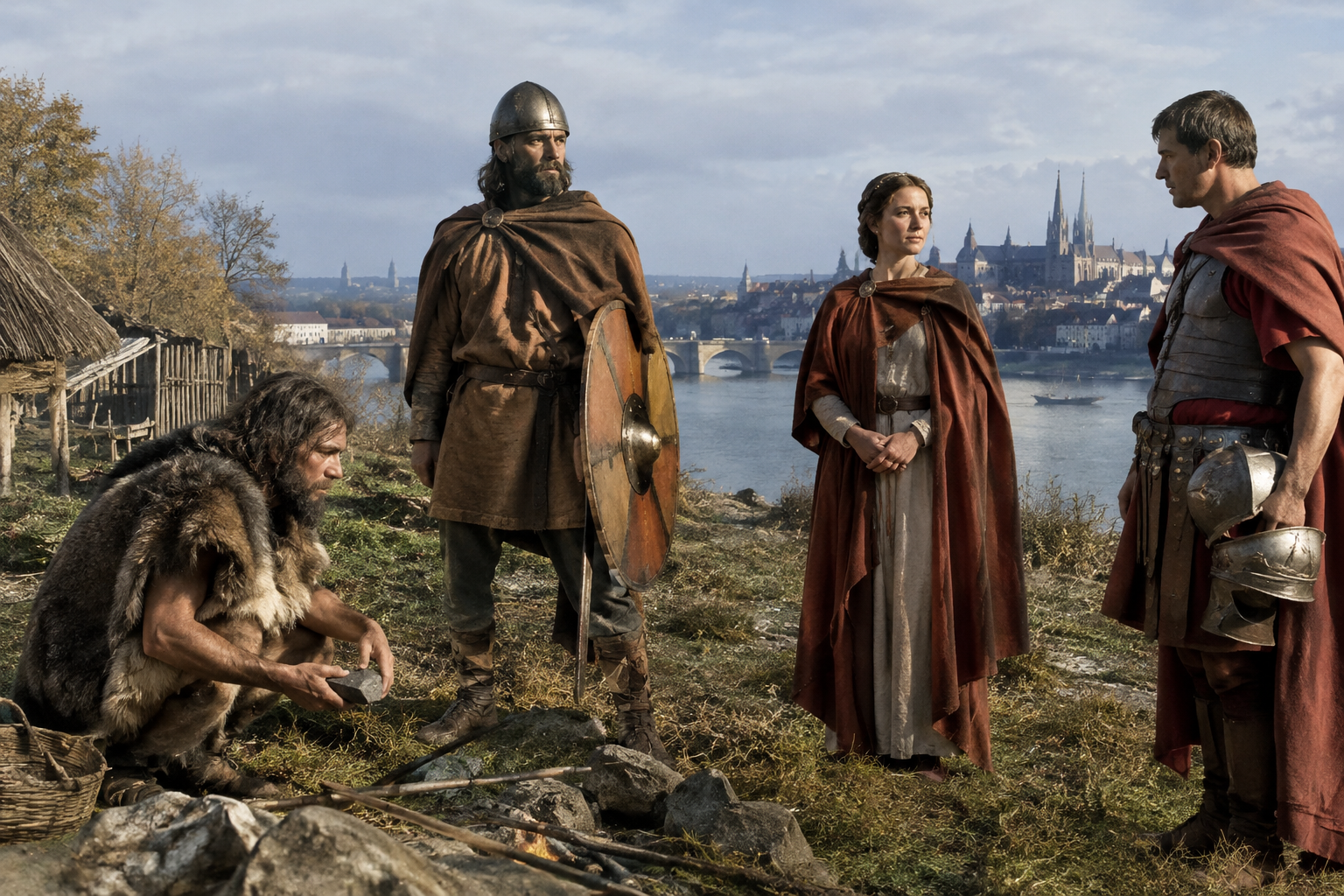
The distinctive feature of R1b1a1b1a1a2c1 is not a single famous king or one dramatic migration. It is its persistence across major historical thresholds: steppe-linked Bronze Age expansion, the making of Bronze Age Britain, Iron Age communities in Yorkshire, Gaul and Italy, Roman Iberia, and the early medieval societies of Britain, Ireland, and Spain. For someone researching this paternal line today, that is the useful clue. Your direct male ancestry may belong to a branch that was already thoroughly woven into western Europe's history long before surnames, kingdoms, or even the Roman Empire existed.
Comments