Haplogroup E1b1b1a1b1a22

– 4 min read


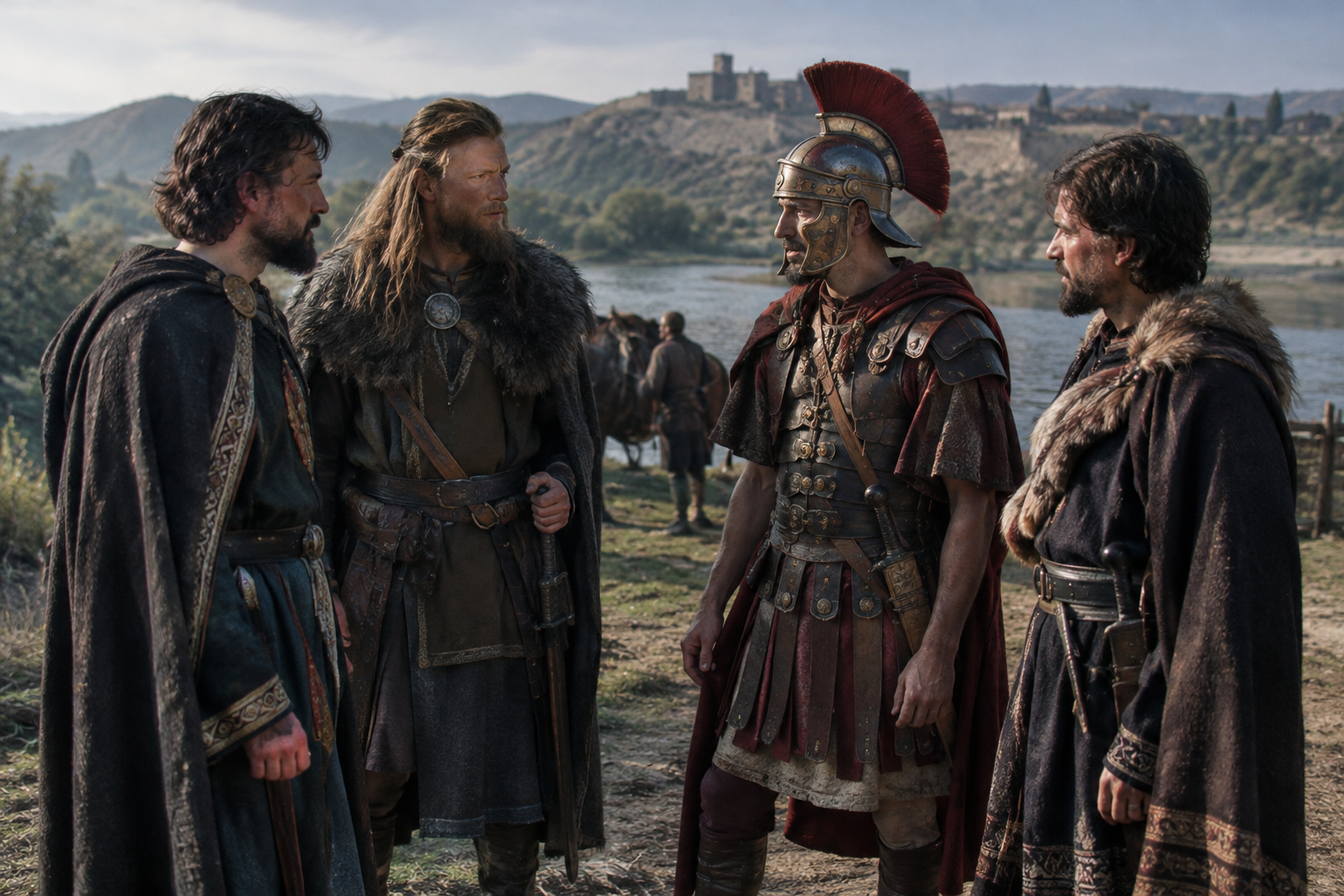
At Sarria de Ter, at Pla de lHorta near Girona, one man from Visigothic-era Spain has become a particularly intriguing signpost for haplogroup E1b1b1a1b1a22. The individual is recorded as sample I12031, dated to about AD 558. On its own, that is just one paternal line in one cemetery. But set beside other ancient finds, it starts to show something far more interesting: this branch appears not as the badge of a single people, but inside the mixed human worlds of late Roman frontiers, post-Roman kingdoms, and Viking Age mobility.
That is worth pausing over. Y-DNA tracks one direct paternal line only, not a person's whole ancestry or identity. Yet a lineage like E1b1b1a1b1a22 can still be historically revealing when it turns up in very different archaeological settings. Here, the pattern reaches from the Balkans to Iberia and then north into Scandinavia.
The best place to begin is Girona, because I12031 sits in a period when northeastern Iberia was anything but isolated. By the mid-6th century, this region belonged to the Visigothic kingdom, but daily life was shaped by older Roman infrastructure, local Iberian populations, Christian institutions, and the movement of soldiers, clerics, traders, and families across the western Mediterranean.
So a Y-chromosome assignment like E1b1b1a1b1a22 in a Visigothic-period burial should not be read as "a Visigothic haplogroup" in any simplistic sense. It is better understood as evidence that male lines associated with the wider E1b1b world had become part of the population living in early medieval Spain. That fits the increasingly clear picture from archaeogenetics: post-Roman Iberia was not a sealed ethnic block, but a society made from layers of earlier and newer ancestry.
A useful parallel here is MyTrueAncestry's look at Madrid's early medieval burials, which also shows how varied such communities could be.
Research on ancient Iberian populations has increasingly emphasized that Roman and post-Roman Spain preserved substantial diversity rather than collapsing into neat ethnic categories. For broader context on that long transition, see an ancient DNA study of Roman and migration-period Iberia, which helps frame why a lineage like this can appear quite naturally in a Visigothic setting.
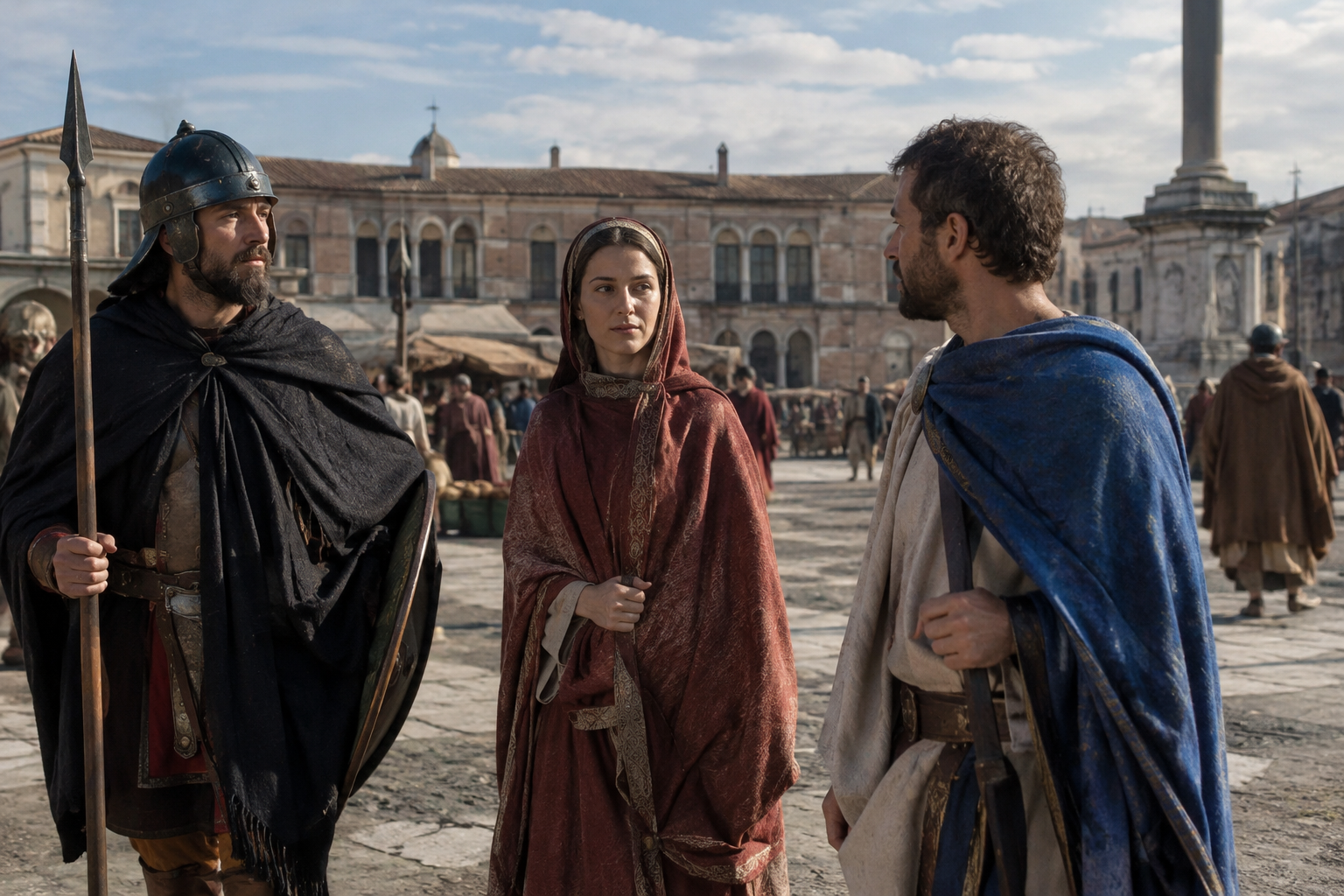
If Girona shows E1b1b1a1b1a22 in a western post-Roman kingdom, sample R6764 shows it in a very different historical landscape: Naissus in present-day Serbia, around AD 300, classified as Late Roman Period Dacian. Naissus was no backwater. It lay in a strategic corridor of the central Balkans, a region tied into imperial roads, military logistics, and the administrative life of the Roman Empire.
That matters because the Balkans were one of the great contact zones of antiquity. Armies moved through them, emperors emerged from them, and provincial communities there absorbed people from multiple backgrounds. A paternal line found in Late Roman Naissus may reflect deep local continuity, mobility within the empire, or both. The point is not to force a single origin story, but to recognize that this was precisely the sort of environment in which lineages could spread, persist, and reappear in later centuries far from any supposed homeland.
Recent archaeogenetic work on frontier populations in this region has underscored how complicated that human landscape was, with biological mixing often cutting across the tidy labels used in written history. That makes R6764 especially valuable: it places this branch in a Roman Balkan setting before the Visigothic sample from Spain and before the Viking Age sample from Denmark.
For readers interested in how DNA has complicated old ideas about identity in this region, this related article is very much to the point.
The northernmost appearance in this small cluster is CGG106782, dated to about AD 975 from Bogovej, Denmark, in the Viking Age. This is the sort of finding that upsets lazy assumptions. People often imagine Viking Age Scandinavia as genetically uniform and culturally straightforward. It was neither.
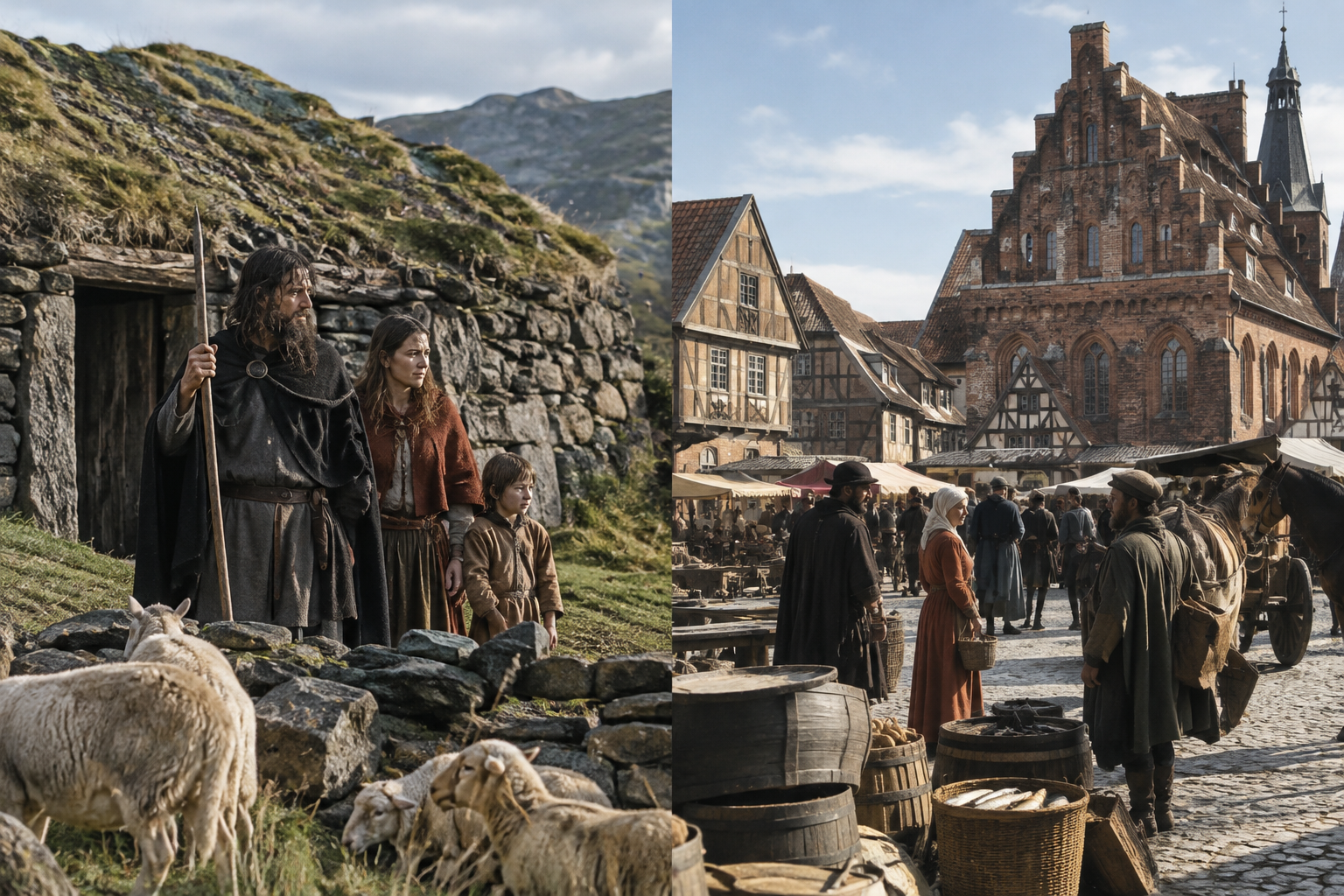
By the 10th century, Denmark was deeply entangled with the North Sea, the Baltic, the British Isles, the Frankish world, and routes that extended far beyond them. Men and women moved as raiders, traders, captives, settlers, spouses, and converts. A paternal lineage such as E1b1b1a1b1a22 appearing in Viking Age Denmark therefore fits a wider picture of Scandinavian societies connected to a broad world, rather than sealed off from it.
We should be careful here. One Viking Age Danish sample does not mean this branch was common in Denmark, nor does it prove a specific migration route. But it does show that by around AD 975, this paternal line had entered a Scandinavian context documented by ancient DNA. That is a concrete and useful fact.
A broader genetic study of ancient European populations, including later historical periods, has helped illuminate just how entangled these regional histories could be across time and space; for general backdrop, see this large-scale ancient DNA research publication.
Anyone following the Scandinavian side of the story may also enjoy this related post on population change and connections in the north.
Early Medieval Baltic Connections
With only a few ancient examples, the temptation is to tell too neat a tale. Better not. The evidence here does not allow us to pin E1b1b1a1b1a22 to one tribe, one kingdom, or one dramatic migration. The ancient contexts are too different for that, and in any case historical peoples were not defined by a single Y-chromosome line.
What the evidence does suggest is something more historically interesting. This branch belonged to the interconnected human geography of the Mediterranean and Europe in late antiquity and the early Middle Ages. It appears in a Late Roman Balkan context, in Visigothic-era Spain, and in Viking Age Denmark. That is not a narrow local pattern. It is the pattern of a paternal line carried through societies built by movement, mixture, and long continuity.
That also sits well beside broader discussions of Roman and post-Roman Iberia on MyTrueAncestry, where the old notion of neatly separated populations has steadily given way to a more convincing picture of overlap and persistence.
Roman Hispania's Genetic Legacy
For someone researching a present-day paternal line in E1b1b1a1b1a22, the most responsible takeaway is not a promise of descent from one famous people, but a placement in history's busiest corridors. The ancient record currently points toward a branch present in populations shaped by the Roman Balkans, post-Roman Iberia, and Viking Age northern Europe. In other words, this is a lineage that turns up where worlds met.
That is often the most rewarding result of ancient DNA. Not a mythical founder, but a sharper sense of the kinds of historical environments in which your direct paternal line once moved: frontier provinces, successor kingdoms, and maritime societies that were far more connected than older textbooks used to admit.
Comments