Haplogroup R1b1a1b1a1a2b5

– 5 min read


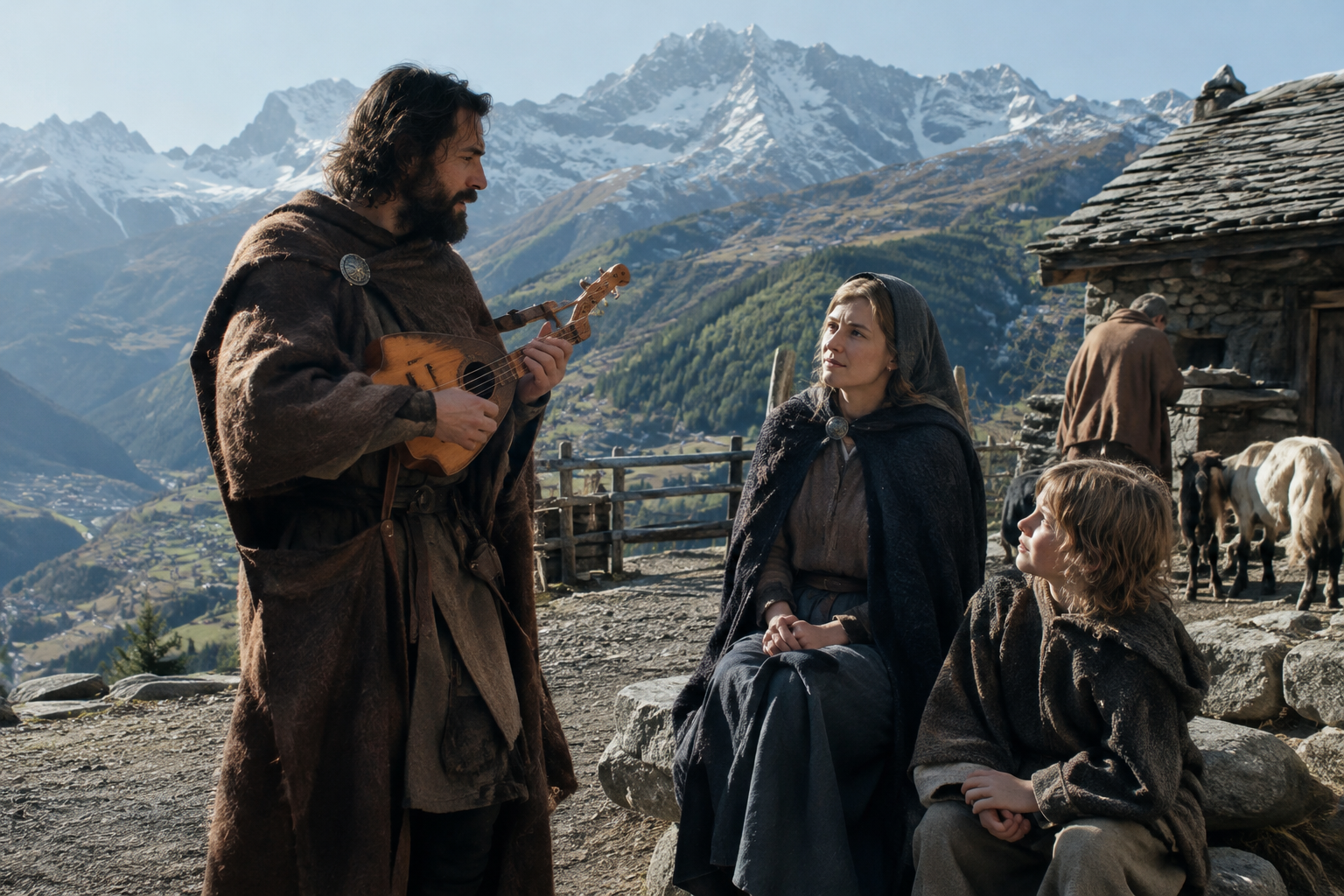
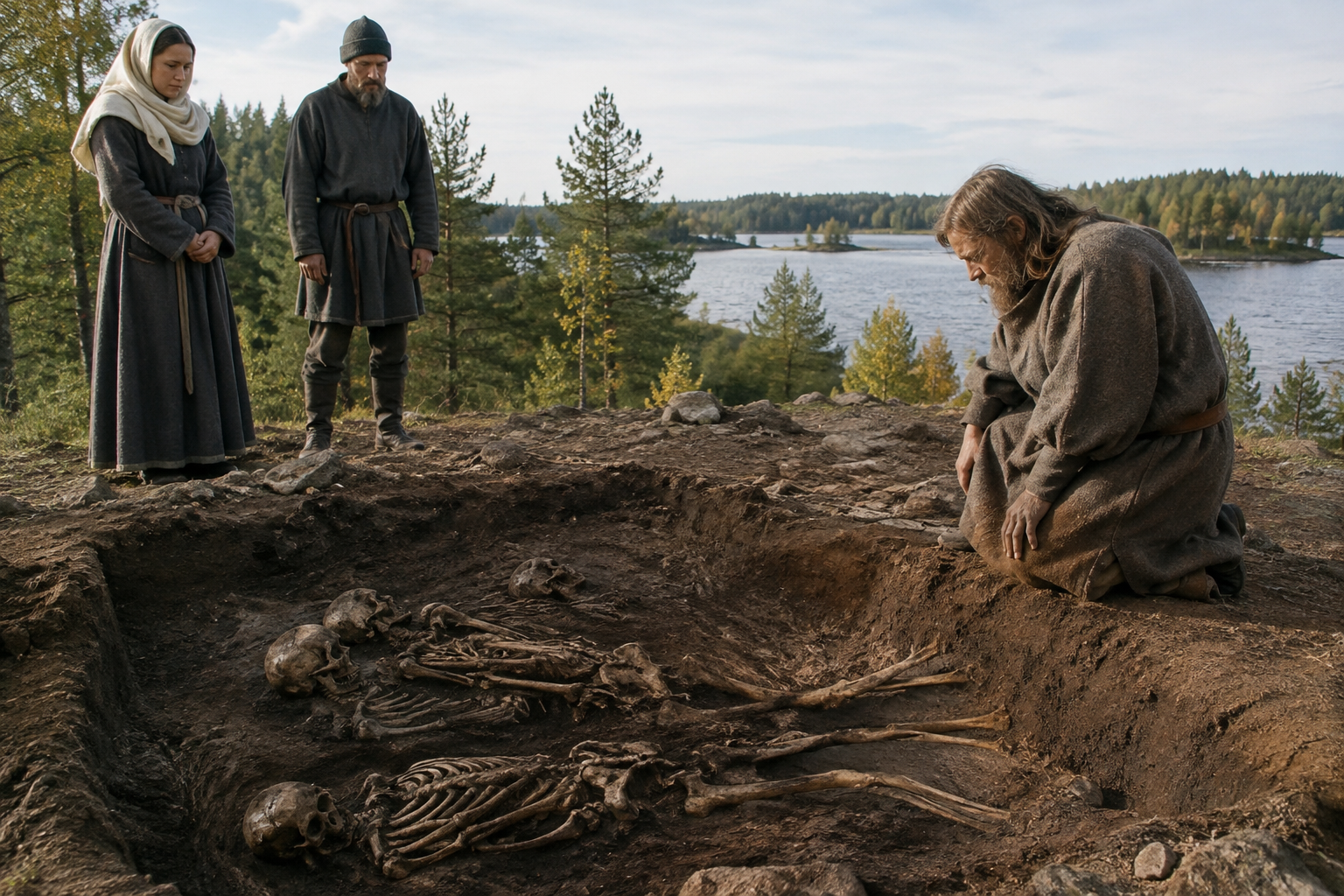
In the western Alps, near Bardonecchia in northern Italy, one early medieval burial gives us a rare fixed point for the Y-DNA haplogroup R1b1a1b1a1a2b5. The individual is known as Bard_T6, dated to around AD 650, and classified here as a Dark Ages Italian sample. That is not a grand royal tomb or a famous name from the chronicles. It is, in a way, better than that: a real man from a real frontier landscape, living in the centuries after Roman imperial rule had fractured and new political worlds were taking shape across the Alps.
That setting matters. Bardonecchia sits in one of those places archaeologists and historians love because it is never just local. Alpine valleys connect as much as they divide. In the centuries around AD 650, northern Italy was tied into Lombard rule, post-Roman settlement, church networks, and movement through mountain passes linking the peninsula to Gaul and beyond. When a paternal lineage such as R1b1a1b1a1a2b5 appears here, the interest lies not in claiming a single ethnic label for it, but in placing one direct male line inside that complicated world.
The sample Bard_T6 is valuable precisely because it is so specific: a place, a period, and a male line attached to an excavated individual. Y-DNA tracks only the direct paternal line, not a person's whole ancestry, language, or identity, but it can still be historically revealing when anchored in archaeology. In this case, the anchor is a man from the Alpine edge of early medieval Italy, where older Roman landscapes and newer post-Roman populations overlapped.
That overlap is one of the central facts of the seventh century in northern Italy. The old Roman road system had not vanished. Christian burial traditions were becoming more deeply rooted. Political power had changed hands, but communities still lived in landscapes shaped by centuries of imperial administration, trade, and mobility. A paternal branch found in Bardonecchia therefore belongs to a lived historical environment, not to a simplistic map of "tribes."
An ancient DNA project associated with these remains is available through this research record, which points to the wider genetic investigation behind the sample set. Even without forcing claims beyond the evidence, Bard_T6 stands as an important datapoint for anyone interested in how paternal lines persisted and circulated in the Alpine world after Rome.
R1b1a1b1a1a2b5 is a very narrow paternal label, far more specific than the broad and famous umbrella of R1b in western Eurasia. That distinction is important. People often hear "R1b" and jump immediately to vast claims about Celts, Romans, steppe migrations, or western Europe as a whole. But a fine-grained subclade like R1b1a1b1a1a2b5 is not automatically a badge of any one ancient people, kingdom, or language community.
What we can say more carefully is that Bard_T6 shows this paternal branch present in the western Alpine zone in the early Middle Ages. That places it in a region where ancestry streams from prehistoric Europe, Roman-period mobility, and post-Roman political change had already mixed for centuries. If your own paternal line falls under this branch, the lesson is not that you descend from one named medieval group, but that your direct male line was part of the sort of population history that made the Alps a corridor as much as a barrier.
By AD 650, Italy was not a blank slate newly settled by one incoming population. It was a patchwork. Some communities had deep local roots stretching back through Late Antiquity and into the Roman period. Others included newcomers or descendants of newcomers from different parts of Europe. The archaeology and genetics of early medieval Italy increasingly show that the post-Roman centuries were shaped by both continuity and mobility.
That makes a site like Bardonecchia especially useful. It belongs to a mountain zone where traffic, military movement, pilgrimage, trade, and seasonal travel could all leave their mark. A Y-DNA lineage found there need not have originated locally in the narrow sense, nor need it represent a recent arrival. In such places, the real historical question is often how lineages became established across generations in communities that sat on routes of exchange and control.
This is also why it is risky to label a single male burial as "Lombard," "Roman," "Frankish," or anything similar without stronger evidence from burial context, texts, or comparative analysis. The sixth and seventh centuries in northern Italy were full of people who lived under changing rulers while remaining embedded in local landscapes. Genetics helps us see the biological dimension of that world, but it does not flatten its social complexity.
Medieval Italian paleogenomics
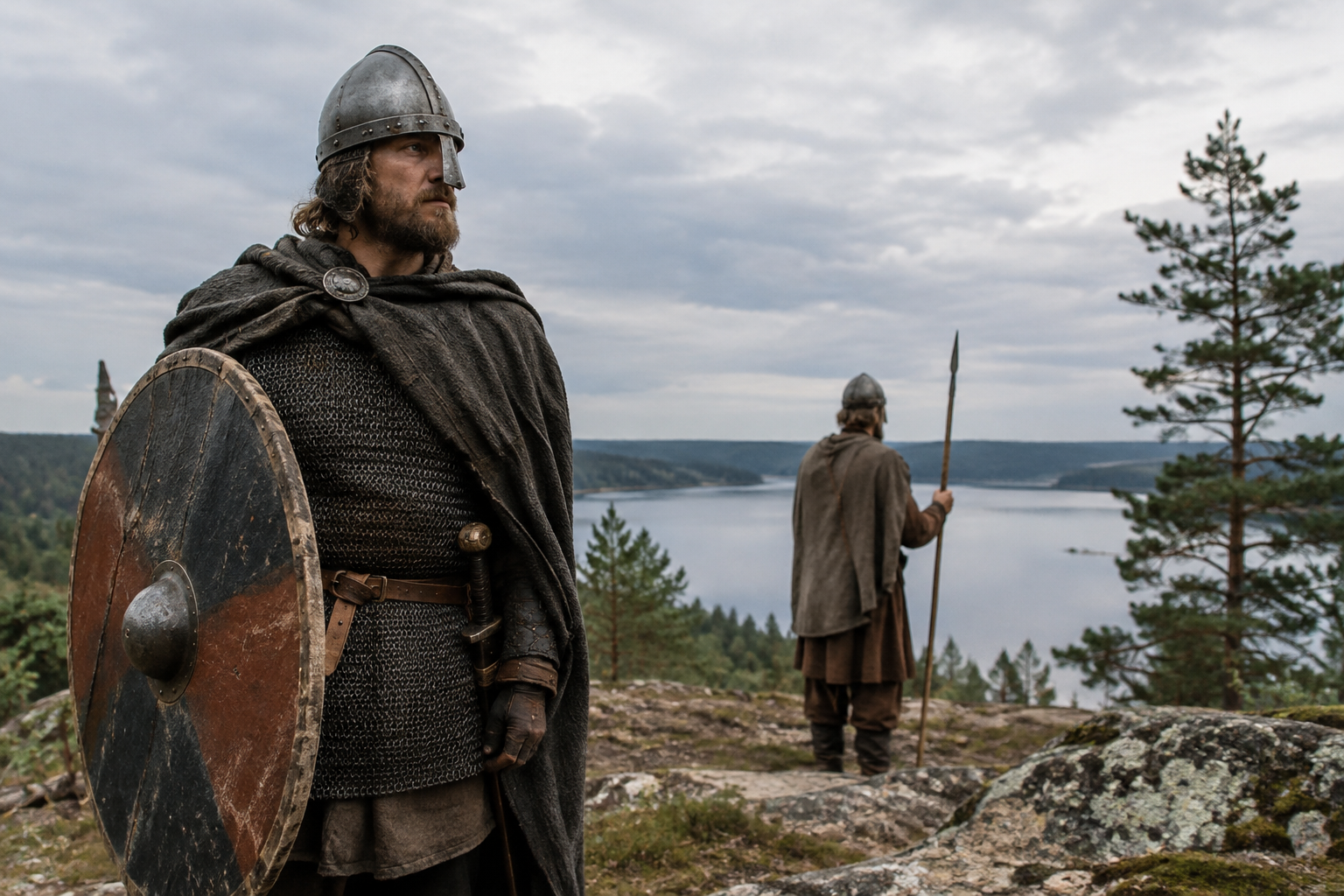
Bardonecchia's importance lies partly in geography. The western Alps were one of the great hinge zones of European history. Armies crossed them, certainly, but so did merchants, clerics, herders, families, and messengers. If a direct paternal line appears in this region in the seventh century, it belongs to a human landscape shaped by repeated contact between the Italian peninsula and transalpine Europe.
For archaeogenetics, that means a single sample can help pin a lineage to a meaningful historical context. Not because one grave explains everything, but because well-dated individuals let us stop speaking in vague prehistoric clouds and start speaking about actual centuries and actual regions. Bard_T6 tells us that by the early medieval period, this branch was present in a community at the Alpine threshold of Italy.
That finding fits well with a broader trend in ancient DNA research: frontier and corridor regions often turn out to be biologically mixed in ways that match their historical role. The Alps were never simply a wall. They were also filters, channels, and inhabited worlds of their own.
There is a temptation, with any precise Y-DNA label, to treat it like a surname that runs unchanged through history. But the past is messier than that. Every generation doubles your total number of ancestors, while Y-DNA follows only one line among many. So a man like Bard_T6 may have carried R1b1a1b1a1a2b5 on his father's side while drawing the rest of his ancestry from a broad mixture typical of early medieval northern Italy.
That is exactly why ancient DNA is so useful when kept in proportion. It can identify direct paternal continuity or presence, but it also sits best alongside archaeology, chronology, and regional history. In Italy especially, that means remembering that Roman, Late Antique, and early medieval populations were shaped by long-term interaction across the Mediterranean and Europe. A seventh-century Alpine male line is one thread in that larger fabric, not the whole cloth.
The most solid historical insight here is a modest but valuable one. R1b1a1b1a1a2b5 is attested in the person of Bard_T6, an early medieval man from Bardonecchia in the western Italian Alps around AD 650. That places this paternal branch in a borderland shaped by post-Roman continuity, Alpine movement, and the reorganization of northern Italy in the centuries after empire.
For someone researching their own paternal ancestry, that does not promise descent from a named dynasty or a single people. What it does offer is something more historically honest: your direct male line belongs to a branch that was present in a real early medieval Alpine community, at a moment when Italy's mountain corridors linked old Roman worlds with new medieval ones.
Comments