Haplogroup I1a1b1a4a1a1

– 5 min read


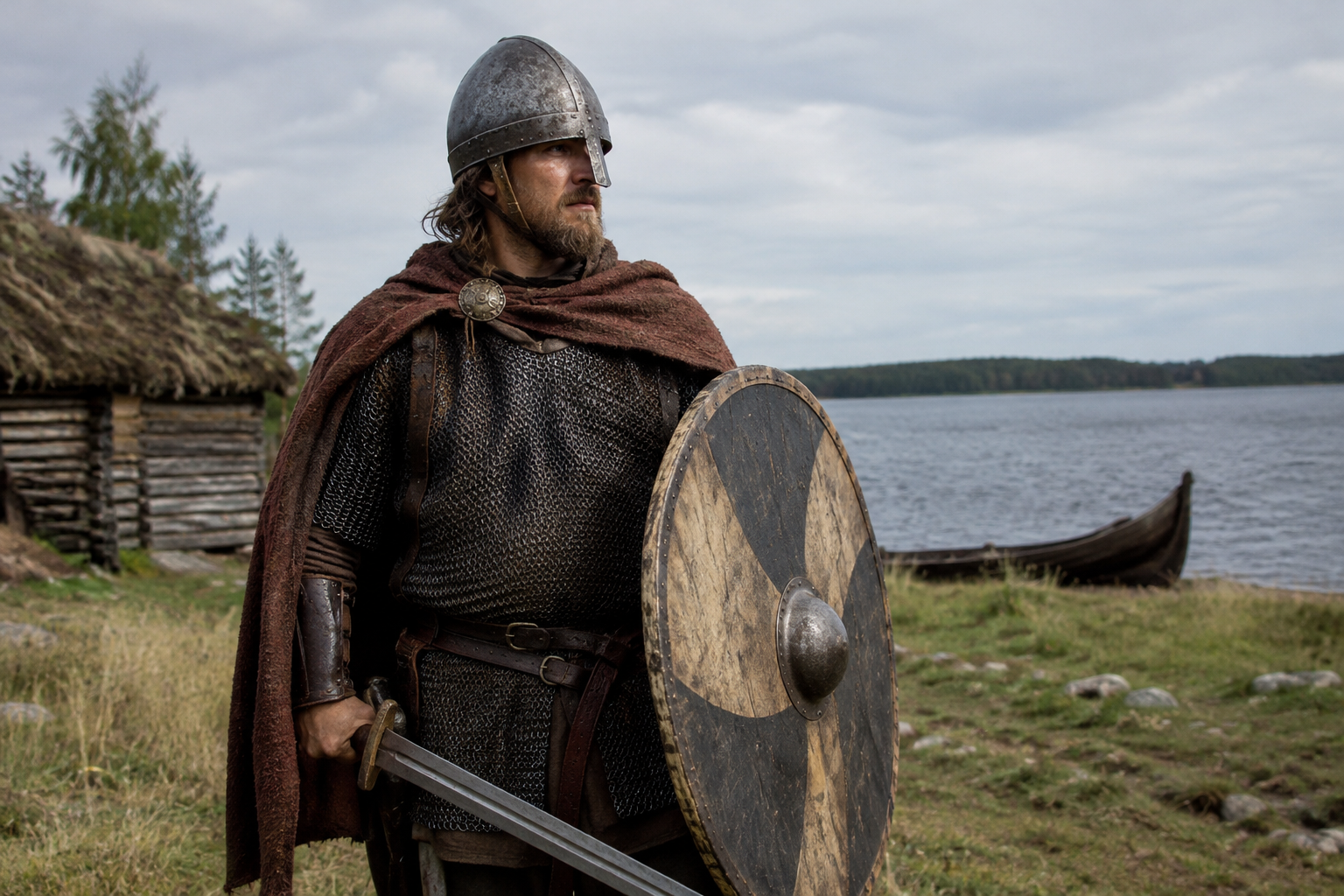
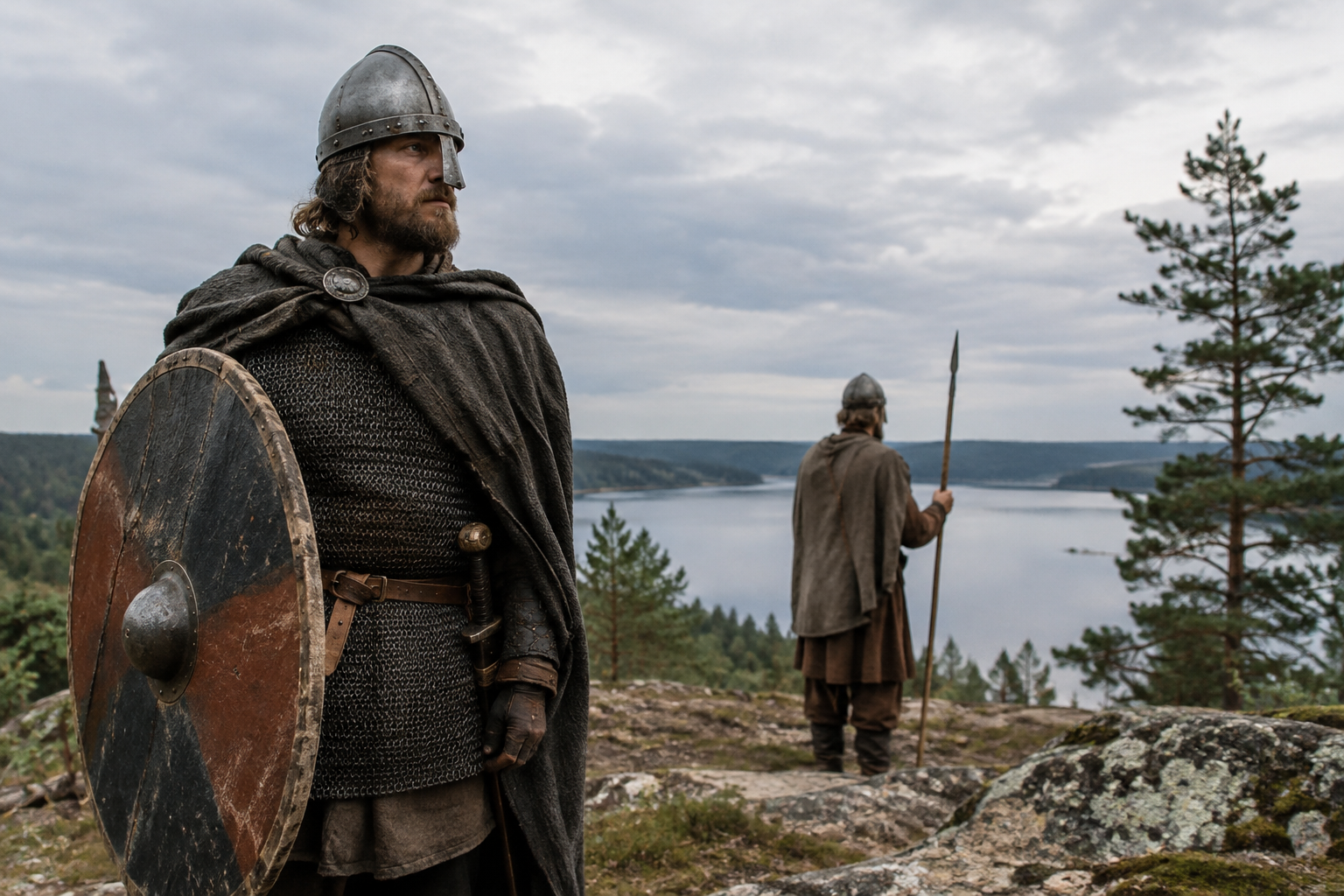
At Ylojarvi in Hame, Finland, one medieval man gives this very specific Y-chromosome branch a firm archaeological foothold. He appears in the record as MYI001, described as a medieval warrior from Mikkola and dated to around 1175 AD. For anyone carrying Y-DNA haplogroup I1a1b1a4a1a1, that matters because it places this paternal line in a real northern European landscape: inland southern Finland, in the centuries when local communities were tied into both Baltic exchange and the expanding political worlds of Sweden, Novgorod, and the Latin Church.
This is also exactly the sort of case where precision matters. Y-DNA traces one direct paternal line only, not a person's whole ancestry, language, or identity. Even so, a securely placed medieval Finnish male associated with I1a1b1a4a1a1 is valuable evidence, because the broader haplogroup I1 has deep connections with northern Europe, and this sample shows one of its narrower branches turning up in a historically meaningful Finnish context.
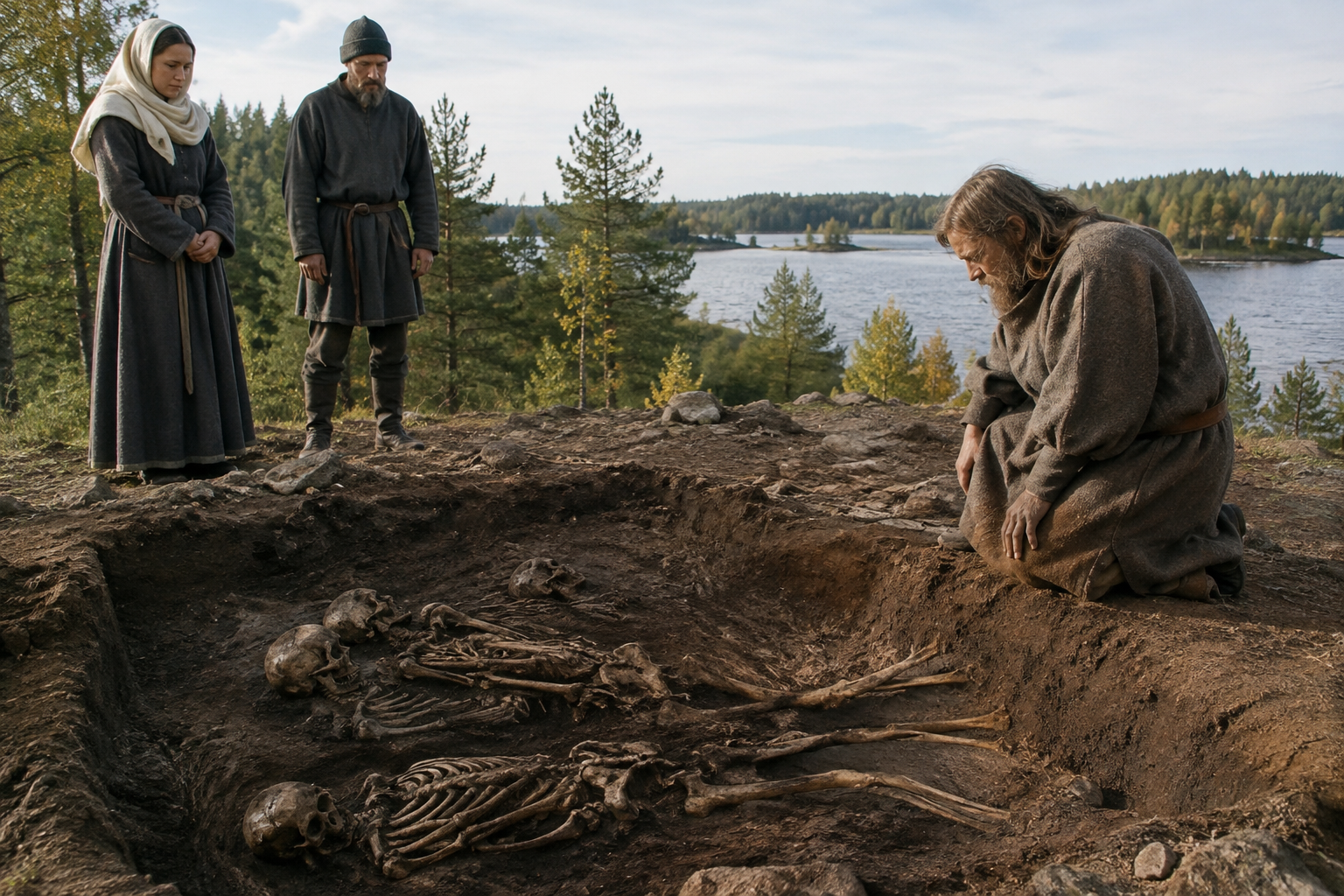
The interest of MYI001 lies not in some invented tale of battlefield glory, but in where and when he lived. Hame, or Tavastia, was one of the core inland regions of medieval Finland, a zone of lakes, forests, hunting grounds, farmed clearings, and routes leading outward toward the Gulf of Finland and the Bothnian world. By the late 12th century, this was not an isolated backwater. It sat within a changing frontier shaped by trade, conflict, Christianization, and regional power-building.
A man from this setting carrying I1a1b1a4a1a1 immediately suggests a paternal line rooted in the wider northern European world rather than something peculiar to a single village or moment. That does not mean every bearer of the branch descends from medieval Tavastians, nor that this individual can stand for all of Finland. But it does show that this lineage was present among men living in the social and military landscape of inland Finland during the high Middle Ages.
The best broader context for that finding comes from research on Finland's early medieval population history, where ancient DNA has begun to show just how mixed and regionally varied the country was before modern borders and identities hardened. MyTrueAncestry readers who want more on that setting may find this useful:
I1a1b1a4a1a1 is a very narrow twig on the larger I1 tree. The broad parent haplogroup I1 is well known from Scandinavia and adjoining parts of northern Europe, but one must be careful not to pour all of that history wholesale into a smaller sub-branch. A fine-grained label like this marks a later paternal subdivision within that older northern lineage, not an entire people.
So what can safely be said? First, the branch belongs to a family of Y-chromosome lineages that are strongly associated with the north. Second, the known ancient evidence here places it in medieval Finland. Third, because Finland in this period was entangled with Scandinavian and Baltic worlds, the presence of an I1-derived paternal line is historically unsurprising, but still important when tied to an excavated person rather than to modern surname lore or nationalist myth.
That distinction is worth stressing because the medieval eastern Baltic was full of overlapping categories. A man could be local by upbringing, mixed in ancestry, connected by trade to distant coasts, and still carry a Y-line that ultimately sits within a northern European paternal cluster. Genetics, archaeology, and history illuminate each other best when none is forced to do all the work alone.
The approximate date of 1175 AD places MYI001 in a dramatic century for Finland. Written sources for the region are thin and often late, but archaeology and comparative history show growing contact networks, changing burial customs, and the gradual spread of Christian institutions. Southwestern and inland Finland were increasingly drawn into the orbit of Swedish expansion, while eastern connections toward Karelia and Novgorod remained important.
That is why one medieval warrior from Ylojarvi is so evocative. Not because he solves the history of Tavastia by himself, but because he stands at the intersection of local continuity and wider northern mobility. A paternal lineage like I1a1b1a4a1a1 could have been carried by men whose deeper male-line forebears moved through Scandinavian spheres, Baltic contact zones, or older regional networks long before this particular burial.
For a wider look at Finland through archaeogenetics, this related article expands the picture beyond a single individual:
Medieval Finland Archaeogenetics
Ancient DNA articles sometimes tempt us to think only in big numbers, but a single well-placed individual can be historically revealing. MYI001 anchors I1a1b1a4a1a1 in a dated medieval Finnish context. That is already more concrete than many lineages ever get, especially narrow subclades for which evidence may still be patchy.
It also reminds us that medieval Finland was not genetically or culturally uniform. Different regions could show different balances of eastern and western connections, and male-line histories did not always match broader genome-wide ancestry in simple ways. A Y-line may persist through many generations even while families marry across linguistic, cultural, and regional boundaries.
An ancient DNA study of early medieval Finland and its neighboring populations would be the right kind of research framework for interpreting a find like this, and one relevant research lead associated with this material is this published genetic study. The key point, however, is modest and solid: a man associated with this branch lived in 12th-century Hame, in a region central to the making of medieval Finland.
Because the parent haplogroup I1 is so common in discussions of Scandinavia, it is easy to rush straight from this sample to Vikings, crusades, or named dynasties. Better to proceed more carefully. The Ylojarvi individual does support the presence of this paternal branch in a milieu shaped by northern European contacts, but the evidence provided here does not identify him as Swedish, Norse-speaking, immigrant, or a member of any known noble house.
What it does support is a historically sensible picture of medieval Finland as a contact zone. Men carrying I1-derived paternal lines could be part of local societies in Tavastia without needing to be recent arrivals. That fits the larger archaeological lesson from Finland and the Baltic: populations were connected, but connection is not the same thing as simple replacement.
Readers interested in how post-Viking and early Christian communities in Scandinavia can be studied through ancient burials may also want this comparison:
For members of MyTrueAncestry who belong to I1a1b1a4a1a1, the most useful insight is not a grand claim of royal descent or a neat ethnic label. It is that this paternal branch is now tied to a real medieval person from inland Finland, MYI001 of Ylojarvi Mikkola, around 1175 AD. That makes the lineage historically visible in a region where Scandinavian, Finnic, and Baltic worlds met in complicated ways.
In other words, this is a branch with a documented place in the making of northern medieval Europe. As more ancient DNA from Finland and the eastern Baltic is published, the picture will sharpen. For now, the Ylojarvi warrior gives I1a1b1a4a1a1 something precious: not myth, but context.
Comments