Haplogroup C2b1b1i

– 5 min read


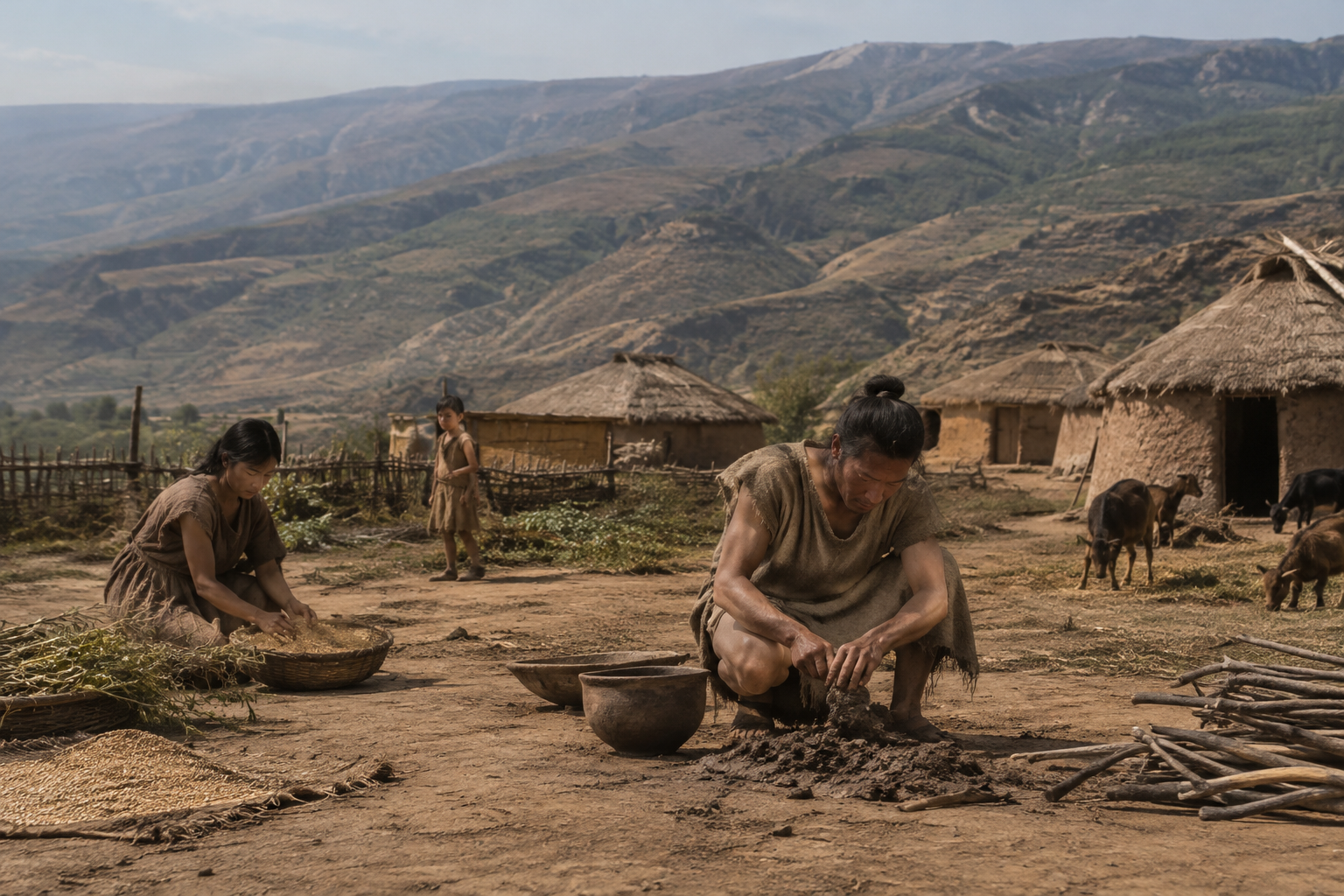
At Xingfucheng in Zhuanglang County, Gansu, one ancient man offers a very early glimpse of the paternal line now labeled C2b1b1i. He is sample XingfuchengM14, dated to around 2750 BC and assigned to the Late Neolithic Changshan Lower cultural setting in northwestern China. With only one named individual in hand, the attraction is not grandeur but precision: a single male line appearing in a region that would later become one of the great contact zones between the Yellow River world, the upper Wei basin, and the eastern edge of the Inner Asian steppe.
That is exactly the sort of find that makes Y-DNA useful when handled carefully. A Y haplogroup tracks one direct paternal line only, not the whole ancestry or identity of a person. Even so, when a branch such as C2b1b1i turns up in an ancient burial from Late Neolithic Gansu, it anchors that lineage in a real archaeological landscape rather than leaving it floating as a modern genetic label.
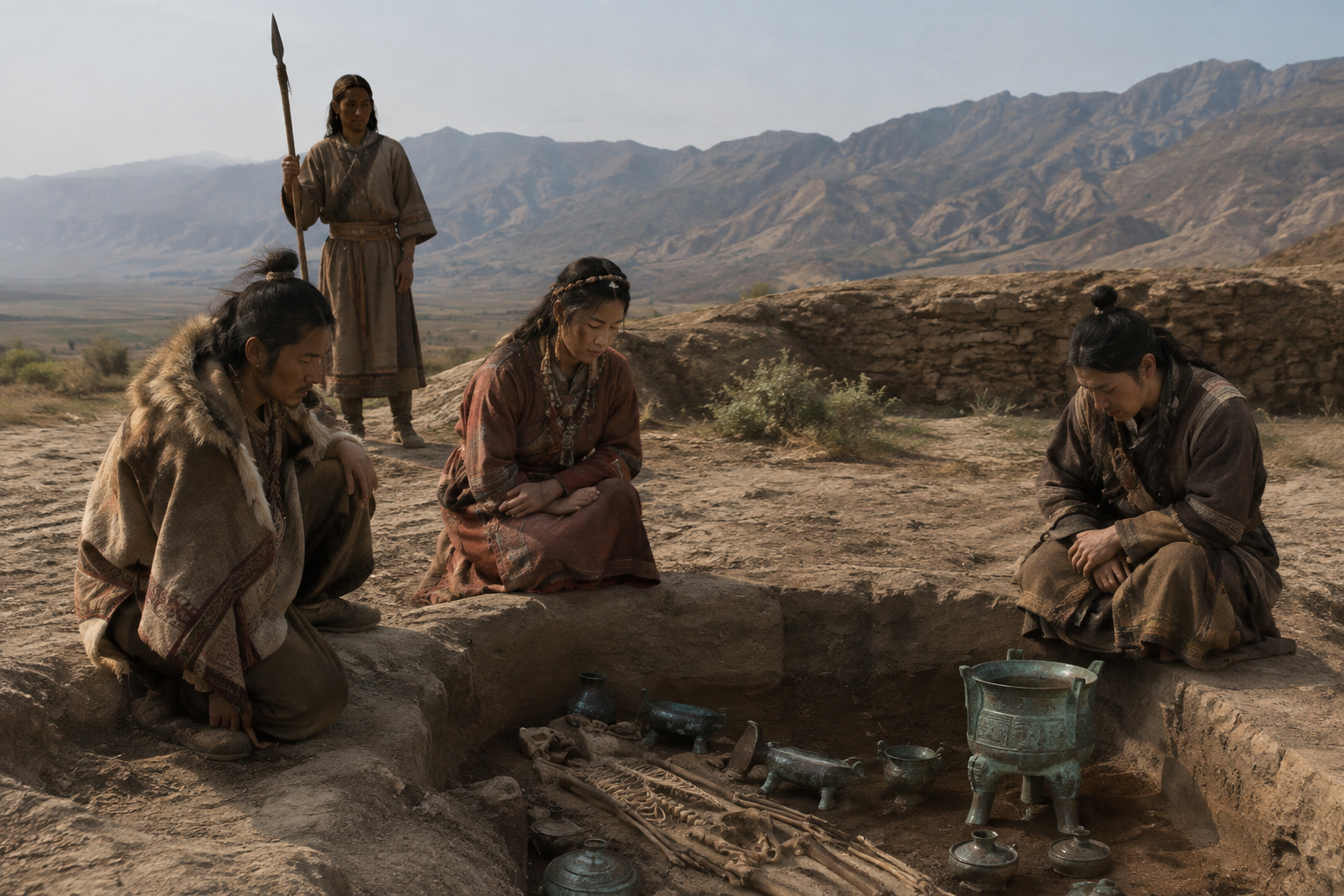
The core evidence here is straightforward and valuable. XingfuchengM14 comes from Xingfucheng, in today's Gansu, a region that sat between farming communities of northern China and the broader corridors leading west and north. Around 2750 BC, this was already a frontier in the best archaeological sense: not an empty border, but a lived-in zone where people, technologies, crops, and ideas moved unevenly across communities.
Because the surviving information on this individual is spare, it is important not to embroider the story. We cannot responsibly assign him grave goods, social rank, language, or tribal identity from the haplogroup alone. What we can say is that a male associated with the branch reported here as C2b1b1i was present in Late Neolithic Gansu, and that matters because this region later becomes central in discussions of population interaction across northwestern China.
An ancient DNA study connected with these Gansu materials is available through this research archive link. Even without overstating any single conclusion, the larger value of such work is clear: it lets archaeologists place excavated individuals from Gansu into long-term regional population history instead of treating sites as isolated dots on a map.
The haplogroup name matters because it is specific. C2b1b1i is not the same thing as the whole of haplogroup C, nor even the whole of C2. Those broader parent branches have very deep histories across northern and eastern Asia, but it would be careless to pour all of that history directly into this narrower label without sample-by-sample evidence.
So the sensible reading runs like this: XingfuchengM14 gives us one ancient attestation of a paternal line associated with C2b1b1i in Late Neolithic northwestern China. It does not, by itself, prove where the branch first arose, how common it was locally, or whether it spread through one migration, several regional expansions, or long-term continuity mixed with later turnovers. Ancient Y-DNA is at its best when it narrows the field of possibility.
That narrowing is especially important in East Asia, where paternal lineages often show strong regional histories that do not always match the movements suggested by material culture alone. Pottery styles, farming systems, burial customs, and male-line descent can travel together, but they need not do so.
Gansu is one of those places that keeps reappearing in Chinese archaeology because it connects rather than separates. It links the Loess Plateau and the upper Yellow River zone with the Hexi Corridor and the wider Inner Asian world. By the Bronze Age, this would become even more obvious, but the groundwork had already been laid much earlier, in Neolithic communities adapting to dry landscapes, experimenting with crops, and maintaining local traditions while facing outward.
A paternal lineage found here is therefore historically interesting even when represented by a single named sample. It places that line in a region where later population history becomes layered and complicated. For descendants exploring a haplogroup like C2b1b1i, this is often the real prize: not a simplistic claim of belonging to one famous people, but an early foothold in a zone where Chinese agricultural history and northern Eurasian mobility repeatedly intersected.
This also helps explain why northwestern China cannot be read through a single historical lens. A man buried in Late Neolithic Gansu was living long before the historically attested empires, ethnonyms, and frontier states that later writers liked to project backward. Archaeology is messier and more interesting than that. It shows enduring local communities, changing ecological strategies, and repeated contacts across different cultural spheres.
Although XingfuchengM14 belongs to the Late Neolithic, his wider significance grows when set against later discoveries from nearby regions. Northwestern China, including Gansu and adjoining corridors, has produced increasing evidence for population change and mixture over time. Later Bronze Age communities in the area reveal how interaction intensified, with the region acting as a hinge between inland East Asian populations and groups connected to steppe worlds.
That does not mean XingfuchengM14 should be turned into a proto-steppe nomad, nor that C2b1b1i must be explained by one dramatic migration. The careful point is smaller and better: this paternal line was already present in the wider region before the historical and Bronze Age transformations that would make Gansu so famous in discussions of exchange and movement.
Readers who want the broader background to those developments may find it useful to compare this case with later work on frontier interaction in northwestern China, including population shifts at the Ningxia crossroads. That later evidence belongs to a different place and period, but it shows why early lineages in the northwest are so worth watching.
There is a temptation, when faced with only one directly cited ancient individual, to treat the evidence as too thin to matter. In fact, single samples often do important work. They establish presence. They give a date. They attach a lineage to a real community rather than to a modern frequency map or a speculative migration diagram.
In this case, XingfuchengM14 tells us that the paternal line associated with C2b1b1i was part of the human landscape of Late Neolithic Gansu by about 2750 BC. That is already a substantial historical statement. It situates the lineage in one of the key transition zones of prehistoric China and gives it chronological depth well before the great political formations of later Chinese history.
East Asian Y-Chromosome Migrations
If your paternal line is C2b1b1i, the most defensible takeaway from this evidence is not a neat ethnic badge but an ancient placement in the northwestern Chinese world. The sample from Xingfucheng suggests that one branch of this lineage was present in Gansu in the Late Neolithic, in a region that would remain central to long-term interaction between agricultural societies and northern frontier populations.
That is a modest conclusion, but a strong one. It roots a modern paternal signature in an actual excavated person, XingfuchengM14, and in a real prehistoric setting where regional continuity and cross-cultural contact were both shaping the human story.

Comments