Haplogroup R1a1a1b2a2b1b

– 5 min read


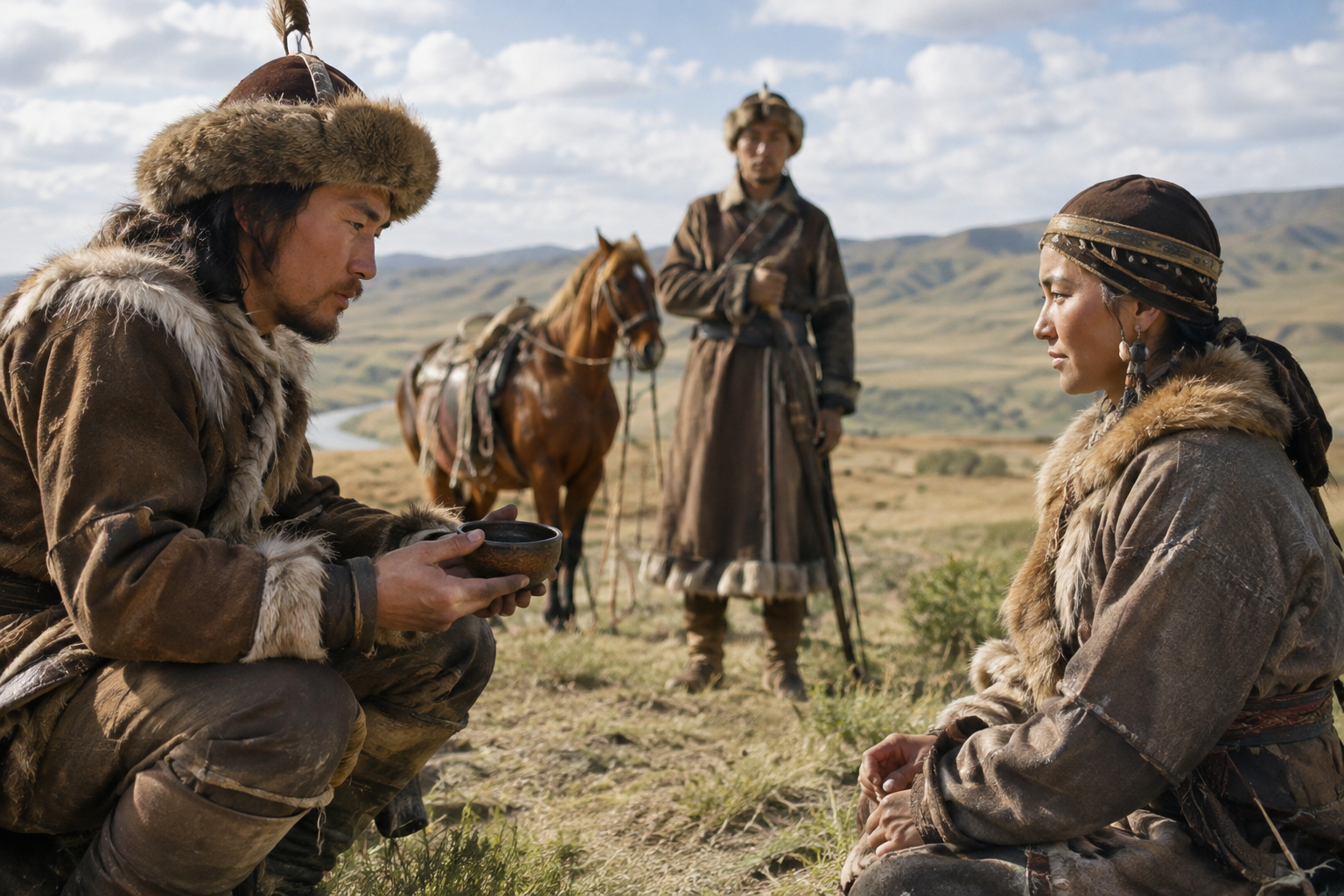
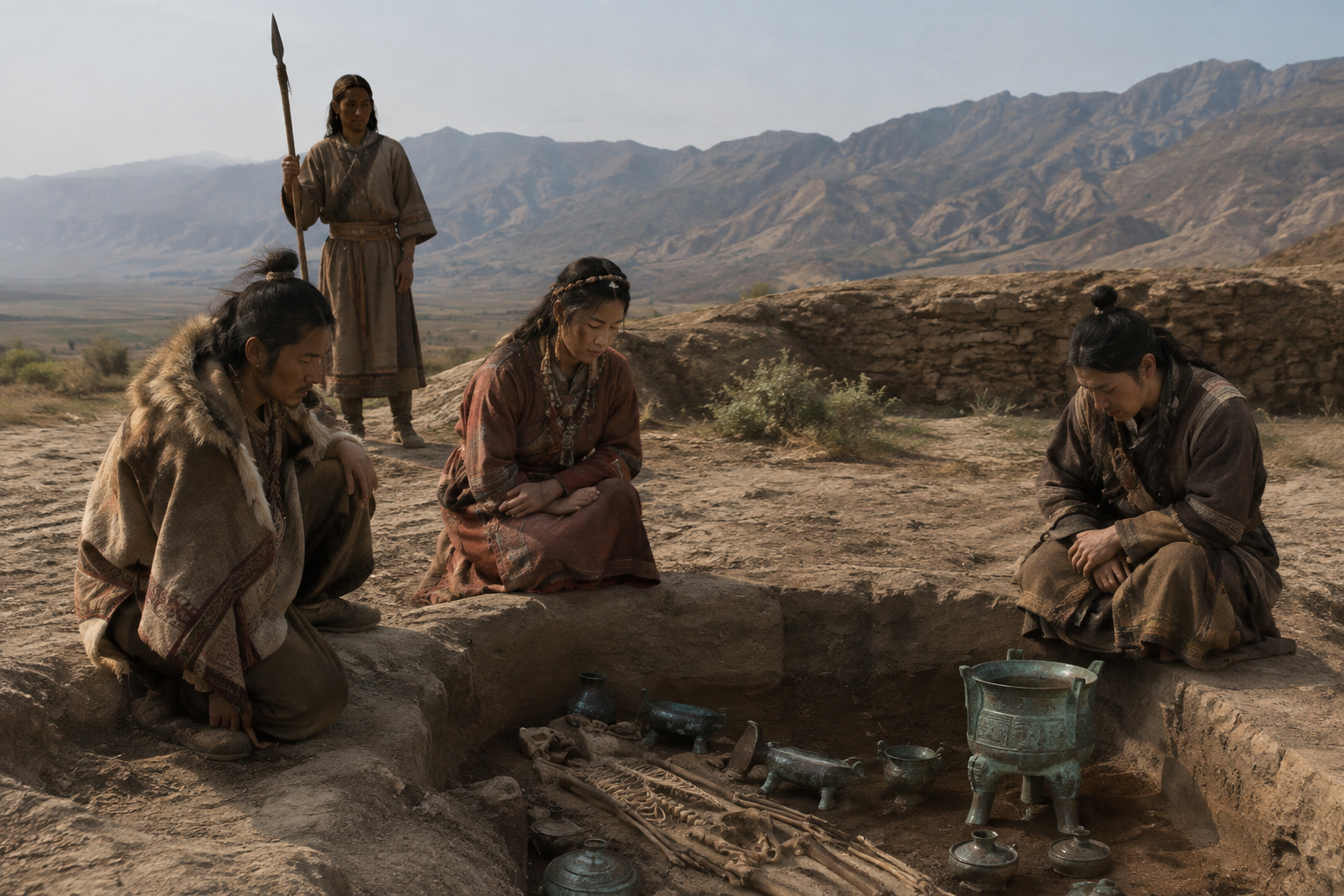
At Kaynar Bulak 2 in Kazakhstan, one ancient man dated to around AD 182 offers a small but valuable clue to the history of the Y-DNA haplogroup R1a1a1b2a2b1b. He appears in the record simply as DA229, associated with the Kangju horizon of Central Asia. That may sound austere, but in archaeology even a single well-placed individual can matter enormously: one burial, one date, one location, and suddenly a paternal line is no longer an abstract branch on a tree but part of a real community living in a real historical landscape.
This is especially true for a lineage inside the wider R1a family, a major Eurasian Y-chromosome branch with a long and complicated history. Y-DNA traces one direct paternal line only, not a person's whole ancestry, but it can still be extraordinarily useful when anchored to excavated individuals. In the case of R1a1a1b2a2b1b, the most immediate ancient anchor here is not a king or a conqueror, but a man from the Central Asian world of the Kangju.
The site named in the record, Kaynar Bulak 2, lies in Kazakhstan within a region that linked steppe, oasis, and riverine routes. By the early centuries AD, this was not an isolated backwater but part of the broad zone connecting eastern Iran, the steppe, Sogdiana, and the trade arteries that later generations would call the Silk Roads. A burial dated around AD 182 belongs to a period when political power in Central Asia was layered, local, and often mobile.
The label Kangju is itself a historical and archaeological signpost rather than a simple ethnic name. Ancient written sources describe Kangju as a significant polity in Central Asia, while archaeology shows populations shaped by steppe traditions, regional interaction, and long-distance exchange. So when DA229 is associated with this world, the interest is not that he solves the puzzle of Kangju identity, but that he places this paternal line within a documented Central Asian setting of the late Iron Age to early historical period.
An ancient DNA project linked through this research record helps situate such individuals within the growing archaeogenetic map of Inner Asia. Even without extravagant claims about one burial, the result matters: R1a-derived paternal lineages were part of the male landscape in this region, and this particular branch or a closely reported association with it appears there in a historically meaningful period.
Readers often know the name R1a because it turns up repeatedly in discussions of Bronze Age steppe expansions, later Indo-Iranian histories, and many medieval and modern populations across Eurasia. But the article haplogroup here is not "R1a in general." It is the much narrower R1a1a1b2a2b1b, a downstream branch whose story cannot simply be lifted wholesale from the wider parent lineage.
That distinction is important. The broad R1a umbrella spans vast geography and many different historical episodes. A much tighter subclade like R1a1a1b2a2b1b tells us something more specific about one paternal thread within that larger history, though only when ancient evidence is securely attached to it. DA229 therefore matters not because he can stand for all R1a men, but because he gives this narrower line a tangible place in the Central Asian record.
Central Asia is exactly the sort of region where such a finding makes sense historically. It was a zone of movement, but also of local continuity. Pastoralists, settled communities, traders, and military elites all interacted here. A paternal branch surviving in this environment may reflect deep regional roots, later mobility, or both; what archaeology allows us to say with confidence is that men bearing R1a-related lines were present within the social world of Kangju-period Kazakhstan.
There is a temptation, whenever Central Asia appears, to write as though every ancient person were endlessly galloping across the steppe. Real life was more complicated. The Kangju realm sat in a corridor where seasonal movement, political alliance, agriculture, and exchange overlapped. Sites in this sphere reflect communities that were connected both to nomadic traditions and to the urban-commercial networks of Transoxiana.
That is one reason the date around AD 182 is so useful. It places DA229 after the great Bronze and Early Iron Age transformations that first spread many steppe-derived ancestries across Eurasia, but before the medieval remaking of Central Asia by later Turkic and Islamic polities. He belongs to an in-between historical world that is often overshadowed, yet crucial for understanding how older paternal lines persisted and were reconfigured.
In practical terms, this means that R1a1a1b2a2b1b in this context should be read as evidence of continuity within a dynamic region, not as a badge of one single language or tribe. Archaeology keeps us honest here. A grave in Kangju-period Kazakhstan does not automatically identify its occupant as Scythian, Sarmatian, Sogdian, or anything else named in distant texts. What it does provide is firmer ground: a man, a site, a date, and a paternal lineage reported from that setting.
The most historically suggestive comparison is not to leap straight to medieval dynasties, but to the older and broader Iranian-speaking and steppe-connected worlds of Inner Asia. Across the first millennium BC and into the early centuries AD, the belt from the Black Sea to Kazakhstan and beyond contained populations with overlapping material cultures, mixed ancestries, and recurring R1a paternal signatures. That does not make them all one people. It does show that certain male lines had remarkable staying power across the steppe-interaction zone.
For that reason, DA229 is best understood as part of a long Central Eurasian conversation rather than a lone curiosity. Research on steppe and Iranian-related populations has repeatedly shown that Central Asia was not a genetic cul-de-sac. It was a meeting ground where lineages could arrive, endure, branch, and be absorbed into new political formations. A useful companion piece for that broader eastern Iranian setting is this discussion of Ancient Iranian mtDNA and skeletal identification, which highlights how ancient populations across the region are best reconstructed through multiple lines of evidence rather than single labels.
That broader context also warns against overreach. One paternal assignment does not prove that every bearer of R1a1a1b2a2b1b descends from a Kangju ancestor, or that the branch originated in Kazakhstan. Ancient DNA works best cumulatively. What DA229 gives us is a fixed point: by the second century AD, this lineage was present in the archaeology of Central Asia.
For someone who carries R1a1a1b2a2b1b today, the immediate value of DA229 is geographical and historical rather than genealogically personal. He shows that this paternal branch, or a directly associated reported lineage, had reached the Central Asian world of Kangju-era Kazakhstan nearly two thousand years ago. That is a meaningful fact, because many haplogroups are discussed in sweeping continental terms, whereas here we have a concrete ancient placement.
It also suggests the sort of historical backdrop worth exploring: steppe networks, eastern Iranian and Inner Asian exchange zones, and the societies that occupied the middle ground between nomadic confederation and settled trade corridor. If that landscape interests you, another useful read is Khazar Frontier Graves and Saltovo-Mayaki Diversity, which shows how later Eurasian frontier societies also combined mobility, mixture, and complex paternal histories.
R1a1a1b2a2b1b does not yet arrive with a gallery of famous tombs or dynastic pedigrees in this evidence set. Instead, it appears in a form archaeologists often trust most: a plainly identified ancient individual, DA229, from Kaynar Bulak 2 in Kazakhstan, dated to around AD 182 and linked to the Kangju world. That is modest evidence, but solid evidence. For a paternal lineage study, that is often how the real story begins: not with legend, but with one excavated life set carefully back into its historical landscape.
Comments