Haplogroup O2a2b1a1a1d1

– 5 min read


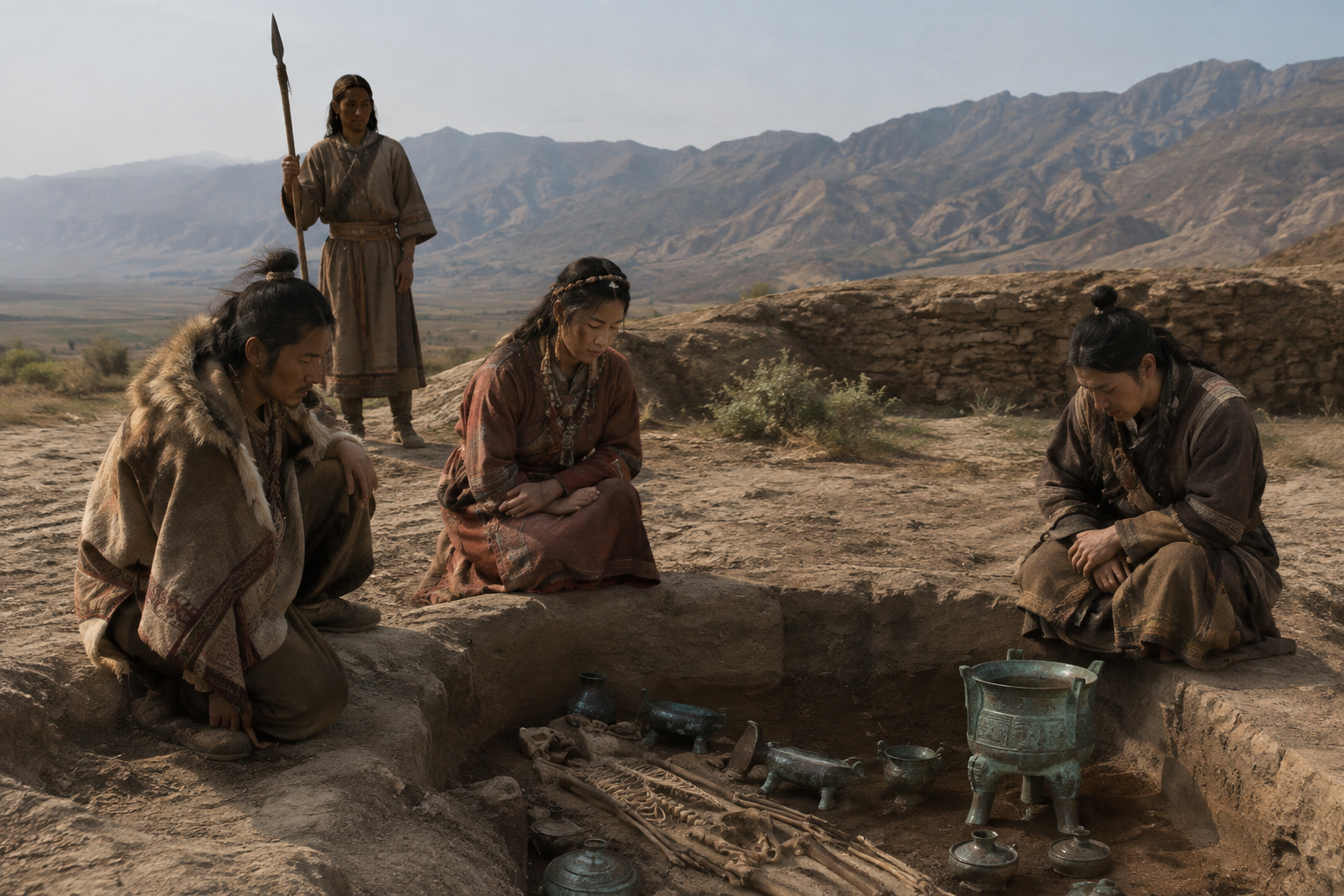
At Mogou cemetery in Lintan, in Gansu, one man from around 1450 BC carries an unexpectedly sharp piece of paternal evidence. The individual labeled MogouM440_R1, buried in the Bronze Age world of the Qijia cultural horizon, has been associated with the Y-DNA haplogroup O2a2b1a1a1d1. That matters because Mogou sits in one of the great contact zones of ancient East Asia: the uplands of northwestern China, where farming communities, metalworking traditions, and steppe-facing exchange networks all met.
With only one directly named ancient sample here, the article cannot pretend to reconstruct an entire paternal dynasty. But that single find is still historically rich. It places this branch of the O lineage in a real archaeological landscape, among Bronze Age communities living far from the coastal heartlands often associated with later East Asian population growth. For anyone tracing a paternal line through O2a2b1a1a1d1, Mogou offers not myth, but something better: a securely ancient foothold in a frontier region where populations were mixing, adapting, and leaving durable genetic traces.
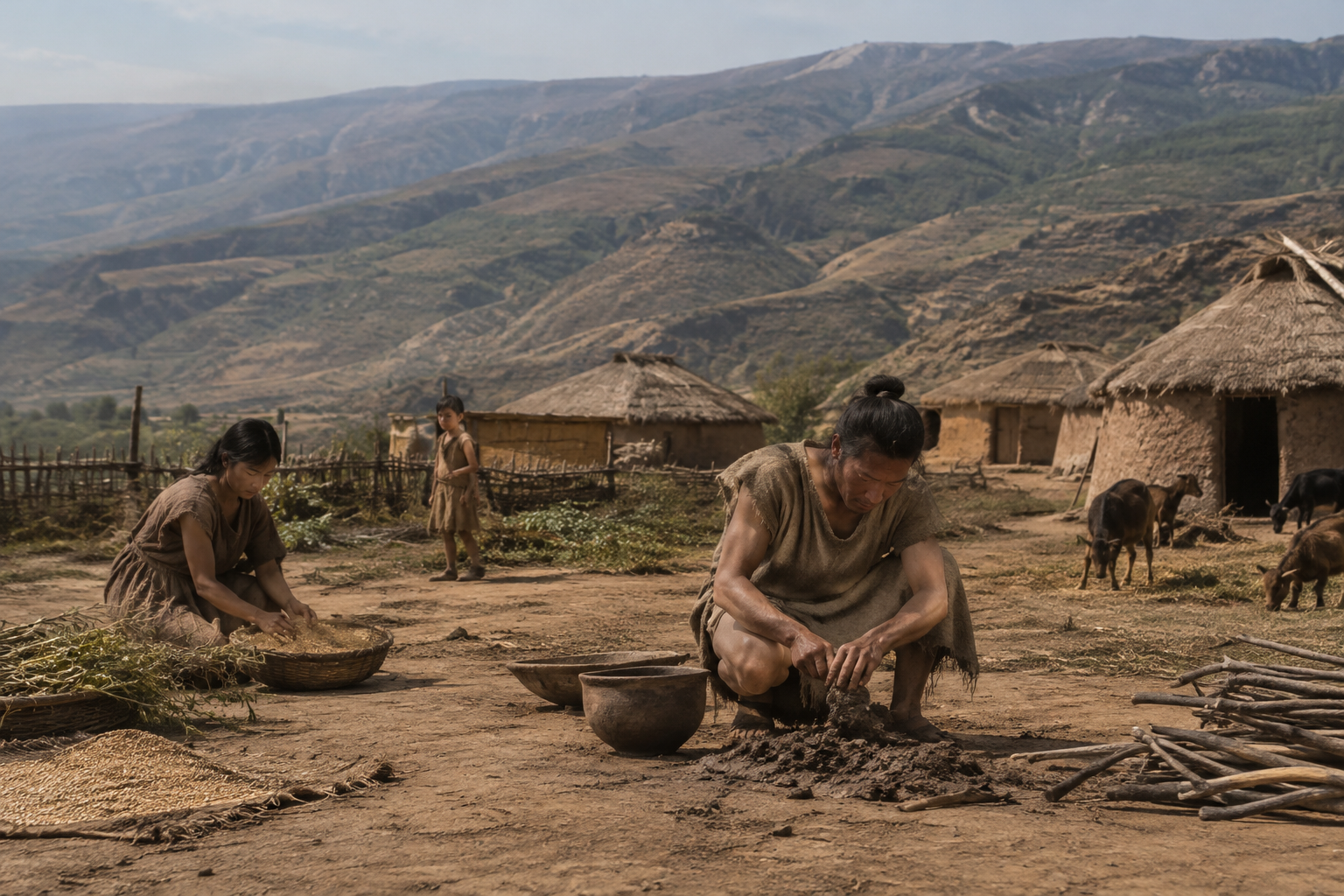
Mogou is not just any cemetery. It belongs to the broad Bronze Age record of Gansu, a region that has long fascinated archaeologists because it links the Yellow River world to Inner Asian corridors. By the second millennium BC, communities here were not isolated mountain villagers tucked away from history. They were participants in a zone of movement, technology transfer, and cultural negotiation.
The sample MogouM440_R1 is dated to about 1450 BC and described as coming from the Qijia Culture Bronze Age Mogou Cemetery, Lintan, Gansu, China. Even that sparse label tells us a good deal. Qijia-related populations are central to debates about how early agro-pastoral societies developed in the northwest and how local traditions responded to influences arriving from both the Central Plains and the Eurasian steppe.
An ancient DNA study examining burials from Bronze Age Gansu has helped frame this wider context, and it is exactly the sort of research that makes a sample like MogouM440_R1 useful beyond its grave number. The published project linked through this research source is associated with the ancient population history of the region and the burial communities of Gansu, where paternal lineages can be studied alongside archaeology rather than in isolation.
The haplogroup name O2a2b1a1a1d1 is highly specific, but it belongs to a much larger Y-DNA family, haplogroup O, which today is widespread across East and Southeast Asia. Y-DNA follows one direct paternal line only: father to son, back through grandfathers and their grandfathers. It does not describe a person's whole ancestry, language, or cultural identity.
That distinction matters especially in a place like Bronze Age Gansu. Archaeological cultures are assemblages of material practice: pottery traditions, subsistence patterns, burial customs, and settlement histories. A Y-chromosome lineage is something narrower and more exacting. So when MogouM440_R1 is linked with O2a2b1a1a1d1, the important point is not that one lineage "explains" the Qijia world, but that this branch was present within it.
And that presence is informative. It suggests that paternal lines later familiar in East Asian populations were already established in the northwest during the Bronze Age, not merely in later imperial or medieval settings. In other words, this lineage was part of the deep human story of northern China before the great historical states of later antiquity came to dominate the written record.
Gansu has a habit of turning up in big arguments about prehistory. It is a corridor province in the strongest historical sense: a place where routes converge, where mountain basins open toward the Hexi region, and where populations from different ecological zones could encounter one another. In the Bronze Age, that made it especially important for understanding how farming, herding, and metallurgy interacted.
A lineage like O2a2b1a1a1d1 appearing at Mogou should therefore be read against that regional background. This was not a static population sealed off from wider developments. The cemetery belongs to a world shaped by local continuity, but also by long-distance contacts that archaeologists trace through changing material culture and, increasingly, through genome-wide ancient DNA.
That broader picture fits with a growing body of East Asian archaeogenetics showing that northern China was never genetically simple. Population history in the Yellow River sphere and its borderlands involved repeated episodes of local persistence and regional interaction. A useful companion piece on that larger framework is MyTrueAncestry's discussion of 6,000 Years of Genomic History in the Middle Yellow River, which helps situate northwestern finds like Mogou within the longer formation of northern East Asian populations.
One of the challenges with a narrowly defined branch such as O2a2b1a1a1d1 is that ancient datasets often remain uneven. Some periods and regions are well sampled; others are represented by only a handful of men. That is why a site like Mogou is so valuable. It anchors the lineage in time and place, rather than leaving it floating in modern frequency maps and surname speculation.
It also invites a sensible historical question: how did paternal lines found in Bronze Age Gansu relate to later expansions across East Asia? We should be cautious here. A single Bronze Age grave cannot be turned into a migration arrow. But it does show that one branch of haplogroup O had already reached, or developed within, a northwestern setting connected to wider population processes.
Recent work on ancient East Asian Y chromosomes has made that kind of question increasingly tractable, as more paternal lines are placed into archaeological sequences rather than modern-only trees. MyTrueAncestry's overview of Ancient Y Chromosomes and East Asian Paternal History is particularly relevant here, because it shows how inland and frontier regions can illuminate the making of later paternal landscapes.
Bronze Age Gansu is chronologically distant from imperial China, but one of the pleasures of archaeogenetics is that it lets us compare very different periods without flattening them together. Later historical cemeteries in China reveal kinship structures, mobility patterns, and local social organization in much finer detail, even when the paternal lines themselves differ.
That is worth keeping in mind if you are trying to read deep ancestry responsibly. A Bronze Age man from Mogou and a medieval or dynastic burial from eastern China do not need to belong to the same immediate paternal branch for comparison to be useful. What changes over time is not just the haplogroups present, but the social worlds in which those lineages were carried: frontier cemeteries, clan tombs, farming villages, military communities, and courtly households.
For readers interested in how later Chinese burials can add that social texture, the post on Song Dynasty remains offers a very different but complementary angle on ancient DNA in China: not just population history, but family ties and lived experience inside a historical burial context.
The most solid historical insight for O2a2b1a1a1d1 is not a grand claim about kings or a neat one-line migration. It is that this paternal line is already visible in the archaeological record of Bronze Age northwestern China, in the Qijia-associated cemetery of Mogou at Lintan, through the individual MogouM440_R1. That places the branch within an old and important zone of contact between the Yellow River world and the Inner Asian frontier.
For a modern tester, that is a meaningful kind of depth. It suggests that your direct paternal line belongs to a history rooted in ancient East Asia and present in one of its most historically revealing frontier regions by around the mid-second millennium BC. The story is still incomplete, as all good archaeological stories are, but it already has a real site, a real burial ground, and a real Bronze Age man at its center.
Comments