Haplogroup N1a1a1a1a2a1a1a

– 5 min read


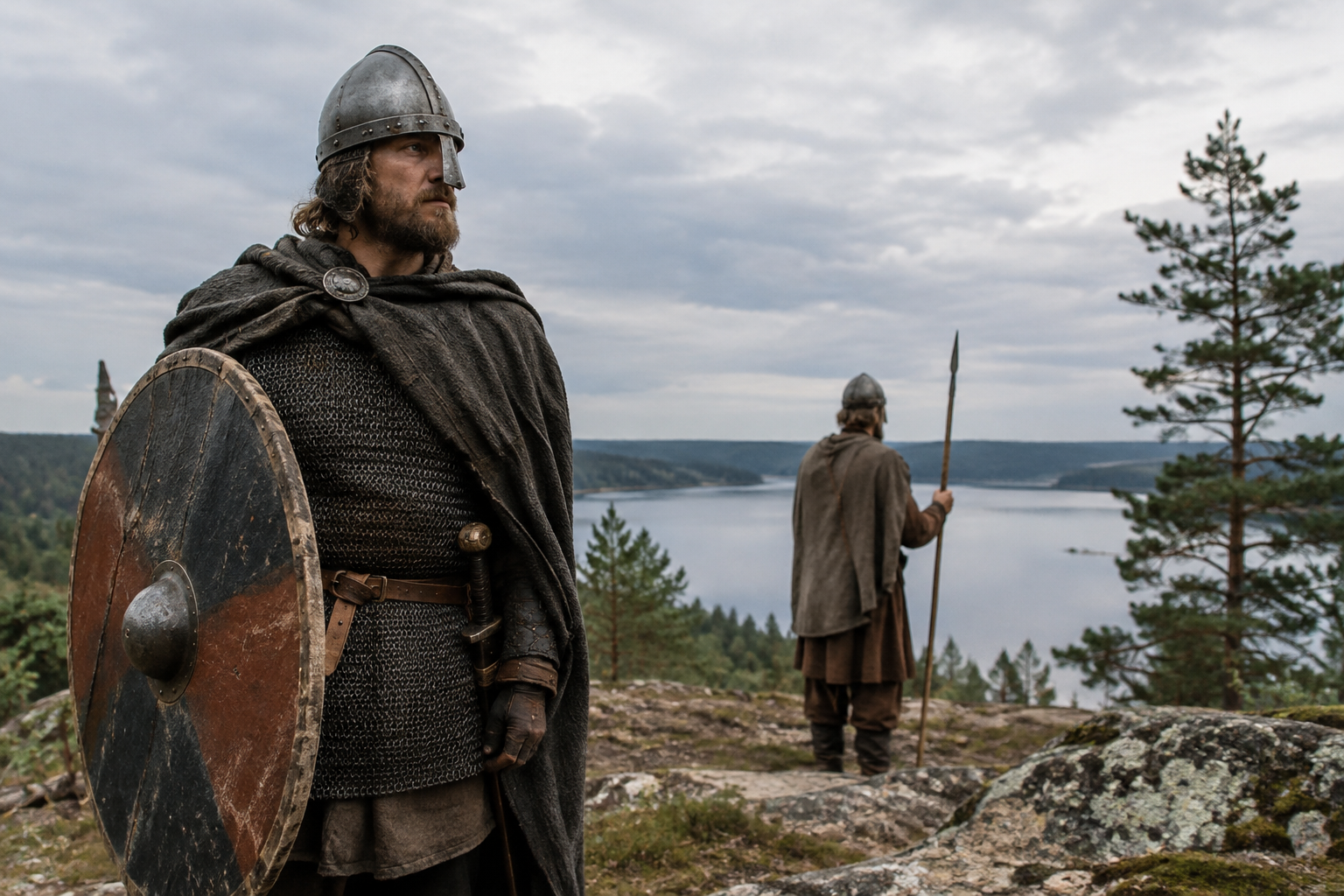
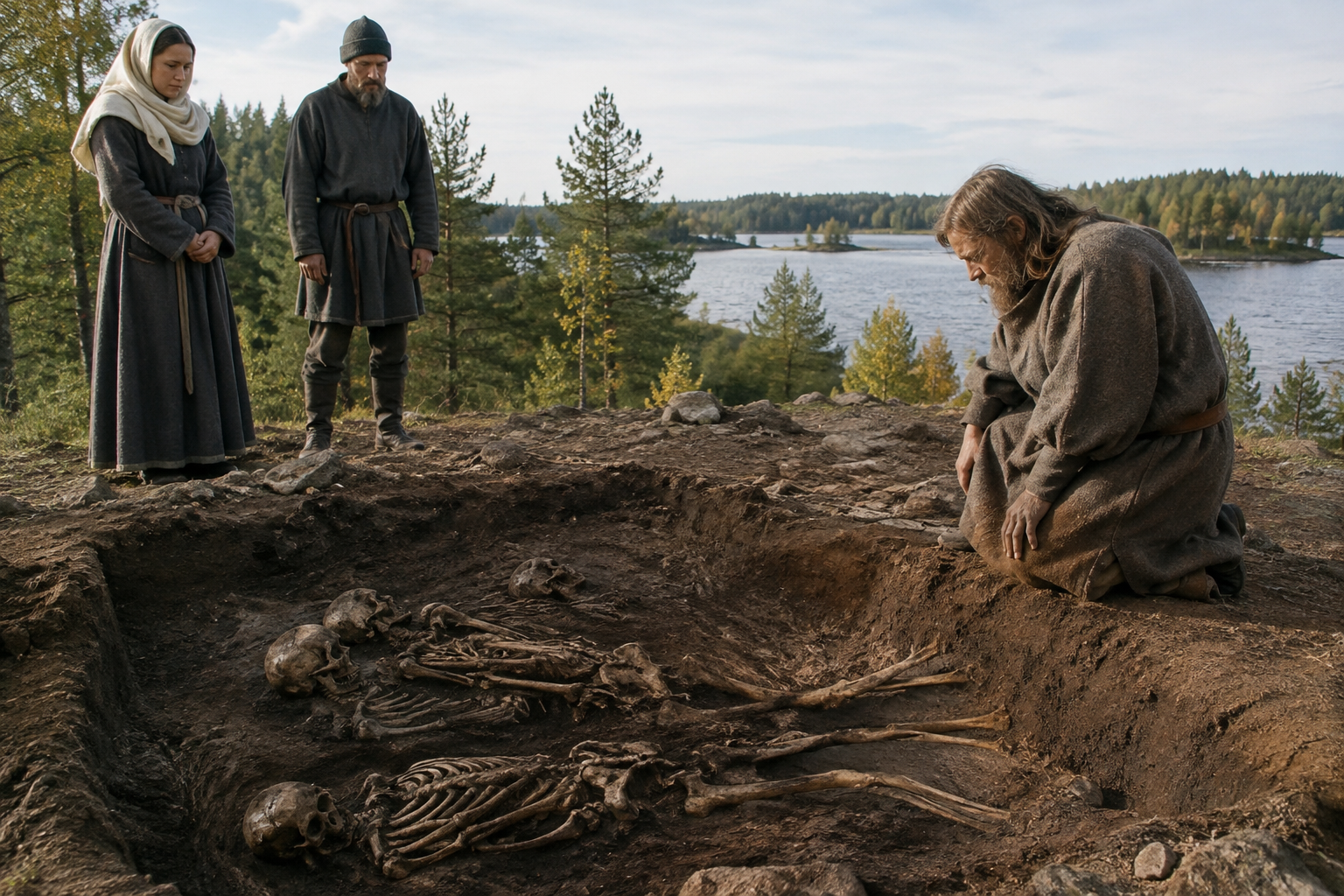
At Santahaudanmaki in Hollola, in southern Finland's Hame region, one medieval burial stands out not because we can romanticize it, but because we can place it quite precisely in a changing world. The individual HOS001, dated to around AD 1211 and described as a medieval warrior from Hollola, carries the Y-DNA haplogroup N1a1a1a1a2a1a1a. That is a very narrow paternal branch, and in this case its importance lies less in grand claims than in where it appears: inland Finland at a time when the region sat between older local traditions, expanding Christian influence, and growing ties across the Baltic.
One ancient man is never a whole people. Still, a direct paternal lineage can be historically revealing when it turns up in the right archaeological context. HOS001 gives us a fixed point for thinking about how branches within the wider haplogroup N were present in medieval Finnish populations, and how male-line continuity in the north can survive beneath centuries of cultural change.
Hollola was not a remote blank on the map in the early 13th century. Tavastia, or Hame, occupied an important position in inland southern Finland, connected by waterways and exchange networks to the Baltic world. By the High Middle Ages this was a frontier in more than one sense: politically, religiously, and culturally.
The burial of HOS001 belongs in that setting. The description "medieval warrior" tells us how the individual has been framed archaeologically, but without fuller excavation details it is better not to embroider the picture with imagined weapons or heroic biography. What we can say is that the sample anchors haplogroup N1a1a1a1a2a1a1a in a real medieval person from Hame, rather than leaving it floating as a purely modern testing label.
A recent ancient DNA study on early medieval and medieval Finland brought precisely this sort of evidence into focus, showing that the region's genetic history cannot be reduced to a single migration or a single identity. The scientific context for HOS001 is tied to research on Finland's past population structure and Baltic connections, discussed in genetic work on ancient individuals from Finland and its surrounding historical landscape.
The haplogroup in this article, N1a1a1a1a2a1a1a, is a fine-grained branch within the broader Y-DNA haplogroup N, a major paternal lineage with deep roots across northern Eurasia. That broader family is especially important in discussions of Uralic-speaking regions and populations stretching across the forest zone from northeastern Europe into Siberia. But it is crucial not to flatten the story: the history of the parent haplogroup is not automatically the history of every tiny descendant branch.
For family history, Y-DNA traces one line only: father to father to father. It does not define a person's full ancestry, language, or social identity. What HOS001 shows is that one very specific paternal branch was present in medieval inland Finland. That matters because it ties a modern-looking genetic label to a documented archaeological setting and period.
In northern Europe, haplogroup N often enters public discussion in overly broad terms, as though it were enough simply to say "Finnic" and stop there. Archaeology is much less lazy than that. Different branches of N may have expanded at different times, in different communities, and under different historical pressures. A subclade as narrow as N1a1a1a1a2a1a1a should therefore be handled with care: it may point to a male-line history rooted in the north, but it does not by itself identify tribe, language, rank, or ethnicity.
Finland is especially interesting for archaeogenetics because written sources arrive late and unevenly, while archaeology shows considerable regional variation. Burial customs, trade contacts, and political affiliations were changing across the 11th to 13th centuries. Christianization did not occur as a neat switch being flipped; nor did outside influence erase local continuity overnight.
That is why a sample like HOS001 is so useful. Instead of arguing in the abstract about "Finnish origins", we get an actual person from a historically sensitive period. His paternal line sits inside a wider northern Eurasian genetic story, yet his burial belongs to a very particular medieval Finnish world.
This is also where ancient DNA has sharpened older historical debates. It allows us to ask whether regions that later seemed culturally unified were in fact more diverse in ancestry and male-line descent. Finland repeatedly turns out to have internal variation, with differences between coastal and inland zones and with links extending eastward and across the Baltic rather than along a single neat axis.
Medieval Finland Archaeogenetics
The Hame region has long occupied a special place in Finnish history. In medieval narratives it appears as a zone of contest and incorporation, but archaeology reminds us that it was also a lived landscape of farms, waterways, cemeteries, and local communities. A burial from Hollola is therefore not simply "Finnish" in the broadest sense; it is specifically Tavastian-Hamean in place and medieval in date.
That matters when thinking about paternal lineages. Some Y-DNA branches spread with population movement, some persist locally for long periods, and some become more visible only when ancient genomes finally catch them in the act. HOS001 suggests that the branch N1a1a1a1a2a1a1a belonged to the pool of male lines present in this inland society during the early 13th century, whether through long local continuity, earlier movement into the region, or both. The present evidence does not let us reduce those possibilities to one simple answer.
There is also a wider northern comparison worth making. Medieval Finland was not isolated from Scandinavian, Baltic, or eastern contacts, but neither should it be treated as a passive receiving zone. Local populations shaped these encounters themselves. The value of HOS001 is that he gives us a male-line data point from within Finland rather than forcing us to infer Finnish history from neighboring regions alone.
For a broader look at how northern paternal histories intersect with language and population structure, MyTrueAncestry readers may also find this overview useful.
Although this article rests on a single named ancient individual, that is not a weakness if we are honest about what one individual can do. In archaeogenetics, a solitary well-placed sample can establish presence, chronology, and context. HOS001 does exactly that for N1a1a1a1a2a1a1a in medieval Finland.
It also invites a longer view. The broader haplogroup N has been central to discussions of northern Eurasian population history, forest-zone mobility, and the peopling of Uralic-speaking regions. Yet the medieval evidence is particularly valuable because it sits between prehistory and the better-documented historical world. A line seen in a medieval burial is close enough to later populations to matter for genealogy, but old enough to show that the paternal branch was already established centuries ago.
That makes Finland one of the most compelling places to study such lineages. The interplay of continuity, regional difference, and contact with neighboring worlds gives Y-DNA branches here a historical texture that is often missing from oversimplified origin stories.
The most distinctive thing we can say about haplogroup N1a1a1a1a2a1a1a from current evidence is refreshingly concrete. It appears in the medieval individual HOS001 from Santahaudanmaki, Hollola, around AD 1211, placing this paternal branch in Hame during a formative period of Finnish history. For anyone researching this Y-line today, that does not promise descent from a named dynasty or a single ancient tribe. It does, however, suggest a paternal heritage tied into the deep and regionally complex history of northern Europe, with medieval Finland providing one of its clearest archaeological anchor points.
Comments