Haplogroup R1b1a1b1a1a2b1c1c1

– 4 min read


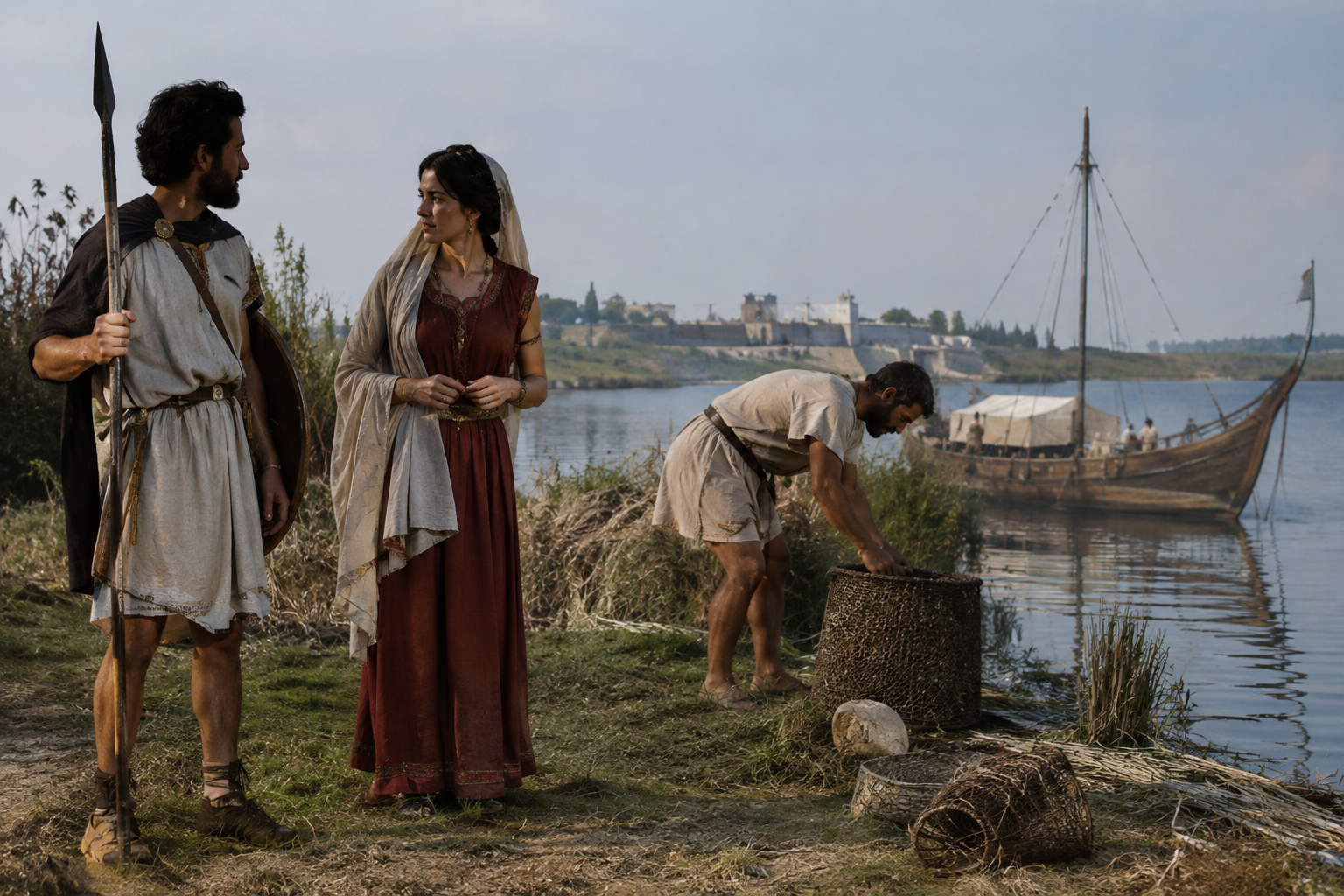
At Spina, the Adriatic port that flourished on the edge of Etruria and the wider Mediterranean, one ancient male sample stands out for anyone interested in the paternal line R1b1a1b1a1a2b1c1c1. The individual known as SPINA2, dated to around 400 BC, is described here as an Iron Age Etruscan with an Illyrian shift from Spina in Italy. That is already a revealing combination. Spina was never a sealed-off world. It was a trading town, a contact zone, and exactly the sort of place where archaeology and ancient DNA can show how messy ancient identities really were.
That matters because a Y-DNA haplogroup traces one direct paternal line only: father to father to father, across many generations. It does not define a person's whole ancestry, language, or ethnicity. But when a branch like R1b1a1b1a1a2b1c1c1 appears in an Iron Age context such as Spina, it gives us one small but quite concrete thread inside a much larger historical fabric of movement, intermarriage, and regional continuity.
Spina is one of those places that rather upends tidy textbook categories. It is usually described as an Etruscan city, yet it sat on the Adriatic shore and was deeply entangled with Greek trade networks and the populations of northern and northeastern Italy. An individual like SPINA2 belongs in that world of exchange, not in a frozen ethnic box.
The note that this man shows an "Illyrian shift" is especially interesting. Used carefully, language like this points to genome-wide affinities leaning in the direction of populations from across or around the Adriatic, rather than suggesting that one Y-chromosome alone can identify him as "Illyrian." In other words, the paternal line is one clue, while the broader ancestry signal hints at the sort of maritime and regional connections we would expect in a port settlement facing the Balkans.
An ancient DNA study of these Italian Iron Age populations, published in Nature, is the research context behind this sort of finding. Even without forcing the evidence too far, the broad picture is compelling: northern Adriatic communities could be culturally Etruscan while also carrying ancestry shaped by contacts well beyond inland Etruria.
The haplogroup name here is extremely specific: R1b1a1b1a1a2b1c1c1. That precision is useful for matching lines within genetic genealogy, but archaeologically it can also tempt overconfident storytelling. We should resist that temptation. A narrow subclade is not automatically a map of one tribe, one people, or one migration event.
The wider R1b family is common in many parts of Europe today and has a deep and complicated prehistory. But the presence of this much narrower branch in SPINA2 does not by itself prove where the branch first arose, how it moved, or that every later carrier descends from Iron Age Etruscans. What it does show is that this paternal line was present in the northern Adriatic world by the later first millennium BC, in a man buried within an Etruscan-associated setting that also carried cross-Adriatic genetic signals.
That is, frankly, more interesting than a simplistic label. Ancient Italy was full of local continuities, outside arrivals, and communities that absorbed newcomers without ceasing to be themselves. The Y-chromosome here fits that larger pattern rather well.
Modern readers sometimes imagine seas as edges. In antiquity, very often they were roads. The Adriatic linked the Po Valley, Etruria, the eastern Italian coast, and the Balkan shore. Goods, styles, people, and presumably families moved through these routes over generations.
So when SPINA2 is described as an Iron Age Etruscan with an Illyrian shift, the point is not that we have caught a single dramatic migrant stepping off a boat. It is subtler than that. The genetic profile suggests that populations in this region were shaped by repeated contact across the Adriatic, and that paternal branches such as R1b1a1b1a1a2b1c1c1 formed part of those entangled histories.
This is one of the recurring lessons of archaeogenetics: ports and frontier regions rarely behave like the neat ethnic maps drawn centuries later. They look mixed because they were mixed. They look local because many people were local. And often, as at Spina, they look both at once.
Etruscan origins have long attracted grand theories: eastern migrations, local development, or some combination of the two. Ancient DNA has not solved every argument, but it has made the conversation much sharper. Rather than searching for a single founding event, genetic evidence increasingly points to regional populations that were broadly continuous in some respects while still open to mobility and admixture.
SPINA2 fits neatly into that more nuanced picture. He is not best understood as evidence for a legendary one-off origin story. He is better seen as a witness to the lived reality of Iron Age Italy: a world in which communities could be politically and culturally Etruscan, while also reflecting the movement of people around the Adriatic basin.
That is why single ancient males can matter so much. One burial cannot stand in for all of Spina, let alone all Etruscans. Yet one securely placed individual can show that a very specific paternal branch had entered this historical landscape by about 400 BC, and that it did so in a setting where broader ancestry signals already reveal contact across regions.
Some ancient samples are famous because they come from royal tombs or richly furnished graves. SPINA2 is interesting for a different reason. He anchors a very specific Y-line in a place that historians already know was commercially and culturally connected to several worlds at once.
That makes him useful both historically and genealogically. Historically, he adds one more piece to the picture of the northern Adriatic as a zone of interaction between Etruscan Italy and populations to the east. Genealogically, he shows that the branch R1b1a1b1a1a2b1c1c1 belongs, at least in one documented ancient case, within the complicated human geography of Iron Age Italy rather than in some abstract cloud of undated "European" ancestry.
If your own paternal ancestry falls under R1b1a1b1a1a2b1c1c1, the most responsible takeaway is not a boast about belonging to one ancient people. It is something better grounded and, in its way, more revealing: this line is documented in the northern Adriatic sphere by the Iron Age, in an Etruscan-associated individual from Spina whose wider ancestry reflects a world of cross-Adriatic contact. In other words, your Y-line belongs to a past shaped not by isolation, but by connection.

Comments