Haplogroup R1b1a1b1a1a2b1a2a1

– 5 min read


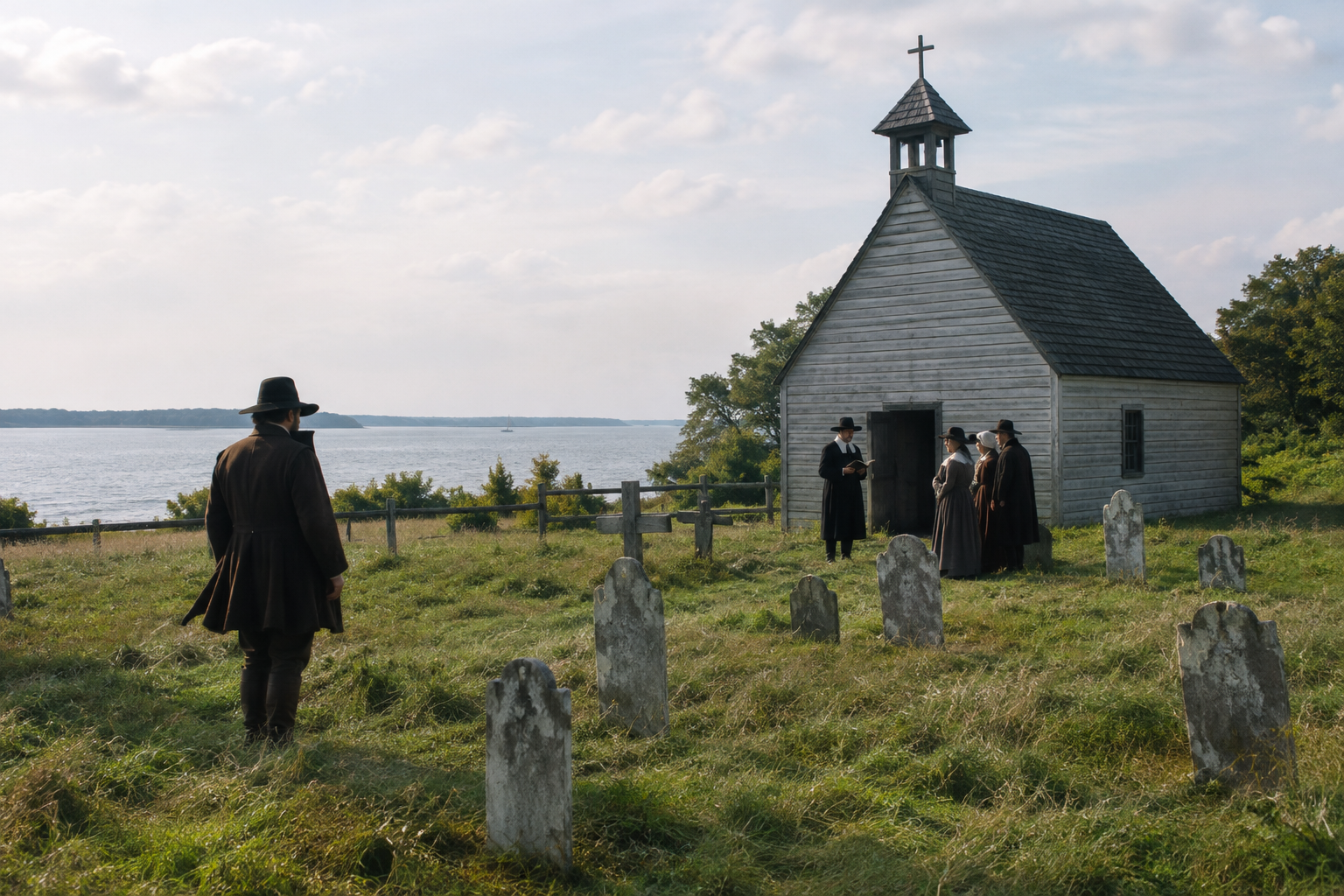
In the cemetery at Historic St. Mary City Chapel Field in Maryland, archaeologists and geneticists recovered the remains of a man identified as I15295, dated to around AD 1634. That date matters. It places him at the very beginning of England's colonial experiment in Maryland, in a settlement planted on the edge of the Chesapeake at a moment when old European lineages were being carried into a very new Atlantic world. Among the paternal lines found there was the Y-DNA haplogroup R1b1a1b1a1a2b1a2a1.
That formidable string of letters and numbers is not a nationality, a language, or a complete ancestry. It marks one direct paternal line only: father to son, and so on, through time. But in a place like early St. Mary's City, even one paternal line can open a remarkably concrete historical window. Here, the interest lies less in some grand prehistoric claim than in the fact that this branch appears in one of the earliest colonial burial grounds in English North America.
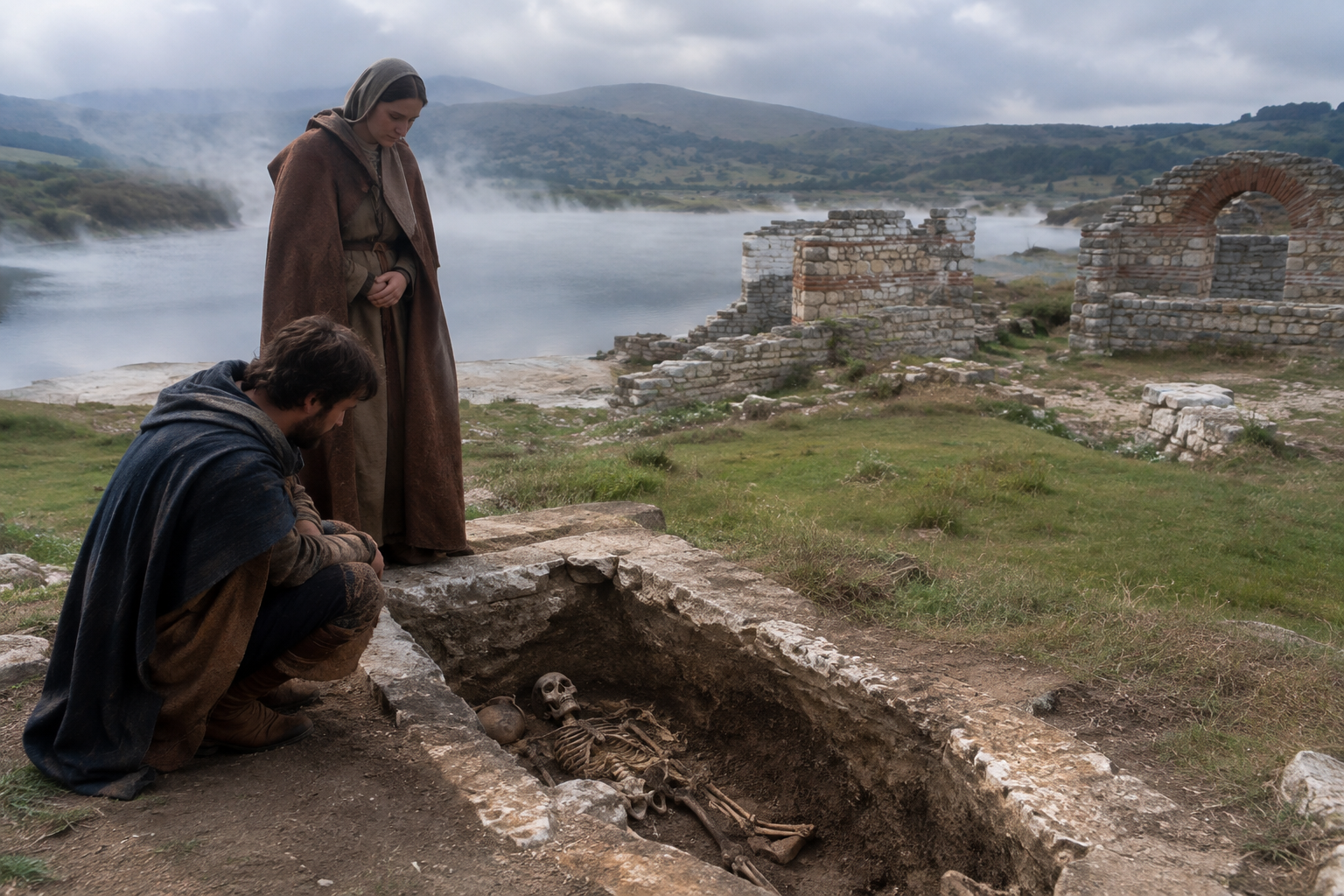
St. Mary's City was not just another colonial outpost. Founded in the 1630s, it became Maryland's first capital and one of the earliest enduring English settlements in the Chesapeake. Chapel Field Cemetery belongs to that fragile first generation, when disease, supply problems, religious ambition, and imperial rivalry all pressed on a very small community.
Sample I15295 comes from that setting. Even without embellishing the burial beyond what is documented, the context is vivid enough: a man buried in the cemetery associated with the colony's chapel, in the earliest decades of settlement. Research on the population of St. Mary's City has shown how useful these burials are for reconstructing the origins and diversity of the colonial town. A study of this community can be found in research published on the genetic legacy of 17th-century St. Mary's City, which examined how ancestry and kinship illuminate the formation of this early colonial population.
What makes I15295 especially interesting for a haplogroup article is that the lineage appears in a burial ground tied to a documented historical rupture: migration across the Atlantic. This is not a hazy association with a broad region thousands of years ago. It is a person from an excavated colonial cemetery, living at the moment when European male lines were being transplanted, sometimes abruptly, into American soil.
The wider parent haplogroup R1b is one of the major Y-chromosome lineages in western Europe, but that broad fact should be handled carefully. It does not mean every narrow descendant branch has the same story, nor that every man carrying such a branch belonged to the same people. The article's lineage, R1b1a1b1a1a2b1a2a1, is a much more specific twig on that larger paternal tree.
In practical historical terms, that means we should resist the temptation to turn one colonial-era result into a sweeping tale of Celts, Saxons, Normans, or any other single named population. What the St. Mary's evidence supports securely is narrower, but still valuable: this paternal line was present among the men connected with the founding generation of colonial Maryland.
That may sound modest, but modesty is often where the best history starts. Archaeology is full of overconfident stories that collapse on inspection. Here, the better approach is to keep the lens on what can actually be seen: a direct paternal line in an early 17th-century burial, in a colony whose inhabitants were part of the dense social and demographic traffic of the British Atlantic.
When people picture ancient DNA, they often imagine Bronze Age warriors or Iron Age chiefs. Yet colonial cemeteries can be every bit as revealing. The Chesapeake in the early 1600s was a contact zone shaped by English migration, interaction with Native communities, labor systems in formation, and the hazards of settlement life. Burial grounds from this period are, in effect, archives of human movement.
That is why a single Y-chromosome assignment from Chapel Field matters beyond genealogy. It helps pin one paternal lineage to a specific time, place, and historical process. In this case, the process is colonial foundation: the movement of people from the British Isles and wider Europe into an unstable new settlement that would become one of English America's key early footholds.
There is also a larger methodological point here. Colonial burials sit at an unusual intersection of archaeology and written history. Unlike many prehistoric graves, they can sometimes be placed against documents, settlement plans, church contexts, and named institutions. That does not magically give us an identity for I15295, but it does make the archaeological setting unusually sharp.
Maryland's first decades were not socially simple. Even a burial ground associated with an early colonial chapel does not represent a single, pure, or unchanging stock of people. The early Chesapeake drew in migrants with different regional origins, and over time the colonial population became more mixed in ancestry and experience than old textbook sketches used to suggest.
That wider complexity is one reason it is important not to overread one haplogroup. A paternal line can persist through men who spoke different dialects, married into different communities, or moved repeatedly between counties, ports, and colonies. By the time a man carrying R1b1a1b1a1a2b1a2a1 was buried at St. Mary's City, his paternal ancestors had already passed through many historical filters long before crossing the Atlantic.
For readers interested in how ancient genomics can illuminate language and migration questions in northern Europe, there is a useful broader comparison in MyTrueAncestry's piece on Germanic-language spread.
That comparison matters because early colonial Maryland was, in a sense, the downstream result of many earlier European movements. But the St. Mary's burial reminds us that colonial history is not merely an epilogue to prehistory. It is its own archaeological world, with its own mortality crises, institutions, and patterns of kinship.
With only one ancient individual supplied here, the sensible question is whether the evidence is too thin to say much. In one sense, yes: no responsible historian should build a dynasty, a tribe, or a grand migration route from I15295 alone. But in another sense, no: because the sample is anchored so firmly in time and place, it gives us something unusually tangible.
Many haplogroup discussions drift into vagueness. This one does not have to. We can point to Historic St. Mary City Chapel Field Cemetery, to around AD 1634, to the colonial Chesapeake, and to sample I15295. That is already a solid piece of evidence: a direct paternal lineage from the founding era of Maryland, recovered through archaeology rather than family legend.
What R1b1a1b1a1a2b1a2a1 suggests, in this case, is not a romantic pedigree but a historically situated male line present at one of the first durable English colonial settlements in North America. For someone researching this haplogroup today, the most meaningful connection is to that documented world of migration, settlement, and survival in the early Chesapeake. The value of the evidence is its precision: one paternal branch, one excavated man, one cemetery, at the edge of a new colony that was still trying to become a society.

Comments