Haplogroup R1b1a1b1a1a2a2

– 5 min read


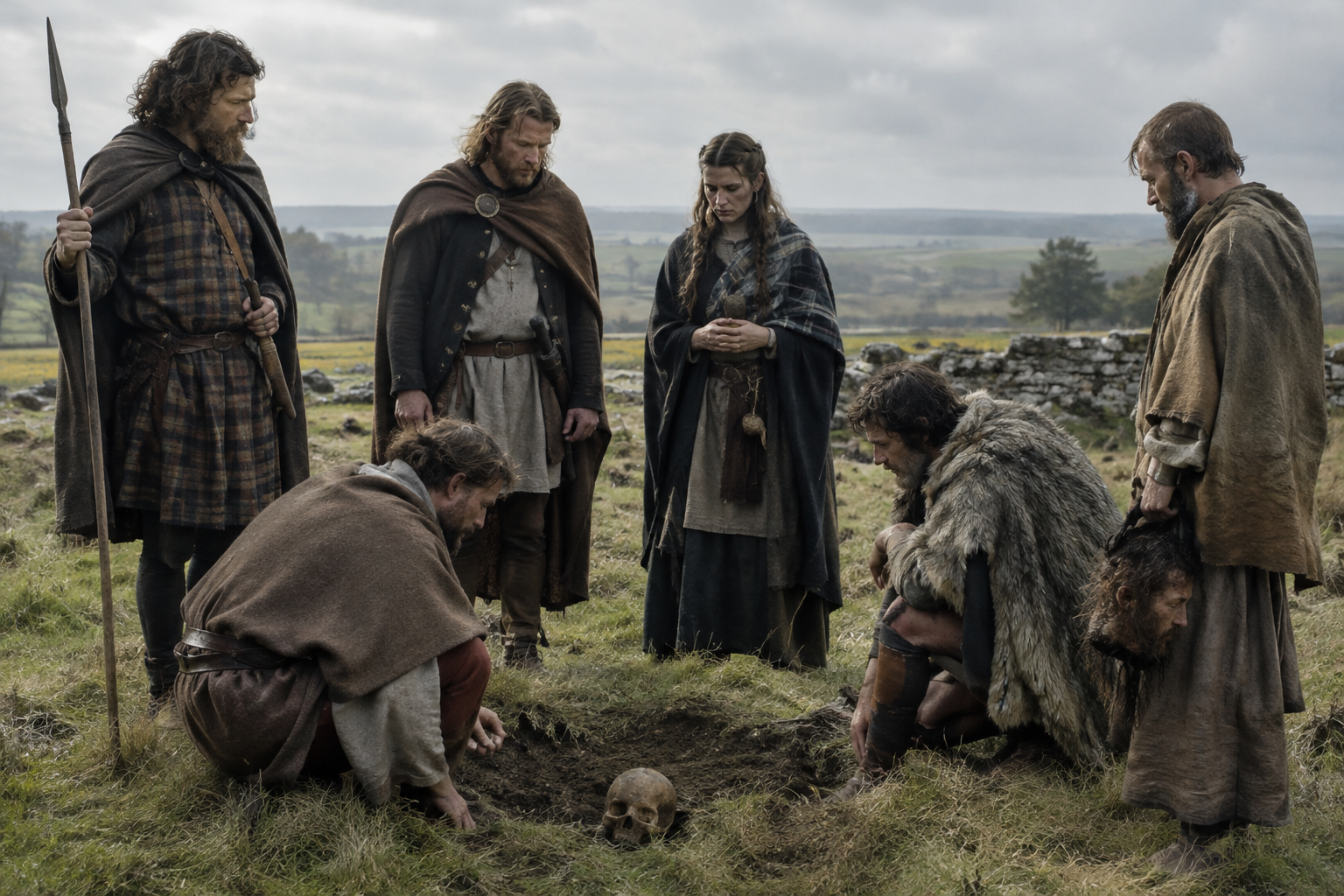
At Winterborne Kingston in Dorset, the ancient cemetery of the Durotriges has produced a small but striking cluster of men dated to around AD 125: WBK103, WBK105, and WBK23. That matters because this is not a vague appearance of a broad western European Y line somewhere in Britain. It is a repeated signal, associated here with the haplogroup R1b1a1b1a1a2a2, in a local Romano-British setting rooted in an Iron Age community that had already been living through conquest, adaptation, and continuity for generations.
The interest of this branch lies precisely in that combination of familiarity and specificity. R1b in its wider sense is common across western Europe, but R1b1a1b1a1a2a2 is a much narrower paternal line. Y-DNA tracks one direct male line only, not a whole identity or the total ancestry of a person. Still, when the same branch turns up in Iron Age Yorkshire, southern France, and Roman-period Dorset, it begins to look less like an isolated curiosity and more like part of a recognizably Celtic-age and later northwestern European pattern.
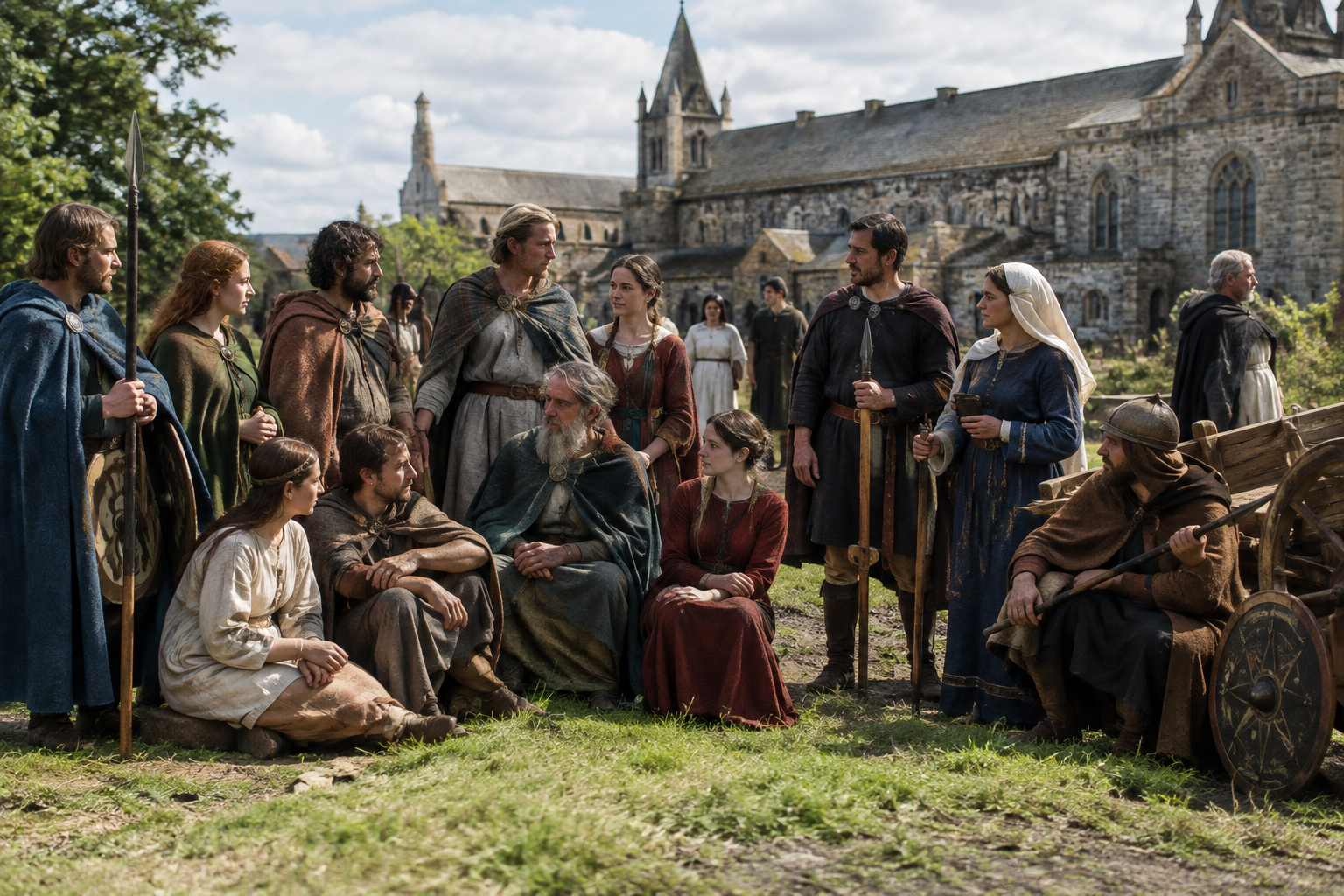
The Dorset evidence is the best place to begin because it gives us repetition at one site. The Durotriges were the Iron Age people of this part of southern Britain, known archaeologically long before any DNA result entered the conversation. By the early 2nd century AD, when WBK103, WBK105, and WBK23 were buried, the region had been under Roman rule for decades. Yet local communities did not simply vanish into a Roman blur. Their settlements, burial grounds, and family histories continued, though now within an imperial world.
An archaeological report on the Dorset discoveries drew attention to just how informative these remains could be for understanding life in Roman Britain beyond the forts and villas that tend to dominate popular imagination. What makes the Y-DNA result especially interesting is not that it proves some grand tribal dynasty, because it does not, but that several men from the same broad community carried the same narrow paternal branch. That suggests continuity of local male lines within a population negotiating Roman power without losing all local structure.
There is also a useful historical caution here. A cluster like this may reflect relatives, a wider kindred, or simply a line that happened to be well represented in one cemetery. The evidence does not entitle us to call all Durotriges men members of R1b1a1b1a1a2a2, nor to imagine a single ruling family behind the graves. What it does show is that this paternal branch was present in southern Britain not as an abstract map dot, but among real men living in a local community under Roman rule.
The sample I36979, from the Parisi-associated burial ground at Wetwang Slack in East Yorkshire and dated to around 225 BC, pushes the story further back into pre-Roman Britain. Wetwang Slack is one of those sites that matter because it anchors genetics in a well-known archaeological landscape. East Yorkshire's Iron Age burials have long stood out within Britain for their distinctive funerary traditions, and the Parisi have often occupied an awkward but fascinating corner of British Iron Age history.
Here the haplogroup matters because it appears in a different British region and in an earlier period. That does not mean Dorset and Yorkshire were linked by one tidy paternal chain that we can now reconstruct grave by grave. But it does suggest that the wider paternal background represented by R1b1a1b1a1a2a2 was already established in Iron Age Britain before the Roman conquest, rather than arriving only in some later military or post-Roman movement.
This is important for anyone tempted to read every British R1b signal through a much later lens, whether Anglo-Saxon, Norman, or medieval. Some paternal lines in Britain were already deeply rooted there in the centuries before Rome. The Wetwang Slack result helps remind us that British genetic history did not begin with the historical periods that wrote more texts about themselves.
The sample CLR31, dated to around 350 BC from Le Cailar in southern France, broadens the map in a different direction. Le Cailar is famous for its Iron Age context involving severed heads, one of those archaeological discoveries that instantly catches the public eye. Yet the real value of the DNA evidence is not theatrical. It places this paternal branch within a continental setting tied to southern Gaul, where Mediterranean contact, local Celtic cultures, and regional power all met in a very busy historical landscape.
That French occurrence matters because it stops the story becoming too insular. R1b1a1b1a1a2a2 is not appearing only in later Britain, nor only in one cemetery. Instead, we have a branch associated here with Iron Age individuals on both sides of the Channel. This does not prove language by DNA, and it certainly does not reduce "Celtic" to a haplogroup. But it does fit the broader archaeological fact that Late Iron Age Britain and Gaul were connected worlds, with exchange, mobility, and shared cultural tendencies unfolding across regions rather than inside modern national boxes.
A broader ancient DNA study of western European populations, available at this research publication, has helped sharpen exactly these sorts of questions: not who belonged to a mythical pure people, but how local continuity and regional interaction worked together over time. That is the frame in which a lineage like this becomes historically useful.
Put the samples together and a reasonable picture emerges. Around 350 BC in southern France, CLR31 shows the branch in an Iron Age continental context. Around 225 BC in Yorkshire, I36979 places it in pre-Roman Britain. By around AD 125 in Dorset, WBK103, WBK105, and WBK23 show it persisting in a local community of the Durotriges inside Roman Britain.
That sequence does not give us a straight-line family tree, nor does it identify the founding homeland of the exact subclade with certainty. We should be especially careful not to take the long history of broader R1b and simply paste it onto this narrower branch as though nothing changed along the way. But the evidence does support something more modest and more interesting: this was a paternal line present in the northwestern European Iron Age world, with particular visibility so far in Britain and Gaul.
It also gives a useful reminder about Romanization. Rome altered law, roads, military structures, trade, and material culture on a vast scale, but local populations did not become genetically or socially featureless the moment imperial rule arrived. The Dorset cluster is a neat illustration of that. Beneath Roman administration, older local family lines carried on.
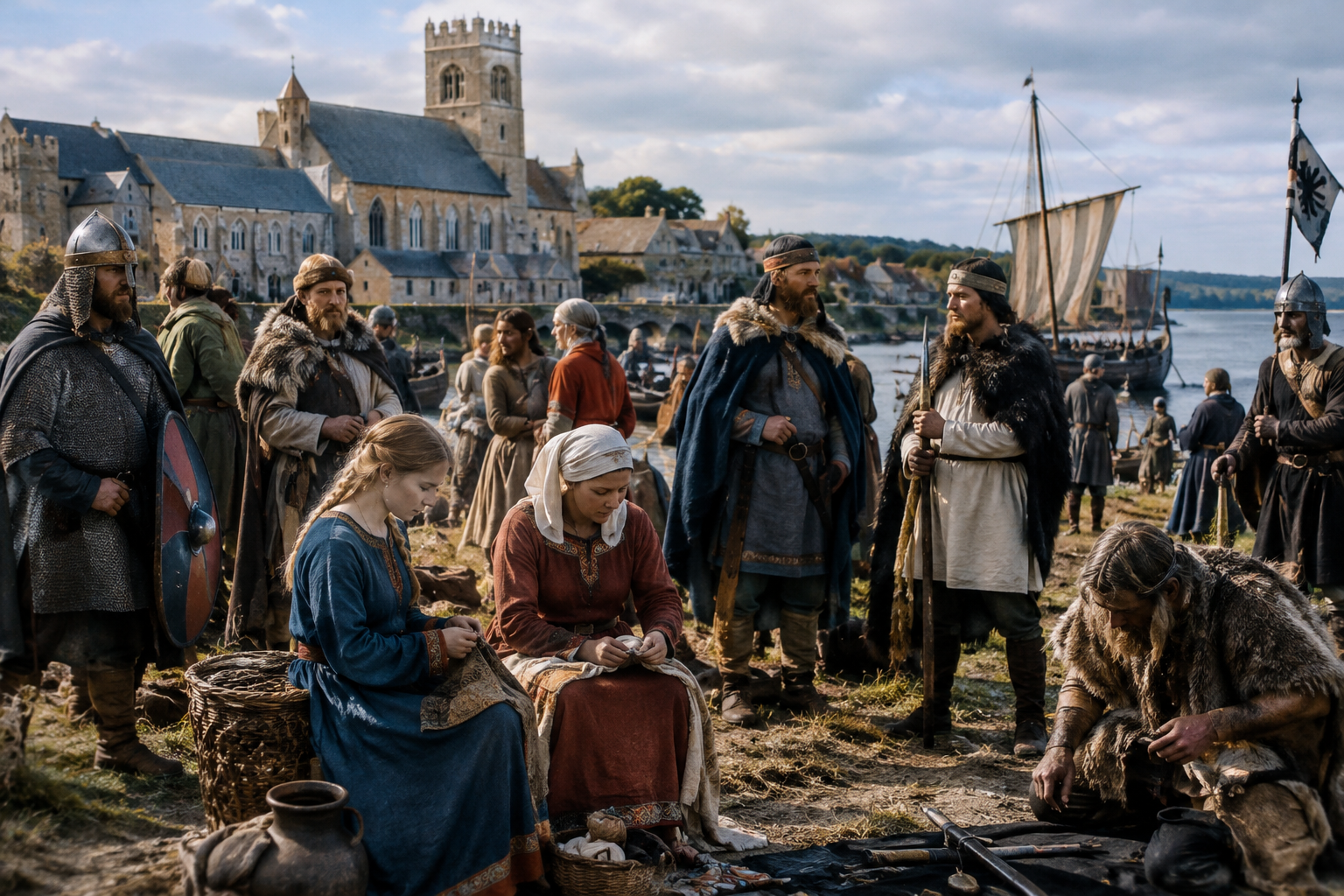
Roman and early medieval Britain
For someone who belongs to R1b1a1b1a1a2a2 today, the most distinctive point is not a promise of famous ancestors. It is the growing archaeological visibility of this paternal line in real Iron Age and Romano-British people, especially in Britain but also in connected parts of continental Europe. In other words, this is a branch that already appears embedded in the human landscape of Celtic-age western Europe before and during Roman rule.
That is a solid, properly limited historical insight. Your direct paternal line is only one thread in your ancestry, but it may be one that reaches back into communities like the Parisi of East Yorkshire, the Durotriges of Dorset, and Iron Age groups in southern Gaul. Those are not legends. They are excavated lives, dated burials, and named ancient individuals whose DNA has begun to put a sharper outline around this branch of the past.
Comments