Haplogroup R1b1a1b1a1a2c1a1a

– 5 min read


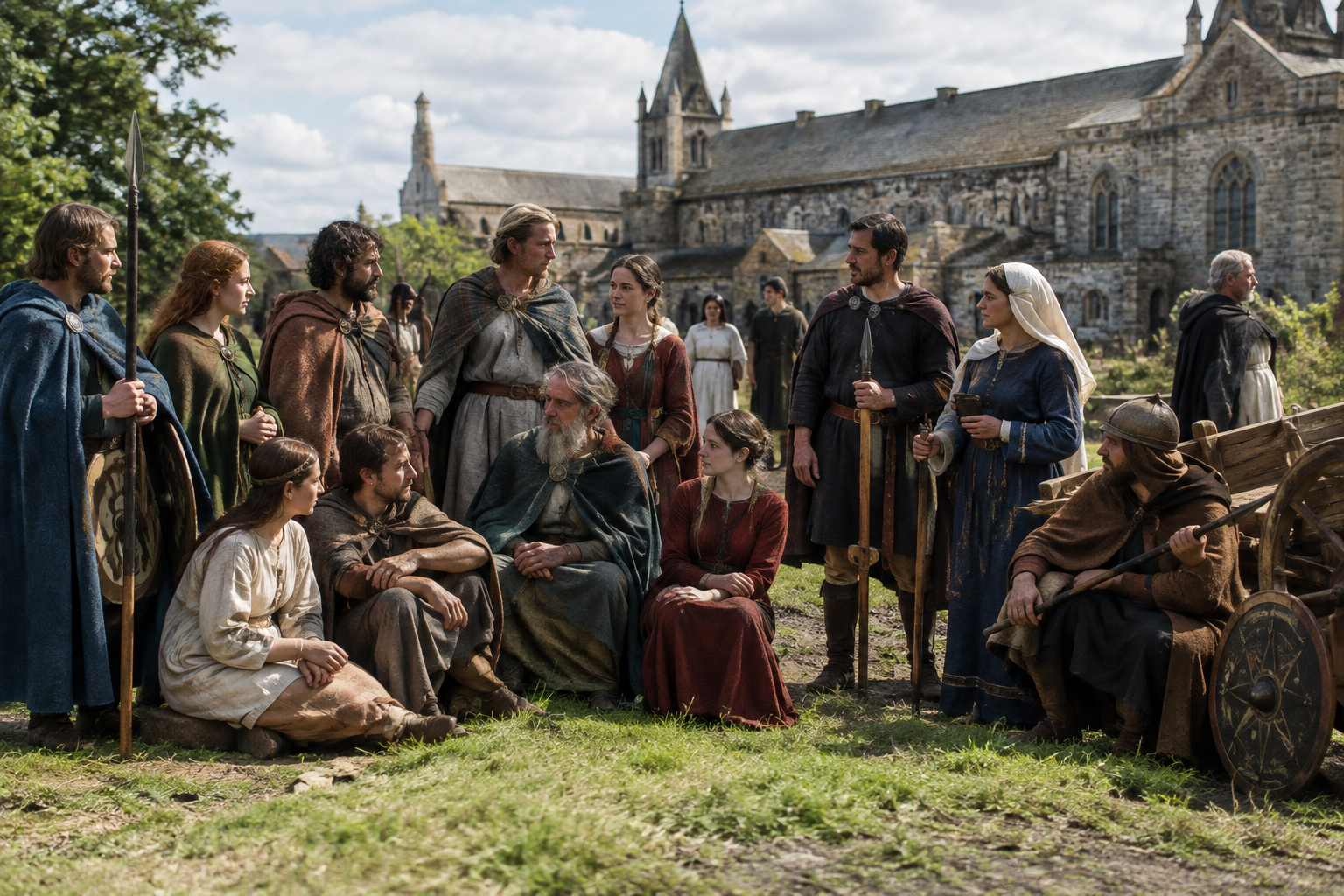
At Wetwang Slack in East Yorkshire, a remarkable cluster of Iron Age burials has produced something unusually valuable for Y-DNA history: not a lone genetic outlier, but repeated evidence from the same broader community. Among the men associated here with the haplogroup R1b1a1b1a1a2c1a1a is the elite Celtic Parisi chariot burial I36892, dated around 225 BC, alongside a series of other Wetwang Slack individuals from roughly the same period. That matters because it turns one paternal line from an abstract code into something rooted in a very specific archaeological landscape.
This is not a claim about the whole ancestry of Iron Age Yorkshire, still less about all people called "Celtic" in Britain. Y-DNA tracks one direct paternal line only. But when the same branch appears again and again in one region, across several burials and sites, it gives us a firmer historical foothold than a single isolated match ever could.
The haplogroup name here is extremely specific: R1b1a1b1a1a2c1a1a. In practical terms, that means a narrow twig on the much larger R1b family tree, a tree already well known in later prehistoric and historic western Europe. One has to be careful, though. The broad success of R1b in Europe does not automatically tell us the detailed history of this exact sub-branch.
What the sample pattern does show is that this lineage was present in Britain by the Iron Age, and not merely at one stray site. The strongest concentration in the present evidence lies in East Yorkshire, especially among burials linked to the Parisi and nearby Brittonic groups. That kind of clustering suggests local persistence and reproduction over generations, rather than a passing arrival represented by one traveler.
An ancient DNA study examining Iron Age and later British populations has been central to this wider picture of continuity and regional structure in Britain: https://www.nature.com/articles/s41586-021-04287-4.
Wetwang Slack is one of the key cemeteries for understanding Iron Age East Yorkshire. The site is famous in archaeology because the Arras culture of this region included chariot burials, a practice long discussed in relation to status, identity, and links across the Channel. In genetic terms, the site is becoming just as interesting, because several male individuals from there are associated with this same paternal branch.
Besides I36892, the sample list includes I37337, I36824, I36784, I31513, I30983, I30978, I36909, I36800, I37136, and I37137, all from Wetwang Slack and all dated around 225 BC. One should not leap from that to the idea of a single family cemetery in the modern sense; cemeteries can serve communities over time, and repeated Y-lineages do not automatically mean close kin in every grave. Still, the recurrence is striking. It suggests that this paternal line formed part of the local male population strongly enough to appear again and again in the surviving record.
That is precisely where archaeology helps. Wetwang Slack is not just "Britain in the Iron Age" in the vaguest way. It is an eastern Yorkshire community with its own burial customs, its own social distinctions, and a regional identity often connected with the Parisi. So when R1b1a1b1a1a2c1a1a turns up repeatedly here, the branch begins to look less like a floating label and more like a lineage embedded in a real historical society.
The same pattern is not confined to Wetwang Slack alone. At nearby Pocklington in East Yorkshire, three more Iron Age individuals in the list are associated with this branch: I21955 from around 225 BC, I21263 from around 225 BC, and I21863 from about 88 BC. These are important because they broaden the picture from one cemetery to a wider regional zone.
Pocklington has become one of the major reference points for later Iron Age Yorkshire archaeology, and its graves show that eastern Britain in this period was anything but culturally flat. The presence of the same paternal branch at both Wetwang Slack and Pocklington hints at durability across time as well as place. The later Pocklington date, especially I21863, suggests that this was not a one-generation phenomenon but part of a continuing male line in the region.
For anyone tracing a modern paternal line, that is the useful point. The evidence does not prove descent from the Parisi as a tribe named in classical texts, and it certainly does not identify a single founding ancestor. What it does suggest is that this lineage had a real foothold in Iron Age East Yorkshire communities over more than one moment in time.
The branch is not restricted to Yorkshire in the sample set. Other associated individuals appear across Britain: I14807 from Iron Age Thame in Oxfordshire, dated around 290 BC; I16597 from Broom Quarry in Bedfordshire, around 307 BC; I16380 from Harlyn Bay in Cornwall, around 200 BC; I16499 from North Berwick in East Lothian, around 190 BC; and I2799 from Iron Age Orkney, around 25 BC. That is a wide scatter indeed, stretching from southern England to northern Scotland and the islands.
Here caution becomes essential. A spread of finds across Britain does not mean a single unified "people" carrying this branch, nor does it map neatly onto language or tribal boundaries. But it does show that the paternal line was not purely local to East Yorkshire. Rather, Yorkshire gives us the densest cluster, while the other finds hint that related male lines were present in several British regions during the later prehistoric period.
This makes historical sense. Iron Age Britain was regionally varied but connected by exchange, marriage, mobility, and shared technological and social fashions. Y-DNA lineages can persist through such worlds without respecting the tidy borders later historians might wish to draw.
The latest sample in the group is very different in setting: ATP_PSN_68, from St John's Hospital in Cambridge, dated to about AD 1250. Now we are no longer in the world of Iron Age burial grounds, but in medieval England, with Christian institutions, urban life, and a society transformed by Roman rule, Anglo-Saxon settlement, Scandinavian influence, and the Norman kingdom.
That single medieval appearance matters because it reminds us that paternal lines can outlast enormous cultural change. The men buried at Wetwang Slack and Pocklington lived long before the English language, before parish churches, before universities, and before Cambridge became a medieval town of note. Yet one associated Y-line appears again in medieval Cambridgeshire, suggesting long-term survival of a paternal branch through centuries of upheaval.
Research on medieval and post-Iron Age eastern England has increasingly shown that continuity and change lived side by side, genetically as well as culturally. A more recent preprint on British ancient DNA may help frame that broader context, especially for eastern England and long-run population history: https://www.biorxiv.org/content/10.1101/2023.03.03.531048v1.
Of all the individuals here, I36892 remains the most vivid anchor because the burial context is so archaeologically distinctive. An elite Parisi chariot burial is not just a date and a county. It belongs to one of the most discussed funerary traditions in Iron Age Britain, where social display, local identity, and wider continental connections all come into play.
That does not make this haplogroup a "noble marker," nor does it mean every carrier descends from ancient elites. But it does show that this paternal line could be found in a high-status burial context in eastern Britain. Combined with the many other Yorkshire samples, it gives the branch a historical profile that is unusually tangible: not legendary kings, not speculative clan founders, but excavated men from a real Iron Age community.
The most distinctive thing about R1b1a1b1a1a2c1a1a in this evidence is not glamorous dynastic legend but repeated archaeological presence in Iron Age Britain, above all in East Yorkshire. Wetwang Slack and Pocklington make this lineage feel grounded: a paternal branch carried by men living in the society archaeologists associate with the Parisi and their neighbors, and one that seems to have persisted into medieval England as well. For someone exploring this haplogroup today, that is the valuable clue - a direct male line with a visible footprint in the long history of Britain, especially its Iron Age east.






Comments