Haplogroup R1b1a1a2a1a2c1a

– 4 min read


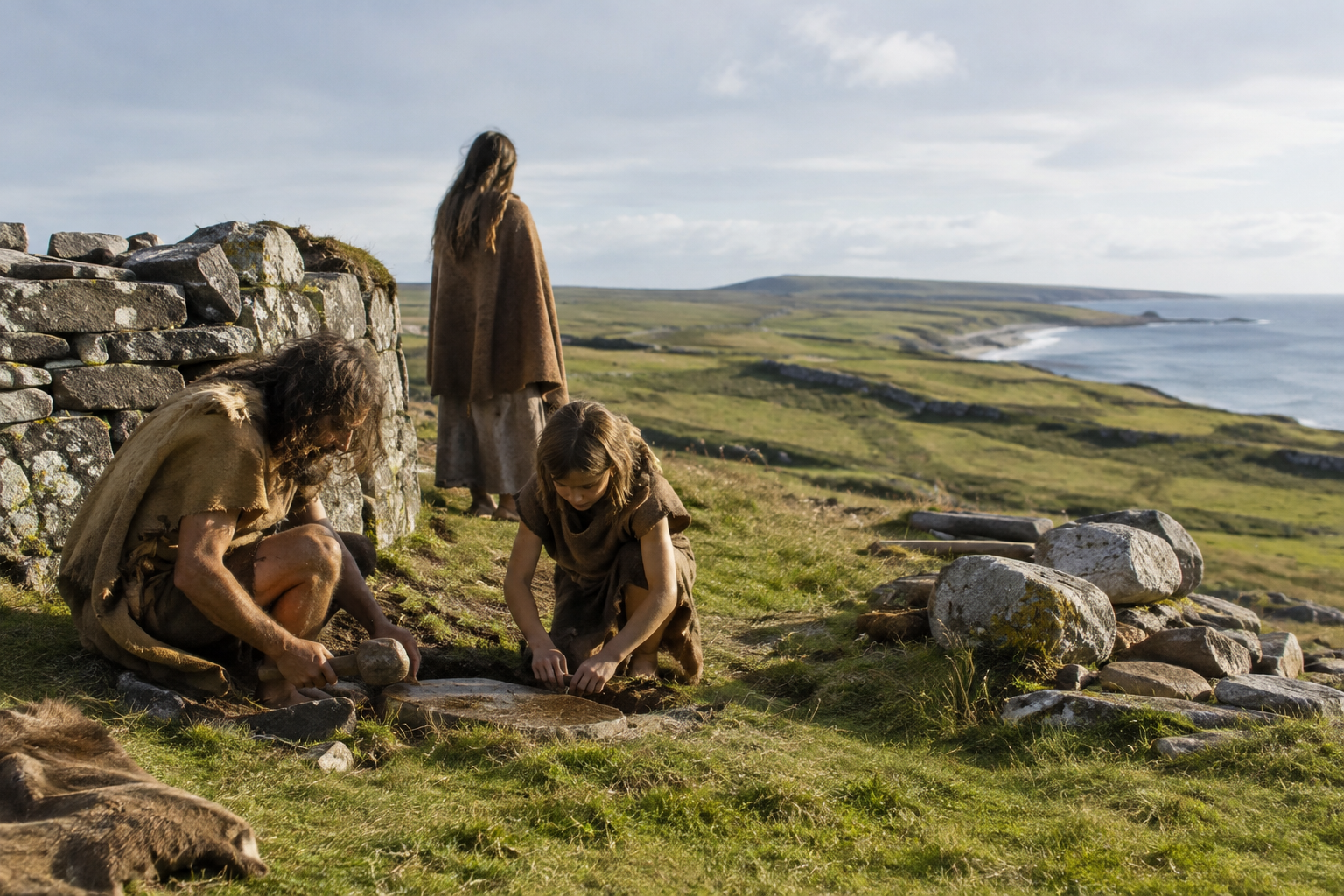
At Westray in Orkney, the Links of Noltland have produced one of those wonderfully awkward archaeological stories that refuse to stay in a single period. The site is best known for its remarkable prehistoric settlement and sculpture, but it also yielded later burials, including an individual dated to around 1498 BC and identified as KD061_4. That matters here because KD061_4 has been associated with the Y-DNA haplogroup R1b1a1a2a1a2c1a, placing this paternal line firmly in the Bronze Age north of Scotland rather than in some misty, unlocated ancestral elsewhere.
That is already a useful corrective. Y-DNA traces one direct paternal line only, not a person's whole ancestry, language, or social identity. But when a branch appears in a securely dated archaeological context, it gives us something precious: not a legend, but a man in a place, at a time, within a real community.
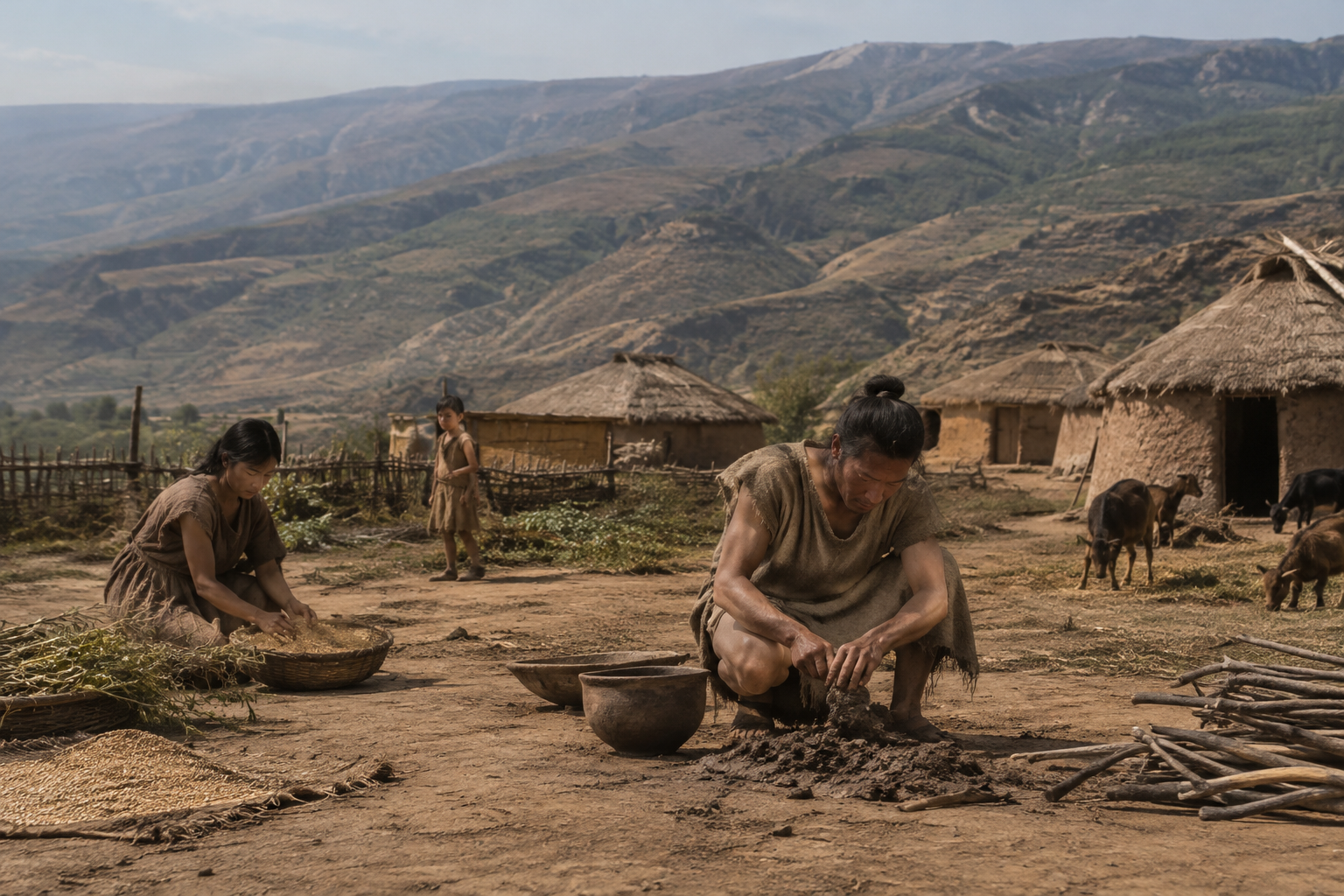
The Links of Noltland, on the island of Westray, is one of the great Orcadian sites because it condenses so much prehistory into one windy strip of coastline. Neolithic settlement, later reuse, and Bronze Age funerary activity all overlap here. KD061_4 belongs to that later Bronze Age presence, long after the first famous phase of monumental Neolithic Orkney, showing that these islands remained socially important across many centuries.
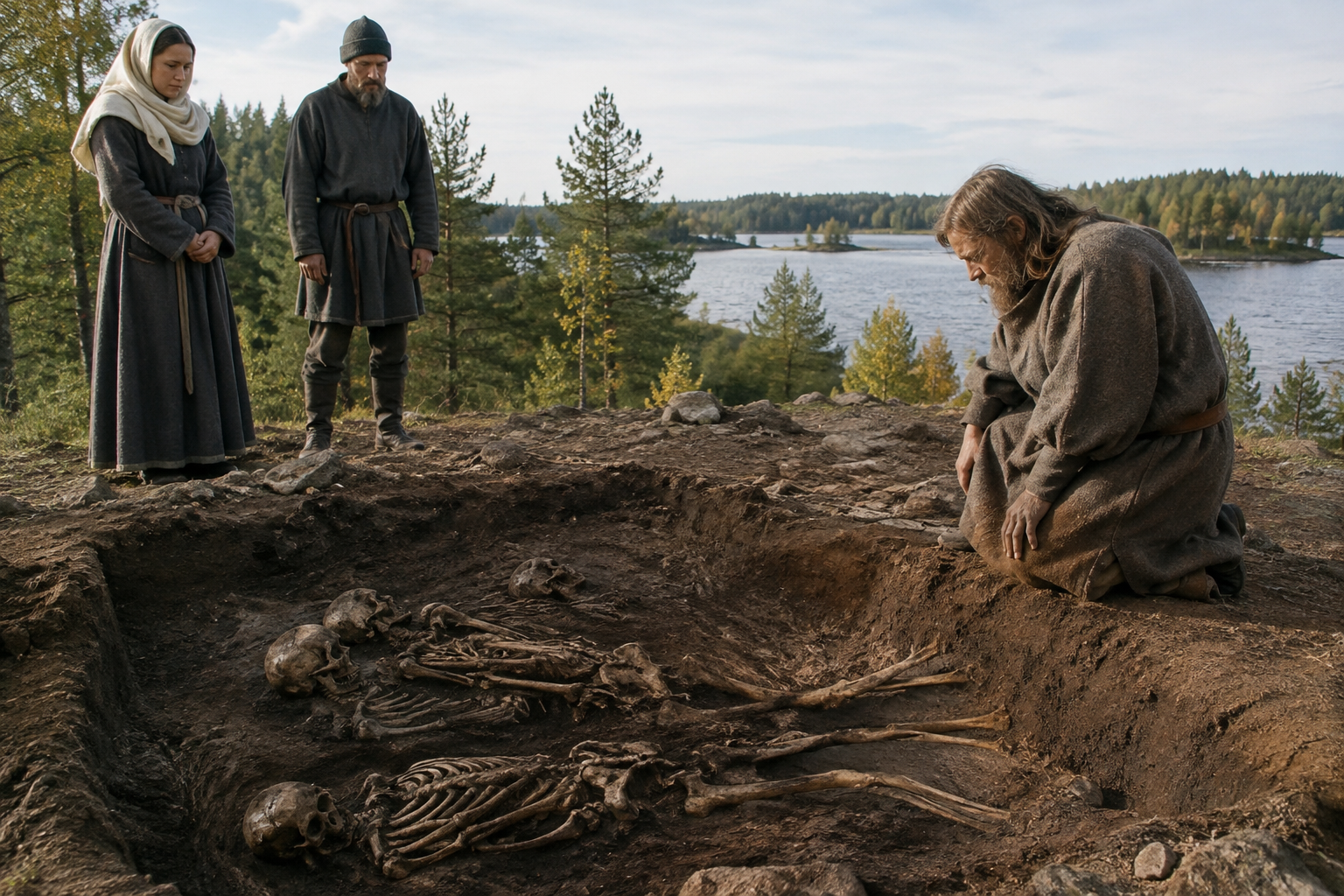
That continuity of place is as interesting as the lineage itself. A Bronze Age paternal line like R1b1a1a2a1a2c1a is not floating abstractly across a map; it is embedded in a landscape already dense with ancestral memory. By the second millennium BC, people in Orkney were living among the remains of far older structures and tombs, and their burials formed part of that long conversation between the living and the dead.
An ancient DNA study of northern Scottish burials, published in PNAS, helped clarify just how informative these island communities can be for reconstructing kinship, continuity, and change. Even when one sample does not tell the whole story of a population, it anchors a paternal branch within a documented archaeological world.
Northern Scotland tomb kinship
The unwieldy name matters because it reminds us that this is a specific twig on a very large paternal tree. The broader family, R1b, is well known across later prehistoric western Europe, especially in many Bronze Age contexts. But it would be careless to pour the whole history of R1b into this narrower branch as though every subclade had the same route, date, or cultural setting.
What we can say more safely is that KD061_4 shows this branch, or a lineage reported within it, present in Bronze Age Orkney. That places R1b1a1a2a1a2c1a within the social world of Atlantic Britain during a period when metalworking, exchange, and regional identities were all developing in distinctive ways. In other words, this is not merely a "Scottish" or "British" signal in the modern sense, but a paternal line living in an island zone that was both connected and locally particular.
People often imagine Orkney as marginal because it lies at the edge of the British Isles. Prehistory tells a rather different story. Orkney could be strikingly central within seaborne networks, with communities linked by movement across the North Sea and along the Atlantic facade.
That wider setting matters for interpreting a lineage such as R1b1a1a2a1a2c1a. A paternal branch found in Orkney does not mean its history was confined to the islands, nor does it mean every man nearby shared it. What it does suggest is that Bronze Age Orcadian society participated in the larger demographic world that had reshaped much of Britain after the Beaker horizon and into the Bronze Age, while still maintaining its own strongly local traditions.
So KD061_4 is best understood not as a lone genetic curiosity but as part of a northern island community connected to broader developments in Britain and beyond. Archaeology has been steadily showing that such communities could preserve local continuity even as ideas, objects, and sometimes people moved across considerable distances.
Bronze Age tomb reuse in Britain
There is a temptation in genetic genealogy to want grand certainty from a single ancient match: a migration route, a tribe, a named people, perhaps even a direct path to a later clan. Ancient DNA is rarely so obliging. KD061_4 does not license a leap from Bronze Age Westray to any specific medieval surname or dynasty.
Yet one sample can still be historically powerful. It fixes this paternal line in a documented Bronze Age community in Orkney around the late second millennium BC. That is already a better kind of history than mythic origin stories. It tells us that men carrying this lineage were present in the far north of Britain during a period of enduring settlement, burial, and memory-making in landscapes already ancient to them.
It also illustrates a broader truth visible in British archaeogenetics: paternal lines can persist through major cultural transitions, but their meaning changes with context. A Y-line is not a culture. The same broad paternal heritage can pass through many different archaeological worlds, from Beaker-associated societies to later island communities whose daily lives were shaped by local coastlines, farming regimes, and inherited places.
One reason Orkney appears so often in discussions of prehistory is that its archaeology preserves long sequences unusually well. Neolithic chambered tombs, villages, Bronze Age burials, and later occupation all contribute to a sense of deep time compressed into a small landscape. For paternal lineages, that makes the islands especially valuable: they let us place genetic evidence inside a very well studied historical ecology.
KD061_4 belongs to that longer Orcadian record. Even if the sample does not by itself define the full spread of R1b1a1a2a1a2c1a, it shows the branch in an environment where continuity of place seems to have mattered enormously. This is the sort of evidence that encourages caution and curiosity in equal measure: caution about overclaiming, curiosity about how many later northern British paternal lines may have roots in similarly deep prehistoric communities.
Community connections in northern Scotland
For someone exploring the haplogroup R1b1a1a2a1a2c1a today, the most defensible takeaway is not a neat clan badge or a single migratory legend. It is that this paternal line is attested in Bronze Age Orkney through KD061_4, tying it to a real island world of settlement, burial, and inherited landscapes around 1498 BC. That is modest, but it is also solid: a direct paternal thread visible in one of prehistoric Britain's most memorable archaeological regions.
Comments