Haplogroup R1b1a1a1b

– 5 min read


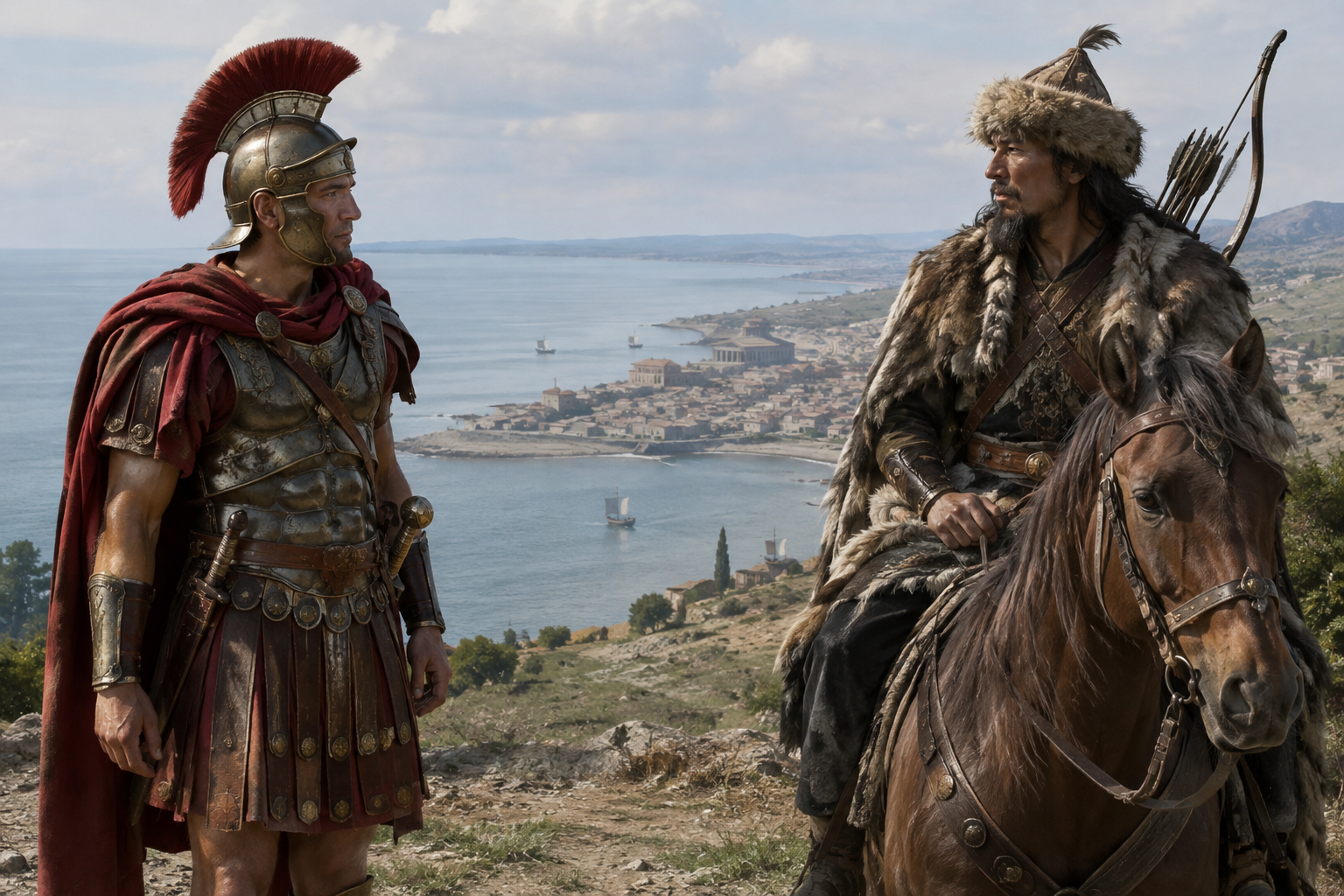
In the early 3rd century AD, a man buried in the Roman-era landscape around Samsun on the Black Sea coast of Anatolia carried a Y-chromosome assigned here to R1b1a1a1b. He appears in the record as I4529, dated around AD 260. On its own, that may sound like a dry laboratory label. In context, it is rather more interesting: Samsun, ancient Amisos, sat in one of the great contact zones of the Roman world, where Anatolian, Black Sea, steppe, and Mediterranean histories met.
The second ancient example linked to this branch is very different. DA92, dated around AD 20, comes from a Hun-Sarmatian context in Kazakhstan. Put those two men side by side and the immediate lesson is not that they belonged to one tribe, nation, or family. It is that a paternal line associated with R1b1a1a1b appears in two sharply different settings across the wider Eurasian world: one inside Roman Anatolia, the other in the mobile societies of the steppe.
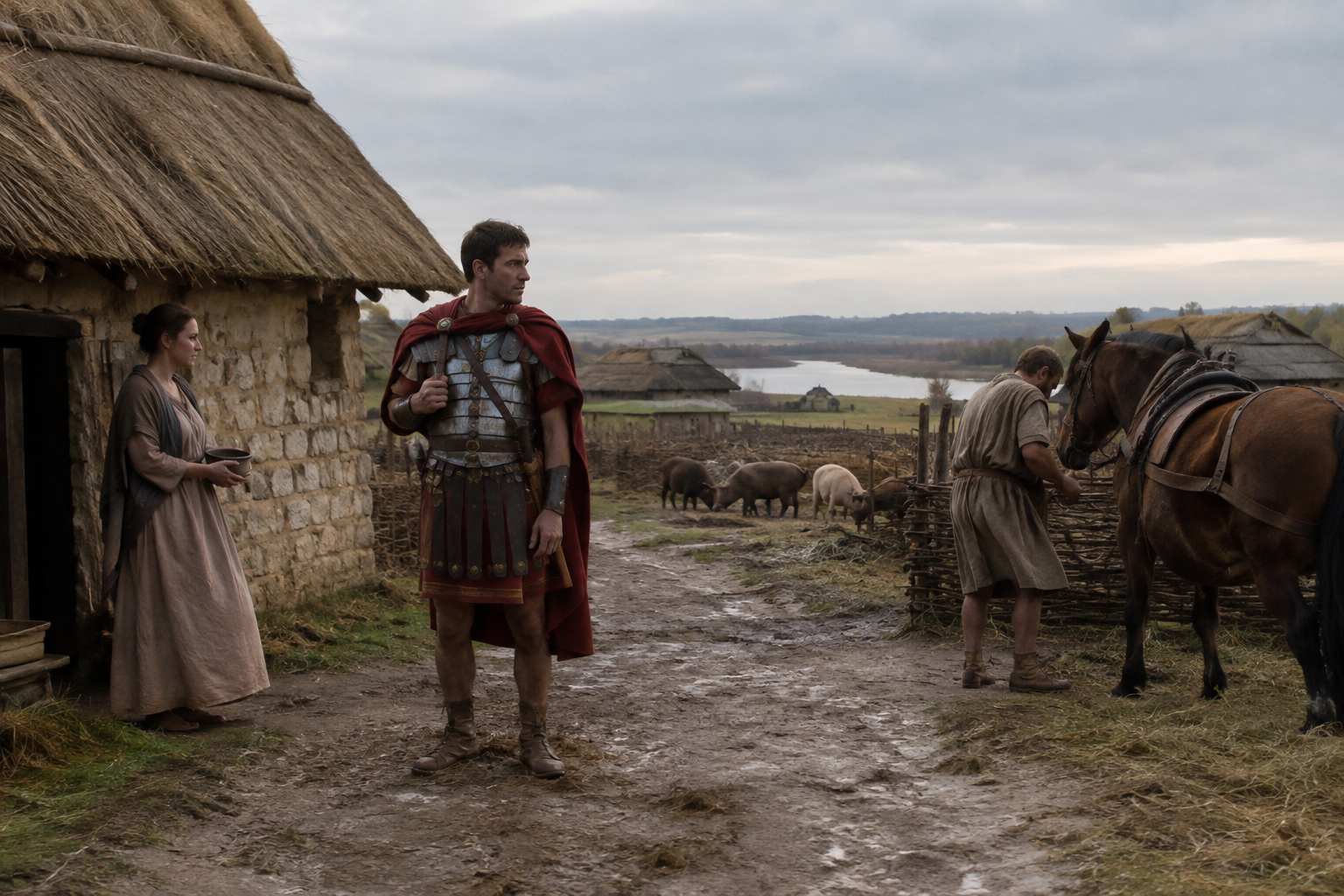
I4529 matters because Roman Anatolia was anything but isolated. The Black Sea coast connected imperial administration, commerce, soldiering, local communities, and long-distance mobility. A Y-line found there cannot be read as a badge of ethnicity. It is better understood as one thread in a busy human landscape where paternal lines moved with men serving in armies, working ports, marrying locally, or arriving through older regional population mixtures.
That is why this particular setting is so useful for thinking about R1b1a1a1b. The branch sits within the wider R1b family, a major West Eurasian paternal lineage with a deep and complicated history. But one must be careful: the broad fame of R1b should not be lazily poured into this narrower label. For I4529, what we can say securely is modest and valuable at once: by the mid-Roman period, a man associated with this branch was living in the Black Sea zone of northern Anatolia.
For readers interested in how Roman rule could leave durable genetic traces in western provinces as well as eastern ones, Roman-period case studies elsewhere are worth comparing.
A broader ancient DNA study of populations around the Roman and post-Roman Mediterranean and Eurasia, published in Science, helped underline a point archaeologists have been making for years: imperial worlds were full of movement, but movement did not produce one simple biological profile. Coastal cities and frontier regions could absorb people from different backgrounds while still remaining locally rooted in many ways.
The sample DA92 comes from a very different historical environment. Labeled Hun-Sarmatian Kazakhstan and dated to around AD 20, it belongs to the world of steppe confederations, mounted mobility, shifting political alliances, and mixed populations spread across huge distances. That world is often flattened into stereotypes. Ancient DNA has been steadily correcting that.
The important thing here is not to force DA92 into a neat origin story. "Hun" and "Sarmatian" are already complex historical labels, and a single Y-chromosome does not dissolve that complexity. Still, the presence of R1b1a1a1b in this context is a reminder that steppe societies were not genetically uniform blocs. Their cemeteries and associated populations often include lineages with different geographic histories, reflecting both long local development and repeated interaction across the Eurasian interior.
That wider pattern has been visible in MyTrueAncestry's coverage of frontier and steppe populations, especially where archaeology and genetics together show mixture rather than purity.
In other words, DA92 is valuable precisely because it resists a simple tale. It does not prove that this branch "came from" the steppe in any final sense, nor that all men in Sarmatian or Hun-linked settings shared it. What it does show is that this paternal line was present in the eastern степpe world in the early centuries AD, inside communities shaped by mobility and political change.
Ancient DNA articles often tempt us into drawing arrows across the map. Samsun, Kazakhstan: surely there must be a grand migration route joining them. Perhaps there was. But the honest historical value here lies in something slightly less cinematic and more useful. These two samples place R1b1a1a1b in two different contact zones during roughly the same broad era.
One was the Roman Black Sea coast, where imperial structures met older regional populations and seaborne exchange. The other was the Inner Eurasian steppe, where political formations and kin networks could stretch over extraordinary distances. A lineage turning up in both settings tells us that this paternal branch belonged to the wider traffic of Eurasian history, not to one neatly bounded people.
That is also why Y-DNA needs careful handling. It follows one direct paternal line only: father to son to son. It can preserve a striking historical signal, but it does not describe a whole person's ancestry, language, culture, or appearance. A Roman Anatolian man and a steppe-associated man may share a distant paternal branch while belonging to quite different communities in every other historical sense.
The Samsun evidence becomes even more suggestive when placed in the larger Black Sea story. This coast was not a remote fringe of empire. It was a zone of ships, armies, tax systems, local elites, and constant human contact with the Caucasus, the Pontic steppe, and Anatolia's interior. Genetic signals found there are often best read as evidence of connection rather than isolation.
That makes the Black Sea one of the most revealing places to encounter a branch like R1b1a1a1b. The paternal line may have deeper histories elsewhere, but by the Roman period it was part of a lived social world in which identities were layered and practical. Men could be local by upbringing, imperial by service, and mixed by ancestry all at once.
Readers who want another window onto this wider maritime and steppe-facing region may find the ancient burials from the northern shores especially useful.
With only a small number of ancient examples in view here, caution is essential. We should not pretend that R1b1a1a1b was "the" lineage of Roman Samsun or "the" hallmark of Hun-Sarmatian Kazakhstan. Nor should we automatically treat the exact subclade resolution as equally secure in every publication or database environment. Ancient Y-chromosome calls can vary in precision depending on coverage and analysis.
What can be said, though, is that this branch belongs to a paternal family that repeatedly appears in West Eurasian and steppe-connected histories. The two ancient men here fit that broad geographical logic without collapsing into a single narrative. One lived in the orbit of Rome on the Anatolian coast; the other in a steppe context associated with Sarmatian and Hun-period labels. That contrast is the real story.
Another useful comparison comes from work on the northern Black Sea and adjacent migration corridors, where ancient DNA keeps showing how often movement produced mixed communities rather than tidy replacements.
The most distinctive thing about R1b1a1a1b, on the evidence here, is not a claim to one famous kingdom or one heroic migration. It is its appearance in two very different early historic worlds: Roman Black Sea Anatolia and steppe Kazakhstan. For someone researching this paternal line today, that is a sensible and intriguing takeaway. Your Y-DNA may belong to a branch that moved through the busy middle spaces of Eurasian history, where empires, ports, grasslands, and frontier societies were constantly meeting.
Comments