Haplogroup R1a1a1b2a2

– 6 min read



Some Y-DNA haplogroups sit neatly inside one landscape or one historical chapter. R1a1a1b2a2 does not. It appears instead like one of those stubborn threads that keeps turning up in very different places: Bronze Age Germany, the steppe world of Saka and Scythian burials, a Gepid-period grave in Serbia, a Roman-era burial in Sicily, a Byzantine-period individual from Mardin, and later steppe-connected contexts reaching as far as Mongolia.
That is precisely what makes it interesting. Y-DNA traces a direct paternal line only, not a person's whole ancestry, but even that narrow line can reveal extraordinary historical range. In the case of R1a1a1b2a2, the evidence supplied here points not to a single people frozen in time, but to a paternal lineage moving through - or persisting within - some of Eurasia's most mobile worlds.
R1a1a1b2a2 is a downstream branch within the broader R1a family, one of the major Y-chromosome lineages associated in ancient DNA studies with parts of Eurasia, especially across regions influenced by Bronze Age and later steppe-linked population movements. That broad fact, however, should not be flattened into a simple slogan. A narrow branch such as R1a1a1b2a2 has its own more specific history, and that history cannot automatically be assumed to match every story told about R1a as a whole.
What we can say from the supplied ancient samples is that this paternal branch, or very closely related lineages in its neighborhood, appears across an arc stretching from Central Europe to the Eurasian steppe and beyond. That distribution fits well with what archaeology has long suggested: male lines could travel with herders, warriors, migrants, raiders, local elites, and mixed frontier communities, then settle into new political worlds very different from those of their distant ancestors.
In other words, this is not the DNA of a single "tribe." It is the paternal signature of movement, survival, and reinvention.
For readers wanting a wider grounding in how ancient DNA transformed these questions, MyTrueAncestry has a useful overview here:
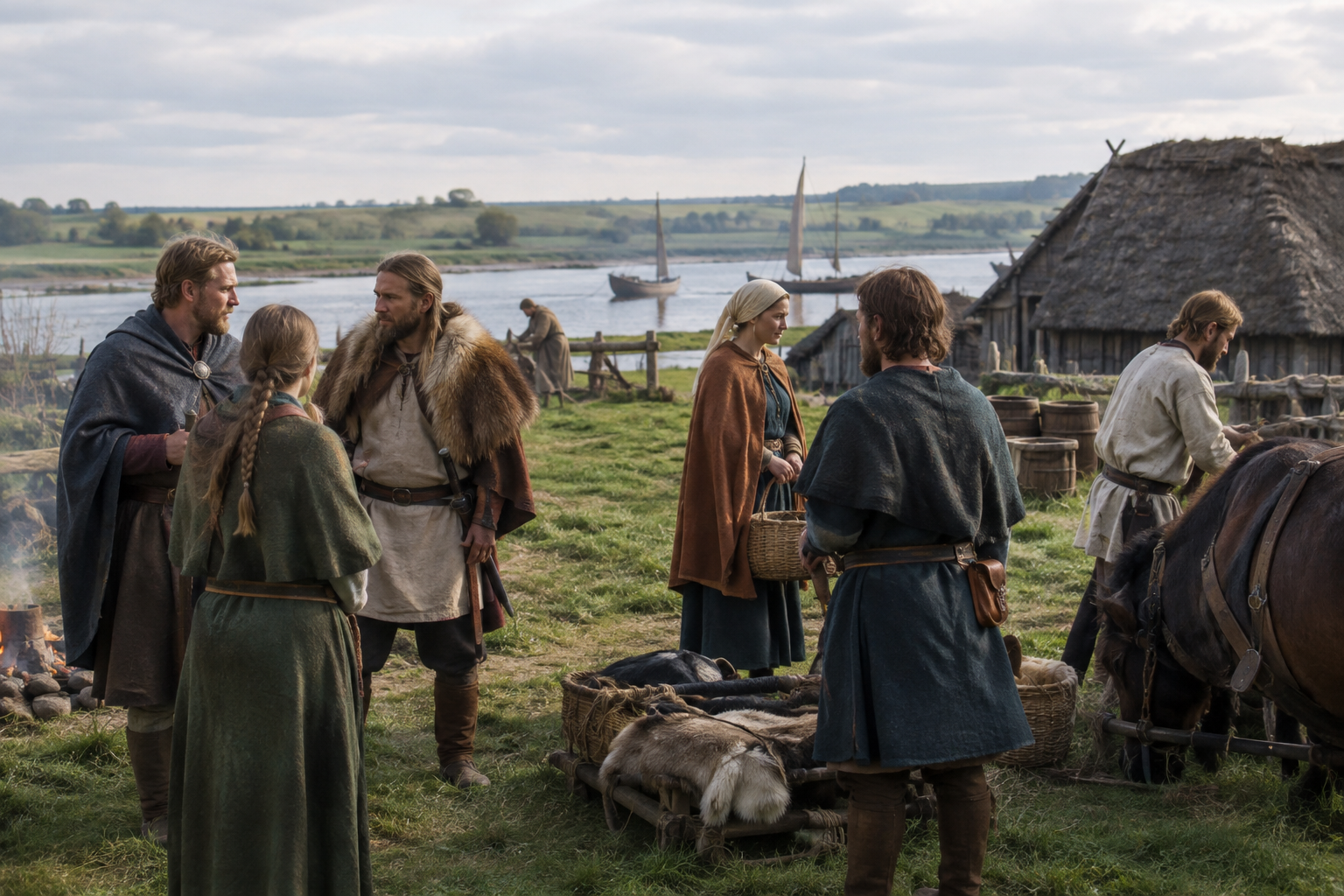
The earliest anchors in the supplied list come from Bronze Age Germany: RISE434 from Tiefbrunn, dated to 2680 BC, and RISE440 from Wolkshausen, dated to 2387 BC. Even without overclaiming a neat migration map, these two finds matter. They place this paternal branch in Central Europe early, during the age when communities across the continent were being reshaped by new networks of mobility, metallurgy, animal husbandry, and long-distance exchange.
Then the trail shifts eastward into one of the great theatres of ancient mobility: the steppe. The Andronovo-linked samples I0507 from the Bayan-Zherek Mountains, dated to 1750 BC, and I11541 from Georgievsky Bugor, dated to 1300 BC, are especially important because they sit in the world that linked forest-steppe, pastoralism, and the huge east-west corridors of Bronze Age Eurasia.
This is where the history of a lineage like R1a1a1b2a2 becomes genuinely vivid. The open grasslands did not merely produce riders and raiders. They created vast zones of contact. Ideas, horses, prestige goods, burial customs, and male lines all moved through them. A Y-chromosome branch appearing in both Central Europe and steppe-associated contexts suggests exactly the kind of connectivity archaeologists have been trying to reconstruct for decades.
If you want to follow that broader prehistoric and early historic steppe story further, this related piece is particularly relevant:
By the Iron Age, the branch turns up repeatedly in the eastern steppe and Saka-Scythian world. That is not a trivial pattern. It is one of the strongest themes in the evidence.
Among the supplied individuals are BIR007 from a Scythian grave at Tasmola, Birlik, Pavlodar, Kazakhstan, dated to 781 BC; SHI009 from Shilikty, East Kazakhstan, dated to 650 BC; KOT001, an elite Saka individual from Koktubek II, East Kazakhstan, dated to 650 BC; DA17 from the Eurasian steppes, dated to 780 BC; ESZ010 from Eleke Sazy, East Kazakhstan, dated to 267 BC; and CGG021496 from Aymyrlyg in Southern Siberia, dated to 209 BC.
Taken together, these samples place the lineage in precisely the sort of archaeological settings that have made steppe genomics so exciting: kurgans, elite burials, and regions associated with mounted lifeways and far-reaching exchange. But caution matters here. Sharing a haplogroup with individuals in Saka or Scythian contexts does not make someone today "a Scythian" in any straightforward sense. What it does show is that this paternal branch was part of that wider demographic world.
And this is where ancient DNA has been so useful. Classical authors wrote about Scythians as if they were a single exotic people. The genetics keeps complicating that picture. Some communities were locally rooted, others were mixed, and elite networks could stretch astonishing distances.
Readers interested in that elite dimension should not miss this companion article:
The later samples are, if anything, even more revealing, because they show this paternal line not frozen in the steppe but reappearing inside complex imperial and post-imperial settings.
Pr10, from Sarmatian southwest Russia, dated to 350 AD, fits neatly into the long history of Iranian-speaking or steppe-associated groups moving around the Black Sea and Pontic regions. HUNper3, described as a wealthy Hunnic male from Arpas-Szeruskert in Hungary, dated to 450 AD, shows the lineage in the turbulent age when the Hunnic sphere disrupted and reorganized much of Central Europe. Then there is I27296 from the post-Roman Gepid period at Jakovo-Kormadin, Belgrade Sur, Serbia, dated to 511 AD, placing the branch inside the mixed successor societies that emerged after the Western Roman world fractured.
That matters because it reminds us that paternal lines do not belong permanently to one named people. The same branch can pass through Sarmatian, Hunnic, Gepid, Byzantine, or other political labels as alliances shift and populations blend.
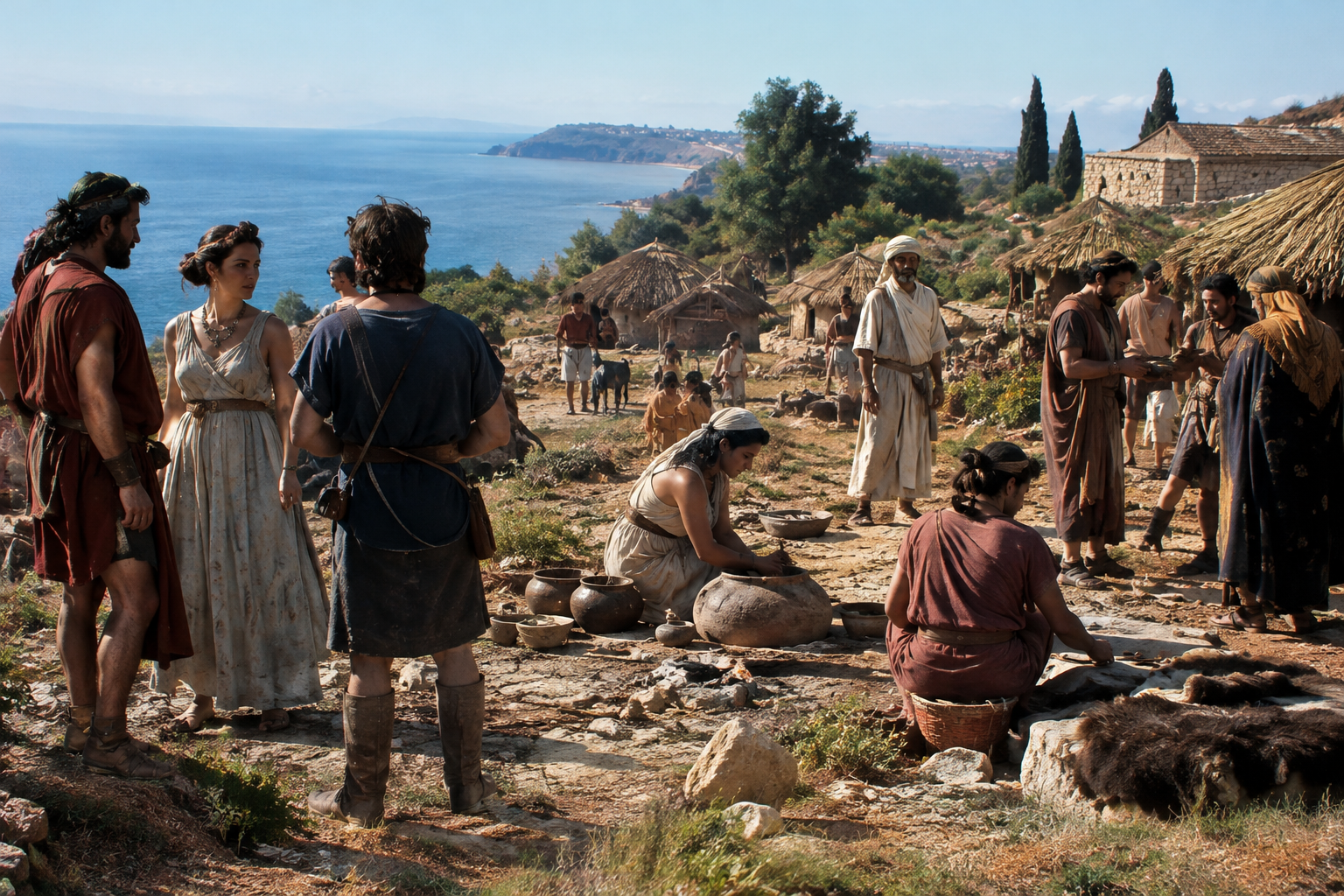
The Mediterranean examples sharpen that point further. I12844, from Roman Republic era Motya in western Sicily, dated to 195 BC, places the lineage in a Punic-Roman contact zone. I4475, from Byzantine-period Mardin in southeast Anatolia, dated to 725 AD, shows it again in a region famous for being a hinge between empires, languages, and trade routes.
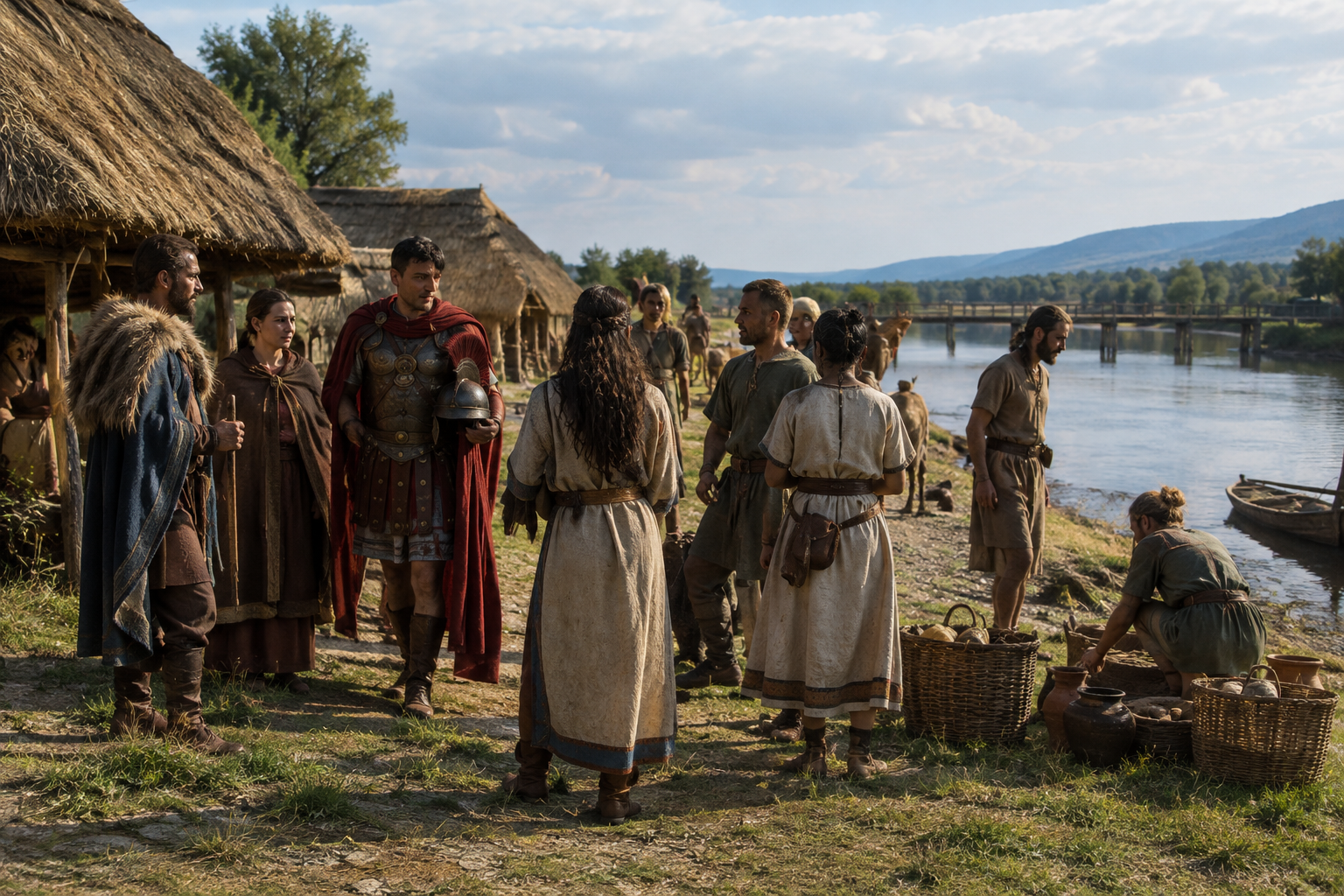
This is less a straight line than a series of reappearances across connected worlds. The geography is different, but the lesson is the same: paternal lineages can persist while political identities change around them.
For a closer look at one of those conquest-period transformations, the Hungarian material offers a particularly good comparison:
The medieval and later steppe-connected samples extend the story still further. K2per61_GE, from Hungarian Conqueror Karos II, dated to 900 AD, places the lineage within the world of the conquering Magyars. ZAM001, from Late Medieval Zambaga Khairkhan, Mongolia, dated to 1400 AD, shows that related paternal continuity or recurrence remained part of Inner Asian history many centuries later.
This is exactly the sort of evidence that makes Y-DNA so useful and so easy to misuse. Useful, because it can illuminate long-term paternal continuity across very distant periods. Easy to misuse, because continuity of haplogroup is not proof of direct descent from any famous buried warrior, noble, or dynasty. The same branch can be shared by many men separated by huge stretches of time and many undocumented family lines.
The supplied field for associated noble families and castles is empty here, and that absence is worth saying aloud rather than papering over. Too often, genetic storytelling rushes to connect a haplogroup to a glittering surname, a ruined keep, or a royal pedigree whether the evidence is there or not. In this case, it is better to be honest: no specific noble houses, dynasties, or castles were provided to anchor R1a1a1b2a2 in a documented medieval family tradition.
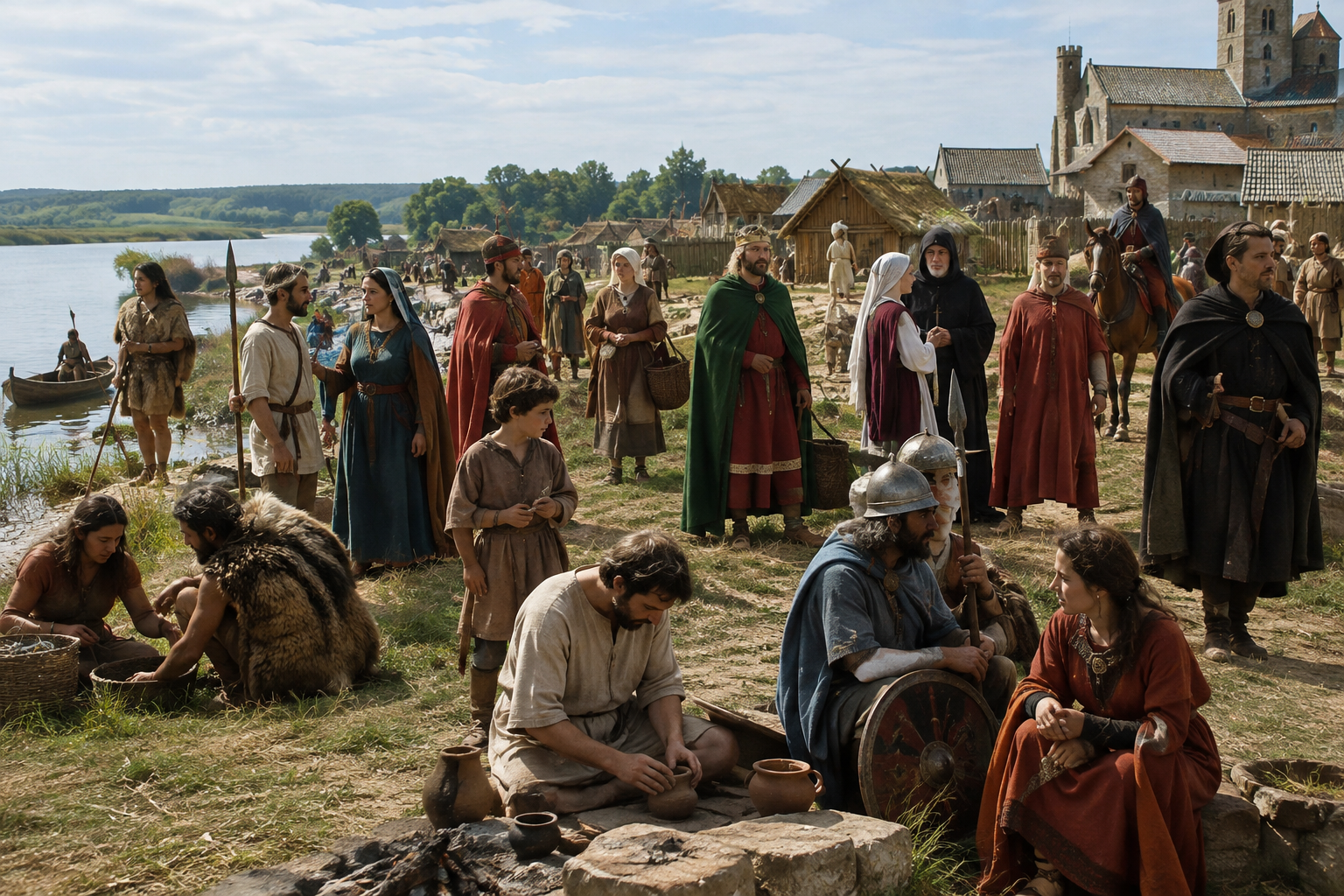
That does not make the story poorer. In some ways, it makes it more interesting. Instead of forcing the lineage into one heraldic box, the ancient DNA shows us something broader and arguably more historical: a paternal branch present in Bronze Age Central Europe, in Iron Age steppe elites, in the migration-period Carpathian Basin and Balkans, in Roman Sicily, in Byzantine Anatolia, and in later Inner Asia. That is a grander historical setting than any single castle gatehouse could provide.
Still, readers drawn to the intersection of genetics and ruling houses may enjoy exploring how MyTrueAncestry handles cases where dynastic evidence is stronger:
Discover the Arpad Dynasty DNA
R1a1a1b2a2 is a good reminder that ancestry is not a tidy ladder from one ancient people to one modern identity. It is a record of survival through movement. This branch appears in farming and metallurgical Bronze Age Europe, in pastoral and elite steppe settings, in imperial borderlands, and in medieval conquest contexts. That does not mean every carrier shared the same language, culture, or self-understanding. Quite the reverse. It means one paternal line could be carried by very different men in very different worlds.
That is the real excitement of archaeogenetics. Written history tends to preserve kings, chroniclers, and battles. Ancient DNA recovers something else: the deep demographic scaffolding underneath them. Sometimes that scaffolding supports a dynasty. Sometimes it shows that the more revealing story is not a family tree but a map of movement across continents.
If your own Y-DNA belongs somewhere near this branch, MyTrueAncestry can help you place it in that wider ancient context. You may discover genetic similarities to individuals like RISE434, BIR007, I27296, K2per61_GE, or others from the long chain of Eurasian history discussed here. That does not prove direct descent from a named Scythian, Hun, or conqueror, but it can offer a striking new perspective on where your paternal line fits into the human past.
Comments