Haplogroup R1a1a1b2a

– 5 min read


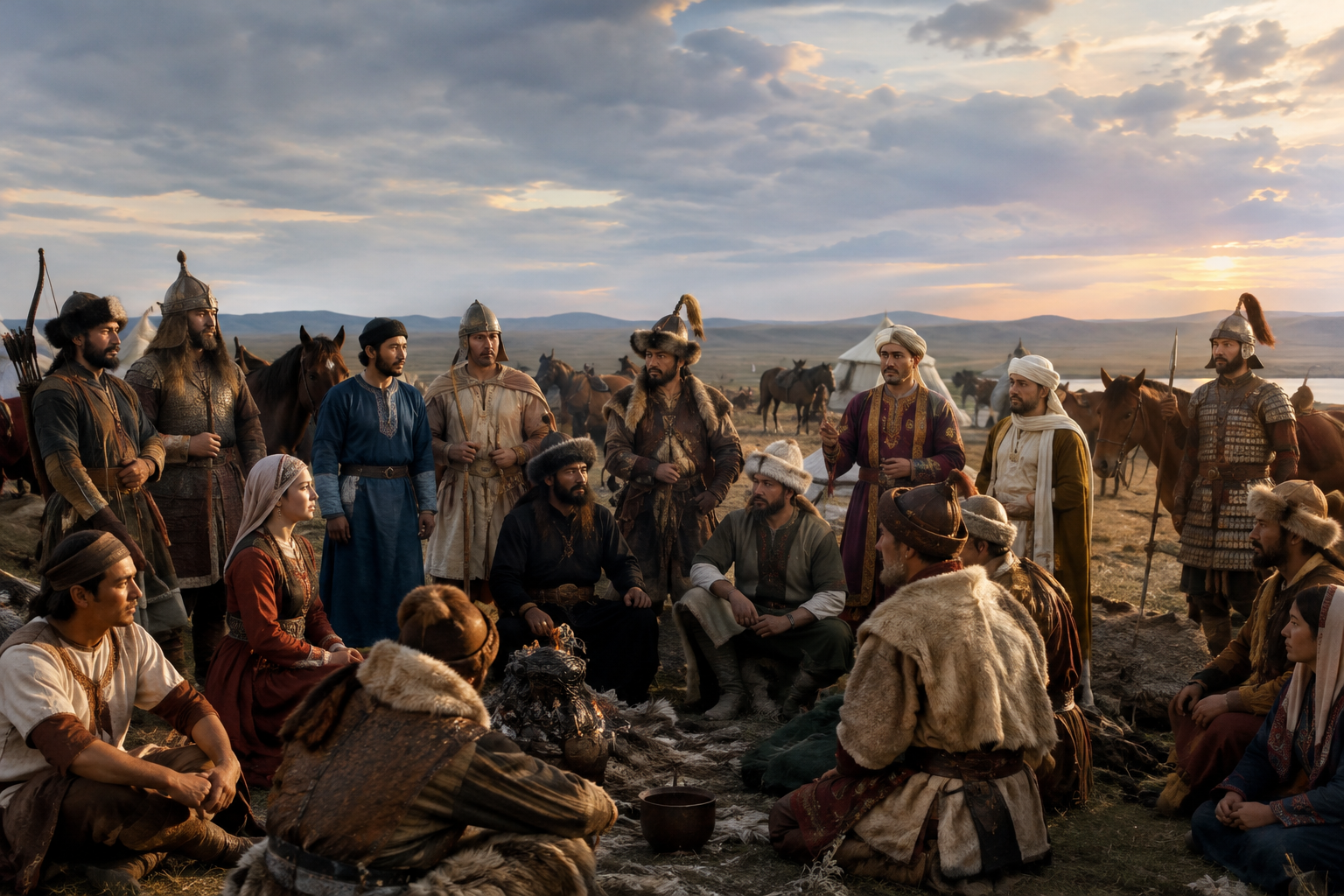
At Grishkin Log in Khakassia, southern Siberia, one Iron Age man labeled DA5 helps anchor a particularly revealing trail for haplogroup R1a1a1b2a. He is dated to around 900 BC and associated with the Tagar horizon, a culture of the Minusinsk Basin long known from its kurgans, metalwork, and deep connections to the steppe world. The striking thing here is not a lone dramatic burial, but the pattern: this same paternal branch, or a reported association with it, turns up again and again across the Eurasian steppe and beyond.
That matters because Y-DNA follows one direct paternal line only. It does not define a whole people or a person's complete ancestry. But when the same branch appears in Bronze Age Volga contexts, Iron Age Saka and Tagar settings, Xiongnu and Hun-period elites, Avar graves in the Carpathian Basin, and even a medieval burial in Portugal, it gives us a wonderfully awkward and historically rich truth: one paternal lineage could move through very different worlds without belonging to only one of them.
The oldest sample in this group is I0432 from Potapovka-1 in the Samara region of Russia, dated to about 2745 BC and described here as Middle Bronze Age Poltavka/Potapovka. That places R1a1a1b2a in a landscape central to steppe archaeology, where mobile pastoral societies, new burial customs, and expanding interaction networks were reshaping northern Eurasia.
This does not mean that every later carrier descended in any simple, traceable way from this one man. What it does suggest is that the branch belongs to an old steppe paternal reservoir already present in the Volga-Ural world by the Bronze Age. Another early marker in the wider zone is kzb003, dated here to about 1725 BC in the Trans-Volga forest-steppe Corded Ware horizon, hinting that this paternal line, or a very close related branch, was not confined to one ecological niche but sat near the frontier between open steppe and forest-steppe societies.
A major ancient DNA study on Inner Eurasian populations helped establish just how complex these steppe histories were, with repeated mixtures and regional continuities rather than a single neat migration story: https://www.nature.com/articles/s41586-018-0094-2.
By the first millennium BC, the evidence becomes much more geographically textured. DA5 at Grishkin Log is joined by several steppe and near-steppe individuals: DA15 from a Saka-Scythian context dated around 715 BC, KYZ001 from Kyzylshilik in Kazakhstan around 660 BC, BKT001 from Bektauta around 650 BC, and I12457 from Iron Age Katelai around 900 BC.
It would be lazy simply to label all of this "Scythian" and stop there. The archaeology of the eastern steppe is more regional than that. Tagar communities in the Minusinsk Basin, Saka groups in Kazakhstan, and related Iron Age populations shared overlapping forms of mobility, animal husbandry, and elite display, but they were not interchangeable. The recurrence of R1a1a1b2a across these settings suggests that this paternal branch fitted comfortably within the social worlds of eastern Iranian-speaking or Iran-related steppe populations, without being exclusive to them.
That point has grown sharper as more elite burials from the broader Scythian sphere have been tested. The steppe was never genetically uniform, but some paternal lines clearly persisted across prestigious male networks over long periods. For readers interested in that wider question of status and descent among steppe elites, one useful companion piece is below.
One of the most interesting samples here is TAK009, dated to about AD 9 from Takhiltyn Khotgor in Mongolia and described as an elite grave of the Xiongnu Empire. This is precisely the sort of context where Y-DNA becomes historically suggestive. Not because one lineage "explains" the Xiongnu, but because imperial confederations often gathered men from several ancestral backgrounds under one political structure. A branch like R1a1a1b2a appearing in such a grave shows that eastern steppe imperial elites could include paternal lines with deeper western or central steppe histories.
Then the branch turns up again in a run of later individuals associated with the Hun horizon: KRY001, an elite Hun warrior from Kurayly dated around AD 379; HDB001, a Hun elite warrior from Hajduboszormeny Vidi-zug grave in Hungary around AD 450; and TGB023, a Hun invader in the Danube-Tisza region around AD 500. This is where the evidence becomes especially evocative. We are not looking at a static homeland lineage, but one moving through the great political reorganizations that linked Mongolia, Central Asia, and the Carpathian Basin.
Research on the genetic history of the Mongolian steppe has repeatedly shown that eastern empires were formed from mixed and changing populations rather than a single biological bloc. A good overview of that broader background is here: https://www.sciencedirect.com/science/article/pii/S0960982222007321#app2.
If the Hun-period samples show westward political motion, the Kangju-related burials show something slightly different: endurance within the middle zone of Central Asia. DA206 from Konyrtobe, dated around AD 250, and DA229 from Kaynar Bulak 2, dated around AD 182, place the branch in the orbit of Kangju-era Kazakhstan. DA224 from Besynshitobe Burial, around AD 269, extends that same broad picture into Late Antiquity.
This matters because Central Asia was not merely a bridge between east and west. It was a world of its own: oasis settlements, river corridors, mobile pastoral groups, and exchange routes feeding into what we rather misleadingly call the Silk Road. A paternal lineage found in both earlier Saka contexts and later Kangju-period graves suggests continuity through changing political labels. Archaeologically, the names change; genetically, some male lines remain in circulation.
It is tempting to turn that into a story of a single tribe surviving unchanged across centuries. Better not. What the evidence really supports is a durable steppe-connected paternal presence in Kazakhstan and adjoining regions from the Iron Age into Late Antiquity. That is less tidy, and much more believable.
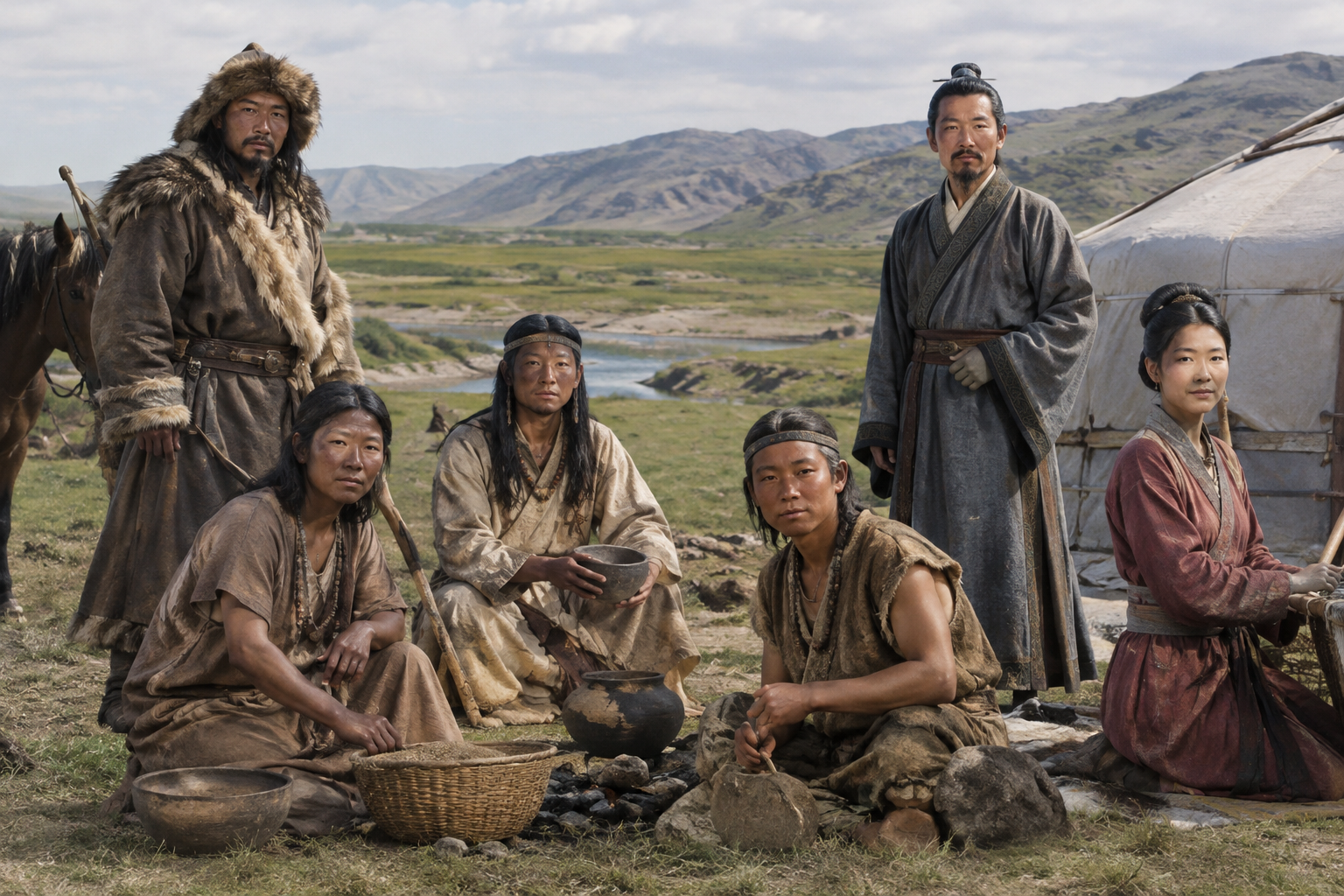
East-west mixing in Inner Asia
The Carpathian Basin adds another important chapter. JHT-130 from Janoshida-Totkerpuszta, dated around AD 800, belongs to a Late Avar context. Two more samples, MMper227 from Mako-Mikocsa around AD 599 and DKper701 from Dunavecse-Kovacsos around AD 650, are described as elite or warrior Avar burials. Taken together with the Hun-period individuals from Hungary, they suggest that R1a1a1b2a persisted through successive steppe-linked polities north of the Danube.
That should not surprise us. The Avar Khaganate, like the Hun world before it, was not a single-origin population. It was a layered political formation, drawing in newcomers and local groups alike. A paternal branch with deeper roots in the steppe zone would fit very naturally into that setting, whether through continuity, elite recruitment, or repeated migrations.
And then there is LP115_3: a medieval individual from Hospital da Misericordia in Portugal, dated around AD 1250 and associated here with the Umayyad Caliphate horizon. This is the outlier that keeps the whole picture honest. By the medieval period, a steppe-derived paternal branch turning up in Iberia need not imply a dramatic migration direct from Kazakhstan or Mongolia. It could reflect much older movements across Europe, mobility within Islamic-period networks, or the ordinary complexity of medieval populations in the western Mediterranean. The point is not to force a romance out of it, but to see how far a paternal line could travel from its earlier concentration zones.
On present evidence, haplogroup R1a1a1b2a looks less like the signature of one named people than the recurring paternal thread of steppe-connected male networks across nearly three millennia. Its strongest archaeological presence in this set lies in the Volga-Ural Bronze Age, the Iron Age eastern steppe, Central Asian Kangju contexts, and the Hun-Avar world of the Carpathian Basin.
For someone researching this haplogroup today, that is the useful historical takeaway. Your direct paternal line may connect most plausibly to the long corridor of Inner Eurasia where pastoral mobility, imperial expansion, and frontier mixing repeatedly brought distant regions into contact. Not a single tribe, not a guaranteed royal pedigree, but a lineage that kept turning up where Eurasian history was being made on the move.
Comments