Haplogroup O2a2b1a1a

– 5 min read


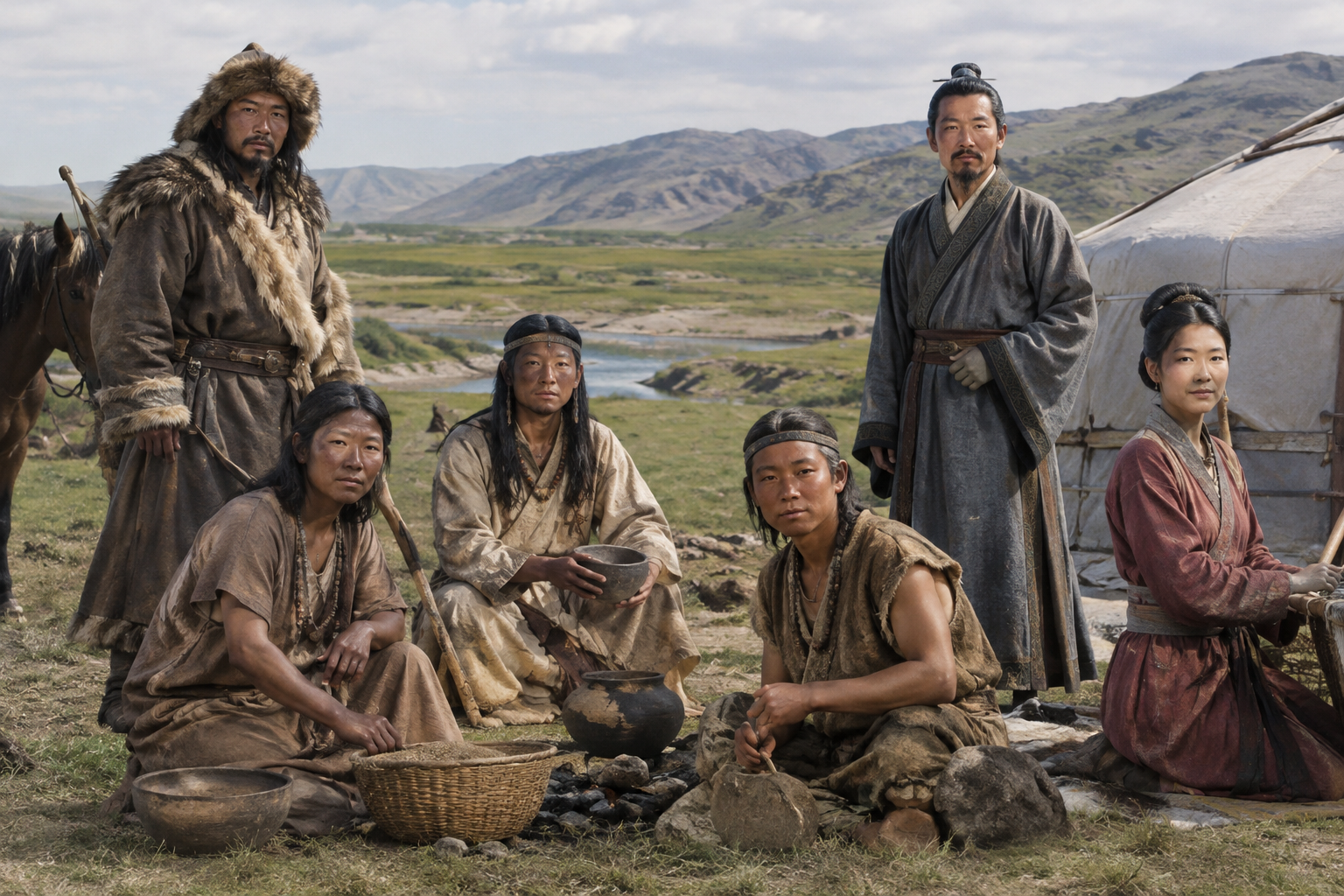
At Lajia village in Qinghai, two men dated to around 1900 BC, LJM5 and LJM3, bring us unusually close to an important early chapter in the history of Y-DNA haplogroup O2a2b1a1a. Lajia is one of those archaeological places that already carries weight because of its Bronze Age setting on the upper Yellow River frontier. The genetic clue makes it even more interesting: this paternal line appears there not once, but repeatedly, in a community linked to the Qijia horizon of northwestern China.
That matters because a Y-chromosome lineage is not a whole ancestry or an ethnic label; it traces one direct male line. Even so, when the same branch turns up at Lajia, at nearby Jinchankou, later in Han-period central China, and then among a Xiongnu-period individual in Mongolia, it suggests a paternal history tied to the long northern arc connecting the upper Yellow River with the steppe world beyond.
The strongest early cluster here is in Qinghai. Lajia village produced LJM5 and LJM3, both dated to about 1900 BC. Nearby, the Qijia-associated site of Jinchankou adds a third relevant individual, JCKM1-1, dated to about 1910 BC. Taken together, these are not stray points on a map. They place the lineage in a Bronze Age setting where farming communities, regional exchange, and frontier contacts were all reshaping life in northwestern China.
Archaeologically, that region matters because Qinghai and Gansu were never a sealed box. They sat at a junction: upland river valleys to the east, highland and corridor routes to the west, and steppe-facing zones to the north. A lineage like O2a2b1a1a appearing in this context is therefore historically suggestive, not because it lets us name a tribe or language, but because it sits in exactly the sort of landscape where populations mixed, split, and spread.
A genetic study of ancient populations in this wider northwestern region helped bring such Bronze Age burials into focus, showing how much population history was already in motion there long before the imperial age. The broader research context can be followed in this ancient DNA study, which has been important for understanding population structure across northwestern China.
One ancient Y-DNA result can be tantalising but limited. Three early finds from closely connected Qinghai contexts are different. LJM5, LJM3, and JCKM1-1 do not prove a dynasty, a clan in the later historical sense, or even close biological kinship between the buried men. But repetition does make it easier to say that this paternal branch was genuinely present in that Bronze Age world rather than appearing there by accident.
That, in turn, helps place O2a2b1a1a within a wider pattern seen in East Asian archaeogenetics: paternal lines can show remarkable staying power across changing archaeological cultures and political systems. Material culture shifts, exchange networks expand, settlements rise and disappear, but some direct male lines continue through those transformations. The interest of this haplogroup lies precisely in that continuity across very different settings.
The next key point in the evidence comes much later, with LGM41 from LuoHeGuXiang in China, dated to around 100 BC, within the Han Dynasty period. This is valuable not because one Han sample can stand for the whole empire, plainly it cannot, but because it shows the lineage in a very different historical landscape from Bronze Age Qinghai.
By the Han period, states, roads, military colonies, administrative movement, and expanding agricultural systems had altered the human geography of northern China. A paternal lineage seen earlier in upper Yellow River communities now appears in a context belonging to the age of one of East Asia's great imperial formations. That does not mean a straight, documented genealogical line from Lajia to LuoHeGuXiang. It does mean that the branch fits comfortably within the long-term demographic history of northern Chinese populations rather than appearing only at the margins.
For readers interested in the deeper regional background to such long continuities, MyTrueAncestry's piece on the Middle Yellow River offers a useful companion perspective.
Middle Yellow River Genomic History
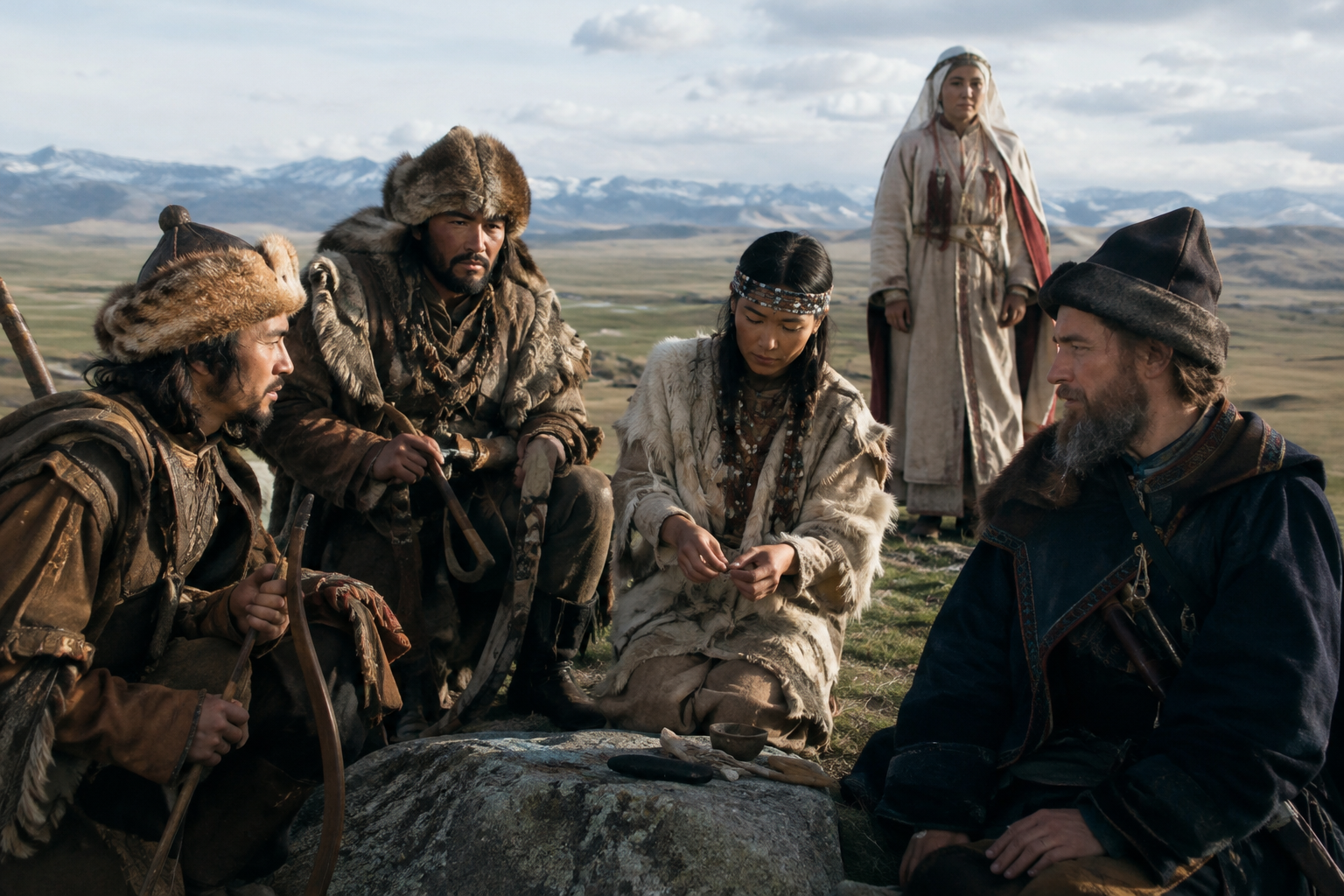
The most striking later appearance is UGO002, a Xiongnu-period individual from Mongolia dated to about AD 650. The label deserves a little care. "Xiongnu-period" in an archaeological or comparative dataset does not automatically make a person a member of the early imperial Xiongnu polity described in Han texts, and the date is centuries later than the classic Xiongnu apex. Still, the sample places this paternal line in Mongolia within a steppe setting shaped by the long afterlife of eastern steppe population movements.
This is where the article's sample set becomes especially revealing. O2a2b1a1a is not confined to one neatly bounded agricultural heartland in the evidence here. It appears in Qinghai Bronze Age communities, in Han-period China, and in a later Mongolian context associated with the broad steppe tradition. That spread does not require us to imagine one heroic migration. Ancient populations moved in many smaller, messier ways: marriage, resettlement, frontier service, local continuity, and repeated episodes of admixture.
Research on the eastern steppe has shown just how layered that history was, with populations in Mongolia often carrying mixed ancestries and complex ties to neighbouring regions. A useful research lead for that bigger context is this study on the genetic history of the Mongolian steppe.
It is tempting to turn any haplogroup article into a hunt for a single point of origin, but the better historical picture is usually broader. With O2a2b1a1a, the ancient evidence supplied here points to a northern interaction zone: upper Yellow River communities in Qinghai, later settled populations under Han rule, and a later steppe-linked individual in Mongolia. This is less a tale of one fixed homeland than of a corridor in which male lineages could persist while cultures and states changed around them.
That is also why the Qinghai samples are so important. Lajia and Jinchankou sit in the sort of place historians and archaeologists keep returning to, because frontier regions are often where large historical processes become visible first. They show us not just who lived there, but how local communities participated in the making of wider Eurasian worlds.
Another helpful parallel is MyTrueAncestry's article on population shifts at Ningxia, a region that also sat between Yellow River and steppe spheres and helps illustrate how dynamic these northern contact zones could be.
On present evidence, haplogroup O2a2b1a1a has a clearly documented place in ancient northern East Asia, with especially early visibility in Bronze Age Qinghai and later appearances extending into Han-period China and the Mongolian steppe zone. For someone researching this paternal line today, that does not confer a simple ethnic badge or a tidy origin myth. What it does suggest, quite strongly, is a deep connection to the long human history of the northern Chinese and Inner Asian frontier, where settled communities and steppe worlds met for millennia.


Comments