Haplogroup G2a2b2a1a1b1a1a

– 5 min read


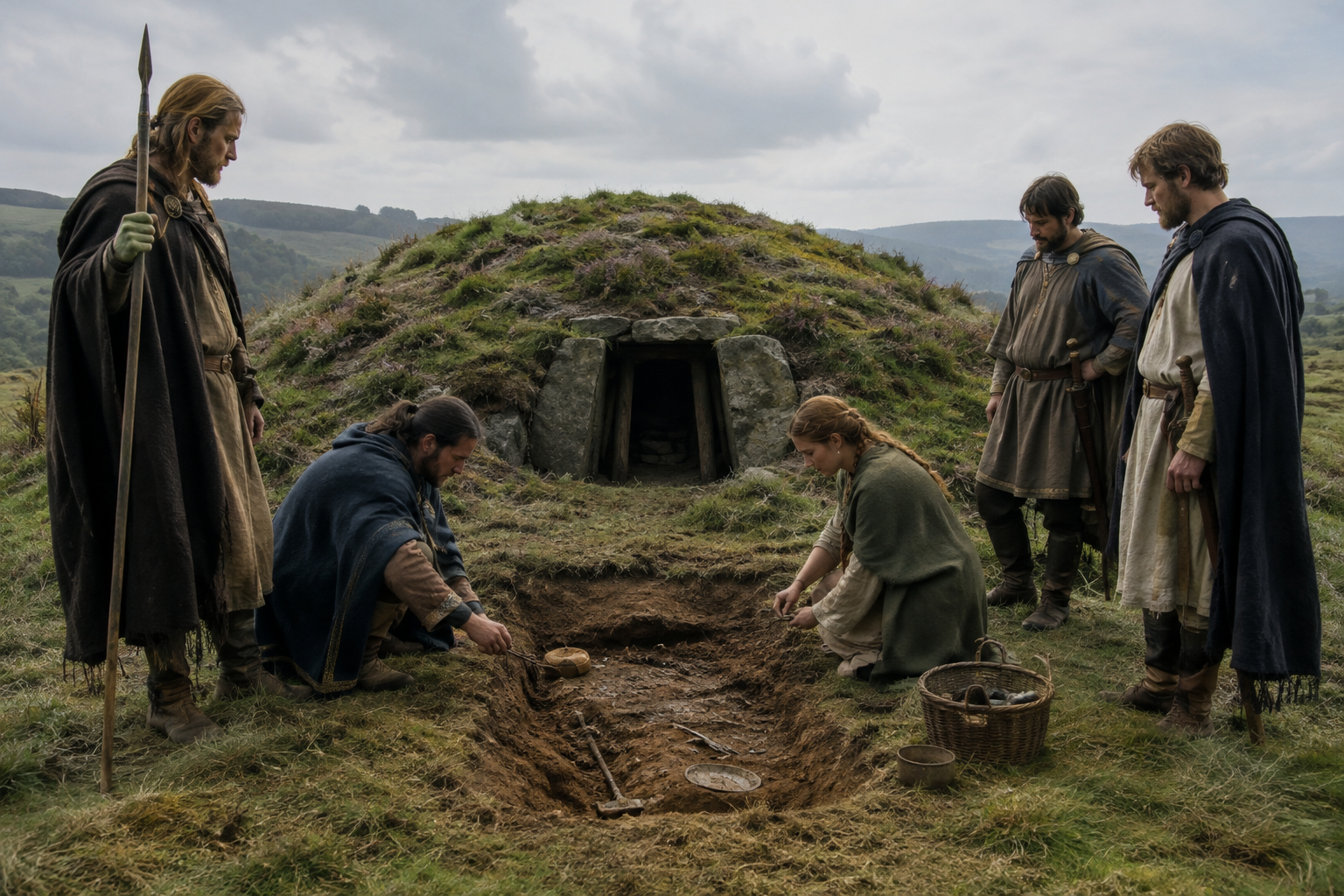
At Magdalenenberg near Villingen-Schwenningen in southwest Germany, one of the most famous Iron Age burial landscapes in Central Europe has produced a striking genetic clue. Among the individuals connected with that world is sample MBG010, dated to around 530 BC, described as an elite Celtic burial. For anyone carrying the Y-DNA haplogroup G2a2b2a1a1b1a1a, that matters because it places this paternal line, or a reported association with it, in a high-status Celtic setting during the early Iron Age.
This is the useful sort of evidence ancient DNA gives us: not a legend about one heroic ancestor, but a series of real men in real archaeological contexts. Y-DNA traces one direct paternal line only, yet even that narrow line can illuminate something larger. In this case, the pattern is especially interesting because the same haplogroup is reported in Iron Age and Roman-period contexts stretching from southwest Germany to southern Britain and then into the Baltic zone of Roman-era Poland.
Magdalenenberg has long attracted attention because of its scale and its place within the Hallstatt cultural world of early Celtic Europe. Sample MBG010 comes from that broad milieu, and the label "elite burial" is itself enough to make the point without any need for embroidery. A paternal line associated with G2a2b2a1a1b1a1a was present in a society that was already socially differentiated and regionally connected in the sixth century BC.
That does not mean this haplogroup was "the Celtic haplogroup," still less that every man in Hallstatt Europe shared it. But it does show that this lineage had reached, and persisted within, communities at the heart of early Celtic Central Europe. A recent ancient DNA study on the spread of Celtic-associated populations has helped sharpen this wider background, showing how genetics and archaeology can be read together rather than forced into simplistic ethnic labels: https://www.nature.com/articles/s41562-024-01888-7.
There is a deeper irony here too. The broader haplogroup G has very old roots in the story of European farmers, and yet this much narrower branch appears here not in a Neolithic village but in a later Iron Age elite context. That is a useful reminder that ancient paternal lines can survive enormous cultural change: the men bearing them may become farmers, chiefs, townsmen, soldiers, or subjects of empire without the Y-chromosome itself caring very much about the label historians later apply.
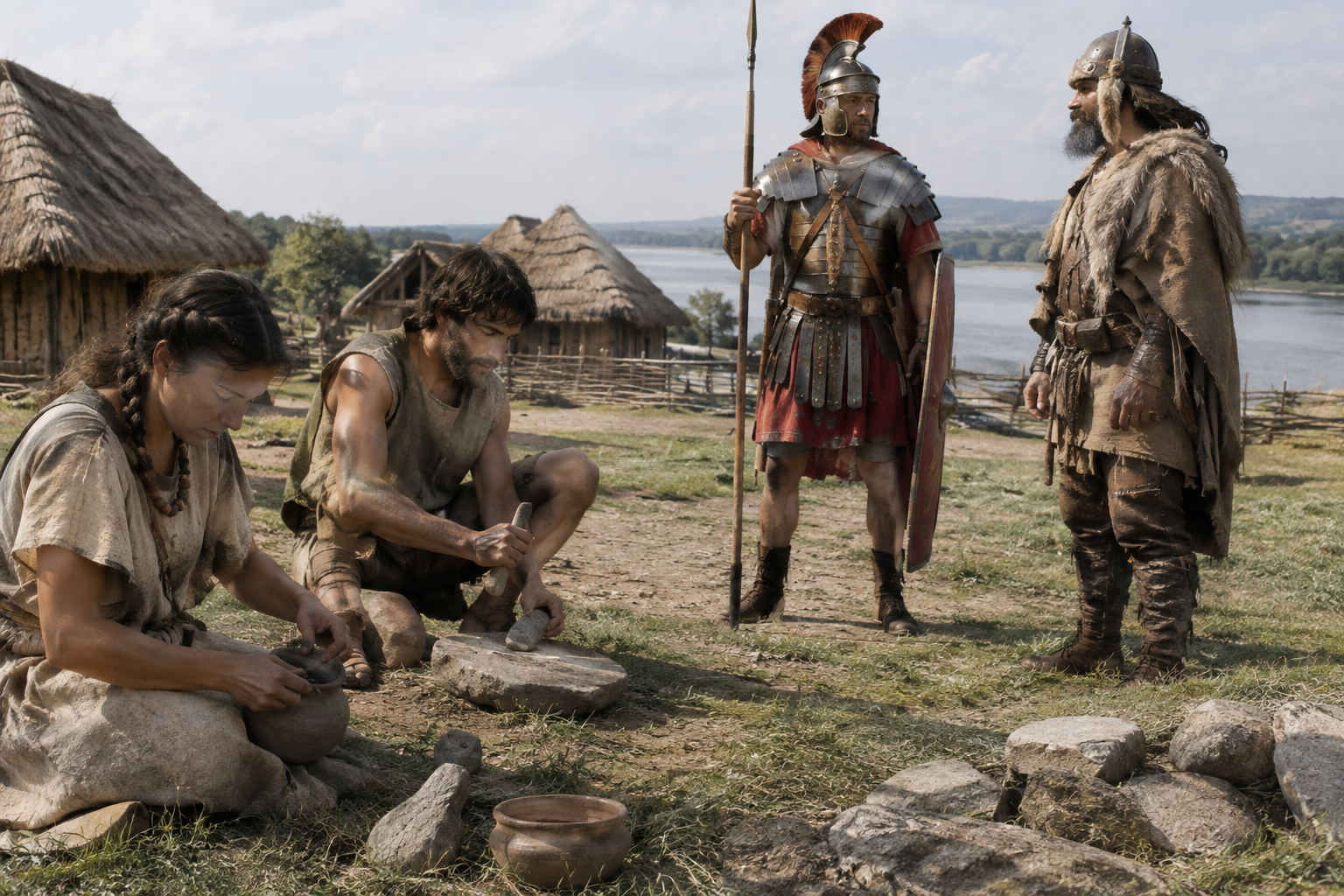
The strongest pattern in this small dataset comes from southern Britain. Two individuals, WBK02 and WBK195, are both listed from Duropolis, Winterborne Kingston in England and dated to around AD 125. They are described as Celtic Durotriges, placing them in the territory of the Iron Age people of Dorset whose world continued, in altered form, under Roman rule.
That is precisely the sort of context that makes ancient DNA so valuable. Roman Britain was not a neat story of replacement. Local communities survived, adapted, traded, buried their dead, and carried older lineages forward into an imperial world. The appearance of the same reported haplogroup in two men from the same broader site suggests continuity of a paternal branch in this region, though not automatically close kinship between the two individuals.
Winterborne Kingston has become an important place for thinking about that transition from late Iron Age society into the Roman period. Popular reporting on the human remains from Dorset has highlighted how much biological detail can now be recovered from burials that once would have yielded only typology and chronology: https://archaeologymag.com/2023/07/2000-year-old-human-remains-in-dorset/. For this haplogroup, the central point is clear enough: G2a2b2a1a1b1a1a was present in a Romano-British population with local Celtic roots.
It is worth pausing over the Durotriges label. This is an archaeological and historical identification tied to a region and its material culture, not a genetic essence. What the two Dorset men show is not that a tribe had one Y-line, but that one direct paternal line now seen in some modern testers was part of life in Roman-period southern Britain.
If the German and Dorset samples suggest a western and Celtic-facing distribution, the fourth sample widens the frame. R11391, dated to about AD 212, comes from Weklice in Poland and is described as Germanic Tribe Weklice. Weklice belongs to a very different historical landscape from Magdalenenberg or Roman Dorset: the Baltic-connected zone often discussed in relation to Gothic and other northern groups moving around the edges of the Roman world.
This does not prove a single migration route from Hallstatt Germany to Dorset to Weklice. That would be far too tidy, and the evidence here is too limited for that. But it does show that the paternal branch reported as G2a2b2a1a1b1a1a was not confined to one small corner of Europe or one single cultural package.
By the second and third centuries AD, Europe's northern frontier regions were full of movement: trade, war, marriage alliances, service to empires, local continuity, and new political identities. A lineage that appears in elite Iron Age Germany and in Roman Dorset turning up again in a Weklice-associated context fits that larger archaeological picture rather well. Ancient DNA from post-Roman and late Iron Age communities in this part of Europe increasingly shows diversity within groups once treated as culturally uniform.
The exact branch name here is very narrow: G2a2b2a1a1b1a1a. That matters. The broader parent haplogroup G is ancient and widespread in West Eurasian prehistory, but one should not simply pour the whole history of haplogroup G into this specific terminal branch. The safer reading is narrower and more interesting: this reported paternal line appears in several later prehistoric and Roman-era European settings, including an elite Celtic context, a local Romano-British one, and a northern frontier context in Poland.
That pattern makes this a lineage of persistence rather than spectacle. It is not attached here to one royal house or one conquering people. Instead, it seems to have moved through different social worlds over many centuries, surviving shifts in language, political power, and cultural identity. For members of this haplogroup today, that is often the more historically realistic story anyway.
Roman and early medieval Britain
The most distinctive thing about G2a2b2a1a1b1a1a in the present evidence is not immense antiquity by itself, but its appearance in several quite different archaeological settings between about 530 BC and AD 212. At Magdalenenberg it sits in the orbit of early Celtic power; at Duropolis it appears among men living in Roman Britain with local Durotrigan roots; at Weklice it reaches into the complicated frontier societies of the Roman-age Baltic world. For a modern tester, that is a solid and evocative clue: your direct paternal line was part of Europe's lived history across multiple regions, not locked into a single tribe or moment.
Comments