Haplogroup Q1b1a2a3

– 5 min read


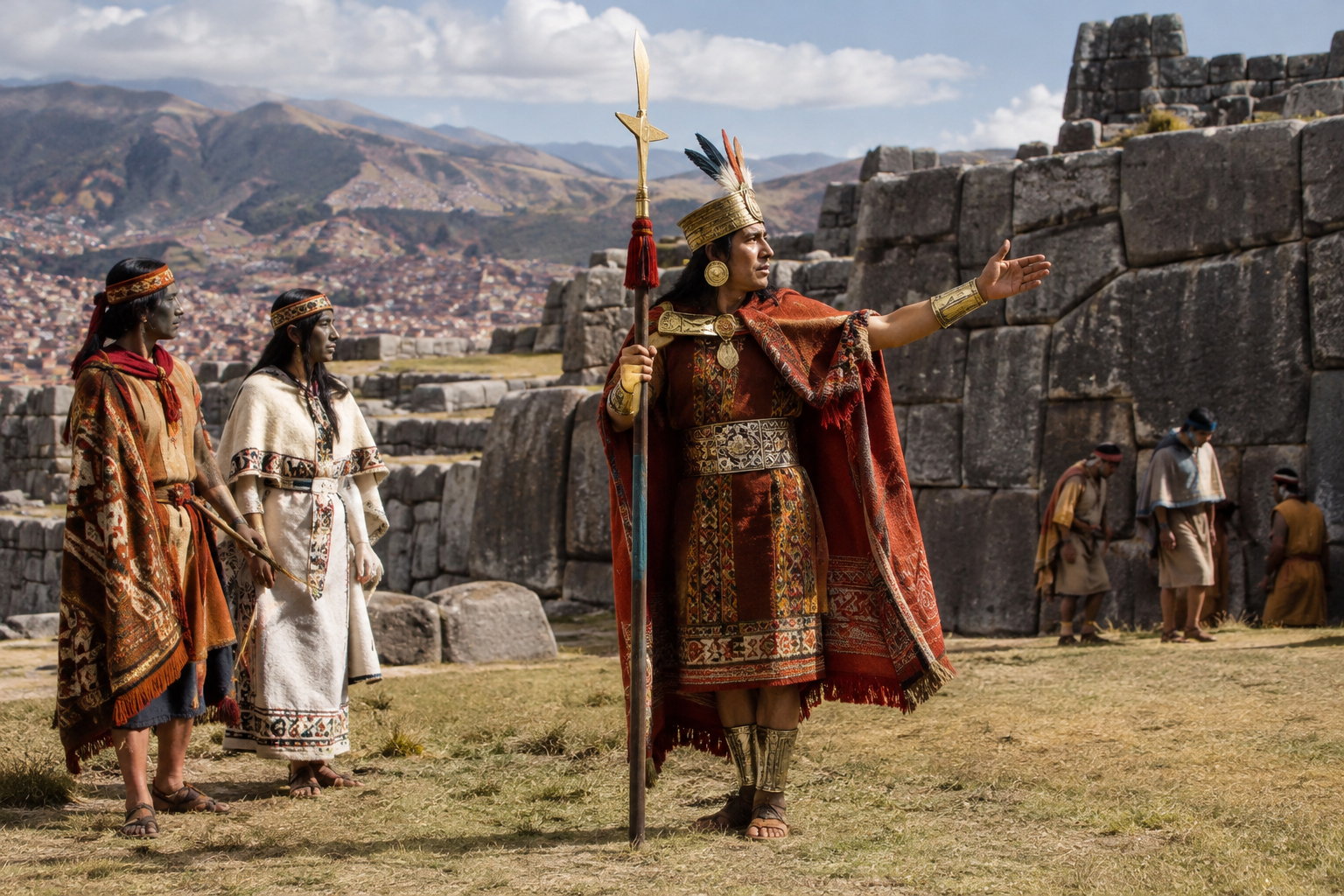
At Sacsahuaman above Cusco, the great Inca fortress-temple complex that still dominates the old imperial capital, one ancient male sample stands out for anyone interested in Y-DNA: SHN-575, dated to around AD 1500. He belongs here because the paternal line associated with him is reported as Q1b1a2a3, a branch within haplogroup Q that is deeply tied to the population history of the Indigenous Americas. That makes this not a story about a wandering noble line or a medieval dynasty, but about something older and in many ways more revealing: paternal continuity in the Andes at the very moment of the Inca world.
The date matters. Around AD 1500, Cusco was not some remote provincial settlement. It was the political and ceremonial center of Tawantinsuyu, the Inca Empire, a place of state ritual, military power, elite residence, forced resettlement, and constant movement of people. To find a Y-chromosome lineage from this setting is valuable because Y-DNA traces one direct paternal line only, not a person's whole ancestry, yet it can still pin one male line firmly into one of the most important cities in pre-Columbian South America.
Sacsahuaman is famous in stone before it is famous in DNA. Its massive masonry walls, still astonishingly precise, formed part of the monumental landscape overlooking Cusco. By the late 15th and early 16th centuries, this was an Inca ceremonial and strategic center bound up with imperial identity itself. A man buried in this orbit was living in the last generations before Spanish conquest transformed the region.
That context gives SHN-575 historical force. A Y-line assigned to Q1b1a2a3 at Cusco around AD 1500 places this branch not at the vague level of "Native American ancestry" but in a specific, archaeologically meaningful imperial setting. The lineage belongs to the wider Q family, which is the principal paternal haplogroup found across many Indigenous populations of the Americas, but the narrower label matters too: a subclade is not the same thing as the whole parent lineage, and it should not be inflated into a claim about every American population or every Andean community.
A genetic study of ancient Andean and South American populations has helped frame this broader picture, showing how powerful ancient DNA can be for reconstructing local continuity, movement, and demographic change without flattening the region into a single story. One relevant research lead is this Science Advances study, which speaks to exactly the sort of archaeological-genetic setting in which samples like this become historically useful.
Haplogroup Q has a long history in the peopling of the Americas. In broad terms, it descends from paternal lineages that were part of the ancient populations moving from northeast Asia into the Americas during the late Pleistocene and early Holocene. But broad terms can be misleading if left alone. The branch discussed here, Q1b1a2a3, is a much narrower twig on that larger tree, and a specific subclade must be handled with care.
What can be said responsibly is that a branch like Q1b1a2a3 belongs within an overwhelmingly American paternal framework and that its appearance in an Inca-period context at Cusco fits that larger pattern well. What cannot be said from one sample alone is that it defines the Inca state, marks a royal bloodline, or represents all men living in the city. Empires gather people together. Their burial grounds and sacred landscapes can preserve both local continuity and the results of political movement.
That is one of the most interesting things about late pre-Columbian Cusco. The Inca imperial system moved populations for labor, loyalty, and control. So any man found in or around the capital might reflect local ancestry, regional integration, or both. The Y-chromosome gives one line of evidence, not the whole social biography.
One sample may sound modest, but archaeology is often like that. A single securely placed individual can anchor a discussion more honestly than a hundred loose assumptions. SHN-575 gives us a documented paternal lineage in a documented place at a documented historical threshold: the closing years of independent Inca rule.
This is especially useful in the Andes, where written history before the conquest comes filtered through later colonial texts, Spanish chroniclers, and Indigenous testimony recorded after upheaval. Ancient DNA does not replace those sources, but it changes the footing of the argument. Instead of speaking only about rulers, roads, and tribute, we can point to an actual man from the Cusco world whose paternal ancestry belongs to a Native American Y-line carried in that landscape before colonial demographic collapse remade it.
There is a temptation, especially in popular history, to imagine an imperial capital as the biological mirror of a ruling people. Ancient DNA usually makes that sort of tidy picture harder to maintain. Cusco at the height of the Inca state was a hub. Pilgrims, retainers, craft specialists, administrators, soldiers, and relocated communities could all be drawn into its orbit.
So SHN-575 should be read against the complexity of empire, not against a fantasy of ethnic purity. Q1b1a2a3 in this context is evidence of one paternal line present in the capital's world, and its significance lies precisely there. It helps place a modern tester with this haplogroup into a real pre-Columbian American setting, while also reminding us that imperial centers gather many stories into one place.
The wider American picture is becoming clearer as more ancient genomes are studied across both North and South America. For readers interested in that deeper background, MyTrueAncestry has also explored ancient genomes and the long settlement history of the Indigenous Americas, a useful companion to the more focused Andean evidence discussed here.
There is a larger archaeological point worth making. In much of the Americas, paternal lineages within haplogroup Q appear again and again in ancient and Indigenous contexts, though not always in the same subclades or frequencies. That repeated pattern matters because it speaks to long-term continuity even in regions shaped by migrations, conquests, ecological adaptation, and political expansion.
In the Andes, continuity and change often sit side by side. States rose and fell: Wari, Tiwanaku, Chimu, Inca. Languages spread, communities moved, and mountain ecologies demanded flexibility. Yet some paternal lines persisted through all that historical noise. A lineage such as Q1b1a2a3, when identified in an Inca-period individual from Cusco, becomes part of that quieter record of endurance.
For someone researching a present-day paternal line in Q1b1a2a3, the most defensible takeaway is not a claim to Inca nobility or a direct link to one named dynasty. It is something more solid. This branch belongs within the deep paternal history of Indigenous America, and one ancient example, SHN-575 from Sacsahuaman in Cusco around AD 1500, places it in the living world of the late Inca heartland. That is a small but vivid fact: one paternal line, one imperial city, one moment just before the Andes changed forever.
Comments